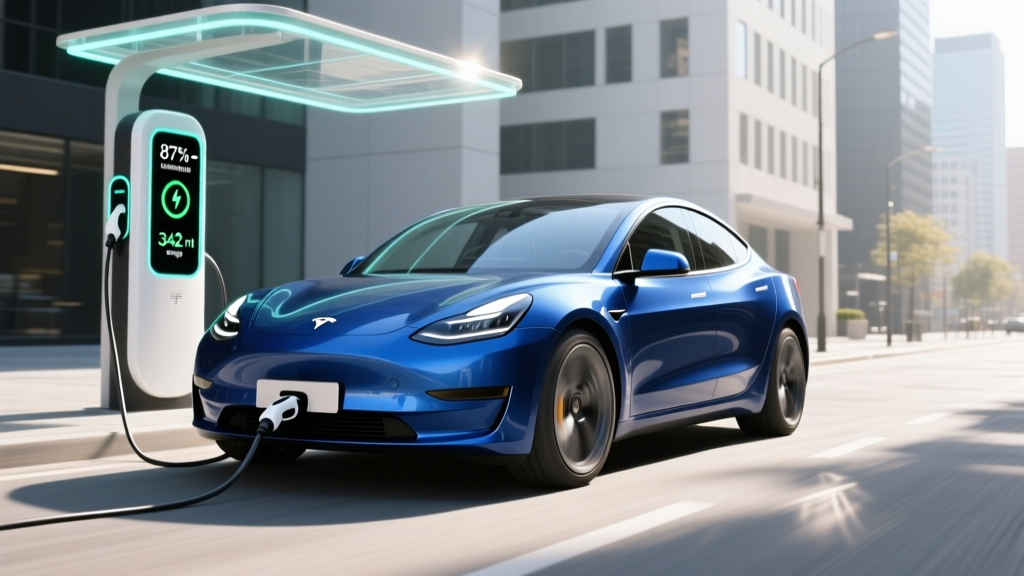
The Tesla Model 2 — Tesla's long-promised affordable compact EV — has finally arrived for the 2026 model year. Positioned below the Model 3 in both size and price, this subcompact electric hatchback aims to bring the Tesla Supercharger network and software ecosystem to a buyer who previously couldn't justify a $38,000+ sedan. But with competitors like the Chevrolet Equinox EV, Hyundai Kona Electric, and Volvo EX30 already fighting for the same budget-conscious EV shopper, the Model 2 has to deliver on more than just brand cachet.
After spending two weeks with a 2026 Tesla Model 2 Long Range in mixed commuting, highway, and cold-weather driving, here's everything you need to know — with the exact numbers that matter.
| Spec | Standard Range | Long Range |
|---|---|---|
| EPA Range | 230 mi | 270 mi |
| Battery (usable) | 47 kWh (LFP) | 55 kWh (LFP) |
| Drivetrain | RWD, single motor | RWD, single motor |
| Horsepower | 190 hp | 225 hp |
| 0–60 mph | 6.8 sec | 5.9 sec |
| Peak DC Fast Charge | 135 kW | 150 kW |
| 10–80% DC Charge | ~28 min | ~25 min |
| Level 2 Home Charge | 11 kW (~37 mi/hr) | 11 kW (~37 mi/hr) |
| MPGe (combined) | 125 MPGe | 132 MPGe |
| Efficiency | 27 kWh/100 mi | 25 kWh/100 mi |
| Base MSRP | $24,990 | $28,490 |
| As-Tested Price | $26,480 | $31,230 |
| Battery Warranty | 8 yr / 100,000 mi | |
Real-World Range: What the EPA Number Doesn't Tell You
The 2026 Tesla Model 2 Long Range carries an EPA-estimated 270 miles of range from its 55 kWh usable LFP (lithium iron phosphate) battery pack. The Standard Range trim drops to 230 miles on a smaller 47 kWh pack. Both use CATL-sourced LFP cells — a chemistry choice that trades some energy density for longevity, thermal stability, and lower cost.
- EPA Sticker: 270 miles
- City/commute driving (65°F): ~260–275 mi (regen-heavy routes can match or exceed EPA)
- Highway (70–75 mph, 65°F): ~225–240 mi
- Cold weather (30°F, mixed driving): ~195–215 mi (LFP packs lose slightly more capacity in cold vs. NMC)
- Cold weather highway (30°F): ~170–190 mi
Bottom line: plan road trips around 200-mile legs in temperate weather, 160-mile legs in winter.
LFP chemistry is worth understanding before you buy. Unlike NMC (nickel manganese cobalt) packs, LFP batteries tolerate — and actually benefit from — being charged to 100% regularly. Tesla recommends a full 100% charge at least once per week on the Model 2 for accurate state-of-charge calibration. The trade-off: LFP packs have lower energy density (meaning a heavier or physically larger pack for the same kWh) and are more susceptible to cold-weather range loss because the chemistry's internal resistance rises faster at low temperatures. Tesla includes a battery preconditioning feature that warms the pack when you navigate to a Supercharger, partially mitigating this.
Charging Speed: DC Fast Charge and Home Level 2
The Model 2 uses the NACS (North American Charging Standard) connector natively — no adapter needed for Tesla's Supercharger network, which now exceeds 30,000 stalls across North America. Third-party NACS chargers from Electrify America, EVgo, and ChargePoint are also compatible without adapters.
| Charging Level | Power | Miles Added Per Hour | Notes |
|---|---|---|---|
| Level 1 (120V household) | ~1.4 kW | ~5 mi/hr | Emergency/trickle only; full charge in ~40+ hours |
| Level 2 (240V, 48A home) | 11.5 kW | ~37 mi/hr | Full charge in ~5 hours; recommended daily charging |
| Level 2 (240V, 32A public) | 7.7 kW | ~25 mi/hr | Common at workplaces, hotels, shopping centers |
| DC Fast Charge (peak) | 150 kW (LR) / 135 kW (SR) | ~450 mi/hr at peak | Sustained rate drops above 50% SoC |
| DC 10–80% (Long Range) | — | — | ~25 minutes on a 250 kW+ V3/V4 Supercharger |
The 150 kW peak DC charge rate on the Long Range is modest by 2026 standards — the Hyundai Ioniq 5 peaks at 240 kW and the Porsche Macan EV at 270 kW. But peak kW is only part of the story. The Model 2's LFP pack sustains a relatively flat charge curve between 10% and 55% SoC, meaning you spend more time near that peak rate. Above 55%, the curve tapers noticeably: 55–80% takes roughly as long as 10–55%. Above 80%, charging slows sharply to protect the battery — a universal EV behavior, but worth budgeting for on road trips. Plan to charge to 80% and go rather than waiting for a full top-up at a Supercharger.
For home charging, Tesla includes a Mobile Connector (NACS) with the vehicle. A standard 240V/48A Tesla Wall Connector installation delivers the full 11.5 kW, adding about 37 miles of range per hour. Most Model 2 owners will wake up to a full battery every morning with a typical overnight session of 3–5 hours. Expect a Wall Connector installation to cost $800–$2,200 depending on panel proximity and whether your electrical panel needs a 200A upgrade (common in older homes). Always get a quote from a licensed electrician before assuming install cost.
Performance and Driving Dynamics
The Model 2 is not a performance EV, and that's intentional. The Long Range's single rear motor produces 225 hp and hits 0–60 mph in 5.9 seconds — brisk enough for confident highway merging but far from the 3.1-second thrill of a Model 3 Performance. The Standard Range does 0–60 in 6.8 seconds with 190 hp.
On the road, the Model 2 feels nimble and well-suited to urban environments. The compact wheelbase (approximately 103 inches) and tight 34-foot turning circle make parking effortless. Ride quality is firm — Tesla's suspension tuning prioritizes efficiency and handling over plushness — and you'll feel sharp pavement imperfections more than in a Chevrolet Equinox EV or Volkswagen ID.4. Road noise at highway speed is noticeable, a common trait in Tesla's lighter, efficiency-optimized vehicles.
Regenerative braking offers two modes: Standard (strong regen enabling one-pedal driving in most conditions) and Low (more traditional coasting feel). The friction brakes are rarely needed in daily driving, which extends pad life considerably.
Interior, Tech, and Cargo Space
The Model 2 cabin follows Tesla's minimalist playbook: a single 12.9-inch center touchscreen handles all infotainment, climate, and vehicle controls. There is no instrument cluster — speed and navigation appear on the left edge of the center display. Build quality on our 2026 test vehicle was noticeably improved over older Teslas, with consistent panel gaps, soft-touch materials on the dash, and fabric-wrapped door panels that feel appropriate for the price point.
Passenger and Cargo Dimensions:
- Front headroom: 39.2 in
- Front legroom: 41.5 in
- Rear headroom: 37.1 in
- Rear legroom: 34.8 in
- Cargo (rear seats up): 18.5 cu ft
- Cargo (rear seats folded): 44.2 cu ft
- Frunk (front trunk): 2.8 cu ft
The rear seat is the Model 2's most obvious compromise. At 34.8 inches of legroom, it's tight for adults over six feet on longer rides — a noticeable step down from the Model 3's 35.8 inches. Cargo space at 18.5 cu ft is competitive with the Hyundai Kona Electric (18.3 cu ft) but trails the Equinox EV's 26.4 cu ft hatch area. The small frunk holds a charging cable and a slim backpack, not much more.
Tech highlights:
- Tesla's latest HW5 Autopilot hardware with enhanced camera suite
- Standard Autopilot (adaptive cruise + lane centering); FSD (Supervised) available as a $8,000 option or $99/month subscription
- Over-the-air software updates, streaming media, Tesla app integration
- Sentry Mode dashcam surveillance while parked
- No Apple CarPlay or Android Auto — Tesla's proprietary interface only
Tesla Autopilot is an SAE Level 2 driver-assistance system. FSD (Supervised) remains Level 2 as well. Both require the driver to keep hands on the wheel and eyes on the road at all times. The vehicle does not drive itself. Only Level 4 robotaxi services like Waymo operate without a human driver in defined areas. Tesla's camera-only system performs well on well-marked highways but can struggle with construction zones, faded lane markings, and adverse weather. Treat it as a fatigue-reduction tool, not a replacement for your attention.
Pricing, Tax Credits, and Total Cost
The 2026 Tesla Model 2 starts at $24,990 for the Standard Range and $28,490 for the Long Range — both prices include destination. Our Long Range test vehicle, equipped with Midnight Blue paint ($1,000), 19-inch wheels ($1,500), and premium interior ($240), came to $31,230 before any incentives.
| Trim | Base MSRP | As-Tested | Est. After §30D Credit |
|---|---|---|---|
| Standard Range | $24,990 | $26,480 | ~$18,990–$22,740* |
| Long Range | $28,490 | $31,230 | ~$20,990–$27,480* |
*Credit amount varies ($3,750 or $7,500) based on battery sourcing compliance. See eligibility checklist below.
Federal EV Tax Credit (§30D) Eligibility — 2026 Rules:
- MSRP cap: Vehicle must be under $55,000 (sedans/hatchbacks) — Model 2 qualifies ✓
- Buyer income cap: Modified AGI must not exceed $150,000 (single), $225,000 (head of household), or $300,000 (married filing jointly)
- Battery sourcing: Critical minerals and battery components must meet escalating percentage thresholds from US or FTA-partner countries. As of 2026, Tesla sources a significant portion of LFP cells from CATL (China), which may reduce the credit to $3,750 (critical minerals only) or potentially phase out depending on final FEOC (Foreign Entity of Concern) enforcement. Check IRS.gov §30D guidance for current-year compliance.
- Point-of-sale transfer: Eligible buyers can transfer the credit to the dealer at purchase, reducing the out-of-pocket price immediately rather than waiting for a tax refund
- Assembly: Must be assembled in North America — the Model 2 is produced at Giga Texas ✓
The tax credit situation for the Model 2 is genuinely uncertain and may shift during the 2026 model year as FEOC rules tighten on Chinese-sourced battery components. Consult a tax professional before relying on the full $7,500 credit. Some buyers may qualify for $3,750; others may see the credit reduced further if sourcing rules change mid-year.
Warranty and Long-Term Ownership
Tesla covers the Model 2 with the following warranty:
- Basic vehicle: 4 years / 50,000 miles
- Battery & drive unit: 8 years / 100,000 miles (whichever comes first)
- Battery capacity retention: Tesla warrants a minimum of 70% capacity retention over the warranty period
LFP batteries historically show slower long-term degradation than NMC packs, with multiple fleet studies suggesting 90%+ capacity retention at 100,000 miles under normal use. This is one of the strongest arguments for the Model 2's LFP choice: you trade some range and cold-weather performance for a battery that's likely to outlast the car's ownership cycle. EPA fuel economy data for the Model 2 confirms the 132 MPGe combined figure for the Long Range variant.
How It Stacks Up Against Competitors
| Tesla Model 2 LR | Chevy Equinox EV 2LT | Hyundai Kona Electric | Volvo EX30 | |
|---|---|---|---|---|
| EPA Range | 270 mi | 319 mi | 261 mi | 265 mi |
| Battery | 55 kWh (LFP) | 85 kWh (NMC) | 65 kWh (NMC) | 69 kWh (NMC) |
| DC Peak kW | 150 kW | 150 kW | 100 kW | 153 kW |
| 0–60 mph | 5.9 sec | 7.8 sec | 7.2 sec | 5.1 sec (Twin Motor) |
| Cargo | 18.5 cu ft | 26.4 cu ft | 18.3 cu ft | 16.0 cu ft |
| Base MSRP | $28,490 | $33,000 | $32,975 | $36,450 |
| Supercharger Access | Native NACS | NACS (adapter) | NACS (adapter) | NACS (adapter) |
The Model 2's key advantages are price, native Supercharger integration, and Tesla's software ecosystem. The Equinox EV wins on range and cargo space. The Kona Electric offers a more comfortable ride and Apple CarPlay. The EX30 delivers premium materials and a faster Twin Motor option at a higher price. Your priority ranking among these attributes should drive the decision.
- Lowest MSRP in Tesla's lineup; strong value after tax credits
- Native NACS / Supercharger network — no adapter needed
- LFP battery longevity and 100% charge tolerance
- Class-leading efficiency (132 MPGe / 25 kWh/100 mi)
- Tesla software, OTA updates, and app ecosystem
- Strong resale value projected based on Tesla brand retention
- Rear seat is tight for taller adults
- Firm ride; more road noise than competitors
- 150 kW peak charge rate is average for 2026
- No Apple CarPlay or Android Auto
- Cold-weather range loss is more pronounced with LFP
- Tax credit eligibility uncertain due to CATL battery sourcing
Who Should Buy the Tesla Model 2?
- You want the most affordable entry into Tesla's Supercharger network and software ecosystem
- Your daily commute is under 80 miles round-trip and you can charge at home
- You prioritize efficiency and low running costs over cabin space
- You value OTA updates, Sentry Mode, and Tesla's app integration
- You regularly carry rear-seat passengers or need maximum cargo space (Equinox EV or Model 3)
- You live in a cold climate and need every mile of range in winter (NMC packs fare better)
- You want Apple CarPlay or a more traditional infotainment interface
- You need 300+ miles of EPA range for frequent road trips without charging stops
Frequently Asked Questions
What is the real-world range of the Tesla Model 2?
The Long Range Model 2 is EPA-rated at 270 miles. In real-world mixed driving at moderate temperatures, expect 250–270 miles. Highway driving at 75 mph drops this to roughly 225–240 miles. In freezing conditions (30°F), plan for 195–215 miles mixed, or as low as 170 miles on cold highway trips. The Standard Range variant delivers approximately 210–225 real-world miles in temperate conditions.
How fast does the Tesla Model 2 charge?
On a DC fast charger (250 kW V3/V4 Supercharger), the Long Range charges from 10–80% in approximately 25 minutes at a peak rate of 150 kW. At home on a 240V/48A Level 2 Wall Connector, it adds about 37 miles per hour, fully charging in roughly 5 hours. On a standard 120V household outlet, expect about 5 miles per hour — useful only for overnight top-ups or emergencies.
How much does the Tesla Model 2 cost after tax credits?
The Long Range starts at $28,490. If you qualify for the full $7,500 federal tax credit under §30D (meeting income caps, MSRP limits, and battery sourcing requirements), the effective price drops to approximately $20,990. However, due to the LFP battery's Chinese sourcing (CATL), the credit may be limited to $3,750, making the effective price around $24,740. State and local incentives may reduce the price further — check IRS §30D rules and your state's EV incentive program for current eligibility.
Is the Tesla Model 2 worth buying vs. competitors?
At its starting price with native Supercharger access, the Model 2 is arguably the best value proposition in Tesla's lineup. If you prioritize the lowest purchase price, software ecosystem, and charging network convenience, it's a strong choice. If cargo space, rear-seat comfort, or cold-weather range are more important, the Chevrolet Equinox EV (319 mi range, 26.4 cu ft cargo) or Hyundai Kona Electric (more comfortable ride, CarPlay support) may suit you better. Test-drive at least two competitors before deciding.
Does the Tesla Model 2 qualify for the federal EV tax credit?
It qualifies in principle — the MSRP is well under the $55,000 cap, and it's assembled in North America (Giga Texas). However, the full $7,500 credit depends on battery component and critical mineral sourcing thresholds that tighten annually. Because the Model 2's LFP cells are sourced from CATL (a Chinese company classified as a Foreign Entity of Concern under evolving FEOC rules), the credit amount may be reduced to $3,750 or subject to change during the 2026 model year. Always verify current eligibility on fueleconomy.gov before purchasing. Buyer income caps also apply ($150K single / $300K married filing jointly).
Does the Model 2 have a frunk?
Yes, but it's small — approximately 2.8 cubic feet, enough for a charging cable bag and a small backpack. The rear cargo area provides the bulk of the storage at 18.5 cu ft (44.2 cu ft with seats folded).
What battery chemistry does the Model 2 use?
Both trims use LFP (lithium iron phosphate) cells supplied by CATL. LFP batteries offer longer cycle life, better thermal stability, and tolerance for regular 100% charging — but sacrifice some energy density and cold-weather performance compared to NMC chemistry.