If you own a Tesla or are about to take delivery, the Tesla Mobile Connector Bundle is likely the first charging hardware you will interact with. Whether you are topping off from a standard 120V outlet in a garage or plugging into a 240V dryer circuit on a road trip, understanding exactly what this bundle delivers — in kilowatts, miles per hour of charging, and real-world convenience — is essential for planning your daily driving and longer journeys.
This guide breaks down the Tesla Mobile Connector Bundle as it ships in 2026, covering charge rates across outlet types, compatibility with Tesla's current vehicle lineup, installation considerations, and how it fits into a broader home and public charging strategy. We will also look at what the Mobile Connector cannot do, so you can budget for a Wall Connector or rely on the Supercharger network where needed.
What Is the Tesla Mobile Connector Bundle?
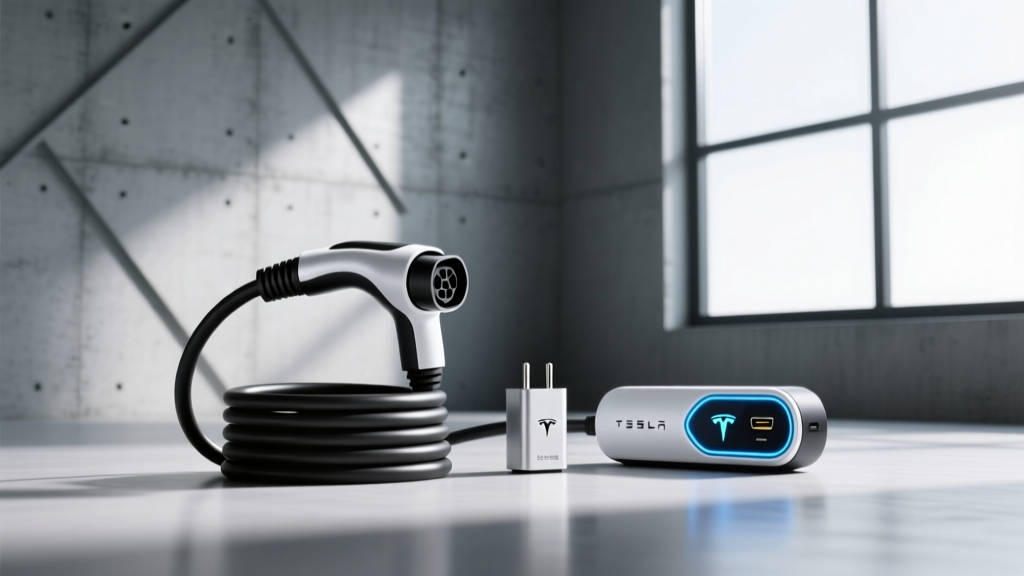
The Tesla Mobile Connector is a portable charging cable with a control box that mediates between a wall outlet and your vehicle's charge port. The bundle version includes the Mobile Connector unit itself plus a set of adapter plugs that allow you to connect to different outlet types — most commonly a standard NEMA 5-15 (120V household) and a NEMA 14-50 (240V, common for EV charging and large appliances).
As of 2026, Tesla ships the Mobile Connector with every new vehicle order, reversing the brief period in 2022 when it was removed and sold separately. The bundle retails for approximately $200 if purchased as an accessory from the Tesla Shop.
The Mobile Connector is not a DC fast charger. It handles AC power only — meaning it converts wall AC to the DC your battery stores using the vehicle's onboard charger. This limits its maximum power delivery compared to a Supercharger or third-party DC fast charger.
Charging Speeds by Outlet Type
The charge rate you get from the Mobile Connector depends entirely on the outlet you plug into and your vehicle's onboard charger capacity. Here is what to expect:
| Outlet Type | Voltage | Max Current | Power (kW) | Miles of Range Per Hour |
|---|---|---|---|---|
| NEMA 5-15 (standard household) | 120V | 12A | ~1.4 kW | 3–5 mi/hr |
| NEMA 5-20 | 120V | 16A | ~1.9 kW | 5–7 mi/hr |
| NEMA 14-50 | 240V | 32A | ~7.7 kW | 25–30 mi/hr |
| NEMA 6-50 | 240V | 32A | ~7.7 kW | 25–30 mi/hr |
| NEMA 10-30 (dryer, ungrounded) | 240V | 24A | ~5.8 kW | 18–22 mi/hr |
kW vs. kWh reminder: kW (kilowatts) measures the rate of energy flow — like water pressure from a hose. kWh (kilowatt-hours) measures total energy stored — like gallons in a tank. The Mobile Connector delivers power at a certain kW rate; your battery capacity in kWh determines how long a full charge takes.
A key limitation: the 2026 Mobile Connector maxes out at 32 amps on 240V circuits, delivering roughly 7.7 kW. Tesla's onboard chargers in the Model 3 and Model Y can accept up to 11.5 kW (48A) on Level 2, but the Mobile Connector hardware cannot deliver that. To unlock your car's full onboard charging capability at home, you need the Tesla Wall Connector (up to 11.5 kW / 48A on a 60A circuit).
Real-World Charging Times for Popular Tesla Models
How long does a full charge actually take with the Mobile Connector? Here are approximate times for a 10% to 80% charge — the range most owners use to preserve battery longevity — on a NEMA 14-50 outlet at 7.7 kW:
| Vehicle (2026) | Battery Capacity (kWh) | 10–80% Time at 7.7 kW | Overnight (10 hrs) Range Added |
|---|---|---|---|
| Model 3 RWD (LFP) | ~60 kWh usable | ~5.5 hours | ~250 miles |
| Model 3 Long Range AWD | ~75 kWh usable (NMC) | ~6.5 hours | ~250 miles |
| Model Y Long Range AWD | ~75 kWh usable (NMC) | ~6.5 hours | ~250 miles |
| Model S Long Range | ~95 kWh usable (NMC) | ~8.5 hours | ~250 miles |
| Model X Long Range | ~95 kWh usable (NMC) | ~8.5 hours | ~250 miles |
On a standard 120V NEMA 5-15 outlet at 1.4 kW, expect to add roughly 30–50 miles of range overnight (10 hours). This works for low-mileage commuters who drive under 40 miles round-trip daily, but it is not viable as a primary charging strategy for most owners.
Battery Chemistry Matters: LFP vs. NMC Charging Habits
Your Tesla's battery chemistry affects how you should use the Mobile Connector for daily charging:
| Factor | LFP (Lithium Iron Phosphate) | NMC (Nickel Manganese Cobalt) |
|---|---|---|
| Found in | Model 3 RWD, some Model Y RWD | Model 3/Y Long Range, Model S, Model X |
| Daily charge recommendation | 100% (Tesla recommends weekly 100%) | 80% daily; 100% only for trips |
| Energy density | Lower (heavier pack for same range) | Higher (lighter, more range) |
| Cold-weather performance | Slightly more range loss in cold | Better cold-weather retention |
| Cycle life / longevity | 3,000+ cycles typical | 1,500–2,000 cycles typical |
| Cost | Lower (contributes to lower vehicle MSRP) | Higher |
If you own an LFP-equipped Model 3 RWD, the Mobile Connector's slower speed is actually less of a concern for daily use, because Tesla recommends you charge to 100% regularly — giving you the full ~272 miles of EPA range to work with each morning. With NMC vehicles, you are typically using 80% of the pack daily, so total usable range from an overnight charge is effectively lower.
Tesla Vehicle Compatibility and Range Reference
The Mobile Connector works with all Tesla vehicles sold in North America via the proprietary Tesla charge port (which has adopted the NACS — North American Charging Standard — as the industry connector going forward). Here is a quick reference for the current 2026 lineup:
| Vehicle | EPA Range | Battery (kWh) | Chemistry | Efficiency (MPGe) | 0–60 mph | Base MSRP |
|---|---|---|---|---|---|---|
| Model 3 RWD | 272 mi | ~60 | LFP | 132 MPGe | 5.8s | $38,990 |
| Model 3 Long Range AWD | 341 mi | ~75 | NMC | 134 MPGe | 4.2s | $42,490 |
| Model Y Long Range AWD | 320 mi | ~75 | NMC | 122 MPGe | 4.8s | $44,990 |
| Model S Long Range | 402 mi | ~95 | NMC | 124 MPGe | 3.1s | $74,990 |
| Model X Long Range | 348 mi | ~95 | NMC | 116 MPGe | 3.8s | $79,990 |
Home Charging Setup: What You Need for the Mobile Connector
The Mobile Connector's versatility depends on having the right outlet. Here is what to consider:
NEMA 14-50 Installation
The NEMA 14-50 is the most popular outlet for Mobile Connector use. It requires a 50-amp dedicated circuit on a 240V line, typically installed by a licensed electrician. Expect installation costs of:
- Simple install (panel has capacity, outlet near parking spot): $300–$800
- Moderate install (longer wire run, new breaker): $800–$1,500
- Panel upgrade needed (older home with 100A service): $1,500–$3,000+
Always have a licensed electrician perform this work. The Mobile Connector draws sustained high current for hours — improper wiring is a fire risk. Tesla's installation guidance defers to local electrical codes and licensed professionals for final specifications.
Using Existing Dryer Outlets (NEMA 10-30 / 14-30)
If your garage or laundry area has an existing dryer outlet, Tesla sells adapter plugs (approximately $35 each) that let you use the Mobile Connector with NEMA 10-30 or 14-30 outlets at up to 24A / 5.8 kW. This is a cost-effective option if you can share the outlet with your dryer (unplugging when charging).
Mobile Connector vs. Wall Connector vs. Supercharger
Understanding where the Mobile Connector fits in Tesla's charging ecosystem helps you plan:
| Charging Method | Max Power (kW) | Typical Use Case | 10–80% Time (Model Y LR) |
|---|---|---|---|
| Mobile Connector (120V / NEMA 5-15) | 1.4 kW | Emergency / trickle top-up | ~50+ hours |
| Mobile Connector (240V / NEMA 14-50) | 7.7 kW | Daily overnight home charging | ~6.5 hours |
| Tesla Wall Connector (hardwired) | 11.5 kW | Primary home charging (fastest AC) | ~4.5 hours |
| Tesla Supercharger V3 | 250 kW (peak) | Road trips, quick top-ups | ~25–30 minutes |
| Tesla Supercharger V4 | Up to 350 kW (peak) | Next-gen road-trip charging | ~15–20 minutes |
The Mobile Connector at 7.7 kW is a solid daily driver for home charging. Most EV owners do 80%+ of their charging at home, and 7.7 kW overnight is more than enough to replenish a typical day's driving (30–60 miles). The Wall Connector's 11.5 kW advantage matters most when you arrive home with a near-empty battery and need a full charge by morning — or if you are charging a larger battery like the Model S/X's 95 kWh pack.
For road trips, the Mobile Connector is not a practical primary option. DC fast charging via the Supercharger network (250–350 kW peak) is the standard, adding 200+ miles in 15–25 minutes depending on the vehicle and charger generation. The Mobile Connector can serve as a backup at hotels or vacation rentals with 240V outlets.
Federal Tax Credit and Cost Considerations
The Tesla Mobile Connector Bundle itself ($200) does not qualify for any standalone federal tax credit. However, the home charging installation may qualify for the Alternative Fuel Vehicle Refueling Property Credit (IRS Form 8911), which covers up to 30% of home EV charging equipment and installation costs, capped at $1,000 — subject to census-tract eligibility requirements.
For the Tesla vehicles themselves, the §30D Clean Vehicle Credit offers up to $7,500 for qualifying new EVs, subject to:
- MSRP caps: $55,000 for sedans (Model 3); $80,000 for SUVs/pickups (Model Y, Model X)
- Buyer income limits: $150,000 single / $300,000 married filing jointly (modified AGI)
- Battery sourcing requirements: Critical minerals and battery component sourcing thresholds that tighten annually through 2032
- Point-of-sale transfer: As of 2024+, the credit can be transferred to the dealer at purchase, reducing your out-of-pocket cost immediately
As of 2026, the Model 3 RWD and Long Range and the Model Y Long Range typically qualify for at least partial credit depending on the buyer's income and the current battery-sourcing compliance level. The Model S and Model X exceed the MSRP cap for sedans and may or may not qualify under the SUV cap depending on trim. Always verify current eligibility at irs.gov before purchasing, as sourcing rules and qualifying vehicle lists update periodically.
Pros and Cons of the Tesla Mobile Connector Bundle
✅ Pros
- Included with every new Tesla (no extra cost at purchase)
- Works with standard 120V outlets anywhere — universal backup
- NEMA 14-50 support delivers adequate 7.7 kW for daily charging
- Portable — take it on road trips as a hotel/vacation-rental backup
- Multiple adapter options available (10-30, 14-30, 6-50, 14-50)
- Simple plug-and-play — no app or network required
❌ Cons
- Maxes out at 32A / 7.7 kW — cannot use full 48A onboard charger
- 120V charging is extremely slow (3–5 mi/hr) — not viable as primary
- Requires a 240V outlet installation for meaningful daily use
- No built-in cable management or wall-mount cradle (unlike Wall Connector)
- Not a substitute for DC fast charging on road trips
- Adapter plugs sold separately for less common outlets ($35 each)
Who Should Rely on the Mobile Connector (and Who Shouldn't)
Choose the Mobile Connector as your primary charger if: You drive under 80 miles per day, have access to a NEMA 14-50 outlet (or can install one affordably), and value portability for occasional travel. It handles daily commuting needs well at 7.7 kW.
Upgrade to a Wall Connector if: You regularly drive 100+ miles daily, own a Model S/X with a larger battery, want the fastest possible home charge (11.5 kW), or prefer a clean wall-mounted setup with cable management.
Rely primarily on Superchargers if: You cannot install any home charging (apartment/condo without outlet access). This is more expensive long-term and less convenient but viable with Tesla's extensive network.
Frequently Asked Questions
Can the Tesla Mobile Connector charge on a standard 120V outlet?
Yes. The included NEMA 5-15 adapter plugs into any standard household outlet and delivers approximately 1.4 kW, adding 3–5 miles of range per hour. This is suitable for emergency top-ups or very low-mileage drivers but is not practical as a daily charging solution for most owners.
Is the Tesla Mobile Connector Bundle included with new vehicles in 2026?
Yes. As of mid-2022, Tesla reinstated the Mobile Connector as standard equipment with every new vehicle delivery. It includes the connector unit and the NEMA 5-15 (120V) adapter. Additional adapters (14-50, 10-30, etc.) can be purchased separately from the Tesla Shop.
Can I use the Mobile Connector with non-Tesla EVs?
The Mobile Connector uses the Tesla/NACS connector. As of 2026, an increasing number of non-Tesla EVs (Ford, GM, Rivian, and others) have adopted NACS ports or offer NACS adapters. If your non-Tesla EV has a NACS port, the Mobile Connector will work. For CCS-equipped vehicles, it will not without a third-party adapter.
How does the Mobile Connector compare to a Level 2 public charger?
Public Level 2 chargers (ChargePoint, EVgo L2, etc.) typically deliver 6.6–19.2 kW. At 7.7 kW on a NEMA 14-50, your Mobile Connector performs similarly to a mid-range public Level 2 station. The advantage of home charging is convenience and lower cost (residential electricity rates vs. public charging fees, which often include per-minute or session fees).
Does the Mobile Connector support scheduled charging?
Yes, but scheduling is handled by the vehicle, not the connector. Through your Tesla's touchscreen or mobile app, you can set scheduled charging to begin during off-peak utility hours (e.g., midnight to 6 AM) to take advantage of time-of-use electricity rates. The Mobile Connector simply passes power through when the vehicle requests it.
What is the warranty on the Tesla Mobile Connector?
The Mobile Connector carries a 4-year limited warranty when purchased from Tesla. Your Tesla vehicle's battery and drive unit carry a separate warranty: 8 years / 100,000 miles for Model 3 RWD, and 8 years / 120,000 miles for Long Range and Performance variants, with a minimum 70% capacity retention guarantee.
Sources: Tesla.com specifications, fueleconomy.gov (EPA range/efficiency data), irs.gov (§30D credit rules). Pricing and eligibility subject to change; verify at time of purchase.