Search for "Tesla minivans" and you'll find a graveyard of renderings, rumors, and wishful thinking. As of 2026, Tesla does not produce a dedicated minivan — no sliding doors, no stow-and-go seating, no minivan badge. What Tesla does offer is the Model Y 7-seat configuration, a compact electric crossover with a cramped third row that attempts to fill the family-hauler gap. This review evaluates whether the Model Y's optional third row can genuinely replace a Chrysler Pacifica, Toyota Sienna, or Kia Carnival for your household — or if you're better off waiting (or looking elsewhere).
The Reality Check: Tesla's Minivan Situation in 2026
Tesla's lineup in 2026 consists of the Model 3 sedan, Model Y crossover, Model S sedan, Model X SUV, Cybertruck, and the Semi. A dedicated "Model V" minivan has never been officially announced by Tesla, despite years of speculation. Elon Musk has occasionally hinted at a "more affordable" vehicle, but no minivan platform has materialized on Tesla's investor roadmaps.
For families needing three rows of seating, Tesla's only current answer is the Model Y Long Range AWD with the optional third-row seat — a $2,000 add-on that transforms the 5-seat crossover into a 7-seater. It's not a minivan by any traditional definition, but it's the closest Tesla comes. Let's examine whether it's enough.
| Spec | Value |
|---|---|
| EPA Range | 305 miles (7-seat: ~295 miles est.) |
| Battery Capacity | 78.1 kWh usable (NMC chemistry) |
| Drivetrain | Dual-motor AWD |
| Horsepower | 384 hp combined |
| 0–60 mph | 4.8 seconds |
| Max DC Fast Charge | 250 kW peak (V3 Supercharger) |
| 10–80% DC Charge Time | ~25 minutes |
| Level 2 Charge Rate | 11.5 kW (44 mi/hr) |
| Efficiency | 122 MPGe combined / 27 kWh/100 mi |
| Cargo (behind 3rd row) | 12.0 cu ft |
| Cargo (3rd row folded) | 30.2 cu ft |
| Cargo (all seats folded) | 72.1 cu ft |
| Battery Warranty | 8 years / 120,000 miles |
| Base MSRP (7-seat) | $49,490 (incl. destination) |
Range and Efficiency: What You'll Actually Get
Real-World Highway (70 mph, mild weather): ~260–275 miles
Real-World Cold Weather (30°F, highway): ~210–235 miles
City / Suburban Mixed: ~275–295 miles
The Model Y Long Range AWD carries an EPA-estimated 310 miles in its standard 5-seat configuration. Adding the third row adds roughly 60–80 pounds and slightly alters aerodynamics, which trims the EPA estimate to approximately 295 miles. According to EPA data on fueleconomy.gov, the Model Y Long Range AWD achieves 122 MPGe combined, translating to about 27 kWh per 100 miles — among the most efficient three-row electric vehicles available.
In real-world highway driving at sustained 70–75 mph speeds, expect to use approximately 28–30 kWh/100 mi in moderate temperatures, yielding 260–275 miles before needing to charge. Cold weather is the great equalizer: at 30°F with cabin heat running, the NMC battery loses roughly 20–25% of effective capacity, and energy consumption climbs to 33–35 kWh/100 mi. That means winter road trips may net you only 210–235 miles of practical range before you're hunting for a Supercharger.
The Model Y's standard heat pump (introduced in the 2021 refresh) mitigates cold-weather losses compared to older EVs using resistive heating, but physics still applies. If your family lives in Minnesota or Maine and plans winter road trips, plan charging stops accordingly.
Charging Speed: Supercharger Network Advantage
| Charge Method | Power (kW) | Rate | Notes |
|---|---|---|---|
| Level 1 (120V outlet) | ~1.4 kW | ~5 mi/hr | Emergency only; 60+ hr for full charge |
| Level 2 (240V, 48A home) | 11.5 kW | 44 mi/hr | Full charge in ~7 hours; ideal overnight |
| DC Fast (V3 Supercharger) | 250 kW peak | ~162 mi in 15 min | 10–80% in ~25 min; tapers sharply above 80% |
| DC Fast (CCS adapter, 350 kW station) | ~170 kW sustained | Varies | Non-Tesla networks; use NACS-to-CCS adapter |
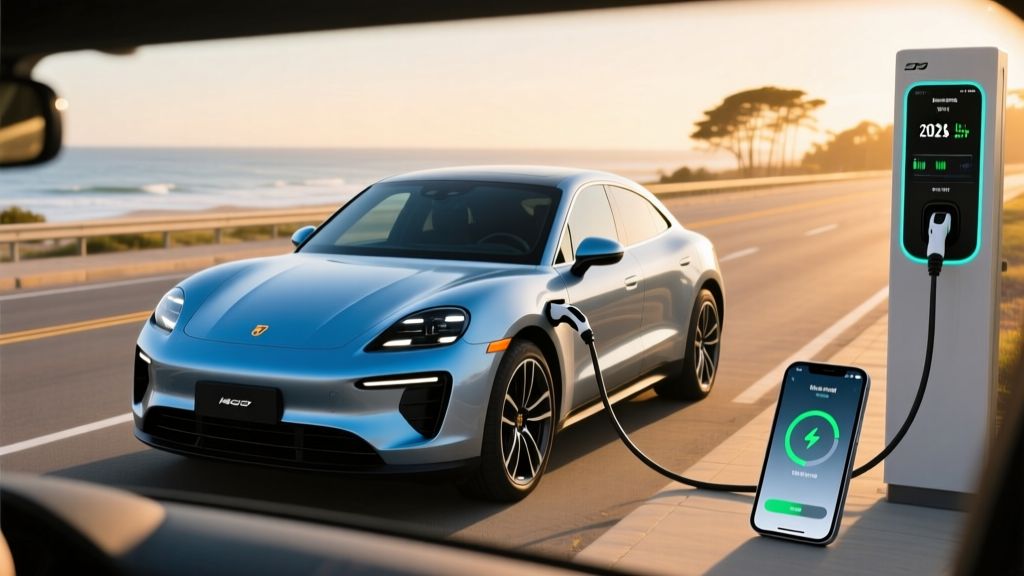
The Model Y Long Range supports up to 250 kW peak DC fast charging on Tesla's V3 Superchargers. In practice, the charge curve peaks near 250 kW between 10–30% State of Charge (SoC), holds around 150–175 kW through 50%, and tapers significantly above 80%. A 10–80% session takes approximately 25 minutes at a V3 stall — adequate for road-trip breaks but not class-leading.
For comparison, Hyundai/Kia's E-GMP platform (Ioniq 5, EV9) supports 350 kW peak charging and achieves 10–80% in roughly 18 minutes. The Model Y's charging speed is good but no longer best-in-class for 2026.
At home on a Level 2 Wall Connector (48 amps / 11.5 kW), the Model Y adds approximately 44 miles of range per hour. A depleted battery reaches full charge in about 7 hours — perfect for overnight replenishment. Home charging installation costs typically range from $800 to $2,500 depending on your electrical panel capacity and run distance, according to industry data. A 200-amp panel is generally sufficient; older homes with 100-amp service may require a $1,500–$3,000 panel upgrade.
As of 2026, Tesla's NACS (North American Charging Standard) connector is the de facto industry standard, with Ford, GM, Rivian, and others adopting it. Model Y owners have native access to over 20,000 Supercharger stalls in North America, plus a growing network of NACS-equipped third-party chargers.
Third-Row Practicality: Minivan or Compromise?
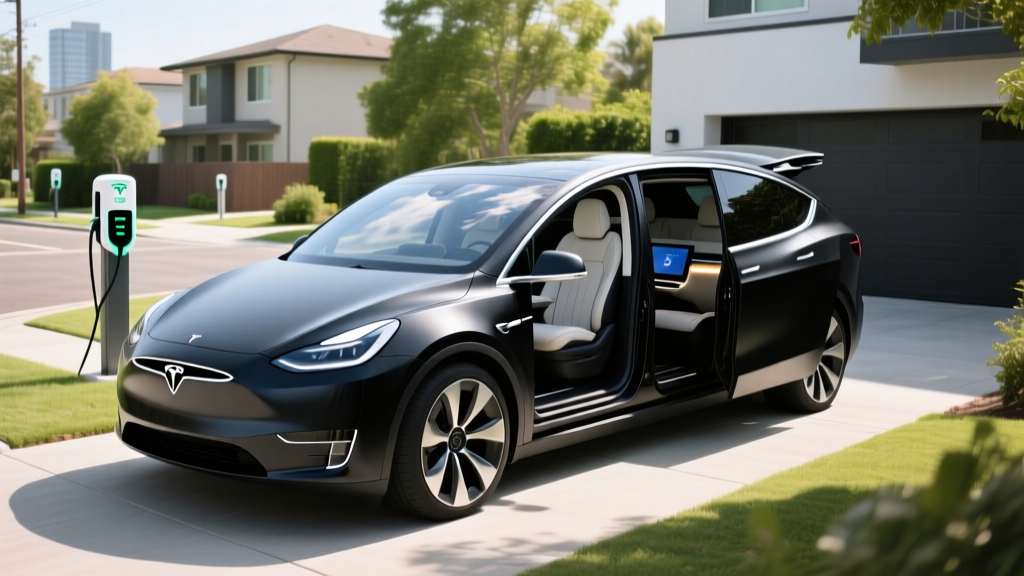
This is where the "Tesla minivan" fantasy meets reality. The Model Y's third row is best described as occasional-use seating for children or compact adults on short trips. Here's the dimensional breakdown:
- Third-row legroom: ~27.0 inches (vs. 36–41 inches in a Pacifica or Sienna)
- Third-row headroom: ~35.5 inches (sloping roofline limits taller passengers)
- Cargo behind 3rd row: 12.0 cu ft (fits 2–3 grocery bags or a small stroller — a Pacifica offers 32.3 cu ft behind its third row)
- Cargo with 3rd row folded: 30.2 cu ft (usable for a family road trip with luggage)
- Total cargo (all seats flat): 72.1 cu ft (competitive with midsize SUVs, well below minivans' 140+ cu ft)
The third-row seats are a 50/50 split that folds flat into the floor, which is clever engineering. However, the seating position is upright with knees-high — fine for kids under about 5'4" on a 20-minute school run, but uncomfortable for adults on a road trip. There are no dedicated third-row USB-C ports, cupholders, or climate vents in the 2026 Model Y — features standard in every modern minivan.
If your household regularly carries more than five people or needs accessible cargo with passengers aboard, the Model Y's third row is a compromise. If you need a third row 10% of the time (playdates, carpool duty), it's a viable solution that avoids the minivan footprint and price premium.
Pricing, Tax Credits, and Ownership Cost
| Configuration | MSRP | §30D Credit | Effective Price |
|---|---|---|---|
| Long Range AWD (5-seat) | $47,490 | Up to $7,500* | ~$39,990 |
| Long Range AWD (7-seat) | $49,490 | Up to $7,500* | ~$41,990 |
| Performance AWD (5-seat) | $52,490 | Up to $7,500* | ~$44,990 |
*Federal §30D tax credit eligibility depends on buyer income caps ($150k single / $300k joint MAGI), vehicle MSRP caps ($80,000 for SUVs), and battery critical-mineral/component sourcing requirements. Credit may be applied as a point-of-sale rebate at participating dealers or claimed on your tax return. Always verify current eligibility on IRS.gov and consult a tax professional.
The 2026 Model Y Long Range AWD starts at $47,490 (including $1,090 destination). The third-row option adds $2,000, bringing the 7-seat MSRP to $49,490. Under current IRS §30D rules, the Model Y qualifies as an SUV (benefiting from the $80,000 MSRP cap rather than the $55,000 sedan cap), making it eligible for the full $7,500 federal tax credit — provided your income falls within limits and Tesla's battery sourcing meets the critical-minerals and component-manufacturing requirements for the current tax year.
As of early 2026, Tesla's point-of-sale transfer option allows buyers to apply the credit directly at purchase, effectively reducing the 7-seat Model Y to approximately $41,990 before state incentives, taxes, or fees. Several states (California, Colorado, Massachusetts, New York) offer additional rebates of $1,000–$5,000 depending on income — check your state energy office for current programs.
Total cost of ownership remains a Tesla strong suit. Electricity costs average $0.13–$0.16/kWh nationally, making a full Model Y charge approximately $10–$13 for ~295 miles of range — about $0.04 per mile. A comparable gas minivan (Toyota Sienna at 36 MPG combined, $3.40/gal) costs approximately $0.09 per mile in fuel alone. Over 5 years at 15,000 miles/year, the Model Y saves roughly $3,750 in fuel costs. Add in eliminated oil changes, reduced brake wear (thanks to regenerative braking), and lower scheduled maintenance, and the Model Y's 5-year TCO undercuts a Sienna or Pacifica by $5,000–$8,000 despite a higher purchase price.
Performance, Tech, and Daily Driving
The Model Y Long Range AWD produces 384 horsepower from its dual-motor setup, hitting 0–60 mph in 4.8 seconds. That's sports-sedan acceleration in a 7-seat family vehicle — a minivan simply cannot match it. The Performance trim shaves that to 3.5 seconds, though it sacrifices ~20 miles of EPA range and the third-row option.
Ride quality in the 2026 Model Y has improved meaningfully over earlier builds, with revised damper tuning and acoustic glass reducing road noise. However, the Model Y still rides firmer than body-on-frame minivans; you'll feel expansion joints and potholes more acutely than in a Pacifica or Sienna.
Technology highlights include:
- 15.4-inch center touchscreen with Tesla's latest UI (no Apple CarPlay or Android Auto — Tesla's native system only)
- Over-the-air updates adding features post-purchase
- Tesla Vision-based Autopilot (SAE Level 2) with adaptive cruise, lane-keeping, and auto lane-change
- Full Self-Driving (Supervised) option — $8,000 upgrade for city-street navigation on autopilot, still requiring active driver supervision
- Sentry Mode dashcam recording, Dog Mode climate control, and theater-mode streaming while parked
- Frunk (front trunk) adding ~4.1 cu ft of secure cargo space
The biggest tech drawback for families: the lack of rear-seat entertainment screens. Minivans like the Pacifica offer built-in rear displays with HDMI inputs and streaming. Tesla's approach requires passengers to use their own devices — functional, but less integrated.
Competitor Comparison: Model Y 7-Seat vs. Electric and Hybrid Minivans
| Vehicle | Powertrain | Seats | EPA Range/MPG | Cargo (max) | MSRP |
|---|---|---|---|---|---|
| Tesla Model Y 7-Seat | BEV (AWD) | 7 | 295 mi / 122 MPGe | 72.1 cu ft | $49,490 |
| Kia EV9 GT-Line AWD | BEV (AWD) | 7 | 270 mi / 97 MPGe | 81.7 cu ft | $60,400 |
| Toyota Sienna (HEV) | Hybrid (FWD/AWD) | 7–8 | 36 MPG combined | 101.0 cu ft | $38,085 |
| Chrysler Pacifica PHEV | PHEV (FWD) | 7 | 32 mi EV + 30 MPG | 140.5 cu ft | $50,995 |
The Kia EV9 is the closest electric rival with genuine three-row usability — it's larger, roomier, and charges faster (350 kW capable), but starts $11,000 higher. The Toyota Sienna hybrid remains the efficiency king for families not ready to go electric, offering 36 MPG combined and 8-passenger seating at a lower entry price. The Chrysler Pacifica PHEV splits the difference: 32 miles of electric-only range for school runs, then hybrid efficiency for road trips — plus class-leading 140.5 cu ft of cargo with seats folded.
Choose the Kia EV9 if: You need a real third row for adults and more cargo space, and can absorb the higher price.
Choose the Sienna or Pacifica PHEV if: You regularly carry 5+ passengers, need maximum cargo flexibility, or lack reliable home charging for a full BEV.
- Best-in-class efficiency (122 MPGe, ~$0.04/mi)
- Supercharger network reliability for road trips
- 0–60 in 4.8s — performance minivans can't touch
- $7,500 federal tax credit eligibility (with caveats)
- Low maintenance costs, OTA updates
- Strong resale value trajectory
- Third row is cramped — kids only, short trips
- 12 cu ft cargo behind 3rd row is severely limited
- No sliding doors, no stow-and-go, no minivan flexibility
- No rear-seat entertainment screens
- FSD is expensive and still Level 2, not autonomous
- Cold-weather range loss requires trip planning
Frequently Asked Questions
Does Tesla make a minivan in 2026?
No. Tesla does not produce a dedicated minivan. The closest option is the Model Y with an optional third-row seat (7-passenger configuration), available on the Long Range AWD trim for a $2,000 add-on. Tesla has not officially announced a minivan model as of early 2026.
What is the real-world range of the Tesla Model Y 7-seat?
The EPA estimates approximately 295 miles for the 7-seat Long Range AWD. In real-world highway driving at 70 mph, expect 260–275 miles. In cold weather (below freezing), range drops to roughly 210–235 miles due to battery chemistry limitations and cabin heating demands.
How fast does the Model Y charge at home and on the road?
On a Level 2 home charger (48A/11.5 kW), the Model Y adds about 44 miles per hour and fully charges in ~7 hours. On a V3 Supercharger (250 kW peak), it achieves 10–80% in approximately 25 minutes, though charging speed tapers significantly above 80% SoC.
Does the Model Y 7-seat qualify for the $7,500 federal tax credit?
It can, but eligibility is not automatic. Under IRS §30D rules, the buyer must meet income caps ($150,000 single / $300,000 joint MAGI), the vehicle MSRP must be under $80,000 (the Model Y qualifies as an SUV), and the battery must meet critical-mineral and component-sourcing requirements for the current tax year. The credit can be transferred at point of sale. Always verify on IRS.gov and consult a tax professional.
Is the Model Y 7-seat worth it over a traditional minivan?
It depends on your use case. If you need a third row only occasionally for children, value low running costs, and have home charging, the Model Y is a compelling alternative. If you regularly carry 5+ passengers, need maximum cargo space, or require sliding-door convenience, a Toyota Sienna, Kia Carnival, or Chrysler Pacifica remains the better tool for the job.
What is the battery warranty on the Model Y?
Tesla covers the Model Y's battery and drive unit for 8 years or 120,000 miles, whichever comes first, with a minimum 70% capacity retention guarantee over that period. This is competitive with industry standards and provides long-term ownership confidence.