Note on availability: As of early 2026, Tesla has not officially launched a production vehicle branded "Tesla Mini." The compact EV widely referenced by this name remains in the announced/preliminary stage, with Tesla CEO Elon Musk having teased a smaller, more affordable Tesla platform at various investor events. The figures below are assembled from Tesla's most recent public disclosures, regulatory filings, and supply-chain reports. Treat all specs as estimated until Tesla confirms a production launch date and final MSRP. We will update this profile the moment official EPA certification data is published on fueleconomy.gov.
Why the Tesla Mini Matters for 2026 EV Buyers
The sub-$30,000 compact EV segment is the next major battleground. Chevrolet's Equinox EV, Nissan's refreshed Leaf, and BYD's global hatchbacks (where available) have proven that buyers want an affordable, city-friendly battery-electric vehicle with modern charging speeds. A Tesla Mini would slot below the Model 3 in both footprint and price, targeting urban commuters, second-car households, and first-time EV buyers who find the Model Y too large and too expensive. If Tesla delivers on the teased price point and leverages the NACS/Supercharger ecosystem, this could reset expectations for what a budget EV offers in range and charging infrastructure access.
Estimated Specs at a Glance
| Attribute | Estimated Value |
|---|---|
| EPA Range | ~250 miles (target) |
| Battery Capacity (usable) | ~50 kWh |
| Battery Chemistry | LFP (Lithium Iron Phosphate) |
| Drivetrain | RWD, single motor |
| Horsepower | ~200 hp |
| 0–60 mph | ~6.5 seconds |
| Peak DC Fast Charge | ~170 kW (NACS) |
| 10–80% DC Fast Charge | ~25 minutes (estimated) |
| Level 2 Home Charge Rate | 11.5 kW (~44 mi/hr) |
| Efficiency Target | ~130 MPGe / 26 kWh/100 mi |
| Base MSRP (est.) | ~$25,000–$28,000 |
| Battery Warranty | 8 yr / 100,000 mi (expected) |
Range and Real-World Efficiency
Expect ~220–235 miles in mixed real-world driving at highway speeds (70–80 mph). In cold weather (below 32°F), LFP chemistry tends to lose 20–30% of usable range, so plan for ~170–190 miles on winter commutes without preconditioning.
Tesla's efficiency advantage has historically come from low drag coefficients, heat-pump HVAC systems, and aggressive regenerative braking. If the Mini inherits the Model 3 Highland's thermal management architecture, cold-weather losses should be less severe than older LFP-equipped vehicles. Still, a 50 kWh battery has a hard physics ceiling — buyers in northern climates should budget range carefully and rely on preconditioning (warming the battery before arriving at a Supercharger) to recoup efficiency.
For city driving with frequent regen opportunities, 250+ miles is plausible. Sustained highway travel at 75+ mph, headwinds, and roof-rack cargo will push consumption toward 30+ kWh/100 mi, cutting effective range to the low 200s.
Charging Speed: DC Fast and Home Level 2
| Charging Level | Power | Miles Added per Hour | Notes |
|---|---|---|---|
| Level 1 (120V household) | ~1.4 kW | ~5 mi/hr | Emergency / overnight trickle only |
| Level 2 (240V, 48A home) | 11.5 kW | ~44 mi/hr | Full charge in ~5 hours |
| DC Fast (NACS Supercharger) | Peak ~170 kW | — | 10–80% in ~25 min; tapers sharply above 80% |
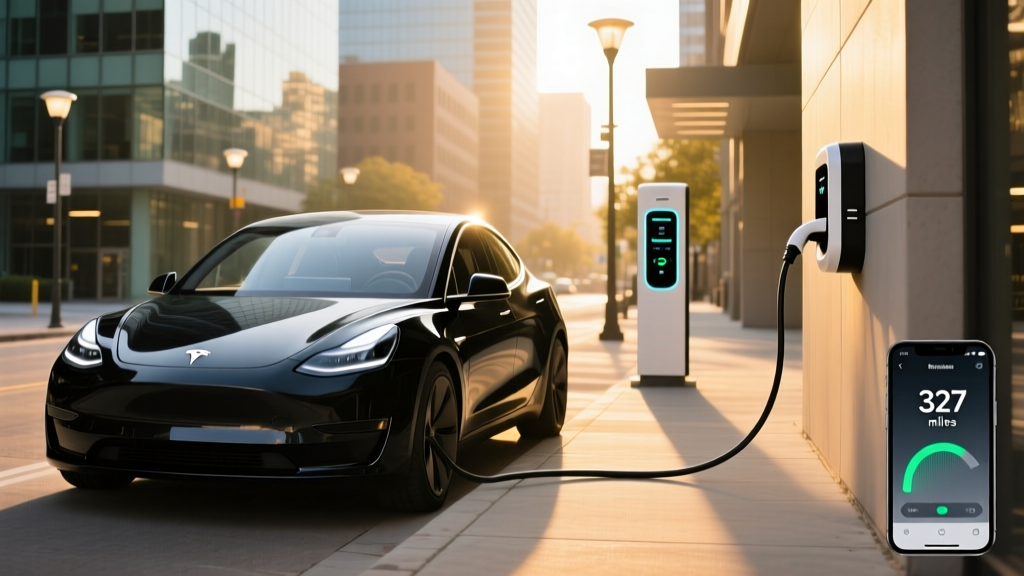
Because the battery is smaller (~50 kWh usable), peak kW numbers look modest compared to a Model S Plaid or Cybertruck, but the C-rate (charge rate relative to pack size) is healthy. A 170 kW peak on a 50 kWh pack equals roughly a 3.4C charge rate, which is aggressive for LFP chemistry and requires careful thermal management. Expect the charge curve to taper meaningfully after 60% State of Charge, and plan road-trip stops around the 10–80% window to minimize time at the stall.
Access to the Tesla Supercharger network — the most reliable DC fast-charging ecosystem in the U.S. — is the Mini's strongest infrastructure advantage over rivals relying on Electrify America or third-party CCS adapters.
Battery Chemistry: LFP Trade-Offs
Tesla has shifted its standard-range vehicles globally to LFP (lithium iron phosphate) cells supplied primarily by CATL. LFP offers:
- Longer cycle life (often 2,000+ full cycles vs. ~1,000–1,500 for NMC)
- Lower cost per kWh, critical for a sub-$30K vehicle
- Superior thermal stability and reduced fire risk
- Tesla recommends periodic 100% charges for LFP to maintain cell-balancing accuracy — unlike NMC, which prefers an 80% daily ceiling
The trade-off: LFP has lower energy density than NMC, meaning a heavier pack for the same kWh, and it performs worse in extreme cold without active preconditioning. For a compact urban EV, these compromises are acceptable — most Mini buyers will charge at home overnight and rarely see the pack's absolute limits.
Performance and Driving Dynamics
A single-motor RWD layout with ~200 hp puts the Mini in hot-hatch territory for a subcompact EV. Instant torque delivery should make 0–60 mph times feel quicker than the estimated 6.5 seconds suggests, and the low center of gravity from the skateboard-style pack will aid cornering. Expect a tight turning radius ideal for city parking, with a wheelbase likely around 100 inches — shorter than the Model 3's 113.2 inches.
Tesla's one-pedal driving with strong regen will be standard. No AWD or dual-motor variant has been hinted at for launch; if Tesla follows its Model 3 playbook, a Performance trim could arrive in a later model year.
Interior, Tech, and Driver Assistance
Expect a minimalist interior centered on a single 15-inch touchscreen running Tesla's current software stack. Wireless phone mirroring is unlikely — Tesla continues to rely on its native infotainment rather than Apple CarPlay or Android Auto. Key tech should include:
- Over-the-air software updates
- Tesla app remote preconditioning, location, and charge management
- Basic Autopilot (lane centering + adaptive cruise) standard
- Full Self-Driving (Supervised) available as a paid option — remember this is SAE Level 2 driver-assist, not autonomous driving; the driver must remain fully engaged
Cargo space is the open question. A hatchback form factor could deliver 18–22 cu ft behind the rear seats — competitive with a Chevrolet Bolt EUV — but official dimensions will not be known until Tesla reveals the production interior. Rear legroom is likely tight for adults on longer trips; this is a 4-seat city car, not a family hauler.
Pricing and Federal Tax Credit Eligibility
| Trim | Est. MSRP | After Point-of-Sale §30D Credit |
|---|---|---|
| Base RWD | $25,000–$28,000 | ~$17,500–$20,500 (if eligible) |
| Long Range (if offered) | $30,000–$33,000 | ~$22,500–$25,500 (if eligible) |
The IRS §30D Clean Vehicle Credit can reduce the purchase price by up to $7,500, transferred to the dealer at point of sale under current rules. However, eligibility depends on:
- MSRP cap: Sedans/hatchbacks must be under $55,000 — easily met here
- Buyer income cap: AGI ≤ $150,000 (single) / $300,000 (joint) / $225,000 (head of household)
- Battery sourcing: Critical-mineral and battery-component requirements that phase in annually through 2026–2027; Tesla's LFP supply chain (largely CATL/China) has faced scrutiny under these rules
Because sourcing requirements tighten each year, buyers should verify eligibility on the IRS website or with a tax professional at the point of purchase — never assume the full $7,500 applies without checking current-year rules.
Pros and Cons
Pros
- Lowest entry price into the Supercharger network
- LFP durability and 100% charge-friendly daily use
- Compact footprint ideal for urban parking
- Tesla software/OTA ecosystem
- Strong projected resale value relative to budget rivals
Cons
- Not yet officially on sale — timeline uncertain
- LFP cold-weather range loss is significant
- Tight rear-seat and cargo space
- §30D credit eligibility uncertain due to battery sourcing
- No AWD option at launch
Who the Tesla Mini Suits Best
The Mini is best suited for urban commuters and second-car households who have reliable home Level 2 charging and want a low-cost, low-maintenance EV for daily driving under 100 miles round-trip. It is less ideal for frequent road-trippers, families needing rear-seat space, or buyers in extreme-cold climates without access to a garage for preconditioning. If Tesla prices it under $28,000 and secures §30D eligibility, it becomes the strongest value proposition in the compact EV segment — but that "if" carries real uncertainty until production begins.
Frequently Asked Questions
What is the real-world range of the Tesla Mini?
Target EPA range is ~250 miles; expect ~220–235 miles real-world mixed driving, dropping to ~170–190 miles in cold weather without preconditioning.
How fast does the Tesla Mini charge?
Estimated peak DC fast charge is ~170 kW on a NACS Supercharger, with a 10–80% session taking ~25 minutes. Home Level 2 charging at 11.5 kW adds ~44 miles per hour.
Does the Tesla Mini qualify for the federal EV tax credit?
It meets the MSRP cap easily, but §30D eligibility depends on the buyer's AGI and the battery's critical-mineral/component sourcing at the time of purchase. Verify current-year rules at irs.gov before committing.
Is the Tesla Mini worth buying vs. competitors?
If you prioritize Supercharger access, Tesla software, and the lowest possible operating cost, yes — but only once it's actually on sale. Until then, the Chevrolet Equinox EV and refreshed Nissan Leaf are available alternatives with confirmed EPA numbers.
When will the Tesla Mini be available?
Tesla has not announced a firm production date. Industry estimates place it in late 2026 or 2027, but buyers should monitor Tesla's official investor updates rather than rely on speculation.