Why Tesla's Mining Strategy Matters for Your Next EV Purchase
When most shoppers research the Tesla Model Y, they focus on range, price, and Autopilot. Few consider where the raw materials inside the battery pack actually come from — and why that directly affects what you pay, whether you qualify for the federal tax credit, and how long your battery will last. Tesla's vertical integration into lithium mining and refining, particularly through its Nevada lithium operations and long-term supply contracts, has reshaped the 2026 Model Y's battery chemistry, pricing stability, and §30D tax-credit eligibility in ways competitors can't yet match.
This review covers the 2026 Tesla Model Y Long Range AWD and Performance trims through the lens of Tesla's supply-chain strategy — connecting the dots between mine, cell, pack, and your driveway.
2026 Model Y: Core Specifications at a Glance
| Spec | Long Range AWD | Performance |
|---|---|---|
| EPA Range | 330 miles | 300 miles |
| Battery (usable) | ~75 kWh (NMC) | ~75 kWh (NMC) |
| Drivetrain | Dual-motor AWD | Dual-motor AWD |
| Horsepower | ~384 hp | ~456 hp |
| 0–60 mph | 4.8 sec | 3.5 sec |
| Efficiency (MPGe) | 122 MPGe combined | 111 MPGe combined |
| Efficiency (kWh/100 mi) | 28 kWh/100 mi | 30 kWh/100 mi |
| Max DC Fast Charge | 250 kW (V3 Supercharger) | 250 kW (V3 Supercharger) |
| 10–80% DC Time | ~25 min | ~25 min |
| Level 2 Home Charge | 11.5 kW / ~44 mi/hr | 11.5 kW / ~44 mi/hr |
| Cargo (rear seats up) | 30.2 cu ft | 30.2 cu ft |
| Cargo (rear seats folded) | 72.0 cu ft | 72.0 cu ft |
| Base MSRP | $44,990 | $49,990 |
| Battery Warranty | 8 yr / 120,000 mi | 8 yr / 120,000 mi |
Source: fueleconomy.gov and Tesla's official specifications.
Real-World Range: What the EPA Sticker Doesn't Tell You
EPA sticker: 330 miles
Highway-heavy driving (70–75 mph): expect ~270–290 miles
Cold weather (below 32°F): expect ~220–250 miles (20–30% reduction)
Mixed city/highway, mild climate: ~300–315 miles
The 2026 Model Y Long Range's 330-mile EPA estimate is among the best in its class, but real-world results depend heavily on driving style, terrain, and ambient temperature. Tesla's heat pump — standard since the 2021 refresh — significantly reduces cold-weather cabin-heating losses compared to earlier resistive-heater EVs, but lithium-ion chemistry still loses efficiency below freezing. On a 300-mile road trip at sustained highway speeds, plan for one 20-minute Supercharger stop to stay comfortable.
The Performance trim sacrifices roughly 30 miles of EPA range for its higher-output rear motor and stickier tires, landing at 300 miles EPA. That's still competitive with the Ford Mustang Mach-E Extended Range AWD (300 mi EPA) and well ahead of the Hyundai Ioniq 5 AWD (290 mi EPA).
Charging Speed: Tesla's Supercharger Advantage
Charging speed is where Tesla's supply-chain control translates into a tangible ownership advantage. The 2026 Model Y supports a peak DC fast-charge rate of 250 kW on Tesla's V3 Supercharger network, adding up to ~200 miles of range in 15 minutes under optimal conditions (low state of charge, preconditioned battery, moderate ambient temperature).
| Charging Level | Power (kW) | Miles Added per Hour | Typical Use Case |
|---|---|---|---|
| Level 1 (120V) | ~1.4 kW | ~5 mi/hr | Emergency / overnight trickle |
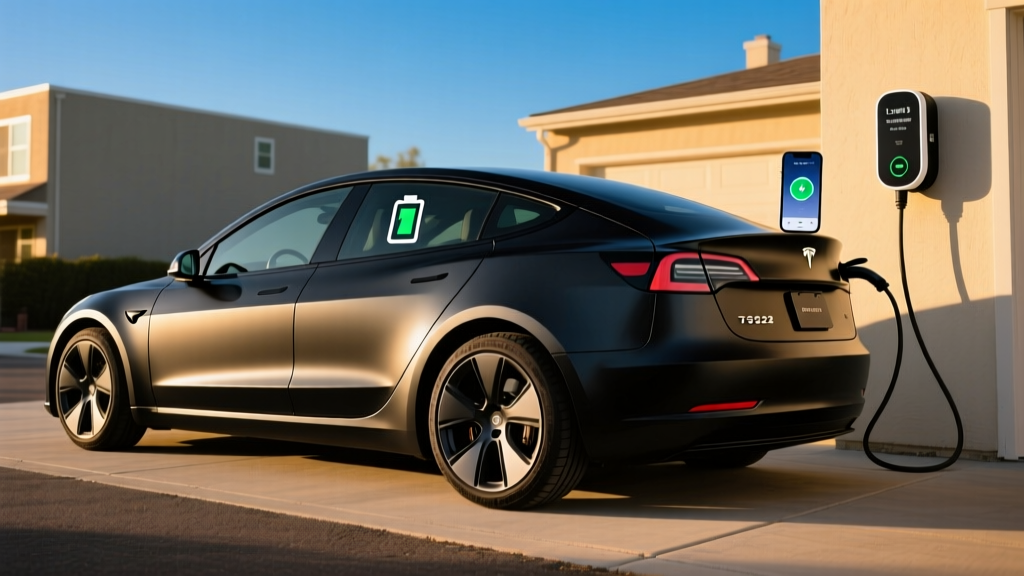
| Level 2 (240V, 48A) | 11.5 kW | ~44 mi/hr | Home Wall Connector / workplace |
| DC Fast (V3 Supercharger) | Peak 250 kW | ~1,000 mi/hr (peak) | Road trips, rapid top-ups |
Charge-curve reality: The 250 kW peak only holds between roughly 10–30% state of charge. Above 50%, the rate tapers to ~100 kW, and above 80% it drops further to ~40 kW. This is standard lithium-ion behavior — the battery management system slows current to protect cell health. A 10–80% session takes approximately 25 minutes; 10–90% adds another 12–15 minutes. Tesla's battery preconditioning — triggered automatically when you navigate to a Supercharger — warms the pack to the optimal temperature for maximum charge acceptance, a feature that still outperforms most competitors in consistency.
With the North American Charging Standard (NACS) now adopted by Ford, GM, Rivian, Hyundai, and others, Tesla Superchargers are opening to non-Tesla EVs. However, Tesla owners still benefit from seamless plug-and-charge integration, automatic billing, and preferential pricing at many stations.
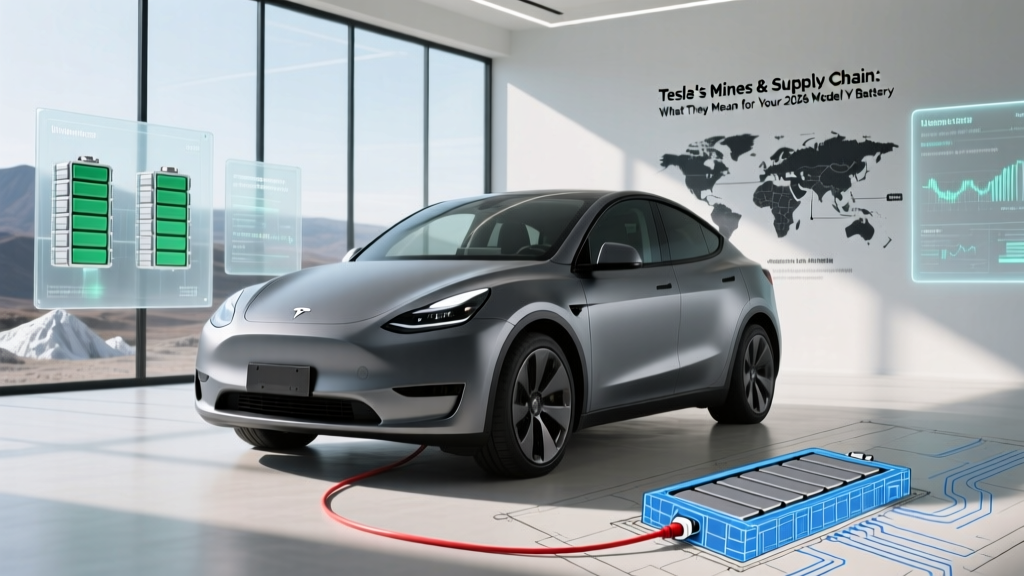
Tesla's Mines: How Lithium Sourcing Shapes Your Battery
The phrase "Tesla mines" has gained traction as the company has invested heavily in securing raw lithium — the single most critical input for EV battery cells. Tesla's strategy includes:
- Nevada lithium deposit (Kings Mountain, NC): Tesla acquired mining rights to a large spodumene lithium deposit and is developing a refinery to process raw lithium into battery-grade lithium hydroxide domestically. As of 2026, the refining operation is ramping toward commercial production.
- Long-term supply contracts: Tesla holds multi-year agreements with lithium producers including Albemarle, Livent (now Arcadium Lithium), and Piedmont Lithium, securing both volume and pricing stability.
- 4680 cell production: Tesla's in-house 4680 cylindrical cells, produced at Giga Texas, use a proprietary dry-cathode manufacturing process that reduces energy and solvent use during production. The 2026 Model Y incorporates a mix of 4680 and supplier-sourced 2170 cells depending on production batch.
What this means for buyers: Tesla's domestic lithium sourcing is directly tied to federal §30D tax-credit eligibility. Under the Inflation Reduction Act's critical-minerals requirement, a qualifying EV must source a percentage of its battery minerals from the U.S. or a free-trade-agreement partner. Tesla's increasing use of North American lithium gives the 2026 Model Y a structural advantage over competitors still reliant on Chinese-processed minerals. Additionally, vertically integrated supply reduces Tesla's exposure to the volatile lithium spot market — helping stabilize vehicle pricing even when raw-material costs spike.
Battery Chemistry: NMC in the Long Range and Performance
The 2026 Model Y Long Range and Performance trims use nickel-manganese-cobalt (NMC) chemistry in a ~75 kWh (usable) pack. NMC offers higher energy density than lithium iron phosphate (LFP), which is why Tesla reserves LFP for the lower-cost Standard Range (RWD) trim. The trade-off:
| Factor | NMC (Long Range / Performance) | LFP (Standard Range RWD) |
|---|---|---|
| Energy density | Higher — enables 330-mi range | Lower — ~260–280 mi range |
| Recommended daily charge | 80% (to reduce degradation) | 100% (LFP tolerates full charge) |
| Cold-weather performance | Moderately better at low temps | More range loss in extreme cold |
| Cycle life | ~1,000–1,500 full cycles | ~2,000–3,000+ full cycles |
| Cobalt content | Low-cobalt NMC, but nonzero | Zero cobalt |
If you charge at home nightly and rarely need the full 330 miles in a single day, NMC's 80% daily-charge recommendation is a non-issue. Set the charge limit in the Tesla app, and the car handles the rest. For buyers who want to charge to 100% daily without concern, the LFP-equipped Standard Range model is worth considering — though you'll trade roughly 50–70 miles of EPA range.
Pricing, Tax Credits, and True Cost
The 2026 Model Y starts at $44,990 for the Long Range AWD and $49,990 for the Performance trim, both before destination fees and options. Tesla's pricing has stabilized considerably since the volatile 2022–2023 period, partly thanks to the supply-chain control described above.
| Trim | Base MSRP | §30D Credit (potential) | Effective Price |
|---|---|---|---|
| Long Range AWD | $44,990 | Up to $7,500 | ~$37,490 |
| Performance | $49,990 | Up to $7,500 | ~$42,490 |
Critical eligibility rules for §30D (2026 tax year):
- MSRP cap: SUVs must be priced at or below $80,000. Both Model Y trims qualify easily.
- Buyer income cap: Modified adjusted gross income (MAGI) must not exceed $150,000 (single), $225,000 (head of household), or $300,000 (married filing jointly).
- Critical-minerals requirement: A percentage of battery minerals must be sourced from the U.S. or FTA partners — Tesla's domestic lithium refining directly supports compliance. The required percentage increases annually under IRA rules.
- Battery-component sourcing: Battery components must be manufactured or assembled in North America, with foreign-entity-of-concern (FEOC) restrictions tightening through 2026.
- Point-of-sale transfer: As of 2024, the credit can be transferred to the dealer at purchase, reducing your out-of-pocket cost immediately rather than waiting for tax filing. Tesla participates in this program.
Verify current eligibility on IRS.gov §30D page and confirm specific VIN eligibility before purchasing. Rules are subject to change.
Driving Impressions, Tech, and Daily Ownership
The 2026 Model Y continues to deliver the driving dynamics that have kept it the best-selling EV in the U.S. The dual-motor AWD system provides confident traction in rain and light snow, and the regenerative braking — adjustable between standard and low — enables one-pedal driving in most city conditions. Ride quality has improved with the 2025 suspension refresh, reducing the firmness that earlier Model Y owners criticized on rough pavement.
Standout tech features:
- 15.4-inch center touchscreen with Tesla's latest UI, including native navigation with real-time Supercharger availability and routing
- Autopilot (standard) — SAE Level 2 driver assistance including adaptive cruise, lane centering, and automatic emergency braking. The driver must remain engaged at all times.
- Full Self-Driving (Supervised) — optional $8,000 upgrade adding Navigate on Autopilot, Auto Lane Change, Autopark, and traffic-light recognition. Still SAE Level 2 — not autonomous.
- Over-the-air updates that continue to add features post-purchase, including UI refinements, efficiency tweaks, and entertainment options
- Sentry Mode and dashcam recording using the vehicle's external cameras
Notable drawbacks:
- No physical instrument cluster — all information is on the center screen, which some drivers find distracting
- Turn-signal stalks removed on refreshed models; signals are now on the steering wheel, a polarizing design choice
- Rear-seat legroom (41.6 inches) is adequate but trails the Hyundai Ioniq 5 (41.7 in) and is tighter than some family-oriented SUVs
- Insurance costs run 15–25% above comparable gas-powered compact SUVs in most states, reflecting Tesla's higher repair costs and parts pricing
- Class-leading 330-mi EPA range (Long Range)
- Access to Tesla Supercharger network — most reliable DC fast-charging in the U.S.
- Strong §30D tax-credit eligibility due to domestic lithium sourcing
- Best-in-class efficiency (28 kWh/100 mi)
- Continuous OTA improvements
- 72 cu ft cargo with seats folded
- Steering-wheel turn signals take adjustment
- No physical instrument cluster or HUD
- Insurance premiums above segment average
- FSD (Supervised) is expensive and still Level 2
- 250 kW peak charge rate trails Hyundai/Kia's 800V / 350 kW capability
Who the 2026 Model Y Is For
Best suited for: Daily commuters with home Level 2 charging who want maximum range and efficiency, small families needing practical cargo space, and road-trippers who value the Supercharger network's reliability and coverage. The Model Y Long Range is particularly compelling for buyers in states with high electricity costs, where its class-leading 28 kWh/100 mi efficiency translates directly into lower charging bills.
Consider alternatives if: You need three rows of seating (look at the Kia EV9 or Rivian R1S), you want the fastest possible DC charging (Hyundai Ioniq 5 N charges at up to 350 kW on compatible chargers), or you prefer a traditional instrument cluster and physical controls.
Frequently Asked Questions
What is the real-world range of the 2026 Tesla Model Y?
The Long Range AWD is EPA-rated at 330 miles. In mixed real-world driving, expect 300–315 miles. Sustained highway driving at 70+ mph drops this to roughly 270–290 miles, and cold weather (below 32°F) can reduce range to 220–250 miles depending on cabin-heating demand and whether you precondition the battery.
How fast does the Model Y charge at home and on the road?
On a Level 2 home charger (240V, 48A), the Model Y charges at 11.5 kW, adding roughly 44 miles of range per hour — a full overnight session restores 250+ miles. On a V3 Supercharger, it peaks at 250 kW and charges from 10–80% in approximately 25 minutes. Actual speed depends on battery temperature, state of charge, and charger availability.
Does the 2026 Model Y qualify for the $7,500 federal EV tax credit?
Both trims are under the $80,000 SUV MSRP cap, and Tesla's increasing use of North American lithium and battery components positions the Model Y favorably under §30D's critical-minerals and battery-sourcing requirements. However, buyer income caps apply ($150K single / $300K joint), and sourcing rules tighten annually. Confirm VIN-specific eligibility on fueleconomy.gov and the IRS clean vehicle credits page before purchasing.
Is the Model Y worth buying vs. the Hyundai Ioniq 5 or Ford Mach-E?
The Model Y Long Range wins on EPA range (330 vs. 290–300 mi), efficiency, and Supercharger-network access. The Ioniq 5 counters with faster 800V DC charging (350 kW capable), a more distinctive design, and physical controls. The Mach-E offers a sportier driving feel and Ford dealer service access. If Supercharger reliability and maximum range are your priorities, the Model Y remains the benchmark. If you want faster DC charging or prefer traditional controls, the Ioniq 5 is a strong alternative.
What are Tesla's lithium mines, and do they affect my car?
Tesla holds mining rights to a large lithium deposit in Nevada and is building a domestic lithium refinery. This vertical integration helps secure battery-mineral supply, stabilize vehicle pricing, and support compliance with the IRA's critical-minerals requirements — directly affecting whether the Model Y qualifies for the full $7,500 §30D tax credit in your purchase year.
How long will the Model Y battery last?
Tesla warranties the battery and drive unit for 8 years or 120,000 miles (whichever comes first), guaranteeing at least 70% capacity retention over that period. Real-world data from Tesla's fleet reports suggest NMC packs in the Model Y degrade roughly 10–12% over the first 100,000 miles, with the curve flattening significantly thereafter. Many Model Y packs are projected to retain 80%+ capacity at 150,000 miles under normal use patterns.