The Truth About a Tesla Military Discount
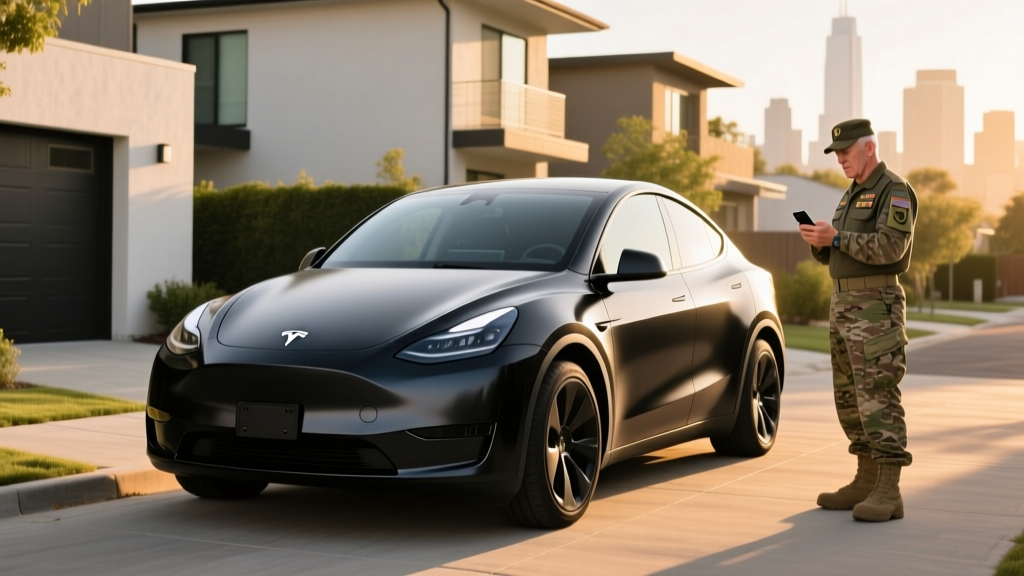
Search for "military discount Tesla" and you'll find forum threads, wishful blog posts, and third-party sites promising savings that don't exist. Let's be direct: Tesla does not offer an official military discount on new vehicles, accessories, or charging. Unlike Ford, GM, and BMW — which run verified military appreciation programs through ID.me or dealer networks — Tesla's direct-to-consumer model means the price you see on tesla.com is the price every buyer pays, regardless of service status.
That doesn't mean service members, veterans, and military families are out of luck. Between the federal EV tax credit under IRS §30D, state-level rebates, Tesla's periodic referral incentives, and military-specific auto loan rates from organizations like USAA and Navy Federal Credit Union, the effective savings on a 2026 Model 3 or Model Y can rival or exceed what traditional automakers advertise as "military pricing." Below, we break down the real numbers, the real discounts, and which Tesla model makes the most financial sense for military buyers in 2026.
2026 Tesla Lineup: Pricing, Range, and Specs at a Glance
Tesla's 2026 U.S. lineup centers on the refreshed Model 3 (Highland) and Model Y (Juniper), alongside the Cybertruck, Model S, and Model X. Here are the figures that matter for purchase decisions:
| Model / Trim | Base MSRP | EPA Range | Battery (kWh / Chemistry) | 0-60 mph | Drivetrain |
|---|---|---|---|---|---|
| Model 3 RWD | $38,990 | 272 mi | ~60 kWh / LFP | 5.8s | RWD |
| Model 3 Long Range AWD | $45,990 | 363 mi | ~82 kWh / NMC | 4.2s | Dual-Motor AWD |
| Model 3 Performance | $52,990 | 315 mi | ~82 kWh / NMC | 2.9s | Dual-Motor AWD |
| Model Y Long Range AWD | $46,990 | 320 mi | ~82 kWh / NMC | 4.8s | Dual-Motor AWD |
| Model Y Performance | $51,490 | 298 mi | ~82 kWh / NMC | 3.5s | Dual-Motor AWD |
| Cybertruck AWD | $79,990 | 340 mi | ~123 kWh / NMC | 4.1s | Tri-Motor AWD |
Sources: EPA / fueleconomy.gov, Tesla.com (2026 model-year listings). Prices exclude destination fees ($1,390–$1,990 depending on model).
Real-World Range vs. EPA Sticker: What to Actually Expect
For the Model 3 Long Range AWD (EPA 363 mi), owners consistently report 300–320 miles on warm-weather highway runs and 250–280 miles in winter conditions at highway speeds. The Model 3 RWD with its LFP battery (EPA 272 mi) is more tolerant of daily 100% charging, which partially offsets its smaller pack — but cold-weather highway range can dip to around 190–200 miles.
The Model Y Long Range (EPA 320 mi) tends to deliver 275–290 miles in real-world mixed driving, dropping to roughly 230–250 miles on cold-weather road trips. For military families planning PCS moves or long base-to-base commutes, the Long Range trims offer the most buffer for unexpected detours and climate extremes.
Charging Speed: DC Fast Charge, Home Level 2, and the NACS Advantage
One of Tesla's strongest selling points — especially for military members stationed at remote bases or frequently relocating — is access to the Supercharger network. As of early 2026, Tesla operates over 6,500 Supercharger stations and 65,000+ connectors in North America, and the network is increasingly open to non-Tesla EVs via NACS adapters.
| Charging Level | Model 3 LR / Perf | Model 3 RWD (LFP) | Model Y LR |
|---|---|---|---|
| DC Fast Charge (peak kW) | 250 kW | 170 kW | 250 kW |
| 10–80% DCFC time | ~25 min | ~30 min | ~25 min |
| Level 2 Home (kW / mi per hr) | 11.5 kW / ~44 mi/hr | 11.5 kW / ~40 mi/hr | 11.5 kW / ~42 mi/hr |
| Level 1 (120V, trickle) | ~1.4 kW / ~5 mi/hr | ~1.4 kW / ~4 mi/hr | ~1.4 kW / ~5 mi/hr |
A critical detail many buyers miss: the charge curve tapers significantly above 80% SoC. That 250 kW peak on the Model 3 Long Range only holds roughly from 10–50% SoC; by 80%, the rate drops to around 60–80 kW. This is why Tesla (and the EV industry broadly) quotes 10–80% times rather than 0–100%. For daily home charging on Level 2, a full overnight charge from 20% takes about 7–8 hours — easily manageable with a Tesla Wall Connector on a 60-amp circuit.
Home Level 2 installation typically costs $800–$2,500 (Wall Connector unit: ~$425; electrician labor + permit: $400–$2,000), with the higher end reflecting homes needing a panel upgrade to support a dedicated 60-amp circuit. Military families in base housing should check with their installation's housing office — some privatized military housing operators now permit Level 2 charger installations at no cost to the tenant.
Federal Tax Credit & Real Cost: How Military Buyers Actually Save
While Tesla doesn't offer a military discount, the IRS §30D Clean Vehicle Credit effectively functions as one for eligible buyers — and many military families qualify. Here's how the credit breaks down for 2026 Tesla purchases:
| Model | MSRP (incl. dest.) | §30D Credit (est.) | Effective Price |
|---|---|---|---|
| Model 3 RWD | $40,380 | Up to $7,500 | ~$32,880 |
| Model 3 Long Range AWD | $47,380 | Up to $7,500 | ~$39,880 |
| Model Y Long Range AWD | $48,380 | Up to $7,500 | ~$40,880 |
| Model 3 Performance | $54,380 | Up to $7,500 | ~$46,880 |
Key eligibility rules under §30D for 2026 (verify at IRS.gov):
- MSRP caps: Sedans (Model 3/S) must be under $55,000; SUVs and trucks (Model Y/X, Cybertruck) under $80,000.
- Buyer income limits: Modified AGI must not exceed $150,000 (single), $225,000 (head of household), or $300,000 (joint). Military BAH and BAS allowances are generally excluded from taxable income, which can help service members stay under these caps.
- Battery sourcing: The credit splits into two halves — $3,750 for critical-minerals sourcing and $3,750 for battery-component manufacturing. Tesla's shifting supply chain means eligibility varies by build month. Always confirm the specific VIN's credit status on fueleconomy.gov before purchasing.
- Point-of-sale transfer: Since 2024, buyers can transfer the credit to the dealer (Tesla) at purchase, reducing the purchase price directly rather than waiting for a tax refund.
Efficiency, Cargo, and Daily Practicality
The Model 3 and Model Y remain among the most energy-efficient EVs on the market. Here's the breakdown:
- Model 3 Long Range AWD: 132 MPGe combined / 25 kWh per 100 miles
- Model 3 RWD: 134 MPGe combined / 25 kWh per 100 miles
- Model Y Long Range AWD: 117 MPGe combined / 29 kWh per 100 miles
At the U.S. average electricity rate of ~$0.17/kWh (EIA, 2025), charging a Model 3 Long Range from 0–100% at home costs approximately $14.00 — equivalent to about $0.045 per mile. A comparable gas sedan at 30 MPG and $3.30/gallon costs $0.11 per mile. Over 15,000 miles annually, that's roughly $975 in annual fuel savings.
Cargo and passenger space:
- Model 3: 23 cu ft trunk + 3 cu ft frunk; rear legroom 35.3 in
- Model Y: 34 cu ft cargo (rear seats up), 72 cu ft (folded) + 4 cu ft frunk; rear legroom 41.6 in
For military families hauling gear, strollers, or PCS essentials, the Model Y's hatchback design and 72 cu ft maximum cargo volume make it the clear choice. The Model 3's sedan trunk opening limits bulky-item loading despite reasonable total volume.
Tech, Autopilot, and What Tesla Still Gets Wrong
Every 2026 Tesla ships with Basic Autopilot (lane-centering + adaptive cruise control), which is an SAE Level 2 driver-assistance system. This means you must keep your hands on the wheel and eyes on the road at all times — it is not self-driving. Tesla's optional Full Self-Driving (Supervised) package ($8,000 or $99/month) adds automated lane changes, traffic-light recognition, and city-street navigation, but remains Level 2 and requires continuous driver supervision.
Standout tech features:
- 15.4-inch center touchscreen with Netflix/YouTube (while parked), gaming, and Dog Mode
- Over-the-air updates that add features post-purchase
- Sentry Mode (360° dashcam surveillance while parked — useful on base or in unfamiliar cities)
- Phone-as-key with automatic walk-up unlock
- Heat pump standard on all trims (improves cold-weather range vs. resistive heating)
Notable drawbacks:
- No physical turn-signal stalk on refreshed Model 3/Y — signals are on the steering wheel (controversial, takes adaptation)
- No Apple CarPlay or Android Auto (Tesla's native infotainment only)
- No traditional instrument cluster — all info is on the center screen
- Rear-seat visibility is limited in Model 3; Model Y is better but still relies heavily on cameras
- Service center wait times remain long in many metro areas — military members at remote installations may face 100+ mile drives for warranty service
Pros and Cons for Military Buyers
✅ Pros
- Supercharger network access — critical for PCS moves and remote-duty travel
- Class-leading efficiency (25 kWh/100mi) minimizes charging cost
- §30D credit up to $7,500 + point-of-sale transfer reduces upfront cost
- Low maintenance: no oil changes, minimal brake wear (regen braking), no transmission fluid
- Sentry Mode and dashcam provide security on base or in temporary housing
- OTA updates keep the vehicle current without dealer visits
- Strong resale value relative to most EV competitors
❌ Cons
- No military discount program — unlike Ford, GM, BMW, and others
- Service center access is limited near many military installations
- No physical stalks or instrument cluster — steep learning curve
- Insurance premiums run 15–30% higher than comparable gas sedans (varies by state and ZIP)
- FSD ($8,000) is expensive and still Level 2 — not autonomous
- Base housing may restrict Level 2 charger installation
Who Should Buy a Tesla (and Who Shouldn't)
Buy a Model Y Long Range if: You have a family, need cargo versatility for PCS moves, regularly drive 200+ miles between bases, or are stationed in cold-weather installations where the 320-mile EPA range provides a comfortable buffer.
Look elsewhere if: You're stationed at an installation with no nearby Superchargers and limited Level 2 access, you need a truck bed (consider Rivian R1T or Ford F-150 Lightning, both of which offer military-appreciation pricing through partner dealers), or you require physical controls and Apple CarPlay.
Warranty Coverage
Tesla's warranty structure is straightforward:
- Basic Vehicle Limited Warranty: 4 years / 50,000 miles
- Battery & Drive Unit Warranty (Model 3/Y RWD with LFP): 8 years / 100,000 miles, whichever comes first, with minimum 70% capacity retention
- Battery & Drive Unit Warranty (Long Range / Performance, NMC): 8 years / 120,000 miles, minimum 70% retention
Real-world battery degradation data from fleet aggregators like Recurrent shows Tesla Model 3/Y packs typically retain 90–93% capacity at 60,000 miles and 85–88% at 100,000 miles. LFP batteries (Model 3 RWD) degrade more slowly but have lower energy density. Battery replacement outside warranty currently runs $12,000–$16,000 at Tesla service centers — a worst-case cost worth knowing.
Frequently Asked Questions
Does Tesla offer a military discount in 2026?
No. Tesla does not have an official military, veteran, or first-responder discount program. All buyers pay the same listed price on tesla.com. Savings come from the federal §30D tax credit (up to $7,500), state rebates, and competitive financing through military-affiliated lenders like Navy Federal and USAA.
Which Tesla models qualify for the $7,500 federal tax credit?
As of early 2026, the Model 3 RWD, Model 3 Long Range, Model Y Long Range, and Model Y Performance all qualify for at least partial §30D credit, subject to battery-sourcing requirements that vary by build date. The Cybertruck qualifies under the $80,000 truck MSRP cap. Always verify your specific VIN's eligibility on fueleconomy.gov before ordering. Buyer income caps apply: $150K single / $300K joint.
How much does it cost to charge a Tesla at home vs. Supercharging?
Home Level 2 charging at the national average of $0.17/kWh costs roughly $0.04–0.05 per mile for a Model 3. Supercharger pricing varies by station and time of day but typically runs $0.25–$0.40/kWh, translating to $0.07–$0.12 per mile. For military members who can install a home charger, the annual fuel savings vs. a 28 MPG gas car at $3.30/gallon are approximately $900–$1,200.
Is Tesla reliable enough for military families who relocate frequently?
Tesla's reliability is mixed. The powertrain and battery are generally robust, but build-quality issues (panel gaps, trim rattles, 12V battery failures) are more common than on a Toyota or Honda. The bigger concern for military families is service access: Tesla has roughly 250 service centers in the U.S., and wait times for non-critical repairs can stretch 2–4 weeks in major metros. If you're stationed at a remote installation (e.g., Minot AFB, Fort Irwin), confirm the nearest Tesla service center before purchasing. Mobile Service handles many software and minor hardware issues on-site.
Can I use my military auto-loan benefits to buy a Tesla?
Yes. Navy Federal Credit Union, USAA, and PenFed all offer new-vehicle loans applicable to Tesla purchases, with rates often 0.5–1.5% below conventional bank rates for qualified military borrowers. Tesla also offers financing through its website, but comparing rates is always recommended. The §30D credit can be applied as a point-of-sale reduction, lowering the financed amount directly.
What about Tesla's referral program — can that save me money?
Tesla's referral program changes frequently and is sometimes paused. When active, referrals typically offer the buyer a small credit (e.g., $500–$1,000 off or free Supercharging miles) and the referrer credits toward Tesla products. Check tesla.com/referrals for current status — never pay a third party for a "referral code," as these are free and publicly shared.
Editorial note: Tax credit eligibility, pricing, and Tesla's promotional programs change frequently. Verify all figures with IRS.gov, fueleconomy.gov, and Tesla.com before making a purchase decision. This article reflects data available as of early 2026.