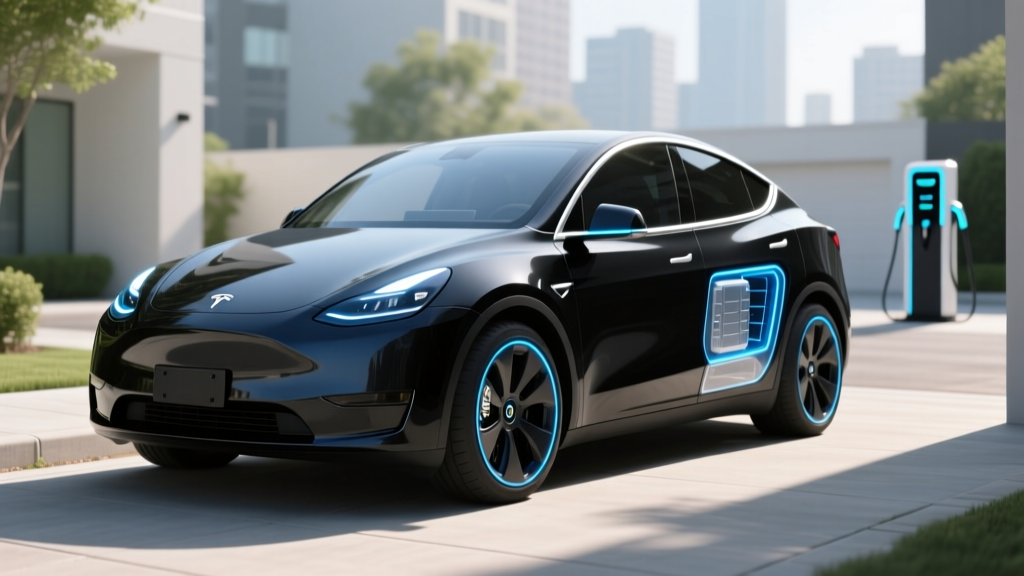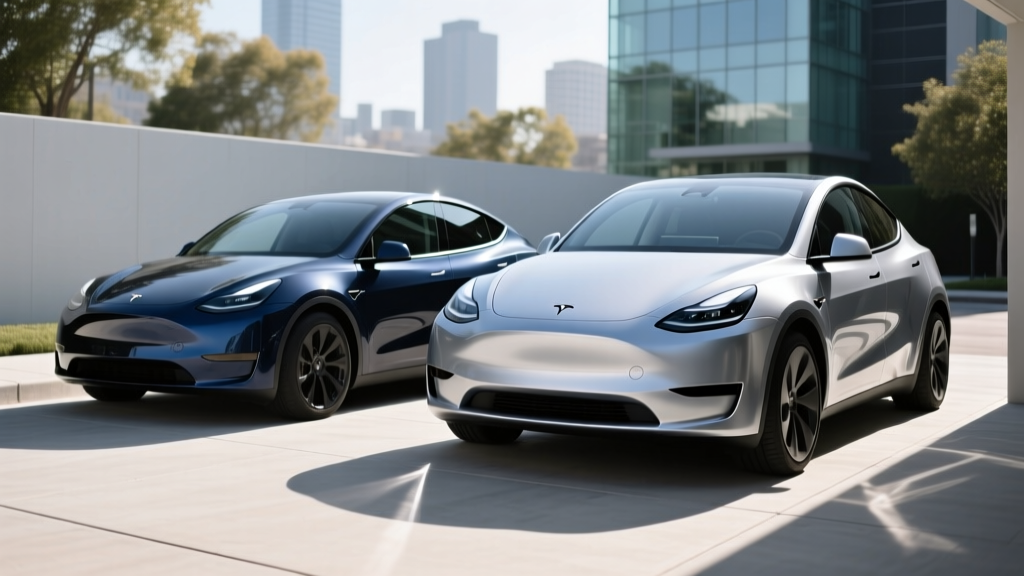
Tesla's Midnight Silver Metallic has become one of the most recognizable finishes on the road — a deep, chameleon-like gray that shifts between charcoal and gunmetal depending on the light. Originally introduced as a free color option, Tesla moved Midnight Silver to its paid paint roster, and it now commands a $1,500 premium on both the Model 3 and Model Y. But beyond the aesthetics, buyers choosing this paint are also selecting some of the most refined versions of Tesla's current lineup.
This guide covers everything you need to know about ordering a Tesla in Midnight Silver Metallic in 2026: which models offer it, how the underlying vehicles perform in range, charging, and daily ownership, and whether the color holds resale value better than alternatives.
Which 2026 Teslas Offer Midnight Silver Metallic?
As of the 2026 model year, Midnight Silver Metallic is available on:
- Model 3 (all trims: RWD, Long Range AWD, Performance)
- Model Y (all trims: Long Range AWD, Performance)
It is not available on the Model S or Model X, which use a different paint palette. The finish is a multi-coat metallic with a darker base layer than Stealth Grey (which replaced the original silver on some trims), giving it a more dramatic appearance in low light.
Model 3 Midnight Silver: Specs, Range & Efficiency
| Specification | Value |
|---|---|
| EPA Range | 341 miles |
| Usable Battery Capacity | ~75 kWh (NMC) |
| Efficiency | 132 MPGe combined / 25 kWh/100 mi |
| 0-60 mph | 4.2 seconds |
| Horsepower | ~346 hp (dual motor) |
| Drivetrain | AWD (dual motor) |
| Max DC Fast Charge | 250 kW peak |
| 10-80% DC Charge Time | ~27 minutes |
| Level 2 Home Charging | 11.5 kW (~44 mi/hr) |
| Cargo Volume | 23 cu ft (rear seats up), 65 cu ft (folded) |
| Rear Legroom | 35.2 inches |
| Battery/Drive Unit Warranty | 8 years / 120,000 miles |
| Base MSRP (Long Range AWD) | $47,740 |
| Price with Midnight Silver | $49,240 |
The Model 3 RWD trim uses a lithium iron phosphate (LFP) battery, which offers slower degradation over time and can be charged to 100% daily without concern — a meaningful ownership advantage for commuters. The Long Range and Performance trims use nickel-manganese-cobalt (NMC) chemistry, which provides higher energy density but benefits from an 80% daily charge limit for longevity.
Model Y Midnight Silver: Specs, Range & Efficiency
| Specification | Value |
|---|---|
| EPA Range | 320 miles |
| Usable Battery Capacity | ~75 kWh (NMC) |
| Efficiency | 122 MPGe combined / 27 kWh/100 mi |
| 0-60 mph | 4.8 seconds |
| Horsepower | ~384 hp (dual motor) |
| Drivetrain | AWD (dual motor) |
| Max DC Fast Charge | 250 kW peak |
| 10-80% DC Charge Time | ~28 minutes |
| Level 2 Home Charging | 11.5 kW (~37 mi/hr) |
| Cargo Volume | 30 cu ft (rear seats up), 72 cu ft (folded) |
| Rear Legroom | 37.0 inches |
| Battery/Drive Unit Warranty | 8 years / 120,000 miles |
| Base MSRP (Long Range AWD) | $46,630 |
| Price with Midnight Silver | $48,130 |
The Model Y's taller, crossover profile costs it some aerodynamic efficiency compared to the Model 3, but the trade-off is substantially more cargo space and easier rear-seat access — key factors for families. The updated "Juniper" refresh brought improved sound insulation, ventilated front seats, and ambient lighting that make the Midnight Silver interior-exterior pairing particularly striking.
Charging Speed: DC Fast Charging & Home Setup
| Charging Level | Power | Model 3 (mi/hr) | Model Y (mi/hr) | Notes |
|---|---|---|---|---|
| Level 1 (120V) | ~1.4 kW | ~3-4 | ~3-4 | Emergency/trickle only |
| Level 2 (240V, 48A) | 11.5 kW | ~44 | ~37 | Standard home install |
| DC Fast (Supercharger V3) | 250 kW peak | 10-80% in ~27 min | 10-80% in ~28 min | Peak rate; tapers above 50% |
| DC Fast (Supercharger V4) | Up to 325 kW* | Future-compatible | Future-compatible | *Vehicle-side limited to 250 kW currently |
Both the Model 3 and Model Y peak at 250 kW on Tesla's V3 Superchargers. However, the charge curve is not flat — peak rate holds roughly from 10-50% state of charge, then tapers progressively. From 80-100%, charging slows dramatically to protect battery health, adding 15-20 minutes for the final 20%. This is why the 10-80% metric is the standard: it reflects the usable fast-charging window.
For home charging, Tesla's Wall Connector at 48 amps on a 240V/60A circuit delivers 11.5 kW, which fully replenishes either vehicle overnight (7-8 hours from near-empty). Installation costs vary widely: a simple install near the panel may run $500-$1,200, while a panel upgrade (100A to 200A service) can add $1,500-$3,000. Consult a licensed electrician for your specific situation.
Tax Credit Eligibility & Pricing Breakdown
Under IRS §30D rules, the federal EV tax credit offers up to $7,500 for qualifying new EVs. However, eligibility depends on multiple factors that change frequently:
- MSRP Cap: SUVs/wagons (Model Y) must be under $80,000; sedans (Model 3) under $55,000. Both qualify at current pricing.
- Buyer Income Cap: Modified AGI must not exceed $150,000 (single), $225,000 (head of household), or $300,000 (joint). Check IRS guidelines for current-year limits.
- Battery Sourcing: Critical minerals and battery components must meet escalating domestic-content thresholds. Tesla has worked to localize supply chains, but eligibility can shift mid-year. Verify at fueleconomy.gov before purchasing.
- Point-of-Sale Transfer: Eligible buyers can transfer the credit to the dealer at purchase, reducing the upfront cost immediately rather than waiting for tax filing.
| Model & Trim | MSRP | + Midnight Silver | Est. After $7,500 Credit* |
|---|---|---|---|
| Model 3 RWD | $38,990 | $40,490 | ~$32,990 |
| Model 3 Long Range AWD | $47,740 | $49,240 | ~$41,740 |
| Model 3 Performance | $54,990 | $54,990 (included) | ~$47,490 |
| Model Y Long Range AWD | $46,630 | $48,130 | ~$40,630 |
| Model Y Performance | $51,490 | $52,990 | ~$45,490 |
*Credit eligibility is not guaranteed. Confirm current sourcing and income requirements at the time of purchase. State incentives (e.g., California, Colorado, New York) may stack on top — check your state's energy office for details.
Technology, Driver Assistance & Interior
Both vehicles come standard with Tesla's 15.4-inch center touchscreen (Model 3) or 15.4-inch center plus optional rear screen (Model Y Juniper refresh). The infotainment system remains best-in-class for responsiveness, over-the-air updates, and integrated navigation with real-time Supercharger routing.
Notable tech features include:
- Sentry Mode (360° parking surveillance with phone alerts)
- Dog Mode and Camp Mode for climate-controlled cabin use
- Phone-as-key with automatic approach unlock
- Theater mode for streaming on the center display while parked
- Heat pump (standard) for improved cold-weather efficiency and range preservation
Drawbacks to note: the minimalist interior means no physical buttons for climate or mirrors (all touchscreen-controlled), no traditional instrument cluster, and the panoramic glass roof can create significant cabin heat in summer without aftermarket tinting or the included sunshade.
Pros, Cons & Who Should Buy
Pros
- Class-leading Supercharger network access with reliable plug-and-charge
- Excellent efficiency — among the lowest kWh/100mi in the segment
- Strong over-the-air update cadence adds features post-purchase
- Midnight Silver hides road grime better than black or white
- Competitive cargo space, especially Model Y (72 cu ft max)
- Standard heat pump preserves winter range better than resistive heating
Cons
- $1,500 paint premium for what was once a free color
- Touchscreen-only controls frustrate some drivers
- Rear-seat comfort still trails Hyundai Ioniq 5 and BMW iX
- No Apple CarPlay or Android Auto integration
- FSD Supervised remains a Level 2 system despite the name
- Insurance premiums tend to run 15-30% above segment average
Who It Suits Best
- Commuters: Model 3 RWD with LFP battery — charge to 100% daily, 272 EPA miles covers most round trips comfortably.
- Families: Model Y Long Range AWD — rear-seat space, cargo capacity, and 320-mile range handle school runs and road trips.
- Road trippers: Either Long Range AWD — Tesla's Supercharger network remains the most reliable for cross-country travel.
- Towing: Model Y is rated for 3,500 lbs — adequate for a small trailer or bike rack, but not heavy-duty towing.
Frequently Asked Questions
Is Midnight Silver Metallic worth the $1,500 premium?
From a pure aesthetics and resale standpoint, Midnight Silver is one of Tesla's most popular paid colors and tends to hold value well in the used market. It also hides dust and light road grime better than Solid Black or Deep Blue Metallic. Whether it's "worth it" depends on your preference — Stealth Grey offers a similar tone without the metallic flake, and Pearl White remains the no-cost default.
Does a Tesla in Midnight Silver qualify for the $7,500 federal tax credit?
Color has no bearing on tax credit eligibility. Both the Model 3 and Model Y currently qualify under §30D rules, subject to buyer income caps ($150K single / $300K joint), MSRP limits ($55K sedans / $80K SUVs), and battery sourcing requirements. Always verify current eligibility on fueleconomy.gov before purchase, as sourcing rules can shift.
How long does the battery last on a Model 3 or Model Y?
Tesla warranties the battery and drive unit for 8 years or 120,000 miles (whichever comes first), with a minimum 70% capacity retention threshold. Real-world data from high-mileage owners suggests NMC batteries (Long Range/Performance) typically retain 85-90% capacity at 100,000 miles when charged to 80% daily. LFP batteries (Model 3 RWD) show even slower degradation and can be charged to 100% without concern.
How does the Model Y compare to the Hyundai Ioniq 5 or Ford Mustang Mach-E?
The Model Y leads in range (320 vs. ~300-310 for competitors), charging network reliability (Superchargers), and software integration. The Ioniq 5 offers faster peak charging (up to 350 kW on compatible chargers, 10-80% in ~18 min), more physical controls, and a more spacious rear seat. The Mach-E provides a more traditional crossover driving feel and available BlueCruise hands-free highway driving (also Level 2). All three are strong choices — your priority (network vs. comfort vs. charge speed) determines the winner.
Can I charge a Tesla on non-Tesla charging networks?
Yes. All current Tesla vehicles in North America use the NACS (North American Charging Standard) connector natively. With Tesla opening its Supercharger network to other brands, and nearly all major automakers adopting NACS by 2025-2026, Tesla owners benefit from the broadest fast-charging compatibility. For CCS-equipped stations ( Electrify America, some ChargePoint locations), a NACS-to-CCS adapter is available from Tesla for approximately $250.