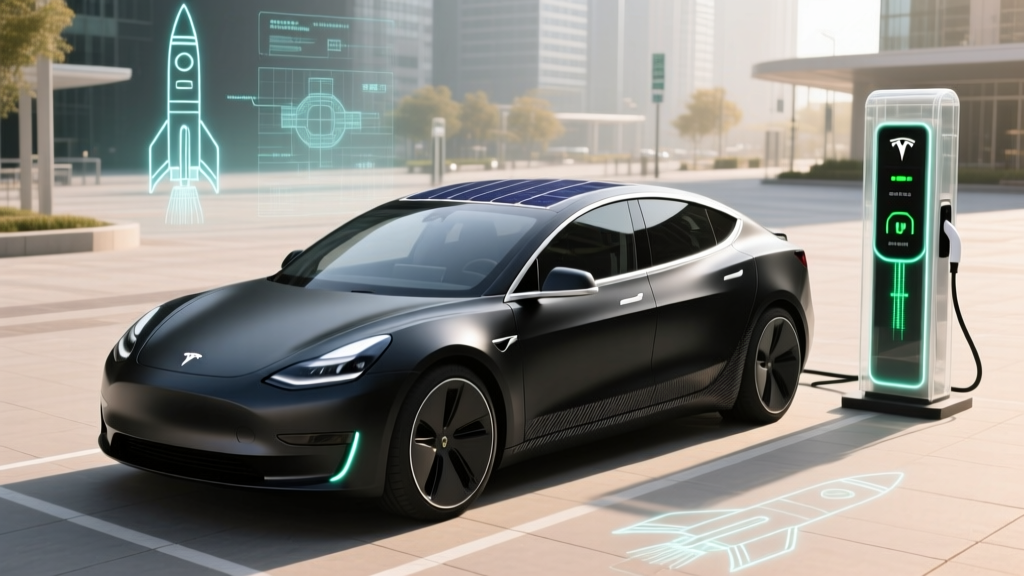
The Rumor Mill: Is a Tesla-SpaceX Merger Actually Happening?
Search interest in a potential Tesla merge with SpaceX spikes every time Elon Musk hints at corporate restructuring during earnings calls or on X. As of early 2026, no formal merger has been filed with the SEC, and Tesla remains an independent publicly traded company (TSLA) while SpaceX continues as a private entity valued at roughly $350 billion. But the question persists: what would a combined entity actually mean for someone shopping for a Model Y, Model 3, or Cybertruck right now?
This analysis examines the tangible implications — from potential tech transfers and manufacturing synergies to the very real risks around federal tax credit eligibility and corporate governance — so you can make an informed purchase decision regardless of how the corporate saga unfolds.
Current Tesla Lineup: 2026 Specs at a Glance
Before speculating about corporate futures, here is where Tesla's core lineup stands today. These are the vehicles you can order and take delivery of in 2026.
| Spec | Model 3 LR AWD | Model Y LR AWD | Cybertruck AWD |
|---|---|---|---|
| EPA Range | 341 mi | 320 mi | 340 mi |
| Battery (usable) | ~75 kWh (NMC) | ~75 kWh (NMC) | ~123 kWh (NMC) |
| Peak DC Charge | 250 kW | 250 kW | 250 kW (400V arch) |
| 10-80% DCFC Time | ~25 min | ~25 min | ~35 min |
| Level 2 Rate | 11.5 kW (~44 mi/hr) | 11.5 kW (~44 mi/hr) | 11.5 kW (~34 mi/hr) |
| 0-60 mph | 4.2 sec | 4.8 sec | 3.9 sec |
| Horsepower | 346 hp | 384 hp | 600 hp |
| Drivetrain | Dual Motor AWD | Dual Motor AWD | Tri-Motor AWD |
| MPGe (combined) | 132 MPGe | 122 MPGe | 70 MPGe |
| Base MSRP | $47,740 | $48,240 | $79,990 |
| Battery Warranty | 8 yr / 120,000 mi | 8 yr / 120,000 mi | 8 yr / 120,000 mi |
Source: fueleconomy.gov and Tesla's 2026 specification pages.
Real-World Range: What the EPA Sticker Doesn't Tell You
EPA estimates assume mixed driving at moderate temperatures. In our experience and consistent with third-party highway testing, expect roughly 10-15% range reduction at sustained 75 mph highway speeds, and 20-30% reduction in sub-freezing winter conditions without preconditioning. A Model Y Long Range rated at 320 miles EPA typically delivers 260-280 miles on a warm-weather highway trip and 220-250 miles in cold Midwestern winters.
Tesla's thermal management system — which includes a heat pump across the 2026 lineup — mitigates cold-weather losses better than many competitors, but physics still applies. The Cybertruck's boxy aerodynamics hit especially hard at highway speed; owners consistently report 260-280 real-world highway miles despite the 340-mile EPA sticker. For buyers in northern states, plan your road trips around 70% of the EPA figure in winter to avoid unwelcome surprises.
Charging Speed and Infrastructure: The Supercharger Advantage
Tesla's charging ecosystem remains its strongest competitive moat, even as the North American Charging Standard (NACS) opens Supercharger stalls to Ford, Rivian, and other automakers throughout 2025 and 2026.
| Charging Level | Power | Typical Speed (Model Y) | Use Case |
|---|---|---|---|
| Level 1 (120V) | ~1.4 kW | ~5 mi/hr | Emergency / overnight trickle |
| Level 2 (240V home) | 11.5 kW | ~44 mi/hr | Daily home charging |
| DC Fast (V3 Supercharger) | 250 kW peak | 10-80% in ~25 min | Road trips |
| DC Fast (V4 Supercharger) | Up to 350 kW* | Model 3/Y limited by vehicle | Future vehicle architectures |
*V4 Supercharger cabinets support higher power, but current Model 3/Y vehicles peak at 250 kW due to their 400-volt architecture. Only vehicles with 800V+ systems (like the Hyundai Ioniq 5 or upcoming Tesla platforms) can utilize the full V4 capability.
The key ownership insight: Tesla's charge curve tapers significantly above 80% state of charge. That 25-minute 10-80% window is practical for road trips, but charging from 80-100% can add another 20+ minutes. Plan to charge to 80% and go — it's how the network is designed to be used. Home Level 2 charging at 11.5 kW recovers a full battery overnight in roughly 7-8 hours, which covers the daily needs of virtually every commuter.
How a Tesla-SpaceX Merger Could Reshape EV Pricing and Tech
If a formal Tesla merge with SpaceX were to materialize, the implications for EV buyers fall into three categories:
Potential Upsides
- Materials and manufacturing synergies: SpaceX's expertise in advanced alloys, friction-stir welding, and gigacasting could accelerate Tesla's unboxed manufacturing process, potentially driving per-unit costs down further.
- Battery chemistry R&D: SpaceX's energy storage requirements for spacecraft and Starship could funnel advanced cell development into Tesla's battery pipeline, particularly around energy density improvements for next-generation 4680 cells.
- Starlink integration: A combined entity could deeply integrate Starlink satellite connectivity into Tesla vehicles, enabling reliable over-the-air updates and navigation in rural areas where cellular coverage drops — a genuine pain point for road-trippers today.
Real Risks for Buyers
- Tax credit complications: The IRS §30D clean vehicle credit has strict MSRP caps ($55,000 for sedans, $80,000 for SUVs/trucks) and buyer income limits ($150K single / $300K joint). A merger that inflates Tesla's stock price or shifts manufacturing priorities could indirectly affect pricing strategies that push models above these caps.
- Governance distraction: Combining a public company with a private one creates regulatory complexity. Historically, Musk's attention divided across multiple ventures (Tesla, SpaceX, xAI, X) has raised analyst concerns about execution timelines.
- Supply chain opacity: §30D also requires battery component and critical mineral sourcing from the U.S. or free-trade-agreement partners. A merged entity with aerospace supply chains could complicate the audit trail that certifies credit eligibility.
Federal Tax Credit Eligibility: What You Can Actually Claim Today
- Vehicle MSRP must not exceed $55,000 (sedans) or $80,000 (SUVs, trucks, vans)
- Buyer AGI must not exceed $150,000 (single) / $225,000 (head of household) / $300,000 (joint)
- Battery components must meet increasing domestic-content thresholds (phased annually through 2029)
- Critical minerals must be sourced from U.S. or FTA-partner countries
- Credit can be transferred to the dealer at point of sale as an immediate price reduction
- Vehicles with battery components from a "foreign entity of concern" are disqualified
Always verify current eligibility on fueleconomy.gov and consult a tax professional before relying on the credit.
As of 2026, the Tesla Model 3 Long Range ($47,740 MSRP) qualifies for the full $7,500 credit for buyers within income limits, bringing the effective price to approximately $40,240. The Model Y Long Range ($48,240) similarly qualifies as an SUV under the $80,000 cap. The Cybertruck, starting at $79,990, clears the truck cap but only just — any trim upgrades or future price increases could push it over the threshold. Always confirm the specific VIN's eligibility at purchase, as battery sourcing requirements tighten annually.
Tesla vs. the Competition: Where the Value Stands
The EV market in 2026 is dramatically more competitive than even two years ago. Here's how Tesla's core models stack up against key rivals:
| Attribute | Tesla Model Y LR | Hyundai Ioniq 5 LR AWD | Ford Mustang Mach-E ER AWD |
|---|---|---|---|
| EPA Range | 320 mi | 290 mi | 305 mi |
| Peak DC Charge | 250 kW | 240 kW (800V) | 150 kW |
| 10-80% Time | ~25 min | ~18 min | ~36 min |
| 0-60 mph | 4.8 sec | 5.0 sec | 5.1 sec |
| Base MSRP | $48,240 | $49,850 | $47,995 |
| Cargo (rear seats up) | 30.2 cu ft | 27.2 cu ft | 29.7 cu ft |
| Charging Network | Supercharger (native) | Supercharger (NACS adapter) | Supercharger (NACS adapter) |
The Ioniq 5's 800-volt architecture delivers faster 10-80% charging despite a slightly lower peak kW rating, because it sustains higher power longer on the charge curve. The Mach-E trails on charging speed but offers a more traditional dealership service experience. Tesla's advantage remains the integrated Supercharger network — pull up, plug in, it works — though Ford and Hyundai owners using NACS adapters in 2026 report a much more seamless experience than the CCS-to-Tesla adapter days of 2024.
Who Should Buy a Tesla in 2026 — and Who Should Wait?
- You need Supercharger access for frequent road trips and value the seamless plug-and-charge experience
- You want the most energy-efficient vehicles in their respective classes (Model 3 leads at 132 MPGe)
- You can install a Level 2 home charger and charge overnight (the ownership experience transforms with home charging)
- You value OTA updates that meaningfully improve the vehicle over time
- You prioritize dealership service networks and prefer in-person support over mobile rangers
- You want 800V fast-charging architecture (Tesla's current fleet remains on 400V)
- Interior material quality and traditional luxury finishes matter to you
- You're concerned about corporate governance risk from a potential SpaceX merger creating uncertainty around long-term support and focus
Tech, Safety, and the Autopilot Reality Check
Tesla's 2026 infotainment system remains the class benchmark for responsiveness and functionality, with a 15.4-inch center display handling everything from navigation to Netflix at Supercharger stops. The removal of ultrasonic sensors in favor of Tesla Vision (camera-only) continues to draw mixed reviews — parking assist works adequately but is less precise than ultrasonic-equipped competitors in tight garages.
Tesla Autopilot and Full Self-Driving (Supervised) are SAE Level 2 driver-assistance systems. The driver must remain engaged, hands on or near the wheel, and eyes on the road at all times. These are not autonomous driving systems. Only Level 4 services like Waymo operate without a human driver in geofenced areas.
On safety, Tesla vehicles consistently earn 5-star NHTSA ratings, though IIHS evaluations have varied by model year and headlight configurations. The structural safety is excellent; the debate centers on driver monitoring adequacy in Level 2 systems, a conversation the entire industry is still having with regulators.
Frequently Asked Questions
Has Tesla officially merged with SpaceX?
No. As of 2026, Tesla (TSLA) and SpaceX remain separate legal entities. Musk has discussed potential synergies publicly, but no merger filing has been made with the SEC. Any corporate restructuring would require extensive regulatory review.
Would a merger affect my Tesla warranty?
Existing warranties — including the 8-year/120,000-mile battery and drive unit warranty — are contractual obligations that would survive a corporate merger. However, long-term parts availability and service network quality could shift depending on how a combined entity prioritizes resources.
Does the Model Y still qualify for the $7,500 tax credit?
Yes, the 2026 Model Y Long Range at $48,240 MSRP falls under the $80,000 SUV cap. Buyer income must not exceed $300,000 (joint) / $150,000 (single), and the specific VIN must meet battery sourcing requirements. Verify at purchase via fueleconomy.gov and consider the point-of-sale transfer option to apply the credit as an immediate price reduction.
Is Tesla's 400V architecture a dealbreaker vs. 800V competitors?
For most buyers, no. Tesla's 250 kW peak and ~25-minute 10-80% time is adequate for road trips, and the Supercharger network's reliability compensates. However, if you frequently drive 400+ mile days and want the absolute shortest charging stops, Hyundai/Kia's 800V platform (Ioniq 5, EV6) delivers measurably faster sustained charging.
What's the biggest risk of buying a Tesla if a SpaceX merger happens?
The primary risk is executive attention and strategic focus. A complex corporate combination could slow product development timelines (the long-promised next-generation compact platform, for example) and create uncertainty that affects resale values in the short term. The vehicles themselves — and their warranties — remain sound.