Tesla Megapack: Utility-Scale Energy Storage for Grid and Commercial Buyers
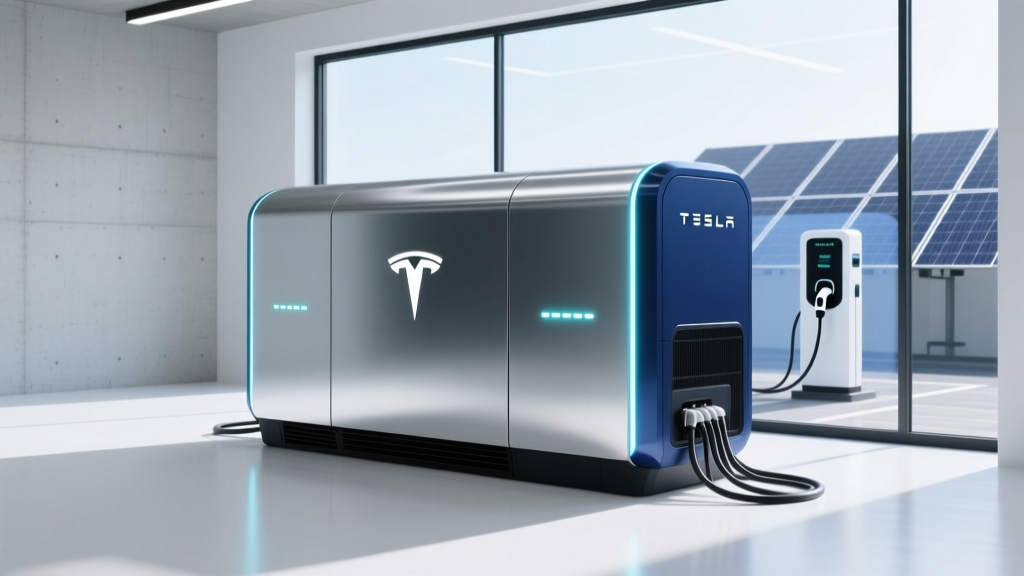
If you've searched for tesla megapack contact email sales, you're likely evaluating utility-scale battery energy storage systems (BESS) for a commercial, industrial, or grid-scale project. The Tesla Megapack is not a vehicle — it's a massive lithium-ion battery system designed for utilities, independent power producers, and large commercial installations. This review covers Megapack specs, how to reach Tesla's energy sales team, and what buyers should know before committing to a multi-million-dollar storage project.
As of 2026, the Megapack platform is in its second generation (Megapack 2), with production ramping at Tesla's Shanghai and Lathrop, California megafactories. Let's break down the technical specifications, purchasing process, and competitive landscape.
Megapack 2 Specifications: Capacity, Chemistry, and Performance
| Specification | Megapack 2 (2026) |
|---|---|
| Energy Capacity | 3.9 MWh per unit |
| Power Output | ~1 MW continuous per unit |
| Battery Chemistry | LFP (Lithium Iron Phosphate) |
| Round-Trip Efficiency | ~89-92% |
| Cycle Life | 6,000+ cycles at 80% DoD |
| Warranty | 15 years, 60% capacity retention |
| Dimensions (L×W×H) | ~24 ft × 8 ft × 9 ft (shipping container form factor) |
| Weight | ~84,000 lbs (38,000 kg) |
| Thermal Management | Liquid cooling with integrated HVAC |
| Inverter | Integrated bidirectional inverter |
The Megapack 2 uses LFP chemistry, which trades energy density for longer cycle life, thermal stability, and lower cost per kWh compared to NMC. For stationary storage, these trade-offs favor LFP decisively — there's no weight or volume constraint like in a vehicle, and LFP's resistance to thermal runaway is a major safety advantage for densely packed installations.
A typical utility-scale deployment ranges from 10 to 100+ Megapack units. For example, a 100 MW / 400 MWh project would require roughly 100 Megapack 2 units paired with Powerhub (Tesla's AC collection and grid-interconnection system).
Real-World Range Equivalent: Duration and Discharge Characteristics
For context, most utility RFPs in 2026 specify 4-hour duration systems. This means buyers typically oversize capacity slightly — specifying ~4.2 MWh nameplate to guarantee 4 hours of contracted output after accounting for efficiency degradation in years 5-15.
Cold-weather impact is minimal compared to EVs. LFP cells operate effectively down to -20°C, though charging speed throttles below 0°C to prevent lithium plating. The integrated liquid thermal management system maintains cells in the optimal 15-35°C range, consuming roughly 2-4% of stored energy in extreme climates.
Charging and Grid Integration: How Megapack Connects
Megapack doesn't "charge" at a DC fast charger — it integrates directly with medium-voltage AC grid infrastructure through Tesla's Powerhub system. Here's how the charging profile works:
| Charge Source | Rate | Full Charge Time |
|---|---|---|
| Grid AC (via Powerhub) | ~1 MW per unit | ~4.2 hours (0-100%) |
| Solar DC-coupled (direct) | Variable, up to 1 MW | Depends on array size & irradiance |
| Hybrid (wind + solar) | Variable | Continuous opportunistic charging |
The integrated bidirectional inverter handles AC-DC conversion at 96-97% efficiency. Megapack supports grid-forming mode (black-start capability) and grid-following mode, making it suitable for islanded microgrids and weak-grid applications.
For solar-coupled projects, Tesla's Autobidder software optimizes charge/discharge schedules based on wholesale electricity pricing, renewable generation forecasts, and grid ancillary service revenue opportunities. This is where Megapack differentiates from pure hardware competitors — the software layer can add 10-20% revenue uplift through intelligent market participation.
Pricing, Project Costs, and How to Contact Tesla Energy Sales
| Cost Component | Estimated Range (2026) |
|---|---|
| Megapack 2 unit (hardware) | $800,000 - $1,000,000 per 3.9 MWh unit |
| Powerhub + BOS (balance of system) | $150,000 - $250,000 per MW |
| EPC (engineering, procurement, construction) | $200,000 - $400,000 per MWh |
| Total installed cost | $280 - $400 per kWh (utility-scale) |
| Federal ITC (Investment Tax Credit, §48) | 30% base; up to 50% with adders |
| Net cost after ITC | $140 - $280 per kWh |
Important: Megapack does NOT qualify for the §30D consumer EV tax credit — that credit applies only to light-duty vehicles. Instead, utility-scale storage qualifies for the §48 Investment Tax Credit (ITC), which provides a 30% base credit for standalone energy storage, with potential bonus adders for domestic content (10%), energy communities (10%), and low-income siting (10-20%).
How to Contact Tesla Megapack Sales
Tesla does not publish a direct sales email for Megapack inquiries. The standard process is:
- Visit tesla.com/megapack and click "Contact Sales" or "Request a Quote"
- Submit a project inquiry form with: project size (MW/MWh), interconnection voltage, site location, target COD (commercial operation date), and offtake structure
- Tesla's energy sales team responds within 5-10 business days for qualified projects (typically 10+ MWh)
- For smaller commercial projects (under 10 MWh), Tesla may redirect you to the Powerwall/Powerwall 3 commercial stacking program or certified installer partners
For urgent or complex projects, Tesla's energy sales can be reached through their regional offices:
- North America: Submit via tesla.com/megapack contact form (no direct email published)
- Europe/Middle East: tesla.com/megapack with region specified
- Asia-Pacific: tesla.com/megapack or through local Tesla Energy partners
Pro tip: If you're an EPC firm or developer with a specific project in development, mention your interconnection queue position and PPA (power purchase agreement) status in the inquiry. Tesla prioritizes projects with clear paths to commercial operation.
Who Should Buy Megapack (And Who Shouldn't)
Megapack is purpose-built for specific buyer profiles:
Best fit:
- Utilities and load-serving entities needing capacity, peak shaving, or renewable integration
- Independent power producers (IPPs) developing merchant or contracted storage projects
- Large industrial/commercial facilities (100+ MW load) with demand charge management needs
- Renewable developers adding storage to solar/wind projects for firm capacity
- Microgrid operators (islands, remote communities, military bases)
Not a fit:
- Residential homeowners (see Powerwall 3 instead)
- Small commercial buildings under 500 kW (Powerwall commercial stacking or PowerBlock is more appropriate)
- Portable/temporary power needs (Megapack requires permanent concrete pad, grid interconnection, and 6-12 month lead time)
Megapack vs. Competitors: Fluence, BYD, and CATL
Megapack Advantages
- Integrated software (Autobidder) with proven market optimization
- Vertically integrated supply chain (LFP cells from CATL + Tesla pack integration)
- Strong track record: 10+ GWh deployed globally as of 2025
- Grid-forming capability for weak-grid and islanded applications
- Single-vendor accountability (hardware + software + commissioning)
Megapack Drawbacks
- 12-18 month lead time for large orders (supply constrained)
- Premium pricing vs. Chinese BESS competitors (BYD, CATL direct)
- Limited customization — Tesla's "standard product" approach doesn't suit all projects
- Autobidder licensing adds ongoing OPEX (typically 1-2% of project revenue)
- Single-source vendor risk for long-term service agreements
Key competitors include Fluence (Siemens/AES joint venture, using modular Cube architecture), BYD (BYD Cube with blade LFP cells), and Sungrow (PowerTitan 2.0). On a pure $/kWh hardware basis, BYD and Sungrow often undercut Megapack by 15-25%, but Tesla's software integration and bankability (lender confidence) can justify the premium for financed projects.
Federal Incentives: Investment Tax Credit (ITC) Eligibility
Unlike consumer EVs governed by §30D, Megapack falls under IRS §48 ITC for energy storage technology. Here's the 2026 eligibility framework:
- Base credit: 30% of eligible project costs (hardware + installation) for projects beginning construction before 2033
- Domestic content bonus: +10% if 40%+ of manufactured components (by cost) are US-produced (rising to 55% in 2027+)
- Energy community bonus: +10% for projects in census tracts with closed coal mines, retired coal plants, or high fossil employment
- Low-income community bonus: +10-20% for qualifying siting (allocated via competitive application)
- Maximum potential credit: Up to 50-70% of project cost in stacked scenarios
Critical caveat: ITC eligibility requires prevailing wage and apprenticeship compliance for projects over 1 MW AC. Failure to meet these requirements reduces the base credit from 30% to 6%. Consult a tax equity advisor before finalizing project economics.
Warranty, Degradation, and Long-Term Performance
Tesla's Megapack warranty covers 15 years with a guaranteed 60% end-of-warranty capacity retention. In practice, LFP chemistry degrades more gracefully than NMC:
- Year 1: ~2-3% initial capacity loss (formation cycling)
- Years 2-10: ~0.5-0.7% annual linear degradation
- Years 11-15: ~0.3-0.5% annual degradation (curve flattens)
- Year 15 expected SoH: 65-70% (above warranty floor)
Augmentation (adding replacement modules in years 10-15) is typically planned into project financial models to maintain contracted capacity through the full 20-25 year project life. Tesla offers long-term service agreements (LTSA) covering preventive maintenance, remote monitoring, and augmentation planning at roughly $5-8 per kWh/year.
Frequently Asked Questions
How do I contact Tesla Megapack sales for a project quote?
Submit an inquiry through tesla.com/megapack's contact form. Include project size (MW/MWh), location, interconnection voltage, and target commercial operation date. Tesla typically responds within 5-10 business days for qualified projects (10+ MWh). There is no public direct email — the web form is the official channel.
What is the minimum Megapack order size?
Tesla generally engages on projects of 10+ MWh (roughly 3+ Megapack units). For smaller commercial applications, Tesla's Powerwall commercial stacking or certified Powerwall installer partners may be more appropriate. Single Megapack orders are rare and typically reserved for pilot or expansion projects with existing Tesla relationships.
Does Megapack qualify for the $7,500 federal EV tax credit?
No. The §30D Clean Vehicle Credit applies only to light-duty electric vehicles under 14,000 lbs GVWR. Megapack qualifies instead for the §48 Investment Tax Credit (30% base, up to 50%+ with bonus adders) for standalone energy storage. These are entirely different tax code sections with different eligibility rules.
What is Megapack's lead time in 2026?
Expect 12-18 months from contract execution to delivery for orders placed in early 2026. Tesla's Lathrop and Shanghai megafactories are capacity-constrained due to strong global BESS demand. Projects requiring delivery in under 12 months should consider Fluence or BYD alternatives, which may have shorter lead times depending on configuration.
Can Megapack be used for residential or small commercial applications?
No. Megapack requires medium-voltage grid interconnection (typically 12-35 kV), a concrete pad, and utility-scale permitting. For residential backup, Tesla's Powerwall 3 (13.5 kWh) is the appropriate product. For small commercial (under 500 kW), Powerwall commercial stacking or PowerBlock systems are designed for that scale.
How does Megapack compare to building my own BESS from CATL or BYD cells?
Sourcing cells directly and integrating with third-party inverters (SMA, Sungrow) can reduce hardware costs by 20-30%, but shifts integration risk, warranty responsibility, and software optimization to the project developer. Most project finance lenders prefer bankable, single-vendor solutions like Megapack or Fluence for debt service coverage ratio (DSCR) confidence. Self-integration is viable for experienced EPC firms with in-house BESS engineering teams.
For more on utility-scale storage policy, see the U.S. Energy Information Administration's BESS deployment data. For safety standards, Megapack is tested to UL 9540 and NFPA 855 — confirm local fire code compliance with your AHJ (Authority Having Jurisdiction) before permitting.