Why a Battery Factory in Brookshire Matters to Every EV Owner
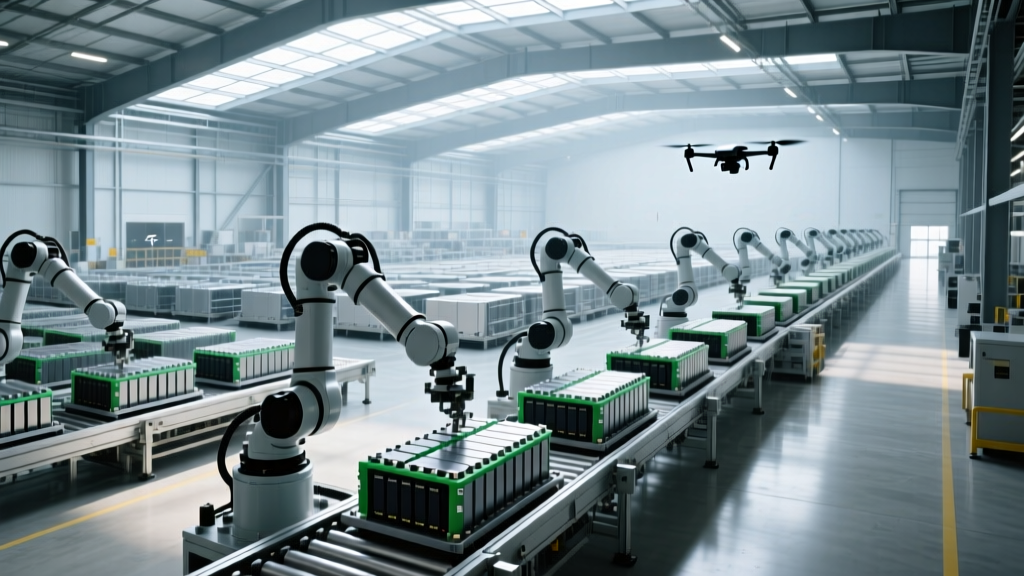
When most people search for Tesla Megafactory Brookshire, they expect to find a car plant. What they actually find is something arguably more consequential for the electric vehicle ecosystem: a 2+ million-square-foot facility in Brookshire, Texas (west of Houston), dedicated entirely to manufacturing Tesla Megapacks — the company's grid-scale energy storage systems. Unlike the Gigafactories that stamp out Model Ys and Cybertrucks, this facility exists to solve the other half of the electrification equation: where the electricity comes from, how it's stored, and how it reaches your EV when the grid is strained.
As of 2026, the Brookshire Megafactory is Tesla's primary Megapack production site globally, with a second facility in Shanghai ramping up. The Brookshire plant has scaled to produce approximately 40 GWh of Megapack capacity annually, a figure that dwarfs the total grid storage deployed in the US just five years ago. For EV buyers, this matters because Megapacks are increasingly the backbone of utility-scale solar-plus-storage projects, EV fast-charging buffer stations, and virtual power plants that stabilize the grids you charge from.
| Specification | Value |
|---|---|
| Energy Capacity (per unit) | 3.9 MWh (usable) |
| Battery Chemistry | LFP (Lithium Iron Phosphate) |
| Continuous Power Output | 1.25 MW per unit |
| Round-Trip Efficiency | ~92% (AC-to-AC) |
| Thermal Management | Integrated liquid cooling/heating |
| Design Lifespan | 25+ years / 10,000+ cycles |
| Physical Dimensions | ~23.6 ft L × 5.3 ft W × 8.2 ft H |
| Weight (approx.) | ~84,000 lbs per unit |
| Warranty | 15 years / 60% capacity retention minimum |
| Estimated Unit Cost | ~$1.0–1.2M per Megapack (utility-scale contracts) |
What the Brookshire Megafactory Actually Builds
The Brookshire facility does not produce consumer vehicles or Powerwall home batteries. Its sole product is the Megapack, currently in its 2XL iteration. Each Megapack 2XL stores 3.9 MWh of energy using LFP (lithium iron phosphate) cells — a chemistry choice that trades some energy density for dramatically improved cycle life, thermal stability, and freedom from cobalt and nickel supply-chain risk. For context, a single Megapack holds roughly 50 times the energy of a Tesla Model Y Long Range battery pack (75 kWh usable).
The factory sits on approximately 200 acres in Waller County, Texas, leveraging the state's relatively low industrial energy costs and proximity to major logistics corridors (I-10, rail lines, and the Port of Houston for imported cell materials). Tesla chose LFP chemistry for Megapacks specifically because grid storage prioritizes longevity and safety over weight — a stationary 84,000-pound unit doesn't need to be light, but it does need to survive 25 years of daily charge-discharge cycles in Texas heat.
The LFP Advantage for Grid Storage
Unlike the NMC (nickel manganese cobalt) chemistry found in many long-range EVs, LFP cells tolerate sustained high states of charge without accelerated degradation. Megapacks routinely sit at 90–100% SoC for hours while absorbing excess solar generation, then discharge during evening peak demand. LFP's thermal runaway threshold (~270°C vs. ~210°C for NMC) also reduces fire risk in densely packed utility installations — a critical consideration when hundreds of units sit side-by-side at projects like California's Moss Landing or Victoria's Big Battery in Australia.
How Megapacks Connect to the EV Charging Experience
Here's where the Brookshire Megafactory's output directly affects you as an EV owner. Grid-scale Megapack installations serve three functions that impact EV charging:
- Fast-charger buffer storage: Tesla Supercharger stations and third-party DC fast-charging sites increasingly pair 350–500 kW chargers with on-site Megapacks. The batteries absorb grid power at a steady rate, then deliver peak bursts to multiple vehicles simultaneously — avoiding demand charges that can exceed $15/kW/month from utilities and enabling high-power charging at sites with limited grid connections.
- Solar-plus-storage for charging corridors: Utility projects along major highways (I-10, I-40, I-80) combine solar arrays with Megapack banks, ensuring renewable energy is available for EV charging even when the sun isn't shining. This reduces the grid strain and carbon intensity of your road-trip charges.
- Virtual power plants (VPPs): Aggregated Megapack installations can discharge to the grid during peak demand, reducing the likelihood of rolling blackouts that strand EV owners without charging access. In Texas, ERCOT's ancillary services market pays Megapack operators to stabilize frequency — revenue that helps keep electricity prices lower for everyone.
Real-World Impact: What This Means at the Charger
When you pull up to a Supercharger V4 station with integrated Megapack buffering, you're more likely to see sustained peak charge rates (250–350 kW on compatible vehicles) even when 6–8 stalls are occupied. Without buffer storage, shared grid connections often force charge-rate throttling during peak occupancy. The Megafactory's output is directly enabling more reliable, faster public charging — one of the top pain points for EV adoption.
Production Scale and the 2026 Outlook
Tesla began limited Megapack production at the Fremont factory before shifting to Brookshire as the dedicated facility. The site came online in phases starting in 2024, and by early 2026 was operating multiple production lines. Tesla's stated goal is to reach 100 GWh of annual Megapack production across Brookshire and Shanghai combined — a target driven by signed utility contracts that already exceed current capacity.
The demand signal is unmistakable: according to the U.S. Energy Information Administration (EIA), grid-scale battery storage deployments in the US grew from under 2 GW in 2020 to over 25 GW by the end of 2025, with projections exceeding 60 GW by 2028. Tesla's Megapack holds a dominant share of large-scale project wins, competing primarily with Fluence (Siemens/AES), BYD's CubePro, and Caterpillar's battery storage systems.
Supply Chain and Cell Sourcing
Megapack LFP cells are sourced primarily from CATL (China) and, increasingly, from Tesla's own cell partnerships and North American suppliers qualifying under the Inflation Reduction Act's domestic-content provisions. The IRA's §48X advanced manufacturing credit and §48 energy investment tax credit provide substantial incentives for domestically produced battery storage — a tailwind for the Brookshire facility's economics. For utility buyers, projects using US-manufactured Megapacks can claim bonus tax credits of 10–30% on top of the base 30% investment tax credit, according to IRS guidance on §48 and §48X credits.
Who Benefits Most from Megafactory Output?
The Brookshire Megafactory's customers are not individual consumers — they're utilities (PG&E, Duke, NextEra), independent power producers, data-center operators, and charging-network companies. But the downstream beneficiaries include every EV owner who charges from a grid stabilized by storage. Here's the practical breakdown:
Benefits to EV Owners (Downstream)
- More reliable fast-charging at high-occupancy stations with battery buffering
- Lower electricity rates in regions with high renewable + storage penetration
- Reduced risk of grid curtailment and rolling blackouts stranding chargers
- Enables 500 kW+ next-gen chargers at sites with weak grid connections
- Accelerates coal/gas plant retirement, reducing upstream charging emissions
Limitations and Criticisms
- Not a consumer product — individuals cannot purchase Megapacks directly
- LFP cells rely on imported materials (lithium, iron phosphate) with supply-chain risk
- Large installations require significant land and water for cooling systems
- Utility interconnection queues can delay project commissioning by 2–4 years
- End-of-life recycling infrastructure for grid-scale LFP packs is still maturing
How Megapack Economics Compare to Home Storage
For readers wondering whether grid-scale storage makes home batteries like the Powerwall redundant — it doesn't. They serve different layers of the system. Here's a comparison to put Megapack scale in context:
| Metric | Megapack 2XL | Powerwall 3 |
|---|---|---|
| Energy Capacity | 3.9 MWh | 13.5 kWh |
| Power Output | 1.25 MW continuous | 11.5 kW continuous |
| Chemistry | LFP | NMC |
| Approx. Cost | $1.0–1.2M | ~$9,200 (unit) + ~$4,500 install |
| Warranty | 15 years | 10 years |
| Buyer Type | Utilities / IPPs | Homeowners |
| Energizes a Typical Home | ~289 homes for 1 hour | 1 home for ~10–14 hours |
The Powerwall protects your home during outages and optimizes time-of-use rates. Megapacks protect the entire grid and enable the fast-charging infrastructure your EV depends on when you're away from home. They're complementary, not competitive.
Federal Incentives Driving Megafactory Growth
The Brookshire facility's expansion is heavily supported by federal policy. Key incentives include:
- §48 Investment Tax Credit (ITC): 30% base credit for energy-storage projects, with 10% bonus for domestic content and 10–20% bonus for projects in energy communities (former fossil-fuel regions). A Megapack-based project can stack these to reach 50–60% total credit value.
- §48X Advanced Manufacturing Credit: $35/kWh for battery cells and $10/kWh for battery modules produced in US factories like Brookshire. This directly subsidizes Tesla's per-unit manufacturing cost.
- §45Y Clean Electricity Production Credit: For storage paired with clean generation, providing per-kWh credits over a 10-year period.
These incentives, codified under the Inflation Reduction Act, are what make US-based Megapack production economically competitive with Chinese-manufactured alternatives. Any changes to IRA provisions — a subject of ongoing legislative debate — could materially impact the Brookshire facility's growth trajectory.
Frequently Asked Questions
Can I visit or tour the Tesla Megafactory in Brookshire?
No. The Brookshire Megafactory is an active industrial manufacturing facility and is not open to public tours. Unlike some Tesla Gigafactories that have offered limited visitor access, Brookshire operates as a production-only site with no retail or showroom presence.
Does the Brookshire Megafactory produce Tesla vehicles?
No. The facility exclusively manufactures Megapack grid-scale energy storage units. Tesla vehicles for the North American market are produced at the Fremont, California factory and Giga Texas in Austin.
How does Megapack production affect my EV charging experience?
Indirectly but significantly. Megapacks deployed at Supercharger stations, utility solar farms, and grid substations improve charging reliability, enable faster charge rates at high-occupancy sites, and reduce the grid strain that leads to higher electricity costs. Every Megapack installed along a highway corridor makes your next road-trip charge more likely to hit peak speeds.
Is the Brookshire facility the only Megapack factory?
As of 2026, Brookshire is Tesla's primary Megapack production site, with a second facility in Shanghai, China serving Asian and European markets. Tesla has indicated plans to expand production capacity further, potentially adding a European Megafactory, though no site has been officially confirmed.
What battery chemistry do Megapacks use, and why?
Megapacks use LFP (lithium iron phosphate) cells. LFP was chosen for its superior cycle life (10,000+ cycles vs. ~2,000–3,000 for NMC), higher thermal runaway threshold, lower cost per kWh over the system's lifetime, and elimination of cobalt and nickel from the supply chain. For stationary storage where weight doesn't matter, LFP's lower energy density is an acceptable trade-off.
Does the Inflation Reduction Act still support battery storage in 2026?
Yes. As of 2026, the IRA's §48, §48X, and §45Y credits remain in effect for energy storage projects and domestic battery manufacturing. However, specific bonus-credit percentages and domestic-content requirements are subject to IRS rulemaking updates. Consult irs.gov or a tax professional for current eligibility details on any specific project.
How does this relate to Tesla's consumer EV batteries?
Megapacks and Tesla vehicle batteries share some supply-chain overlap (particularly in LFP cells sourced from CATL for standard-range Model 3 and Model Y), but they're different products manufactured at different facilities. The Brookshire Megafactory has no direct impact on Tesla vehicle pricing or availability — its output serves the utility and infrastructure market exclusively.
The Bottom Line for EV Owners
The Tesla Megafactory in Brookshire doesn't sell you a car, but it may be doing more for your EV experience than any single vehicle launch. By producing grid-scale LFP batteries at 40+ GWh annually, this facility is building the storage backbone that makes fast charging reliable, renewable energy dispatchable, and grid blackouts less frequent. As charging speeds climb toward 500 kW and EV adoption scales past 50% of new-car sales, the infrastructure that Megapacks enable will be the difference between a seamless electric lifestyle and one plagued by charger congestion and grid failures. It's not glamorous, but it's foundational — and it's being built in a small Texas town most drivers will never see.