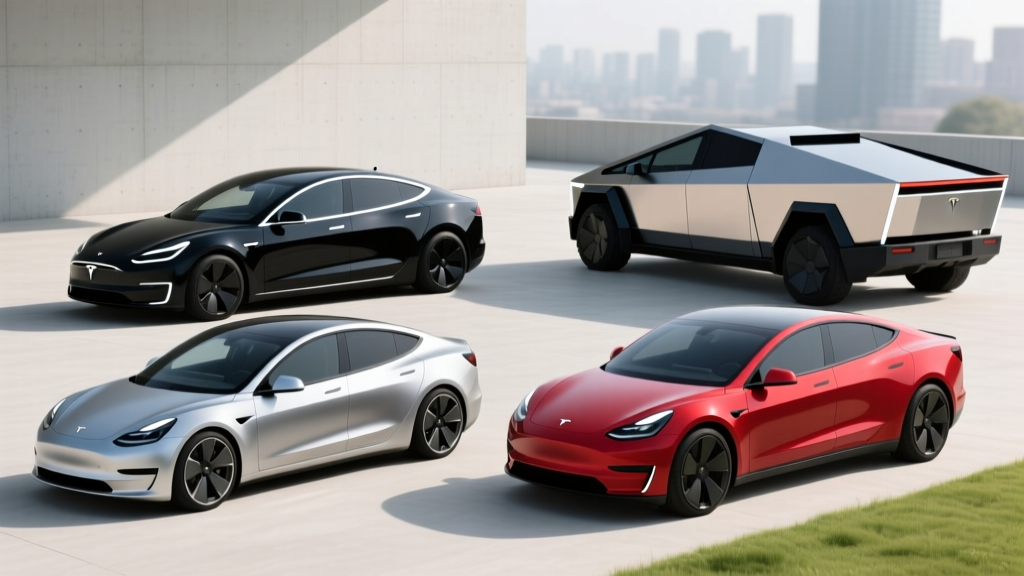
If you are shopping for a Tesla in 2026 and searching for Tesla maximum mileage, the answer depends on which model, trim, and wheel size you choose — and more importantly, how and where you drive. Tesla's lineup spans from the refreshed Model 3 Long Range to the tri-motor Cybertruck, and EPA estimates vary by more than 150 miles across the range. This guide ranks every current-production Tesla by range, pairs each EPA figure with real-world expectations, and breaks down charging speed, pricing, and tax-credit eligibility so you can pick the right one for your commute or cross-country trips.
Tesla Maximum Mileage Ranking: Every 2026 Model at a Glance
The table below ranks every current Tesla by EPA-estimated range. Note that wheel size, drivetrain, and performance trims significantly affect these numbers — sometimes by 40+ miles on the same vehicle.
| Rank | Model / Trim | EPA Range (mi) | Battery (kWh, usable) | Chemistry | MPGe (combined) | 0-60 mph | Base MSRP |
|---|---|---|---|---|---|---|---|
| 1 | Model S Long Range (19" wheels) | 402 | ~100 (NMC) | NMC | 120 | 3.1 s | $79,990 |
| 2 | Model 3 Long Range RWD (18" wheels) | 363 | ~79 (NMC) | NMC | 132 | 5.8 s | $42,490 |
| 3 | Model Y Long Range AWD (19" wheels) | 320 | ~79 (NMC) | NMC | 122 | 4.8 s | $44,990 |
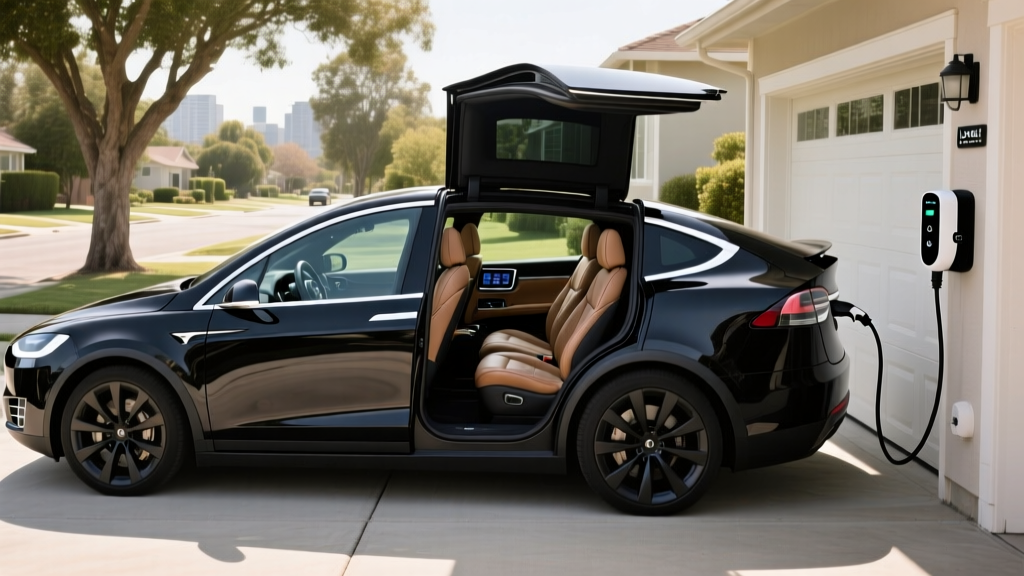
| 4 | Model X Long Range (20" wheels) | 311 | ~100 (NMC) | NMC | 104 | 3.8 s | $79,990 |
| 5 | Model 3 Performance AWD | 315 | ~79 (NMC) | NMC | 116 | 2.9 s | $52,990 |
| 6 | Model 3 RWD (Standard) | 272 | ~60 (LFP) | LFP | 132 | 5.8 s | $36,990 |
| 7 | Cybertruck AWD | 340 | ~123 (NMC) | NMC | 76 | 4.1 s | $79,990 |
| 8 | Model Y Performance AWD | 285 | ~79 (NMC) | NMC | 111 | 3.5 s | $49,990 |
Source: fueleconomy.gov and Tesla.com 2026 configurator. Prices exclude destination.
Real-World Range: What the EPA Sticker Doesn't Tell You
The Model S Long Range leads the lineup at an EPA-estimated 402 miles — the highest of any current-production Tesla and one of the longest ranges in the entire EV market. But maximum mileage on paper does not always translate to maximum mileage on the road.
Real-World Range Expectations by Model
| Model | EPA Range | Highway (70 mph, 72°F) | Cold Weather (30°F, mixed) | Worst-Case (highway + cold) |
|---|---|---|---|---|
| Model S Long Range | 402 mi | ~330-350 mi | ~290-320 mi | ~250-270 mi |
| Model 3 Long Range RWD | 363 mi | ~300-320 mi | ~260-290 mi | ~220-240 mi |
| Model Y Long Range AWD | 320 mi | ~265-285 mi | ~230-255 mi | ~195-215 mi |
| Model 3 RWD (LFP) | 272 mi | ~225-245 mi | ~195-215 mi | ~165-185 mi |
| Cybertruck AWD | 340 mi | ~260-280 mi | ~220-250 mi | ~180-210 mi |
The Model 3 Long Range RWD deserves special attention for range seekers. Its single-motor RWD layout is lighter than the dual-motor AWD variants, and its aerodynamic sedan profile outperforms the taller Model Y crossover on the highway. At 132 MPGe combined, it is also Tesla's most efficient vehicle, consuming roughly 25 kWh per 100 miles.
The Cybertruck's angular stainless-steel body and heavy 6,800+ lb curb weight make it Tesla's least efficient vehicle at just 76 MPGe. Its 340-mile EPA figure drops sharply at highway speeds — expect closer to 260-280 miles on a 70 mph road trip. The stainless-steel exoskeleton also means no traditional crumple-zone body panels to repair; collision damage often requires full panel replacement.
Charging Speed: DC Fast, Level 2, and the Charge Curve
Tesla's Supercharger network remains the most reliable DC fast-charging ecosystem in North America, but peak kW ratings do not tell the full story. Tesla vehicles precondition the battery when a Supercharger is set as a navigation destination, warming or cooling the pack to optimize the charge curve — the rate at which charging slows as the battery fills past 80% state of charge (SoC).
| Model | Peak DC kW | 10-80% Time | Level 2 Rate (kW) | Level 2 Miles/Hour | Connector |
|---|---|---|---|---|---|
| Model S Long Range | 250 kW | ~27 min | 11.5 kW | ~34 mi/hr | NACS (native) |
| Model 3 Long Range RWD | 250 kW | ~25 min | 11.5 kW | ~40 mi/hr | NACS (native) |
| Model Y Long Range AWD | 250 kW | ~25 min | 11.5 kW | ~37 mi/hr | NACS (native) |
| Model X Long Range | 250 kW | ~30 min | 11.5 kW | ~30 mi/hr | NACS (native) |
| Model 3 RWD (LFP) | 170 kW | ~30 min | 7.6 kW | ~30 mi/hr | NACS (native) |
| Cybertruck AWD | 250 kW | ~35 min | 11.5 kW | ~28 mi/hr | NACS (native) |
Key distinction — kW vs. kWh: kW (kilowatts) measures charging power, or how fast energy flows into the battery. kWh (kilowatt-hours) measures battery capacity, or how much energy the battery stores. A 250 kW charger fills a 79 kWh battery quickly, but only at peak rate for a portion of the session.
The Model 3 RWD with the LFP battery charges noticeably slower than NMC-equipped Teslas, peaking at just 170 kW. However, LFP batteries tolerate daily charging to 100% SoC without accelerated degradation — a significant advantage for commuters who can charge at home overnight. Tesla recommends charging LFP packs to 100% at least once per week for accurate state-of-charge calibration.
At home on a Level 2 Tesla Wall Connector (up to 48 amps / 11.5 kW on a NEMA 14-50 or hardwired 60-amp circuit), most Teslas add 30-40 miles of range per hour of charging. A full overnight session easily replenishes a daily commute. Installation costs for a home Level 2 charger typically range from $500 (simple outlet near panel) to $2,000+ if a panel upgrade or long conduit run is needed.
Battery Chemistry, Degradation, and Warranty Coverage
Tesla uses two battery chemistries across its lineup, and the choice has real ownership implications:
| Factor | LFP (Lithium Iron Phosphate) | NMC (Nickel Manganese Cobalt) |
|---|---|---|
| Models using | Model 3 RWD (Standard) | All Long Range & Performance trims |
| Energy density | Lower (heavier for same kWh) | Higher (lighter, more range) |
| Cycle life | 3,000+ cycles | 1,000-2,000 cycles |
| Daily charging to 100% | Recommended | Not recommended (80% daily limit) |
| Cold-weather performance | Weaker (slower charging, more range loss) | Better thermal tolerance |
| Cobalt content | None | Contains cobalt |
| Cost | Lower | Higher |
All current Tesla models carry an 8-year / 100,000-mile battery and drive unit warranty (120,000 miles on Model S and Model X). The warranty guarantees the battery will retain at least 70% of its original capacity during the coverage period. Real-world degradation data from fleet studies suggests Tesla NMC packs lose roughly 10-12% capacity in the first 100,000 miles, with degradation slowing significantly afterward. LFP packs show even slower degradation curves, often retaining 90%+ capacity at 100,000 miles.
Out-of-warranty battery replacement remains a significant expense. A Model 3/Y pack replacement currently runs approximately $12,000-$16,000 at Tesla service centers, while Model S/X packs can exceed $20,000. However, the vast majority of Tesla batteries outlast the vehicle itself — total pack failure before 200,000 miles is rare.
Pricing, Trims, and Federal Tax Credit Eligibility
Tesla's pricing has shifted frequently, and federal tax credit eligibility under IRS §30D depends on MSRP caps, buyer income limits, and battery-component/critical-mineral sourcing requirements that change annually.
| Model / Trim | Base MSRP | As-Tested (typical) | MSRP Cap Met? | Est. §30D Credit |
|---|---|---|---|---|
| Model 3 RWD | $36,990 | $38,500 | Yes (sedan ≤$55K) | Up to $7,500* |
| Model 3 Long Range RWD | $42,490 | $44,000 | Yes (sedan ≤$55K) | Up to $7,500* |
| Model 3 Performance | $52,990 | $54,500 | Yes (sedan ≤$55K) | Up to $7,500* |
| Model Y Long Range AWD | $44,990 | $47,500 | Yes (SUV ≤$80K) | Up to $7,500* |
| Model Y Performance | $49,990 | $52,000 | Yes (SUV ≤$80K) | Up to $7,500* |
| Model S Long Range | $79,990 | $84,000 | No (sedan cap $55K) | $0 |
| Model X Long Range | $79,990 | $84,000 | Yes (SUV ≤$80K)** | Up to $7,500* |
| Cybertruck AWD | $79,990 | $85,000 | Yes (truck ≤$80K)** | Up to $7,500* |
*Eligibility depends on buyer AGI (≤$150K single / $300K joint), battery sourcing compliance, and point-of-sale transfer election. **MSRP classification (SUV/truck vs. sedan) is determined by the IRS and has shifted in prior years. Always verify at fueleconomy.gov before purchasing.
- Buyer modified AGI ≤ $150,000 (single) or $300,000 (married filing jointly)
- Vehicle MSRP under cap: $55,000 for sedans; $80,000 for SUVs, vans, and trucks
- Battery components manufactured or assembled in North America (percentage threshold increases annually)
- Critical minerals sourced from the U.S. or FTA partners (percentage threshold increases annually)
- Vehicle assembled in North America (all U.S.-built Teslas qualify)
- Credit can be transferred to the dealer at point of sale for an instant price reduction
Consult a tax professional to confirm eligibility for your specific situation.
Performance, Interior Space, and Daily Livability
Range is only one dimension of an EV purchase. Here is how the lineup compares on space, performance, and daily use:
| Model | Drivetrain | Horsepower | 0-60 mph | Cargo (cu ft) | Rear Legroom (in) |
|---|---|---|---|---|---|
| Model S LR | Dual-Motor AWD | 670 hp | 3.1 s | 28 (rear) + 5 (frunk) | 35.4 |
| Model 3 LR RWD | Rear-Wheel Drive | 271 hp | 5.8 s | 23 (trunk) + 3 (frunk) | 35.2 |
| Model Y LR AWD | Dual-Motor AWD | 384 hp | 4.8 s | 34 (rear) + 4 (frunk) | 41.6 |
| Model X LR | Dual-Motor AWD | 670 hp | 3.8 s | 77 (max) + 6 (frunk) | 37.1 |
| Cybertruck AWD | Dual-Motor AWD | 600 hp | 4.1 s | 67 (bed + vault) | 36.0 (est.) |
The Model Y Long Range AWD is Tesla's best-selling vehicle for a reason: its crossover profile delivers 34 cubic feet of rear cargo space (expandable with seats folded), generous 41.6 inches of rear legroom, and a practical ride height for families. Its 320-mile EPA range is more than adequate for most road trips given Tesla's Supercharger density.
The Model 3 Long Range RWD is the efficiency and value champion. At 132 MPGe combined and a $42,490 MSRP (potentially $34,990 after the full tax credit), it delivers the best cost-per-mile-of-range in the lineup. The trade-off is a tighter rear seat (35.2 inches of legroom) and a trunk rather than a hatch — less practical for bulky cargo.
The Model S Long Range holds the maximum-mileage crown at 402 miles, but its $79,990 base price and ineligibility for the federal tax credit (sedans are capped at $55,000 MSRP under §30D) make it a premium proposition. Its air suspension, 17-inch center touchscreen, rear-seat entertainment display, and 670-hp dual-motor powertrain position it as a luxury grand tourer rather than a value play.
Autopilot, FSD (Supervised), and Smart Driving Tech
All 2026 Teslas ship with Basic Autopilot (adaptive cruise control + lane centering) at no extra cost. Full Self-Driving (Supervised) adds automatic lane changes, traffic-light and stop-sign recognition, and assisted navigation on city streets. As of 2026, FSD is available as a $8,000 one-time purchase or $99/month subscription. Tesla has not published comprehensive safety data comparing FSD Supervised to manual driving across all conditions, and NHTSA continues to monitor Level 2 systems across all manufacturers.
Every Tesla also includes a comprehensive suite of passive and active safety features: automatic emergency braking, blind-spot monitoring, lane-departure warning, and 360-degree camera views. The Model 3 and Model Y have consistently earned IIHS Top Safety Pick+ ratings in recent model years.
Which Tesla Should You Buy? Decision Framework
- You want the best efficiency (132 MPGe) and range-per-dollar
- Your priority is commuting and solo or couple driving
- You want to maximize the $7,500 tax credit (MSRP well under the $55K sedan cap)
- Rear-seat and cargo space are secondary concerns
- You need family-friendly cargo space and rear-seat room
- You want AWD capability for snow or rain
- You take regular road trips and value 320 miles of range
- You want crossover ride height and easy car-seat installation
- Absolute maximum range (402 mi) is the top priority
- You want luxury features (air suspension, premium audio, rear screen)
- Budget is flexible ($80K+ with no federal tax credit)
- You frequently drive 300+ mile highway trips
- You want the lowest entry price ($36,990, potentially ~$29,490 after credit)
- You can charge at home daily to 100% (LFP advantage)
- Your daily commute is under 100 miles round-trip
- You plan to keep the car 8+ years (LFP longevity)
- You need 3-row seating (Model X is expensive; consider the Rivian R1S or Kia EV9)
- You want a sub-$30K EV (consider the Chevy Equinox EV or used Model 3)
- You need a truck for heavy towing (Cybertruck's 11,000-lb rating is strong, but efficiency suffers badly when towing)
Frequently Asked Questions
What Tesla has the longest range in 2026?
The Model S Long Range at 402 miles EPA — the highest of any Tesla and among the longest-range EVs sold in the U.S. However, its $79,990 price and ineligibility for the federal tax credit make the Model 3 Long Range RWD (363 miles, ~$34,990 after credit) a far better value for range-per-dollar.
How does cold weather affect Tesla range?
Expect 20-30% range reduction in sustained sub-freezing temperatures. The LFP battery in the Model 3 RWD is more affected by cold than NMC packs, with slower DC charging speeds and greater range loss. All Teslas include a heat pump (standard since 2021) that significantly reduces cabin-heating energy draw compared to resistive heaters. Preconditioning the battery before driving and while charging recovers meaningful range.
Do all Teslas qualify for the $7,500 federal tax credit?
No. The Model S is ineligible because its MSRP exceeds the $55,000 sedan cap under IRS §30D. Other models may qualify for the full $7,500, a partial credit, or no credit depending on battery-sourcing compliance, buyer income, and current-year IRS rules. Always verify eligibility on fueleconomy.gov and with a tax professional before purchasing.
Is the Tesla Supercharger network really better than other charging networks?
In terms of uptime, plug-and-charge simplicity, and geographic coverage, yes — Tesla's Supercharger network consistently outperforms third-party networks in reliability surveys. With 2026's industry-wide shift to NACS (the Tesla connector standard), non-Tesla EVs are gaining Supercharger access, but Tesla owners still benefit from native integration: automatic billing, battery preconditioning on route, and in-car charger navigation.
How long will a Tesla battery last before needing replacement?
Tesla's battery warranty covers 8 years / 100,000-120,000 miles with a 70% capacity retention guarantee. Real-world data shows most Tesla NMC packs retain 88-90% capacity at 100,000 miles and can reach 200,000+ miles before degradation becomes noticeable. LFP packs (Model 3 RWD) show even slower degradation. Full battery replacement costs $12,000-$20,000+ depending on model, but is rarely needed within the vehicle's typical lifespan.
What is the real-world highway range of the Model Y Long Range?
The Model Y Long Range AWD carries a 320-mile EPA estimate. On a 70 mph highway trip at moderate temperatures, expect approximately 265-285 miles before reaching 0% SoC. In cold weather (30°F or below), plan for 230-255 miles. For road-trip planning, Tesla's in-car trip planner with Supercharger routing is generally accurate within 5-10% when battery preconditioning is active.