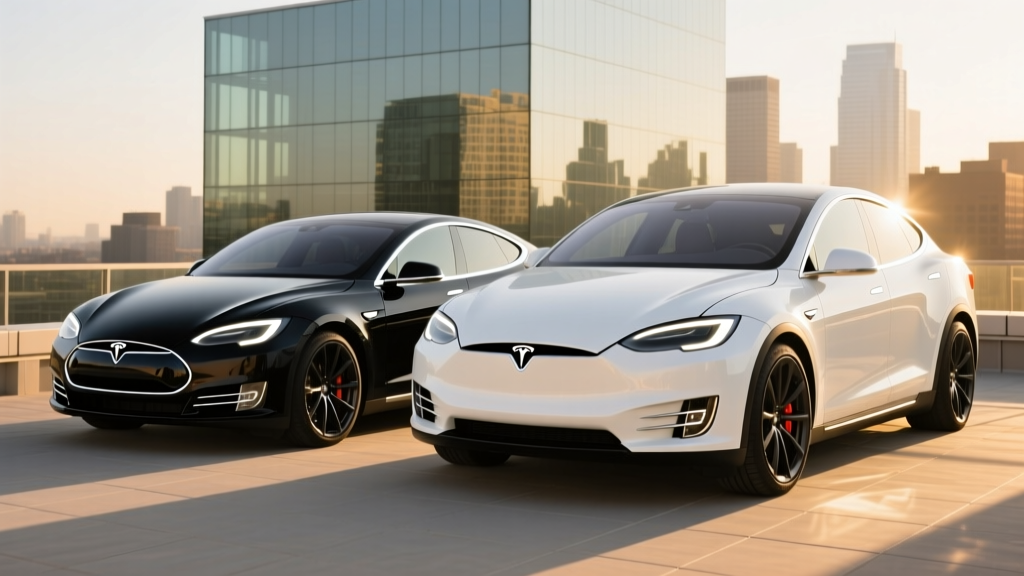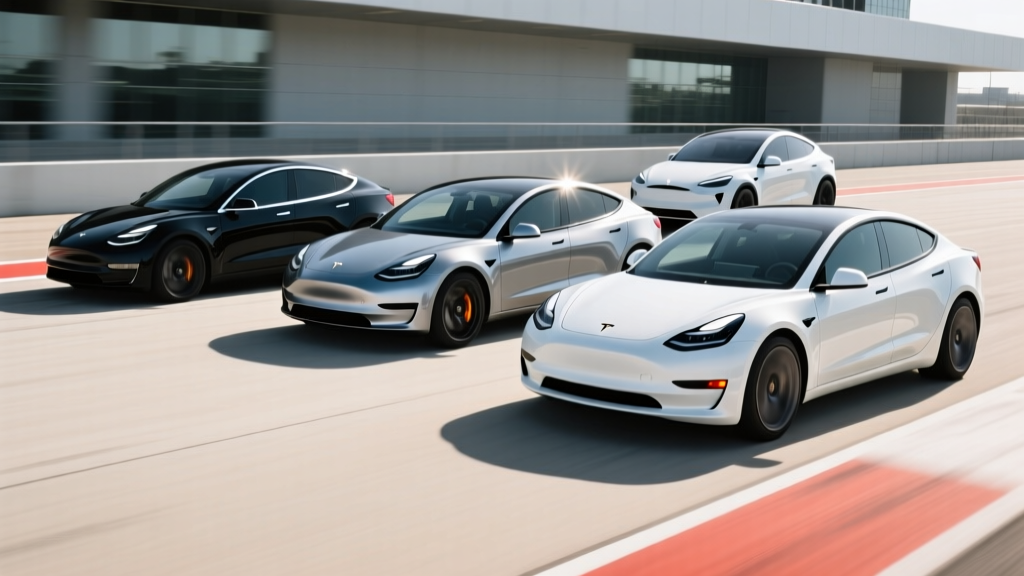
When shoppers search for Tesla max speed, they're usually asking one of two things: how fast does a Tesla accelerate, or what is its electronically limited top speed? The answer depends heavily on which model and trim you choose. A base Model 3 Rear-Wheel Drive tops out at 125 mph, while a Model S Plaid will pull an electronically governed 200 mph — making it one of the fastest production sedans on the planet. But top speed is only part of the performance story. Below, we break down every current-production Tesla by the numbers that actually matter to buyers: 0-60 times, EPA range, charging speeds, efficiency, and real-world ownership costs.
2026 Tesla Lineup: Max Speed and Performance at a Glance
| Model / Trim | Top Speed (mph) | 0-60 mph (sec) | Horsepower | Drivetrain | EPA Range (mi) |
|---|---|---|---|---|---|
| Model 3 RWD | 125 | 5.8 | ~283 | RWD (single motor) | 272 |
| Model 3 Long Range AWD | 125 | 4.2 | ~346 | AWD (dual motor) | 363 |
| Model 3 Performance | 163 | 2.9 | ~510 | AWD (dual motor) | 315 |
| Model Y Long Range AWD | 125 | 4.8 | ~384 | AWD (dual motor) | 320 |
| Model Y Performance | 155 | 3.5 | ~456 | AWD (dual motor) | 298 |
| Model S Long Range | 155 | 3.1 | ~670 | AWD (dual motor) | 402 |
| Model S Plaid | 200 | 1.99 | 1,020 | AWD (tri-motor) | 396 |
| Model X Long Range | 155 | 3.8 | ~670 | AWD (dual motor) | 335 |
| Model X Plaid | 163 | 2.5 | 1,020 | AWD (tri-motor) | 326 |
| Cybertruck AWD | 112 | 5.8 | ~600 | AWD (dual motor) | 340 |
| Cybertruck Cyberbeast | 130 | 2.6 | ~845 | AWD (tri-motor) | 320 |
Tesla electronically governs top speed on every model. The limits are set based on tire ratings, thermal management capacity, and the vehicle's intended use case. The Model 3 RWD's 125 mph governor, for instance, reflects its all-season tire spec and commuter-focused positioning. The Model S Plaid's 200 mph ceiling requires the optional carbon-ceramic brake package and specific high-speed-rated tires — a hardware upgrade that costs several thousand dollars beyond the base Plaid MSRP.
Battery Chemistry, Capacity, and Efficiency by Model
Tesla uses two primary battery chemistries across its lineup, and the distinction matters for longevity, charging habits, and cold-weather performance.
| Model / Trim | Battery Capacity (kWh usable) | Chemistry | MPGe (combined) | kWh/100 mi |
|---|---|---|---|---|
| Model 3 RWD | ~60 | LFP | 132 | 25 |
| Model 3 Long Range AWD | ~79 | NMC | 134 | 25 |
| Model 3 Performance | ~79 | NMC | 121 | 28 |
| Model Y Long Range AWD | ~79 | NMC | 122 | 28 |
| Model Y Performance | ~79 | NMC | 117 | 29 |
| Model S Long Range | ~100 | NMC | 120 | 28 |
| Model S Plaid | ~100 | NMC | 116 | 29 |
| Model X Long Range | ~100 | NMC | 109 | 31 |
| Cybertruck AWD | ~123 | NMC (4680 cells) | ~70 | ~48 |
| Cybertruck Cyberbeast | ~123 | NMC (4680 cells) | ~68 | ~50 |
LFP (lithium iron phosphate) batteries, found in the base Model 3 RWD, offer longer cycle life and can be charged to 100% daily without degradation concerns. The trade-off: lower energy density (hence the smaller pack and shorter range) and greater susceptibility to cold-weather range loss — expect 25-35% reduction in freezing temperatures versus 15-25% for NMC packs.
NMC (nickel manganese cobalt) packs in Long Range, Performance, and Plaid trims deliver higher energy density and better cold-weather retention, but Tesla recommends daily charging to 80-90% for long-term health, reserving 100% for road trips. Per fueleconomy.gov, the Model 3 Long Range AWD achieves 134 MPGe combined — among the most efficient EVs sold in the U.S.
EPA range estimates assume a mix of city and highway driving at moderate temperatures. In real-world use:
• Highway driving (70-80 mph): Expect 15-20% less than EPA. A Model 3 Long Range rated at 363 mi EPA will deliver roughly 290-310 mi at sustained highway speeds.
• Cold weather (below 32°F): LFP-equipped Model 3 RWD may drop to 180-200 mi. NMC models lose 15-25%.
• City / stop-and-go: Regenerative braking recovers energy; real-world range often meets or slightly exceeds EPA.
Preconditioning the battery (via the Tesla app before departure) mitigates cold-weather loss and is essential for fast-charging speed.
Charging Speed: DC Fast Charging and Home Level 2
Charging speed is arguably more important than top speed for daily ownership. Tesla's Supercharger network remains the most reliable DC fast-charging infrastructure in the U.S., and Tesla vehicles now support the NACS (North American Charging Standard) connector natively — the same connector adopted by Ford, GM, Rivian, and most other automakers beginning in 2025.
| Model / Trim | Peak DC Fast Charge (kW) | 10-80% DC Time (min) | Level 2 Home Rate (kW) | Miles Added per Hour (L2) |
|---|---|---|---|---|
| Model 3 RWD (LFP) | 170 | ~30 | 11.5 | ~37 |
| Model 3 Long Range / Perf | 250 | ~25 | 11.5 | ~44 |
| Model Y Long Range / Perf | 250 | ~27 | 11.5 | ~40 |
| Model S / X (all trims) | 250 | ~30 | 11.5 | ~35 |
| Cybertruck (all trims) | 250+ | ~30 | 11.5 | ~28 |
Key charging insight: Peak kW is not sustained kW. A Model 3 Long Range may hit 250 kW at low state-of-charge (SoC), but the charge curve tapers significantly above 60% SoC. The 10-80% time is the practical metric — charging from 80-100% can add another 20-30 minutes due to cell-balancing requirements, especially on NMC packs. For road trips, plan stops around the 10-80% window for the fastest throughput.
At home, a Tesla Wall Connector on a 48-amp circuit (requiring a 60-amp breaker) delivers up to 11.5 kW. Most owners with a standard 240V/40A dryer outlet will see ~7.7 kW, adding roughly 25-30 miles of range per hour. Installation costs typically run $500-$2,000 depending on panel proximity and whether a service upgrade is needed. Always have a licensed electrician evaluate your panel capacity before installation.
Pricing, Trims, and Federal Tax Credit Eligibility
Tesla's pricing has fluctuated frequently over the past few years. Below are approximate 2026 base MSRPs before destination fees and options. The IRS §30D federal tax credit can reduce effective cost by up to $7,500, but eligibility depends on multiple factors that change annually.
| Model / Trim | Base MSRP (approx.) | Federal Tax Credit (up to) | Effective Price After Credit |
|---|---|---|---|
| Model 3 RWD | $38,990 | $7,500* | ~$31,490 |
| Model 3 Long Range AWD | $45,490 | $7,500* | ~$37,990 |
| Model 3 Performance | $52,990 | $7,500* | ~$45,490 |
| Model Y Long Range AWD | $44,990 | $7,500* | ~$37,490 |
| Model Y Performance | $49,990 | $7,500* | ~$42,490 |
| Model S Long Range | $79,990 | $0** | $79,990 |
| Model S Plaid | $94,990 | $0** | $94,990 |
| Model X Long Range | $79,990 | $0** | $79,990 |
| Cybertruck AWD | $59,990 | Varies*** | Varies |
*Credit eligibility requires meeting IRS battery-sourcing and critical-minerals requirements, buyer income caps ($150K single / $300K joint AGI), and vehicle MSRP caps ($55K for sedans, $80K for SUVs/trucks). Point-of-sale transfer is available at participating dealers. Verify current rules at irs.gov before purchasing.
**Model S and Model X exceed the $55,000 sedan MSRP cap and do not qualify for the new-vehicle §30D credit.
***Cybertruck MSRP and credit eligibility remain subject to change as production ramps. The $80,000 truck/SUV MSRP cap may apply depending on IRS classification of specific trims.
Cargo Space, Interior, and Practicality
Performance means little if the car doesn't fit your life. Here's how Tesla's lineup stacks up on interior volume and utility:
- Model 3: 23 cu ft trunk + ~3 cu ft frunk. Rear legroom is 35.2 inches — adequate for adults but tighter than midsize competitors. The minimalist interior eliminates physical stalks and buttons; turn signals are on the steering wheel face (2024+ refresh).
- Model Y: 30 cu ft behind the second row (76 cu ft with seats folded) + ~4 cu ft frunk. Rear legroom of 40.5 inches makes it genuinely family-friendly. Available 7-seat option (small third row, best for children).
- Model S: 28 cu ft rear hatch + ~5 cu ft frunk. Rear legroom is generous at 40.9 inches. The 17-inch center touchscreen and rear-seat 8-inch display are standard. Yoke steering optional.
- Model X: Up to 88 cu ft with all rear seats folded. Falcon-wing rear doors require less lateral clearance than conventional doors but add mechanical complexity. Available in 5-, 6-, or 7-seat configurations.
- Cybertruck: 6.5-foot bed with 100 cu ft of lockable storage (including under-bed and sail-pillar compartments). Towing capacity: up to 11,000 lbs. The stainless-steel exoskeleton is dent-resistant but shows fingerprints readily.
Driver Assistance, Tech, and Software
Tesla Autopilot and Full Self-Driving (Supervised) are SAE Level 2 driver-assistance systems. The driver must remain fully engaged, hands on or near the wheel, and eyes on the road at all times. These systems do not make the vehicle self-driving. Only Level 4 robotaxi services (Waymo, Zoox) operate without a human driver in defined geographic zones.
Every Tesla ships with Basic Autopilot (lane centering + adaptive cruise control). Enhanced Autopilot ($6,000) adds auto lane-change, auto-park, and Navigate on Autopilot. Full Self-Driving (Supervised) ($8,000 or $99/month subscription) adds traffic-light and stop-sign recognition, city-street autosteer, and the ability to summon the car in parking lots. FSD's capability varies dramatically by geography and road complexity — it excels on well-mapped suburban arterials but can struggle in construction zones, unmapped rural roads, and heavy snow.
All Teslas feature over-the-air software updates that regularly add features, improve efficiency, and adjust performance parameters. The 15.4-inch (Model 3/Y) or 17-inch (Model S/X) center touchscreen runs Tesla's proprietary infotainment OS — no Apple CarPlay or Android Auto. Streaming media, gaming, and a built-in trip planner with Supercharger routing are standard.
Warranty Coverage
Tesla's warranty structure is straightforward:
- Basic Vehicle Limited Warranty: 4 years / 50,000 miles, whichever comes first.
- Battery & Drive Unit Warranty: 8 years / 100,000 miles (Model 3 RWD) or 8 years / 120,000 miles (Long Range, Performance, Model S, Model X, Cybertruck). Tesla guarantees the battery will retain at least 70% of its original capacity during the warranty period.
Real-world degradation data from fleet analyses suggests most Tesla NMC packs lose roughly 10-12% capacity over the first 100,000 miles, with the curve flattening significantly afterward. LFP packs in the Model 3 RWD show similar or slightly better retention, with the added benefit that regular 100% charging keeps the cells balanced and makes degradation easier to monitor. For context, a Model 3 Long Range that originally delivered 363 EPA miles would still offer roughly 320+ miles at 100,000 miles based on typical degradation curves.
Pros and Cons: The Honest Assessment
- Supercharger network: 50,000+ stalls globally, highest uptime of any DC network
- Class-leading efficiency (Model 3 LR at 134 MPGe combined)
- Over-the-air updates continuously improve the vehicle post-purchase
- Model S Plaid's 1.99-sec 0-60 is hypercar performance at sedan pricing
- LFP option (Model 3 RWD) allows daily 100% charging without guilt
- Strong resale values relative to non-Tesla EVs
- No Apple CarPlay / Android Auto — Tesla-only infotainment ecosystem
- Model 3/Y steering-wheel turn signals require relearning muscle memory
- FSD (Supervised) is expensive and still requires full driver attention
- Build quality inconsistency — panel gaps and trim issues reported more than legacy OEMs
- Model S and X do not qualify for the federal tax credit (MSRP cap)
- Cybertruck's angular design polarizes and its size complicates urban parking
Who Should Buy a Tesla in 2026?
Choose the Model 3 RWD if: You want the lowest entry price, commute under 40 miles daily, have home charging, and want LFP's 100% daily-charge convenience. Effective price after tax credit can dip below $32,000.
Choose the Model 3 Long Range or Model Y Long Range if: You take regular road trips, need 300+ miles of real-world range, live in a cold climate (NMC handles winter better), or need AWD. The Model Y adds family-friendly cargo space.
Choose the Model 3 Performance or Model Y Performance if: You want sub-4-second 0-60 acceleration without stepping up to Model S pricing, and you value track-capable braking and suspension tuning.
Choose the Model S Plaid if: You want the fastest Tesla max speed (200 mph) and quickest acceleration (1.99 sec) in a four-door sedan, and the $95K+ price is within budget. Understand that the federal tax credit does not apply.
Choose the Cybertruck if: You need truck utility (towing, bed cargo, off-road capability) and want an EV powertrain. The Cyberbeast trim delivers startling acceleration for a 6,800-lb vehicle.
Frequently Asked Questions
What is the fastest Tesla you can buy today?
The Model S Plaid holds the title with a 1.99-second 0-60 mph time and an electronically limited top speed of 200 mph (with the optional carbon-ceramic brake package). Without that package, the Plaid is governed to 175 mph. No other production Tesla reaches 200 mph.
Why does Tesla limit top speed on most models?
Top-speed governors protect tire integrity (all-season tires on base models are rated to ~130 mph), manage battery and motor thermal loads, and align with the vehicle's intended use. Sustained high-speed driving also drains the battery extremely quickly — at 150 mph, a Model S Plaid would deplete its pack in roughly 50-60 miles.
Does a Tesla's top speed affect its real-world range?
Only if you actually drive at top speed, which is impractical and illegal on public roads. What does affect range is sustained highway driving above 70 mph. Aerodynamic drag increases with the square of velocity, so driving at 80 mph versus 65 mph can reduce range by 15-20%.
How fast does a Tesla charge at a Supercharger?
Most current Tesla models peak at 250 kW on V3 Superchargers, achieving a 10-80% charge in roughly 25-30 minutes. The LFP-equipped Model 3 RWD peaks lower at around 170 kW, adding roughly 5-8 minutes to the 10-80% window. Tesla's next-generation V4 Superchargers, beginning deployment in select locations, may support higher peak rates for future vehicle architectures.
Does the Tesla Model 3 qualify for the $7,500 federal tax credit?
The Model 3 RWD and Long Range typically qualify for up to $7,500 under IRS §30D, subject to battery-sourcing and critical-minerals requirements that change annually. Buyer income must not exceed $150,000 (single) or $300,000 (joint), and the sedan MSRP must remain under $55,000. The credit can be transferred at point of sale to reduce the purchase price directly. Always verify current eligibility at irs.gov and consult a tax professional.
Is Tesla's Full Self-Driving worth the cost?
For most buyers, no — Basic Autopilot (included) handles highway commuting well. FSD (Supervised) at $8,000 or $99/month is a Level 2 system that still demands your full attention. It performs impressively on well-mapped routes but requires constant supervision. The monthly subscription is a lower-risk way to test it on a road trip before committing to a full purchase.