What Exactly Is 'Mad Max Mode' in a Tesla?
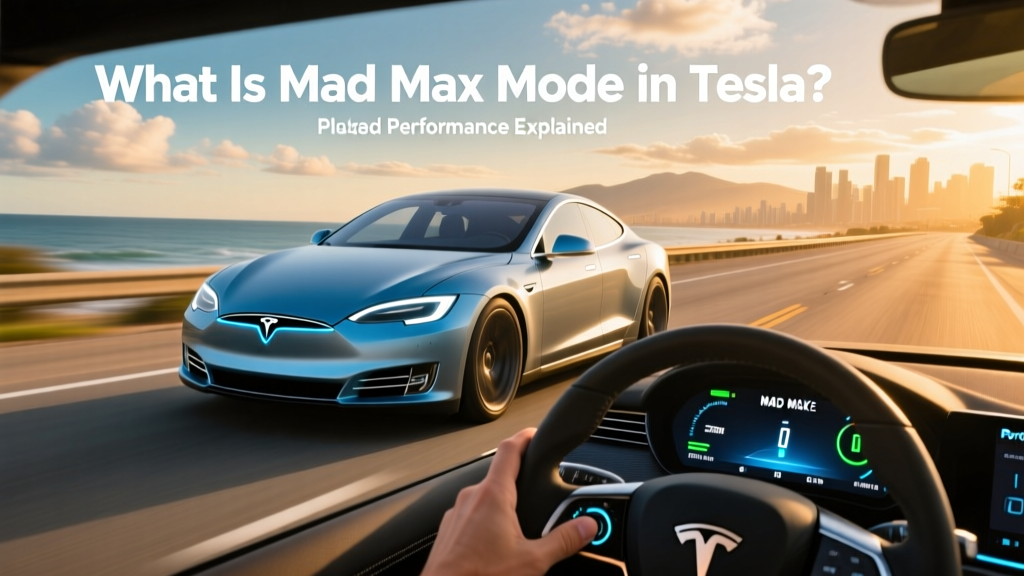
If you've seen Tesla owners posting launch videos or heard enthusiasts reference "Mad Max mode," you're not looking at an official Tesla setting. Mad Max mode is a colloquial term for the maximum acceleration and performance capabilities of Tesla's Plaid powertrain — specifically the tri-motor setup found in the Model S Plaid and Model X Plaid. The name evokes the unhinged, adrenaline-soaked acceleration these vehicles deliver, rivaling hypercars costing five times as much.
Tesla's official performance branding is Plaid (a nod to the comedy film Spaceballs, where "ludicrous speed" gives way to "plaid"). When drivers talk about Mad Max mode, they're referring to the full-throttle experience of launching a Plaid-equipped Tesla in its most aggressive drive setting — Track Mode or Drag Strip mode with battery preconditioning enabled. The result is a visceral, neck-snapping 0-60 mph sprint that Tesla claims hits 1.99 seconds in the Model S Plaid.
This review focuses on the 2026 Tesla Model S Plaid as the flagship "Mad Max" vehicle, breaking down the real numbers behind the hype: range, charging, pricing, tax-credit eligibility, and whether this tri-motor beast makes sense as a daily driver or remains a weekend toy.
2026 Tesla Model S Plaid: Core Specifications
| Spec | Value |
|---|---|
| Drivetrain | Tri-Motor AWD (1 front, 2 rear carbon-sleeved rotors) |
| Horsepower | 1,020 hp |
| 0-60 mph | 1.99 seconds (with rollout subtracted) |
| Top Speed | 200 mph |
| Battery Capacity | ~95 kWh usable (NMC chemistry) |
| EPA Range | 396 miles (19" wheels) / 359 miles (21" wheels) |
| Efficiency | 124 MPGe combined / 27 kWh/100mi |
| Max DC Fast Charge | 250 kW (V3 Supercharger) |
| 10-80% DC Charge Time | ~27 minutes |
| Level 2 Home Charge Rate | 11.5 kW (~44 miles/hr) |
| Cargo Volume | 28 cu ft (rear) + 3.1 cu ft (frunk) |
| Base MSRP | $89,990 (excl. destination) |
| Battery Warranty | 8 years / 150,000 miles (70% retention) |
A few notes on these figures: the 1.99-second 0-60 time includes a one-foot rollout subtraction, which is standard for drag-strip timing but shaves roughly 0.2-0.3 seconds from a standing-start measurement. On a true standing launch, expect closer to 2.2-2.3 seconds — still absurdly quick. The battery uses NMC (nickel manganese cobalt) chemistry, chosen for its higher energy density over LFP, which is necessary to deliver both 1,020 hp and nearly 400 miles of range.
Real-World Range: What the EPA Sticker Doesn't Tell You
EPA Estimated: 396 miles (19" Tempest wheels) / 359 miles (21" Arachnid wheels)
Real-World Highway (70-80 mph): ~300-330 miles
Real-World Mixed Commute: ~340-370 miles
Cold Weather (below 32°F): ~250-290 miles (30-35% reduction)
Note: The Plaid's tri-motor drivetrain and performance tuning sacrifice some efficiency versus the dual-motor Long Range variant. Aggressive driving — which, let's be honest, is the point — will compress range significantly. Sustained track use can drop range below 200 miles per charge cycle.
According to fueleconomy.gov, the Model S Plaid with 19-inch wheels achieves 124 MPGe combined. That's respectable for a 1,020-hp sedan, but it trails the Long Range AWD variant (rated at 122 MPGe but with 402 miles of range on a similar battery) because the Plaid's third motor and performance calibration add weight and parasitic drag.
For context, the Long Range Model S achieves an EPA-rated 402 miles, giving up only 0.2 seconds in the 0-60 sprint (3.1 seconds). If you're not planning to regularly exploit the Plaid's full output, the Long Range offers a more practical daily-driver range profile with 95% of the thrill.
Charging Speed: Supercharger Network and Home Setup
The Model S Plaid charges at up to 250 kW on Tesla V3 Superchargers using the native NACS connector. While some competitors now accept 350 kW on Electrify America or Ionity stations, Tesla's Supercharger network remains the most reliable DC fast-charging infrastructure in the U.S., with consistent uptime and seamless plug-and-charge authentication.
| Charging Level | Power / Connector | Rate | Time / Notes |
|---|---|---|---|
| Level 1 (120V) | ~1.4 kW / NACS | ~3-4 mi/hr | Emergency/trickle only; ~100+ hrs for full charge |
| Level 2 (240V Home) | 11.5 kW / NACS or J1772 adapter | ~44 mi/hr | ~9 hours for 10-100%; ideal overnight |
| DC Fast (V3 Supercharger) | 250 kW peak / NACS | Up to ~200 mi in 15 min | 10-80% in ~27 min; tapers above 80% |
| DC Fast (CCS adapter) | Up to 250 kW / CCS1 | Varies by station | Requires Tesla CCS adapter ($250 MSRP) |
Charging curve reality: Like all EVs, the Plaid doesn't sustain peak charge rate throughout the session. You'll see 250 kW only between roughly 10-30% State of Charge (SoC). From 30-60%, expect 150-180 kW. Above 80%, the rate drops sharply to protect the NMC battery cells — typically below 50 kW. This is why Tesla (and every EV manufacturer) quotes 10-80% times rather than 0-100%.
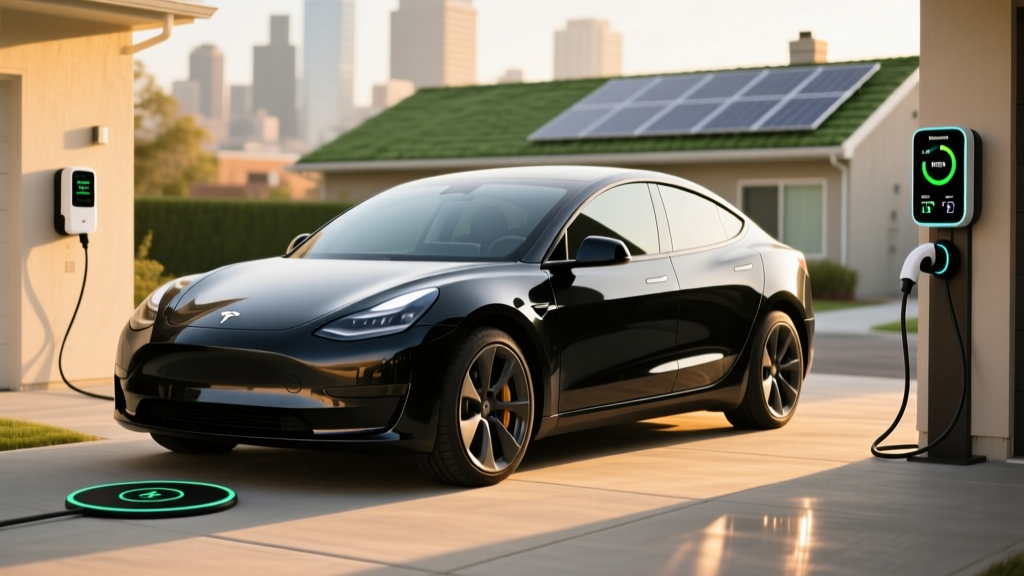
For home charging, a Wall Connector on a 60-amp circuit delivers the full 11.5 kW (48 amps continuous). Most owners with a 200-amp electrical panel can accommodate this without a panel upgrade, but installation costs typically run $500-$1,500 depending on conduit length and local permit requirements. A licensed electrician should verify your panel's available capacity before committing to a 60-amp circuit.
Pricing, Trims, and Federal Tax Credit Eligibility
| Trim | MSRP (excl. $1,390 destination) | Federal §30D Credit Eligible? |
|---|---|---|
| Long Range AWD | $74,990 | No — exceeds $55,000 sedan MSRP cap |
| Plaid (Tri-Motor AWD) | $89,990 | No — exceeds $55,000 sedan MSRP cap |
The Model S Plaid starts at $89,990 before destination and options. Add $21" Arachnid wheels ($4,500), Full Self-Driving (Supervised) capability ($8,000), and a premium interior color, and an as-tested price of $100,000-$105,000 is common.
Tax credit reality check: Under current IRS §30D rules, new sedans must have an MSRP at or below $55,000 to qualify for the up-to-$7,500 federal clean vehicle credit. The Model S — in any trim — far exceeds this cap. Buyers will not receive the federal tax credit on a new Model S Plaid. Some states offer separate EV rebates (California's CVRP, for instance, has its own income and price caps), but these vary by jurisdiction and change frequently. Consult your state's energy office or a tax professional for current local incentives.
If you're shopping used, a pre-owned Model S Plaid may qualify for the Used Clean Vehicle Credit (up to $4,000 or 30% of sale price, whichever is lower) under §25E, provided the sale price is at or below $25,000 and buyer income falls within limits ($75,000 single / $150,000 joint AGI). Given that used Plaid prices currently sit well above $25,000, this credit is unlikely to apply either.
Plaid Tech: What Makes 'Mad Max' Possible
The engineering behind the Plaid's performance is genuinely novel. Tesla uses three permanent-magnet synchronous reluctance motors — one on the front axle, two on the rear — with carbon-fiber-sleeved rotors. These sleeves allow the rotors to spin at extremely high RPM (over 20,000 RPM) without expanding and contacting the stator, which is the limiting factor in conventional EV motors at high speed. This is why the Plaid can sustain its 200-mph top speed rather than running out of breath at 150 mph like many single- or dual-motor EVs.
Torque vectoring: The twin rear motors independently control torque to each rear wheel, enabling active torque vectoring through corners. In Track Mode, the system can over-torque the outside rear wheel to rotate the car, dramatically reducing understeer in a 4,766-pound sedan.
Thermal management: The Plaid features an enhanced cooling system with larger heat exchangers and more aggressive thermal preconditioning. When you navigate to a Supercharger or activate Track Mode, the battery management system preconditions the pack to its optimal temperature window (roughly 40-50°C at the cell level), enabling maximum discharge power for launches and maximum charge acceptance at DC fast chargers.
Driver assistance — important clarification: The Model S Plaid comes standard with Tesla's Basic Autopilot (adaptive cruise + lane centering). Full Self-Driving (Supervised) is an $8,000 add-on. Per NHTSA's SAE automation framework, both of these are SAE Level 2 systems — the driver must remain fully engaged, hands on or near the wheel, eyes on the road. FSD (Supervised) is not self-driving. It handles many scenarios impressively but requires constant human oversight.
Tesla Autopilot and FSD (Supervised) are Level 2 driver-assistance systems. The vehicle can steer, accelerate, and brake under certain conditions, but the driver is legally and practically responsible at all times. Do not treat these systems as autonomous. Level 4 driverless capability (no human needed) exists only in geofenced robotaxi services like Waymo — not in any consumer vehicle you can purchase today.
Interior, Cargo, and Daily Livability
The 2026 Model S interior continues the minimalist approach Tesla adopted with the 2021 refresh: a 17-inch center touchscreen, a 12.3-inch instrument cluster, a yoke or round steering wheel (your choice, at no extra cost since 2023), and a rear-seat 8-inch touchscreen for climate and media control.
Passenger space:
- Front legroom: 42.7 inches
- Rear legroom: 35.4 inches
- Front headroom: 39.7 inches
- Rear headroom: 38.1 inches
Rear-seat comfort is adequate for adults on shorter trips but not class-leading. The floor-mounted battery pack raises the floor height, creating a somewhat knees-up seating position. Compared to a BMW i7 or Mercedes EQS, the Model S rear seat feels tighter and less luxurious.
Cargo: The 28 cu ft trunk (with rear seats up) is generous for a sedan, aided by the hatchback liftgate design. The 3.1 cu ft frunk is modest — useful for charging cables and a small bag but not a significant cargo area. Fold the 60/40 rear seats and total cargo volume expands to approximately 79 cu ft, making the Model S surprisingly practical for a performance sedan.
Pros, Cons, and the Verdict
- 1,020 hp and 1.99s 0-60 — hypercar performance at sedan pricing
- 396-mile EPA range is exceptional for a performance vehicle
- Tesla Supercharger network remains best-in-class for road trips
- Carbon-sleeved motors sustain high-speed performance without derating
- OTA updates continue to add features years after purchase
- Hatchback design + frunk = practical cargo for the class
- $90K+ MSRP with no federal tax credit eligibility
- Real-world highway range drops to ~300-330 miles at 75+ mph
- Rear seat comfort trails German luxury competitors
- Yoke steering controversial; round wheel still available but no physical stalks
- Insurance premiums are steep — $3,500-$5,000/yr in many markets
- Build quality inconsistency remains a reported concern
- 250 kW peak charge rate trails 800V competitors at 350 kW stations
Who is the Model S Plaid for? It's for the enthusiast who wants the fastest-accelerating production sedan on the planet and values Tesla's Supercharger network for road trips. It works as a daily driver — the range and charging infrastructure support commuting and long-distance travel — but the price, insurance costs, and firm ride make it better suited as a second car or a weekend weapon for those who can absorb the running costs.
Who should skip it? If you need maximum rear-seat comfort, the BMW i7 or Mercedes EQS deliver a more refined experience. If range is your top priority, the Model S Long Range gives you 402 miles and a 3.1-second 0-60 for $15,000 less. If you want Plaid-level thrills in a more practical package, the Model X Plaid offers the same powertrain in an SUV body (though with a ~50-mile range penalty and a $99,990 starting price).
Frequently Asked Questions
Is Mad Max mode a real Tesla setting?
No. "Mad Max mode" is an enthusiast nickname for the maximum acceleration experience of Tesla's Plaid tri-motor vehicles, particularly in Drag Strip or Track Mode with battery preconditioning active. Tesla's official performance branding is "Plaid." There is no button, menu option, or software toggle labeled "Mad Max."
How fast is the Tesla Model S Plaid in real conditions?
Tesla's 1.99-second 0-60 claim uses a one-foot rollout subtraction. Independent testing by outlets like Motor Trend and Car and Driver has recorded standing-start 0-60 times between 2.1 and 2.3 seconds on prepped surfaces. That's still among the quickest production cars ever tested. Quarter-mile times typically fall in the 9.2-9.4 second range at 150+ mph.
Does the Model S Plaid qualify for any EV tax credits?
No federal §30D new-vehicle credit — the Model S exceeds the $55,000 MSRP cap for sedans. The used-vehicle §25E credit requires a sale price at or below $25,000, which used Plaid prices don't meet. Check IRS guidelines for the latest rules and consult a tax professional for your specific situation. Some state incentives may apply independently.
How does Plaid range hold up on road trips?
Expect 300-330 miles of real-world range at highway speeds (70-80 mph) in moderate temperatures. On a road trip using V3 Superchargers, a typical 15-20 minute stop adds roughly 170-200 miles of range. In cold weather (below freezing), precondition the battery while navigating to the charger and budget for 250-290 miles between stops. The Supercharger network's density in most U.S. corridors means you're rarely more than 150 miles from a station.
Model S Plaid vs. Porsche Taycan Turbo S: which is better?
The Taycan Turbo S matches the Plaid on prestige and build quality, offers an 800V architecture for faster DC charging (up to 320 kW on compatible stations), and delivers sharper handling dynamics. But it costs $190,000+, has lower EPA range (~283 miles), and can't match the 1.99s 0-60. The Plaid wins on straight-line performance, range, and value; the Taycan wins on chassis refinement, interior luxury, and charge speed. They serve different buyer priorities.
What's the battery warranty on the Model S Plaid?
Tesla covers the Model S Plaid battery and drive unit for 8 years or 150,000 miles, whichever comes first, with a minimum 70% capacity retention guarantee. If the battery degrades below 70% of its original capacity within that window, Tesla will repair or replace it. NMC chemistry in the Plaid typically shows 5-8% degradation in the first 30,000 miles, then a slow linear decline. Most Tesla batteries outlast the warranty period with 80-85% capacity at 150,000 miles based on fleet data.