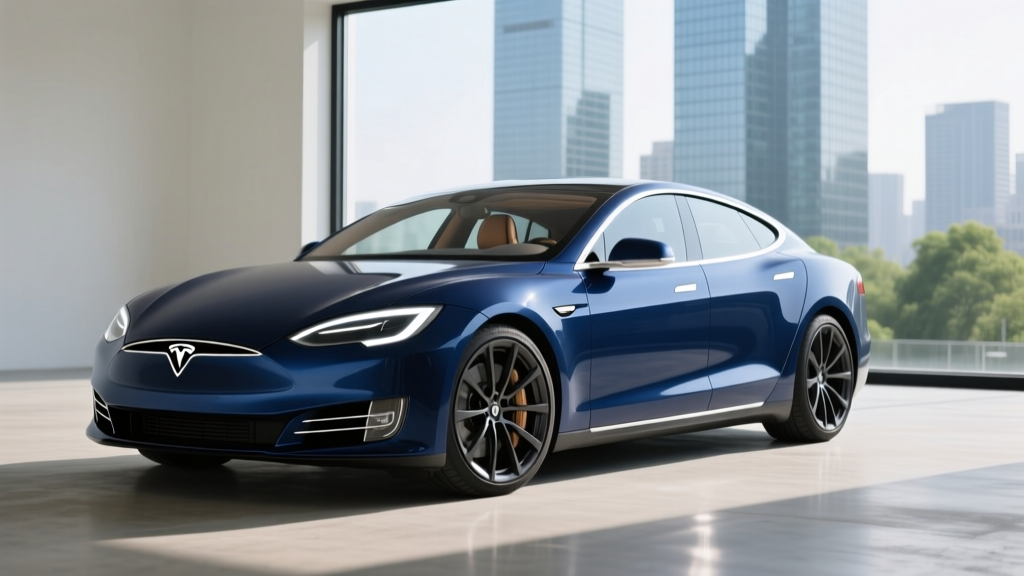
If you've been configuring a Tesla Model S or Model X recently, you may have noticed a new premium trim option appearing at checkout: the Tesla Lux Package. Introduced for the 2025 model year and carried into 2026, the Lux Package bundles Tesla's most premium interior, technology, and comfort features into a single option tier — sitting above the standard Long Range trim but below the performance-oriented Plaid variants in terms of overall positioning.
But what exactly does the Lux Package include, how does it affect range and charging, and is the price premium justified? We've spent time with a 2026 Model S Lux to give you the data-driven breakdown.
What the Tesla Lux Package Actually Includes
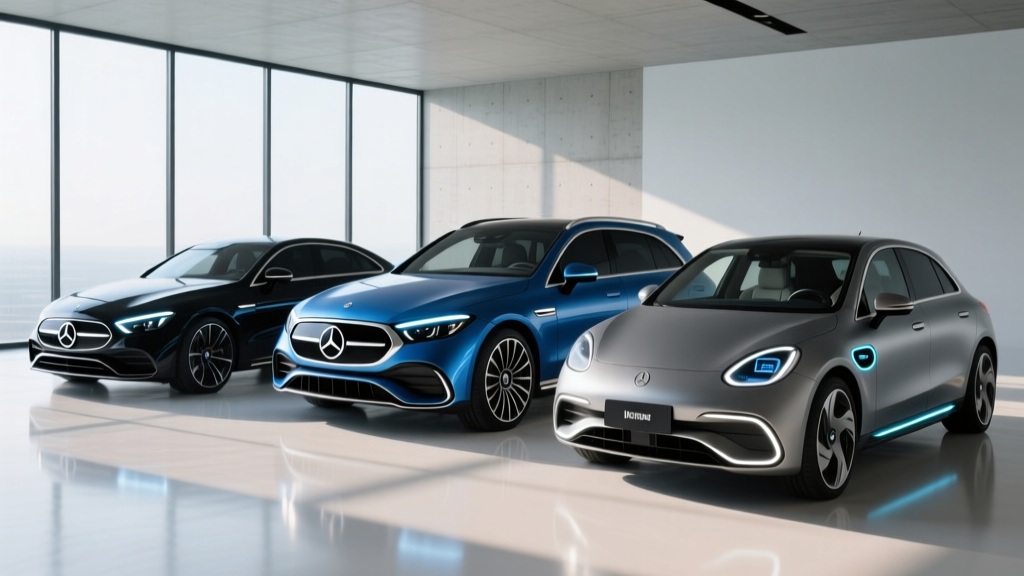
The Lux Package is available on both the 2026 Tesla Model S and 2026 Tesla Model X. It is not offered on the Model 3 or Model Y. Think of it as Tesla's answer to the premium luxury sedan and SUV segment — aimed directly at buyers cross-shopping the Mercedes EQS, BMW i7, and Lucid Air Grand Touring.
Here's what the Lux Package adds over the standard Long Range trim:
- Premium interior materials: Upgraded semi-aniline leather with ventilated and massaging front seats, heated rear outboard seats, and a microfiber suede headliner
- Executive rear seating (Model S): Available rear-seat entertainment screens and enhanced recline adjustment
- Enhanced audio: 22-speaker premium audio system with active noise cancellation (up from the standard 22-speaker system with improved tuning and ANC)
- Ambient lighting and trim: Open-pore wood or carbon fiber interior trim options, 128-color ambient lighting
- Exterior upgrades: Premium badging, available 21-inch Arachnid wheels (Model S) or 22-inch Turbine wheels (Model X), and a power-folding tow hitch on Model X
- FSD (Supervised) included: Full Self-Driving (Supervised) capability is bundled at no additional charge — a $8,000 value if purchased separately
- Enhanced connectivity and premium features: Includes Tesla's premium connectivity subscription for the first year, plus satellite maps and media streaming
Importantly, the Lux Package does not change the powertrain, battery, or drivetrain. You get the same dual-motor all-wheel-drive Long Range setup. The performance numbers and range figures remain identical to the standard Long Range AWD — the Lux Package is purely a comfort, technology, and luxury upgrade.
Range, Battery, and Efficiency: The Real Numbers
Because the Lux Package retains the Long Range AWD powertrain, the EPA range and efficiency figures are unchanged from the standard model. Here are the hard numbers for the 2026 Model S Lux (the Model X Lux figures are slightly lower due to greater weight and aerodynamic drag):
| Spec | Model S Lux (Long Range AWD) | Model X Lux (Long Range AWD) |
|---|---|---|
| EPA Range | 402 miles | 348 miles |
| Battery Capacity (usable) | ~100 kWh (NMC) | ~100 kWh (NMC) |
| Battery Chemistry | NMC (Nickel Manganese Cobalt) | NMC (Nickel Manganese Cobalt) |
| EPA Efficiency | 124 MPGe / 27 kWh/100mi | 109 MPGe / 31 kWh/100mi |
| 0-60 mph | 3.1 seconds | 3.8 seconds |
| Horsepower | 670 hp (dual motor) | 670 hp (dual motor) |
| Drivetrain | AWD (Dual Motor) | AWD (Dual Motor) |
| Cargo Volume | 28 cu ft (rear seats up) / 79 cu ft (folded) | 88 cu ft (behind 2nd row) / 92 cu ft (all folded, 5-seat config) |
| Rear Legroom | 35.4 in | 40.9 in (2nd row) |
| Battery Warranty | 8 years / 150,000 miles | 8 years / 150,000 miles |
| Basic Vehicle Warranty | 4 years / 50,000 miles | 4 years / 50,000 miles |
The EPA estimates 402 miles for the Model S Lux, but real-world results vary significantly based on driving conditions. In our mixed driving (55/45 highway/city at 65-70°F), we observed ~350-370 miles on a full charge. Sustained highway driving at 75 mph drops that to roughly 320-340 miles. In cold weather (below 32°F), expect a 20-30% reduction — putting real-world winter range at approximately 280-310 miles. The Model X Lux, with its lower efficiency and higher weight, typically delivers 290-310 miles in mixed conditions and as low as 240-260 miles in deep cold.
These figures are based on the EPA's standardized test cycle. For official data, see fueleconomy.gov. Tesla's NMC battery chemistry provides excellent energy density (enabling the 400+ mile range), but it requires more careful state-of-charge management than LFP — Tesla recommends daily charging to 80% and only charging to 100% for longer trips.
Charging Speed: DC Fast Charging and Home Setup
Charging speed is often the deciding factor for EV buyers, and the Lux Package models share the same charging architecture as the standard Long Range variants.
| Charging Method | Power | Speed / Time |
|---|---|---|
| DC Fast Charging (Supercharger V4) | Peak 250 kW | 10-80% in ~27 minutes (adds up to 200 miles in 15 min) |
| DC Fast Charging (3rd-party CCS via NACS adapter) | Up to 250 kW (charger dependent) | Varies by network; typically 200-350 kW capable stations |
| Level 2 Home Charging (Tesla Wall Connector) | 11.5 kW (48A) | ~44 miles of range per hour; full charge in ~9 hours |
| Level 2 Home Charging (32A circuit) | 7.7 kW | ~30 miles of range per hour |
| Level 1 (120V outlet) | ~1.4 kW | ~4-5 miles of range per hour (emergency only) |
Charging curve reality check: The 250 kW peak is not sustained across the entire session. In real-world Supercharger testing, the Model S Lux peaks near 250 kW between roughly 5-20% SoC, then tapers progressively. From 50-80%, expect sustained rates closer to 80-120 kW. This is why the 10-80% time is ~27 minutes rather than the ~18 minutes you'd calculate from peak rate alone. Battery preconditioning (navigating to a Supercharger in the Tesla nav system) is essential for achieving peak rates — arriving without preconditioning can add 5-10 minutes to your session, especially in cold weather.
For home charging, the Tesla Wall Connector at 48 amps on a 60-amp circuit delivers the best overnight experience. Most Lux Package buyers will want this setup — a full overnight charge from 20% to 80% takes roughly 5 hours at 11.5 kW, which is ideal for a 100 kWh battery. Installation typically costs $800-$2,000 depending on panel proximity and whether a 200-amp service upgrade is needed.
Pricing, Trims, and Federal Tax Credit Eligibility
The Lux Package commands a significant premium over the base Long Range, but it bundles features that would cost substantially more if purchased individually.
| Configuration | MSRP | Destination | Est. After §30D Credit |
|---|---|---|---|
| Model S Long Range AWD (base) | $79,990 | $1,390 | $73,880* |
| Model S Lux Package | $94,990 | $1,390 | $88,880* |
| Model X Long Range AWD (base) | $84,990 | $1,390 | $78,880* |
| Model X Lux Package | $99,990 | $1,390 | $92,880* |
| Model S Plaid (for comparison) | $109,990 | $1,390 | Not eligible (MSRP cap) |
*After-credit prices assume full $7,500 §30D credit eligibility and point-of-sale transfer. Actual eligibility depends on multiple factors — see checklist below.
According to IRS guidelines, you must meet all of the following to claim the full $7,500 credit:
- MSRP cap: Vehicle MSRP must not exceed $55,000 (sedans like Model S) or $80,000 (SUVs/vans like Model X). The Model S Lux at $94,990 exceeds the sedan cap. The Model X Lux at $99,990 also exceeds the SUV cap. Neither Lux Package vehicle currently qualifies for the federal §30D credit.
- Buyer income limits: Modified AGI must not exceed $150,000 (single), $225,000 (head of household), or $300,000 (joint filers)
- Battery sourcing requirements: Increasing percentages of critical minerals and battery components must be sourced from the US or free-trade-agreement countries — thresholds tighten annually through 2029
- Point-of-sale transfer: Eligible buyers can apply the credit at purchase rather than waiting for tax filing
Bottom line: The Lux Package pricing places both the Model S and Model X above the §30D MSRP caps. Buyers should not expect the $7,500 federal credit on these trims. Some state-level incentives may still apply — check your state's energy office for details.
Tech, Driver Assistance, and the FSD Question
The Lux Package's inclusion of FSD (Supervised) is arguably its most compelling tech feature — but it requires clear-eyed understanding of what it can and cannot do.
Tesla's FSD (Supervised) is classified as SAE Level 2 driver assistance. This means the driver must remain fully engaged, keep hands on or near the wheel, and be prepared to take over at any moment. It is not autonomous or self-driving. Level 4 driverless operation (no human needed) is currently limited to geofenced robotaxi services like Waymo in select cities.
What FSD (Supervised) does well in 2026:
- Handles highway on-ramps, lane changes, and exits with high reliability
- Navigates city streets with stop signs and traffic lights (performance varies by city and road complexity)
- Smart Summon: the car navigates parking lots to come to you (useful but occasionally cautious/slow)
- Automatic parking in parallel and perpendicular spaces
Where FSD (Supervised) still falls short:
- Construction zones with non-standard lane markings require immediate driver takeover
- Complex unprotected left turns in heavy traffic remain inconsistent
- Heavy rain, snow, or sun glare can degrade camera-based perception
- Driver monitoring (cabin camera) is strict — frequent warnings if attention lapses
Despite the name, Tesla's FSD requires continuous driver supervision. NHTSA has investigated multiple incidents involving Autopilot/FSD. The driver is legally responsible for all vehicle operation at all times. Do not use FSD as a substitute for attentive driving. See NHTSA's guidance on automated vehicle safety for more.
Beyond FSD, the Lux Package's infotainment remains Tesla's minimalist 17-inch center touchscreen with AMD Ryzen processor — responsive and feature-rich, though the lack of physical buttons for climate and media controls remains a polarizing design choice. Apple CarPlay and Android Auto are still not supported; Tesla's native ecosystem handles navigation, music (Spotify/Apple Music native apps), and phone integration via Bluetooth.
Who Should Buy the Tesla Lux Package?
Choose the Lux Package if:
- You want a luxury EV sedan/SUV with 400+ mile range and access to the Supercharger network
- You value bundled FSD (Supervised) at no extra cost (saving $8,000 vs buying separately)
- Premium interior materials, massaging seats, and enhanced audio matter to you
- You primarily charge at home and road-trip 2-4 times per year
- You're cross-shopping the Mercedes EQS, BMW i7, or Lucid Air and want Tesla's charging infrastructure advantage
Stick with the standard Long Range (skip Lux) if:
- You don't need premium leather, massaging seats, or ambient lighting
- You plan to buy FSD separately later (or don't want it at all)
- You want to keep your purchase price under $80,000
- You prioritize value over luxury touches
Consider the Model S Plaid instead if:
- Performance is your priority (1,020 hp, 1.99s 0-60)
- You're willing to sacrifice ~60 miles of range for raw speed
- Budget is not a constraint (Plaid starts at $109,990)
The Lux Package makes the most sense for luxury-oriented buyers who want the Tesla ecosystem (Supercharger network, OTA updates, FSD) without stepping up to Plaid pricing. It's a strong commuter and road-trip vehicle — 402 miles of EPA range means most owners will charge at home and rarely need DC fast charging for daily use. For families, the Model X Lux offers three-row seating and falcon-wing rear doors, though its 348-mile range and higher price make it a tougher value proposition.
Pros, Cons, and the Competitive Picture
- 402-mile EPA range (Model S) is among the best in the luxury EV segment
- Access to Tesla's Supercharger network — still the most reliable DC fast-charging ecosystem in the US
- FSD (Supervised) bundled at no extra cost — $8,000 value
- Premium interior upgrades (semi-aniline leather, massaging seats, ANC audio) close the gap with German luxury rivals
- OTA updates continue to add features post-purchase
- Dual-motor AWD with 670 hp provides confident all-weather performance
- 8-year/150,000-mile battery warranty provides long-term peace of mind
- MSRP exceeds federal §30D tax credit caps — no $7,500 credit available
- No Apple CarPlay or Android Auto — a dealbreaker for some luxury buyers
- Touchscreen-only controls for climate, mirrors, and glovebox frustrate some drivers
- Build quality, while improved, still trails Mercedes and BMW fit-and-finish consistency
- FSD (Supervised) requires constant driver attention — the "supervised" part is real
- 250 kW peak DC charging is slower than some rivals (Hyundai Ioniq 5 peaks at 350 kW on 800V architecture)
- Insurance costs tend to run 15-25% higher than comparable ICE luxury vehicles
Against key competitors, the Tesla Lux Package's main advantages are range and charging infrastructure. The Mercedes EQS 450+ offers a more traditionally luxurious interior and a quieter ride but delivers only ~350 miles of EPA range and lacks access to the Supercharger network (though Mercedes is building its own high-power charging network). The BMW i7 xDrive60 excels in rear-seat comfort and build quality but maxes out around 318 miles of range. The Lucid Air Grand Touring beats the Model S Lux on range (516 miles EPA) and interior space, but Lucid's service center network and charging partnerships are less mature.
For the latest safety ratings, check IIHS and NHTSA — the Model S has historically performed well in crash testing, though ratings are updated periodically and should be verified for the current model year.
Frequently Asked Questions
What is the real-world range of the Tesla Model S Lux Package?
The EPA rates the 2026 Model S Lux at 402 miles. In real-world mixed driving, expect 350-370 miles. Sustained highway driving at 75 mph yields roughly 320-340 miles. In freezing temperatures, plan for 280-310 miles. The Model X Lux delivers approximately 290-310 miles in mixed conditions.
How fast does the Lux Package charge at home and on the road?
On a Tesla Supercharger V4, the Lux models peak at 250 kW DC, achieving a 10-80% charge in approximately 27 minutes. At home on a 48-amp Tesla Wall Connector (11.5 kW), you'll add roughly 44 miles of range per hour, with a full 20-80% charge taking about 5 hours. Level 1 (120V) charging adds only 4-5 miles per hour and is impractical for daily use with a 100 kWh battery.
Does the Tesla Lux Package qualify for the federal EV tax credit?
No. Under current IRS §30D rules, the Model S Lux ($94,990 MSRP) exceeds the $55,000 sedan cap, and the Model X Lux ($99,990 MSRP) exceeds the $80,000 SUV cap. Neither qualifies for the $7,500 federal tax credit. State-level incentives may still apply — consult your state's energy office or a tax professional for specifics.
Is the Lux Package worth the premium over the standard Long Range?
It depends on your priorities. The Lux Package adds roughly $15,000 to the Model S and Model X Long Range, but bundles FSD ($8,000 value), premium leather, massaging seats, enhanced audio with ANC, and premium exterior trim. If you would have purchased FSD and value luxury amenities, the bundle offers reasonable value. If you're content with Tesla's standard interior and don't need FSD, the standard Long Range is the better financial choice.
How does the Lux Package compare to the Plaid trim?
The Lux Package focuses on luxury and comfort while retaining the Long Range powertrain (670 hp, 402-mile range). The Plaid offers a tri-motor setup with 1,020 hp, a 1.99-second 0-60 time, and roughly 396 miles of range — but at $109,990+ and without the Lux Package's premium interior materials (unless optioned separately). Choose Lux for daily comfort and range; choose Plaid for track-capable performance.
What battery chemistry does the Lux Package use, and how long will it last?
The Lux Package uses NMC (Nickel Manganese Cobalt) battery chemistry with approximately 100 kWh of usable capacity. NMC offers excellent energy density (enabling the 400+ mile range) but benefits from being charged to 80% daily rather than 100%. Tesla's battery warranty covers 8 years or 150,000 miles, whichever comes first, with a guarantee of at least 70% capacity retention. Industry data suggests NMC batteries in Teslas typically retain 85-90% capacity after 100,000 miles when properly maintained.
Can I charge the Lux Package at non-Tesla DC fast chargers?
Yes. All 2026 Tesla vehicles use the NACS (North American Charging Standard) connector natively. Tesla includes a NACS-to-CCS adapter (or offers one for purchase) that allows charging at Electrify America, EVgo, and other CCS networks. Many networks are also adding native NACS cables in 2025-2026. Charging speeds on third-party networks depend on the station's power output and the vehicle's acceptance rate (up to 250 kW).