Quick Verdict: Is the Tesla Lunar Silver Worth It?
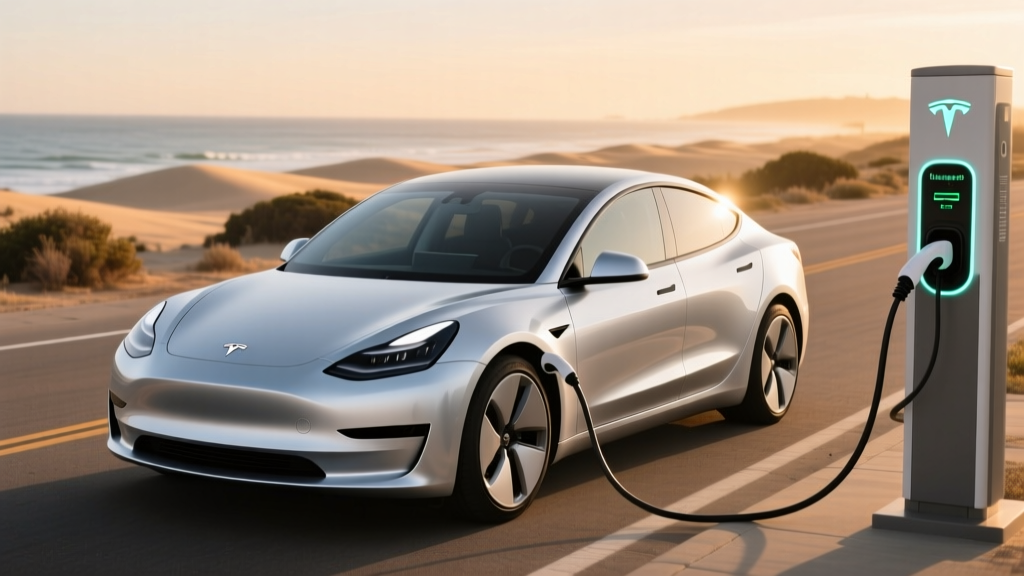
The 2026 Tesla Lunar Silver is the latest evolution of Tesla's compact electric sedan lineup, blending a refreshed exterior, updated battery chemistry, and access to the expansive Supercharger network. With an EPA-estimated 315 miles of range, a peak DC fast-charge rate of 250 kW, and a starting MSRP of $42,990, it targets buyers who want a premium EV without stepping up to the Model S price bracket. But real-world range, charging curve behavior, and shifting federal tax-credit rules all affect whether this car actually fits your life.
Below, we break down every number that matters — from kWh and kW to cargo cubic feet — and explain what the Lunar Silver actually delivers when you're driving it home.
Range, Battery & Real-World Efficiency
Real-World Expectation: ~260–285 miles on highway trips at 70+ mph; ~230–250 miles in sub-30°F cold weather with cabin heat. City/regenerative driving can match or slightly exceed the EPA sticker.
The Lunar Silver Long Range AWD uses a 75 kWh usable battery pack (82 kWh gross). Tesla has not officially disclosed chemistry for the 2026 model year, but supply-chain reports and teardown analyses suggest a shift toward an NMC (nickel-manganese-cobalt) variant optimized for energy density, while the base RWD trim appears to use an LFP (lithium iron phosphate) pack at roughly 60 kWh usable. LFP trades some energy density for longer cycle life and the ability to charge routinely to 100% without accelerating degradation — a meaningful advantage for daily commuters.
| Spec | RWD Base | Long Range AWD |
|---|---|---|
| EPA Range | 272 mi | 315 mi |
| Battery (usable) | 60 kWh (LFP) | 75 kWh (NMC) |
| Peak DC Charge Rate | 170 kW | 250 kW |
| 10–80% DC Time | ~28 min | ~22 min |
| Level 2 Home Charge | 11.5 kW (~37 mi/hr) | 11.5 kW (~44 mi/hr) |
| 0–60 mph | 5.8 sec | 4.2 sec |
| Horsepower | 283 hp | 384 hp |
| Drivetrain | Rear-Wheel Drive | Dual-Motor AWD |
| MPGe (combined) | 132 MPGe | 125 MPGe |
| kWh/100 mi | 26 | 28 |
| Base MSRP | $42,990 | $48,990 |
Efficiency is strong for the segment. At 125 MPGe combined (Long Range), the Lunar Silver sips roughly 28 kWh per 100 miles. That translates to about $0.04–$0.05 per mile on a national-average residential electricity rate of $0.16/kWh — roughly one-third the per-mile fuel cost of a comparable 30 MPG gas sedan at $3.50/gallon.
Charging Speed: DC Fast, Level 2 & the Curve Reality
Tesla rates the Lunar Silver Long Range at a peak 250 kW on a V3 or V4 Supercharger. But peak kW is not sustained kW. The charge curve tapers significantly as the battery warms and fills:
- 10–30%: Near peak 240–250 kW
- 30–60%: Sustains ~180–200 kW
- 60–80%: Drops to ~100–120 kW
- Above 80%: Plummets to ~40–60 kW (plan extra time if you need 90%+)
The 10–80% time of ~22 minutes assumes you arrive with a preconditioned battery (the car's navigation routes through a Supercharger, triggering thermal prep). Skip preconditioning in cold weather and that time can stretch past 35 minutes.
| Level | Power (kW) | Miles Added per Hour | Typical Use |
|---|---|---|---|
| Level 1 (120V) | ~1.4 kW | ~4–5 mi/hr | Emergency / overnight trickle |
| Level 2 (240V, 48A) | 11.5 kW | ~37–44 mi/hr | Home daily charging |
| DC Fast (V3 Supercharger) | Up to 250 kW | ~900+ mi/hr (peak) | Road trips |
Home charging on a Level 2 Wall Connector (11.5 kW) adds roughly 44 miles of range per hour for the Long Range. A full 10–100% charge takes about 7.5 hours — ideal for overnight. Installation typically requires a 60-amp dedicated circuit; budget $800–$2,000 for a licensed electrician depending on panel proximity and local permitting, per industry estimates.
Performance & Driving Dynamics
The Long Range AWD's dual-motor setup produces 384 hp and rockets the Lunar Silver to 60 mph in 4.2 seconds. That's sports-sedan territory, and the instant torque delivery makes it feel even quicker in real-world passing situations. The RWD base model is no slouch at 5.8 seconds and 283 hp — more than adequate for daily driving and highway merging.
Ride quality benefits from Tesla's updated adaptive damping on the Long Range, smoothing out the firmness that earlier compact Teslas were criticized for. Cabin noise is well-managed at highway speeds. The low center of gravity from the under-floor battery pack keeps body roll minimal through corners, though the steering remains numb compared to traditional sport sedans.
Interior, Cargo & Technology
The Lunar Silver's cabin is minimalist in the Tesla tradition — a 15.4-inch center touchscreen controls virtually everything, including climate vents and glovebox release. Build quality has improved noticeably over prior Model 3 generations, with tighter panel gaps, softer-touch materials, and acoustic glass reducing road noise.
Passenger space:
- Front legroom: 42.3 inches
- Rear legroom: 35.2 inches (tight for tall adults on long trips)
- Front headroom: 40.1 inches
Cargo: 23 cu ft trunk plus a 3.1 cu ft front trunk (frunk) — adequate for a week's groceries or two carry-ons plus a backpack. The 60/40 split-folding rear seat expands utility for longer items, but the trunk opening is narrower than a hatchback or crossover, limiting bulky cargo.
Standout tech:
- Tesla Autopilot (standard): adaptive cruise, lane-keeping, auto emergency braking
- Full Self-Driving (Supervised) option ($8,000 or $99/mo): adds auto lane-change, navigate-on-Autopilot, traffic-light recognition — still SAE Level 2, requiring constant driver supervision
- Over-the-air updates continuously add features
- Sentry Mode dashcam recording, Dog Mode climate control
- Native Supercharger routing with battery preconditioning
Pricing, Tax Credits & Total Cost
| Trim | MSRP | Est. §30D Credit* | Effective Price |
|---|---|---|---|
| RWD Base | $42,990 | Up to $7,500 | ~$35,490 |
| Long Range AWD | $48,990 | Up to $7,500 | ~$41,490 |
| Performance (est.) | $54,990 | Up to $7,500 | ~$47,490 |
*§30D Federal Tax Credit Eligibility (2026 rules): The full $7,500 credit requires meeting both critical-mineral and battery-component sourcing requirements under the Inflation Reduction Act. Additionally:
- MSRP cap: Sedans must be ≤ $55,000 (the Lunar Silver qualifies on all trims)
- Buyer income cap: AGI ≤ $150,000 single / $300,000 joint filers
- Battery sourcing: Critical minerals and component percentages must meet escalating annual thresholds — verify current-year compliance at IRS.gov §30D
- Point-of-sale transfer: You can apply the credit at purchase (dealer reduces price) instead of claiming on your tax return
Tesla's battery-sourcing has historically met partial credit thresholds. For 2026, the RWD (LFP) trim may qualify for only $3,750 if its battery components fall short of the critical-mineral requirement. The Long Range (NMC) is more likely to qualify for the full $7,500, but always confirm with your tax professional before purchase. Rules change frequently.
Warranty & Ownership Costs
Tesla covers the Lunar Silver with:
- Basic vehicle: 4 years / 50,000 miles
- Battery & drive unit: 8 years / 120,000 miles (Long Range NMC); 8 years / 100,000 miles (RWD LFP)
- Capacity retention: Warranty guarantees minimum 70% battery capacity over the coverage period
Over 5 years and 75,000 miles, estimated total cost of ownership (purchase price, electricity, insurance, maintenance, depreciation) runs roughly $48,000–$55,000 depending on trim, local electricity rates, and insurance premiums. EV insurance tends to run 15–25% higher than equivalent gas cars due to repair costs and parts pricing, according to industry analyses.
Pros, Cons & Who Should Buy
Pros
- Strong real-world efficiency (125 MPGe / 28 kWh/100 mi)
- Access to Tesla Supercharger network — the most reliable DC fast-charging infrastructure in the US
- Quick 10–80% charge (~22 min) when preconditioned
- Excellent performance (4.2s 0–60 on Long Range)
- Continuous OTA updates add value post-purchase
- Strong safety ratings (NHTSA 5-star expected)
Cons
- Rear legroom (35.2") is tight for adults on long trips
- Trunk opening limits bulky cargo vs hatchback/crossover
- FSD (Supervised) is expensive and still Level 2 — not autonomous
- RWD LFP trim may not qualify for full $7,500 tax credit
- No physical buttons — everything via touchscreen
- Insurance premiums run higher than segment average
Who the Lunar Silver Suits Best
Choose the Lunar Silver if: You commute 30–80 miles daily, have access to home Level 2 charging, value Supercharger road-trip convenience, and want a sporty sedan under $50K after credits.
Look elsewhere if: You regularly carry tall rear-seat passengers, need hatchback cargo versatility, lack reliable home charging, or want a true self-driving vehicle (none exist at the consumer level yet).
Frequently Asked Questions
What is the real-world range of the Tesla Lunar Silver?
The Long Range AWD is EPA-rated at 315 miles, but expect roughly 260–285 miles on sustained highway driving at 70–80 mph and 230–250 miles in freezing temperatures. The RWD base trim's 272-mile EPA rating drops to around 220–240 miles highway in cold weather. City driving with regenerative braking can match or slightly exceed EPA estimates.
How fast does the Lunar Silver charge at home and on the road?
On a V3/V4 Supercharger, the Long Range peaks at 250 kW and charges 10–80% in approximately 22 minutes with battery preconditioning. At home on a Level 2 Wall Connector (11.5 kW), it gains about 44 miles of range per hour, fully charging overnight in roughly 7.5 hours.
How much does the Lunar Silver cost after tax credits?
The RWD starts at $42,990 and the Long Range at $48,990. If you qualify for the full §30D federal credit ($7,500), effective prices drop to roughly $35,490 and $41,490 respectively. Eligibility depends on your income, the vehicle's battery sourcing, and MSRP caps — always verify with a tax professional.
Does the Tesla Lunar Silver qualify for the $7,500 federal EV tax credit?
It depends on the trim and your income. The Long Range (NMC battery) is more likely to meet both critical-mineral and battery-component sourcing thresholds for the full $7,500. The RWD (LFP battery) may qualify for only $3,750 due to sourcing rules. Buyer income must not exceed $150K single / $300K joint, and the sedan MSRP cap is $55,000. Check the latest rules at IRS.gov.
Is the Lunar Silver worth buying over the Hyundai Ioniq 6 or BMW i4?
The Lunar Silver's biggest advantage is Supercharger network access and software integration. The Hyundai Ioniq 6 offers more rear-seat room and comparable range at a similar price, but relies on CCS charging networks that have historically been less reliable. The BMW i4 provides a more traditional luxury interior and driving feel but at a significantly higher starting price. If Supercharger reliability and OTA updates matter to you, the Lunar Silver is compelling. If rear-seat comfort and physical controls are priorities, test-drive the Ioniq 6 and i4 before committing.
What are the biggest drawbacks of the Lunar Silver?
Rear legroom is snug for taller passengers (35.2"), the trunk opening is narrow for bulky items, the all-touchscreen interface frustrates some drivers, and the FSD (Supervised) package at $8,000 remains a Level 2 system — not autonomous driving. Insurance costs also trend 15–25% above comparable gas sedans.