Quick Verdict: Does Tesla Ludicrous Mode Still Define Performance EVs?
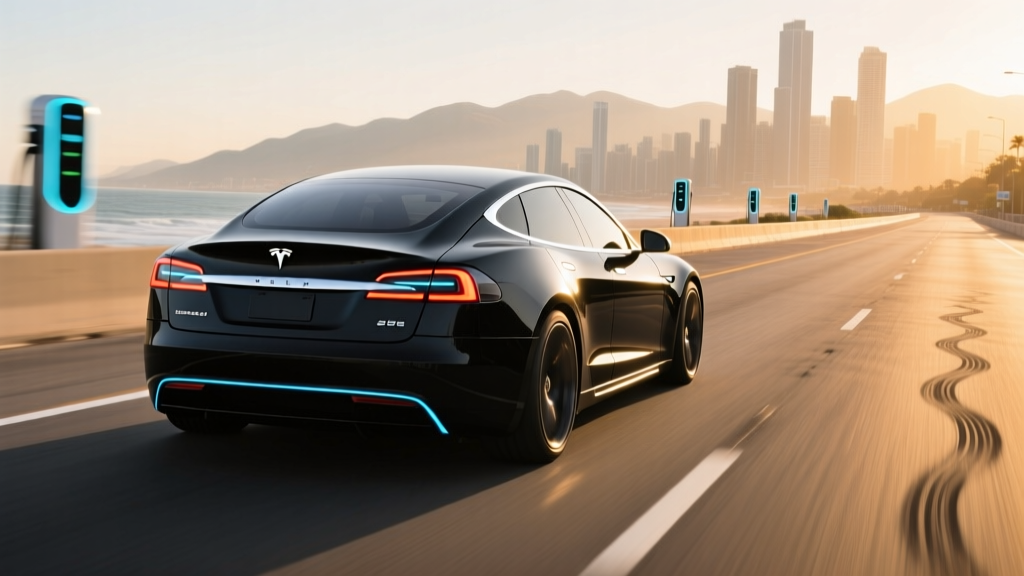
The phrase "Tesla Ludicrous" has been shorthand for face-warping electric acceleration since the Model S P90D debuted the mode in 2015. In 2026, the spiritual successor to that viral launch-control moment is the Tesla Model S Plaid, which carries forward the Ludicrous ethos with a tri-motor powertrain producing 1,020 horsepower and a manufacturer-claimed 0–60 mph time of 1.99 seconds. But raw speed is only part of the ownership equation. With an EPA-estimated 402 miles of range, 250 kW peak DC fast charging, and a starting MSRP that now sits at $89,990, the 2026 Model S Plaid demands a harder look at value, daily usability, and how it stacks up against rivals like the Lucid Air Sapphire, Porsche Taycan Turbo GT, and BMW i7 M70.
This review breaks down every number that matters — from real-world range degradation on cold highway runs to the charging-curve taper you'll see above 80% SoC — so you can decide whether Tesla's flagship performance sedan still earns its halo.
Range, Battery, and Efficiency: 402 Miles on Paper, Less in Practice
The 2026 Tesla Model S Plaid uses a 100 kWh (usable ~95 kWh) NMC (nickel-manganese-cobalt) lithium-ion battery pack. Tesla does not publish cell-level chemistry specs, but teardown data and energy-density figures confirm an NMC architecture optimized for both high discharge rates (necessary for Plaid's 1,020 hp) and long-range cruising.
Real-World Expectation: Plan for 320–350 miles on sustained highway drives at 75+ mph. In cold weather (below 32°F), expect a further 15–25% reduction, dropping effective range to roughly 260–300 miles before you'll want to find a Supercharger. City driving with regen braking recovers more energy and can approach the EPA sticker.
Efficiency on the EPA cycle is rated at 120 MPGe combined for the Plaid, which translates to roughly 28 kWh per 100 miles. That's respectable for a 4,766-pound sedan with over 1,000 hp, though the lighter Long Range variant (no tri-motor) edges slightly better at 124 MPGe. For context, the Lucid Air Grand Touring achieves 131 MPGe with its more aero-focused design.
| Spec | Long Range AWD | Plaid (Tri-Motor AWD) |
|---|---|---|
| EPA Range | 402 mi | 396 mi |
| Battery (usable) | ~95 kWh NMC | ~95 kWh NMC |
| Horsepower | 670 hp | 1,020 hp |
| 0–60 mph | 3.1 sec | 1.99 sec |
| Top Speed | 155 mph | 200 mph |
| Drivetrain | Dual-Motor AWD | Tri-Motor AWD |
| Efficiency (combined) | 124 MPGe | 120 MPGe |
| Cargo (rear + frunk) | 28.0 cu ft (rear) + 3.1 cu ft (frunk) | 28.0 cu ft + 3.1 cu ft |
| Curb Weight | 4,561 lbs | 4,766 lbs |
| Base MSRP | $74,990 | $89,990 |
Charging Speed: 250 kW Peak, but the Curve Tells the Real Story
The Model S Plaid supports a peak DC fast-charge rate of 250 kW on Tesla's V3 and V4 Superchargers via its native NACS connector. Tesla claims a 10–80% charge time of approximately 27 minutes under ideal conditions (battery preconditioned via in-car navigation routing to a Supercharger).
| Level | Power / Rate | Miles Added |
|---|---|---|
| Level 1 (120V household) | ~1.4 kW | ~3–4 mi/hr |
| Level 2 (240V home, 48A Wall Connector) | 11.5 kW | ~34 mi/hr |
| DC Fast Charge (V3 Supercharger) | Peak 250 kW | ~200 mi in 15 min (10–50% SoC) |
| DC Fast Charge (above 80% SoC) | Tapers to ~50–70 kW | Slower; avoid for road-trip efficiency |
The critical nuance most spec sheets omit: peak 250 kW is not sustained. The charge curve ramps quickly from 10% to about 40% SoC, where you'll see the full 250 kW. From 40–60%, power tapers to roughly 180–200 kW. Above 80%, the taper is aggressive — dropping to 50–70 kW — which is why Tesla and most experienced owners recommend charging only to 80% on road trips. Charging from 80–100% at a Supercharger can add 20+ minutes for the last ~80 miles of range.
At home, Tesla's Wall Connector at 48 amps on a 60-amp circuit delivers 11.5 kW, adding roughly 34 miles of range per hour. A full overnight charge from 20% to 90% takes about 6 hours. For NACS-equipped Model S owners, the Supercharger network remains the gold standard for reliability — Tesla's network now exceeds 6,500 stations and 65,000 stalls in North America.
Performance: What Tesla Ludicrous Mode Actually Delivers in 2026
The "Ludicrous" badge originated with the Model S P90D's software-unlocked acceleration mode, which dropped 0–60 times below 3 seconds and spawned thousands of reaction videos. Today, the Model S Plaid makes those numbers look modest. The tri-motor setup — one motor on the front axle, two on the rear — delivers 1,020 horsepower and torque-vectoring capability that keeps all four wheels clawing for grip off the line.
The claimed 1.99-second 0–60 mph time requires specific conditions: a prepped surface, drag-strip mode engaged, and the battery at optimal temperature (above 50% SoC and preconditioned). In independent testing by outlets like Car and Driver and Motor Trend, the Plaid has consistently achieved 2.1–2.3 seconds on unprepared asphalt — still among the quickest production cars ever sold, regardless of powertrain.
Beyond straight-line speed, the Plaid's adaptive air suspension, revised damping, and carbon-sleeve rotors (optional) make it a genuinely capable track car. Tesla's official specs page notes a Nürburgring-oriented chassis tune. However, at 4,766 lbs, tire wear on track days is significant, and the brake-by-wire system, while effective, lacks the pedal feel enthusiasts expect from a Porsche Taycan.
Interior, Tech, and Driver Assistance
The Model S cabin centers on a 17-inch landscape touchscreen running Tesla's proprietary infotainment OS. A secondary 8-inch screen serves rear passengers. The yoke-style steering wheel (now optional alongside a round wheel after significant owner feedback) houses capacitive touch buttons. Build quality in the 2026 model year has improved noticeably over the 2021–2023 refresh, with tighter panel gaps and upgraded materials, though it still trails the Lucid Air and Mercedes EQS in perceived luxury.
Cargo and passenger space: The Model S offers 28.0 cubic feet behind the rear seats (expandable with 60/40 split folding) and a 3.1-cubic-foot frunk. Rear legroom measures 35.4 inches — adequate for adults on shorter trips but tighter than the BMW i7 or Lucid Air. The hatchback-style liftback is a practical advantage over traditional trunk sedans.
Driver assistance: Every Model S ships with Tesla's Basic Autopilot (lane centering, adaptive cruise, emergency braking). The optional Full Self-Driving (Supervised) package, priced at $8,000 (or $99/month subscription in 2026), adds automated lane changes, traffic-light recognition, and city-street navigation.
Pricing, Trims, and Federal Tax Credit Eligibility
The 2026 Tesla Model S is available in two trims:
- Long Range AWD: $74,990 MSRP (670 hp, 402-mi range)
- Plaid Tri-Motor AWD: $89,990 MSRP (1,020 hp, 396-mi range)
Options include Ultra Red or Midnight Silver Metallic paint ($2,000), 21-inch Arachnid wheels ($4,500), yoke steering (no-cost), and FSD Supervised ($8,000). A fully loaded Plaid can approach $104,490.
| Item | Amount |
|---|---|
| Base MSRP (Plaid) | $89,990 |
| Federal §30D Tax Credit | $0 (exceeds MSRP cap — see below) |
| Estimated Out-the-Door (before state incentives) | ~$92,000–$104,000 depending on options |
- MSRP Cap: Sedans must be ≤ $55,000 to qualify. The Model S (starting at $74,990) does not qualify for the new-vehicle §30D credit.
- Buyer Income Cap: AGI ≤ $150,000 (single) / $300,000 (joint). Even if MSRP qualified, high-income buyers would be excluded.
- Battery Sourcing: Critical minerals and battery components must meet phased-in domestic-content thresholds per IRS guidelines.
- Point-of-Sale Transfer: Eligible buyers can transfer the credit to the dealer at purchase for an immediate price reduction — but only if the vehicle itself qualifies.
Ownership Costs: Warranty, Insurance, and 5-Year TCO
Tesla covers the Model S with a 4-year/50,000-mile basic warranty and an 8-year/150,000-mile battery and drive-unit warranty (whichever comes first), with a minimum 70% battery capacity retention guaranteed over that period. This is competitive with Lucid's 8-year/100,000-mile battery warranty and slightly more generous on mileage.
Insurance is a known pain point. The Model S Plaid's average annual premium in 2026 runs $3,200–$4,800 depending on state, driving record, and coverage level — significantly higher than the BMW i5 or Mercedes EQE. Tesla's own insurance product, available in select states, uses real-time driving data and can be 15–25% cheaper for clean-record drivers.
Charging costs are a bright spot. At the national average electricity rate of $0.17/kWh (EIA 2026 data), fully charging the ~95 kWh battery costs roughly $16.15, yielding a cost of about $0.045 per mile. Compare that to a BMW M5 at 16 mpg combined and $3.50/gallon gas: $0.22 per mile. Over 15,000 miles/year, the Plaid saves roughly $2,600 annually in fuel.
Tesla Ludicrous Legacy: Pros, Cons, and Competitor Check
- 1.99–2.3 sec 0–60 mph — still the quickest production sedan
- 396-mi EPA range balances performance and distance
- Access to 65,000+ Tesla Supercharger stalls (NACS native)
- OTA updates continuously add features post-purchase
- Hatchback liftback practicality for a performance sedan
- 8-yr/150,000-mi battery warranty (best-in-class mileage)
- $89,990+ starting price with no federal tax credit eligibility
- Insurance premiums 40–60% higher than comparable luxury EVs
- Interior materials still lag Lucid Air, Mercedes EQS at this price
- Rear legroom (35.4 in) is tight for a $90K+ flagship sedan
- FSD (Supervised) remains Level 2 — not autonomous despite the name
- Track use accelerates tire wear significantly at 4,766 lbs
Choose the Lucid Air Sapphire if: You prioritize interior luxury, need 425+ miles of range, and want 1,234 hp with a more refined ride — at an even higher price ($249,000).
Choose the Porsche Taycan Turbo GT if: Track handling and steering feel matter more than straight-line 0–60 records, and you accept 283 miles of range for superior chassis dynamics.
Choose the Model S Long Range if: You want 402 miles of range, 670 hp, and dual-motor AWD at $15,000 less than the Plaid — and rarely launch from 0–60.
Frequently Asked Questions
What is Tesla Ludicrous Mode and does it still exist?
Ludicrous Mode was Tesla's maximum-acceleration software setting, introduced on the 2015 Model S P90D. It has since been superseded by the Plaid tri-motor powertrain, which delivers even faster acceleration as standard hardware rather than a software toggle. The spirit of "Ludicrous" lives on in the Model S Plaid's 1.99-second 0–60 capability.
What is the real-world range of the 2026 Model S Plaid?
The EPA rates the Plaid at 396 miles. In real-world highway driving at 70–80 mph, expect 320–350 miles. In sub-freezing temperatures, plan for 260–300 miles before needing a charge. Preconditioning the battery and using seat heaters instead of cabin heat can recover 10–15 miles in cold conditions.
How fast does the Model S Plaid charge?
Peak DC fast charging is 250 kW on V3/V4 Superchargers, with a 10–80% time of approximately 27 minutes when preconditioned. At home on a 48A Level 2 Wall Connector, you'll add about 34 miles per hour (11.5 kW). Expect a full 20–90% home charge in roughly 6 hours.
Does the Model S qualify for the federal EV tax credit?
No. Under current IRS §30D rules, new sedans must have an MSRP of $55,000 or less to qualify. The Model S starts at $74,990, well above the cap. Buyer income limits and battery-sourcing rules add additional restrictions. Consult a tax professional and check IRS.gov for the latest guidance.
Is the Model S Plaid worth buying over competitors in 2026?
If your priority is acceleration, Supercharger access, and Tesla's software ecosystem, the Plaid remains compelling at $89,990. If you want a more luxurious interior, the Lucid Air Grand Touring or Mercedes EQS are stronger. If handling precision matters, the Porsche Taycan Turbo GT is the driver's choice. The Plaid's value proposition rests on its unmatched combination of speed, range, and charging infrastructure.
How long will the Model S Plaid battery last?
Tesla warranties the battery for 8 years or 150,000 miles with a minimum 70% capacity retention. Independent data from Tesla's annual Impact Report and owner fleet data suggest NMC packs in the Model S typically retain 85–90% capacity at 100,000 miles. Replacement costs, if needed out of warranty, range from $15,000 to $22,000 depending on the service center.