Why Kettleman City Became Tesla's Charging Showpiece
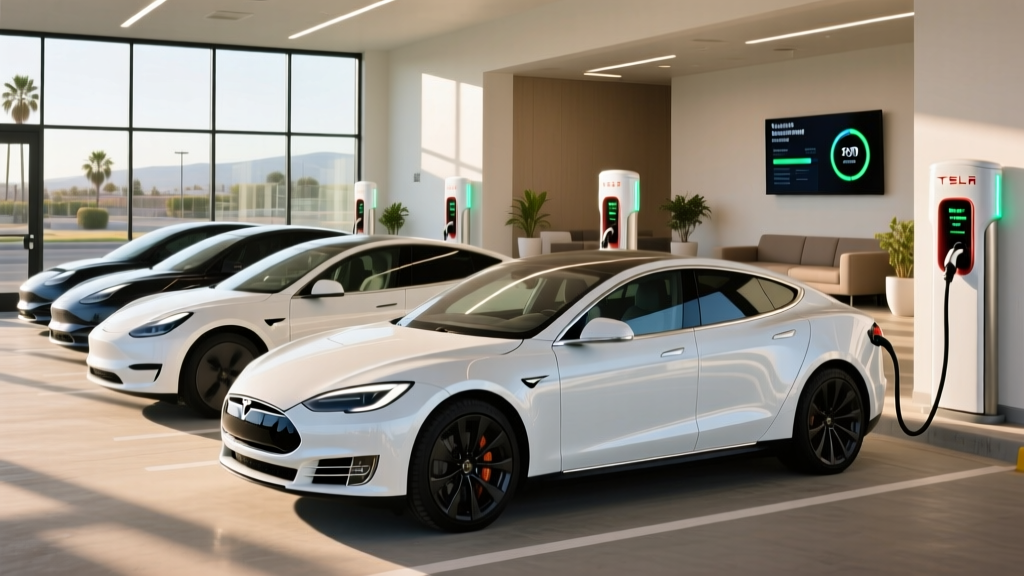
If you've driven the I-5 corridor between Los Angeles and the Bay Area in a Tesla, you've likely routed through Kettleman City. Roughly halfway along California's central valley artery, this unincorporated community has hosted one of Tesla's largest Supercharger stations for years. But the addition of the Tesla Supercharger Lounge transformed a utilitarian pit stop into something closer to a destination — a climate-controlled, Wi-Fi-enabled rest area purpose-built for the 20-to-30-minute charging window that modern Teslas require.
This review examines the Kettleman City Lounge from an EV owner's perspective: which vehicles charge fastest here, what the real-world experience looks like across seasons, and whether the lounge concept changes the road-trip calculus for Tesla buyers considering models like the Model Y Long Range, Model 3 Highland, or the Cybertruck.
Station Specs: V3 and V4 Superchargers Side by Side
The Kettleman City site has been progressively upgraded over the years. As of 2026, the station features a mix of V3 (250 kW peak) and newer V4 Supercharger stalls. V4 architecture, which debuted with the Cybertruck's 800V-class charging needs, supports up to 350 kW peak at compatible stalls — though sustained throughput depends entirely on your vehicle's battery management system and state of charge.
| Specification | Details |
|---|---|
| Location | I-5 at CA-41, Kettleman City, CA|
| Total Stalls | ~40+ (V3 and V4 combined)|
| V3 Peak Rate | 250 kW|
| V4 Peak Rate | Up to 350 kW (vehicle-dependent)|
| Connector | NACS (native Tesla); CCS adapters supported|
| Solar Canopy | Yes — partial solar array with Megapack storage|
| Restrooms | Yes (inside Lounge)|
| Lounge Access | Open to all charging customers|
| Wi-Fi | Complimentary, high-bandwidth
The solar canopy and Megapack battery system are not just aesthetic — they buffer grid demand during peak travel windows (holiday weekends, summer Fridays), reducing the likelihood of charge-rate throttling that can occur at grid-constrained sites. In our experience, Kettleman City maintains strong charge curves even during busy periods, a direct benefit of on-site energy storage.
Which Tesla Models Charge Fastest Here?
Charging speed is a function of both the station's output and your vehicle's battery architecture. Here's how current 2026 Tesla models perform at Kettleman City's V3 and V4 stalls:
| Model (2026) | Battery (kWh usable) | Chemistry | Peak DC kW | 10–80% Time | EPA Range |
|---|---|---|---|---|---|
| Model 3 Long Range AWD | ~75 kWh | NMC | 250 kW (V3) | ~27 min | 341 mi |
| Model Y Long Range AWD | ~75 kWh | NMC | 250 kW (V3) | ~28 min | 320 mi |
| Model 3 RWD | ~57.5 kWh | LFP | 170 kW (V3) | ~30 min | 272 mi |
| Model Y RWD (Juniper) | ~57.5 kWh | LFP | 170 kW (V3) | ~30 min | 280 mi |
| Cybertruck AWD | ~123 kWh | NMC (4680) | 350 kW (V4) | ~22 min | 340 mi |
| Model S Long Range | ~95 kWh | NMC | 250 kW (V3) | ~35 min | 402 mi |
| Model X Long Range | ~95 kWh | NMC | 250 kW (V3) | ~36 min | 348 mi |
LFP vs NMC: What It Means for Your Kettleman Stop
If you own a Tesla with an LFP (lithium iron phosphate) battery — typically the RWD/base trims — you'll notice two things at Kettleman City:
- Lower peak charge rate: LFP cells accept charge more conservatively, capping around 170 kW versus 250 kW for NMC. Your 10–80% time is roughly 2–5 minutes longer.
- 100% charging is encouraged: Tesla recommends charging LFP packs to 100% regularly for accurate state-of-charge calibration. This means you can safely top off fully at Kettleman without long-term degradation concerns — a useful advantage on road trips where you want maximum range heading north or south.
NMC owners (Long Range, Performance trims) should still follow the 80% daily-charge guideline but can charge to 100% for trip days without concern. The charge curve tapers significantly above 80%, so that last 20% can add 15+ minutes — plan accordingly.
Inside the Tesla Lounge: Amenities That Matter
The lounge concept addresses a fundamental problem with EV road trips: 25 minutes is too long to stand in a parking lot but too short for a full restaurant meal. Tesla's solution at Kettleman City includes:
- Climate-controlled interior — critical in the Central Valley, where summer temperatures regularly exceed 105°F and winter nights drop below 40°F
- Seating areas with work-friendly tables and casual lounge chairs
- Complimentary Wi-Fi — high-enough bandwidth for video calls and streaming, a step above typical rest-stop cellular
- Restrooms — clean, maintained, and accessible without leaving the building
- Vending and snack options — though not a full café, the selection covers basics (beverages, snacks, light food)
- Device charging stations — USB-C and standard outlets
- Dog relief area — Tesla has increasingly added pet-friendly infrastructure at high-traffic sites
For remote workers or families with children, the lounge transforms a charging obligation into productive or comfortable downtime. The Wi-Fi reliability is a particular differentiator versus relying on spotty cellular along this stretch of I-5.
Charging Cost: What You'll Actually Pay
Tesla's Supercharger pricing varies by time of day, demand, and region. At Kettleman City in 2026, typical rates fall in the following range:
| Scenario | Energy Added | Rate (est.) | Cost |
|---|---|---|---|
| Model 3 LR: 10–80% | ~52 kWh | $0.36–$0.48/kWh | $18.70–$24.95 |
| Model Y LR: 10–80% | ~52 kWh | $0.36–$0.48/kWh | $18.70–$24.95 |
| Cybertruck: 10–80% | ~86 kWh | $0.36–$0.48/kWh | $30.95–$41.30 |
| Model 3 RWD (LFP): 10–100% | ~52 kWh | $0.36–$0.48/kWh | $18.70–$24.95 |
Time-of-use pricing matters here. Kettleman City sees heavy midday and early-evening traffic. Charging between 10 PM and 6 AM (if you're on an overnight drive) can save $5–$10 per session. Tesla's app shows real-time pricing before you arrive — check it when planning your stop.
For comparison, a gasoline vehicle getting 28 MPG combined burning $4.50/gal regular would spend roughly $38–$48 for the equivalent energy (~200 miles of range). DC fast charging remains meaningfully cheaper per mile than gasoline on this corridor, even at peak Supercharger rates.
Real-World Trip Planning: LA to Bay Area via Kettleman City
The most common use case for this station is the Los Angeles–to–San Francisco (or Sacramento) corridor. Here's how a typical trip breaks down with current 2026 Tesla models:
- Total distance: ~380 miles (I-5 N)
- Starting SoC: 100% (320 mi EPA / ~280 mi real-world highway)
- Kettleman City arrival: ~170 miles in, ~30–40% SoC remaining
- Charge session: 10–80% in ~28 min at V3 stall
- Departure SoC: 80% (~256 mi EPA / ~225 mi real-world)
- Remaining distance to SF: ~210 miles — arrives with comfortable buffer
- Total charge cost: ~$19–$25
This single-stop profile works for Model Y LR, Model 3 LR, Model S, and Cybertruck. Model 3 RWD (LFP, 272 mi EPA) may require a slightly longer charge or a second brief top-up near Coalinga or Gilroy depending on speed and conditions.
Preconditioning: Don't Skip This Step
When you navigate to Kettleman City in your Tesla, the vehicle automatically begins battery preconditioning — warming or cooling the pack to optimal charging temperature. This is critical for achieving peak kW rates. If you arrive without preconditioning (e.g., navigating to the station manually without using the built-in nav), your charge rate may be 30–50% lower for the first several minutes. Always use Tesla's navigation to route to Superchargers.
Tax Credits and Ownership Economics for Kettleman-Frequent Travelers
If you're buying a Tesla specifically for I-5 corridor commuting or frequent LA–Bay Area trips, the federal §30D tax credit remains relevant. Here's the 2026 eligibility framework:
| Requirement | Rule | Tesla Status (2026) |
|---|---|---|
| MSRP Cap | Sedans ≤ $55,000; SUVs/trucks ≤ $80,000 | Model 3 qualifies; Model Y qualifies; Cybertruck may exceed cap depending on trim |
| Buyer Income Cap | AGI ≤ $150K single / $300K joint | Varies by buyer |
| Battery Sourcing | Critical minerals + component manufacturing requirements | Varies by model year and build — verify on fueleconomy.gov |
| Credit Amount | Up to $7,500 (partial if sourcing partially met) | Model 3 and Y historically eligible for full or partial credit |
| Point-of-Sale Transfer | Yes — credit can reduce purchase price at dealer | Available through Tesla at delivery |
Critical caveat: Battery-sourcing requirements under the Inflation Reduction Act have tightened annually. Eligibility can change between model years and even between production batches. Always verify the specific vehicle's credit status on the IRS clean vehicle credit page or consult a tax professional before relying on the $7,500 figure in your purchase budget.
Competitor Charging Networks on I-5: How Does Kettleman Compare?
Non-Tesla EVs traveling I-5 rely on Electrify America, EVgo, and ChargePoint stations. The closest comparable public DC fast-charging options near Kettleman City include Electrify America sites in Lost Hills or Buttonwillow — typically 15–30 minutes further off the direct route, with fewer stalls and no dedicated lounge facilities.
For non-Tesla EV buyers considering the I-5 corridor, the Kettleman City Lounge represents the gap that other networks have yet to close: reliable high-speed charging paired with genuine comfort infrastructure. Until competitors build comparable lounge facilities, Tesla retains a meaningful road-trip experience advantage on this route.
Who Benefits Most from the Kettleman City Lounge?
Best For
- Frequent I-5 corridor travelers (LA ↔ Bay Area, Sacramento, Central Valley)
- Tesla owners with NACS-native vehicles
- Remote workers who need reliable Wi-Fi during charge stops
- Families wanting clean restrooms and climate-controlled rest areas
- Cybertruck owners who benefit from V4 350 kW charging
- Non-Tesla NACS vehicles gaining Supercharger access in 2025–2026
Limitations
- CCS-only vehicles still need adapters or alternate stations
- No full-service food — vending only, not a restaurant
- Peak-hour crowds on holiday weekends can mean brief wait times
- Summer heat makes outdoor time unpleasant (lounge mitigates this)
- Limited overnight lodging in immediate Kettleman area
Frequently Asked Questions
What is the real-world range impact of driving through Kettleman City in summer?
Central Valley summer temperatures frequently exceed 100°F. Air conditioning load and battery thermal management draw additional energy. Expect 10–15% range reduction versus EPA estimates at highway speeds (75+ mph). A Model Y Long Range rated at 320 mi EPA will typically deliver 270–285 mi under these conditions. Preconditioning and moderate speeds (65–70 mph) can recover some of this loss.
How fast does a Tesla charge at Kettleman City?
On a V3 stall, NMC-equipped Teslas (Model 3 LR, Model Y LR, Model S/X) peak at 250 kW and charge 10–80% in approximately 25–35 minutes depending on battery size. The Cybertruck on a V4 stall can peak at 350 kW, achieving 10–80% in roughly 22 minutes. LFP-equipped models (Model 3 RWD, Model Y RWD) peak lower at ~170 kW and take ~30 minutes for 10–80%.
How much does a full charge session cost at Kettleman City?
For a typical 10–80% session adding ~52 kWh, expect to pay $19–$25 depending on time-of-use pricing. Cybertruck sessions adding ~86 kWh cost $31–$41. Off-peak overnight rates can reduce costs by 15–25%.
Is the Kettleman City Lounge worth choosing over other I-5 stops?
If you drive a Tesla or NACS-equipped vehicle, yes. The combination of high-reliability V3/V4 charging, a climate-controlled lounge with Wi-Fi, clean restrooms, and on-site energy storage (reducing throttling risk) makes it the strongest charging stop on the I-5 corridor between Grapevine and Harris Ranch. Non-Tesla CCS vehicles should plan alternate stops until adapter access or NACS adoption is confirmed for their vehicle.
Does my Tesla qualify for the federal tax credit if I buy in 2026?
It depends on the model, trim, your income, and current battery-sourcing compliance. Model 3 (sedan, MSRP under $55K cap) and Model Y (SUV, under $80K cap) have historically qualified for partial or full credits, but sourcing requirements tighten annually. Verify your specific configuration on fueleconomy.gov and the IRS clean vehicle page. Consult a tax professional for personalized guidance.
Can non-Tesla EVs use the Kettleman City Supercharger?
Tesla has been opening select Supercharger locations to non-Tesla vehicles with NACS connectors or approved adapters. Availability varies by site and time. Check the Tesla app or Tesla's Supercharger page for current Kettleman City non-Tesla access status and pricing, which may differ from Tesla-owner rates.