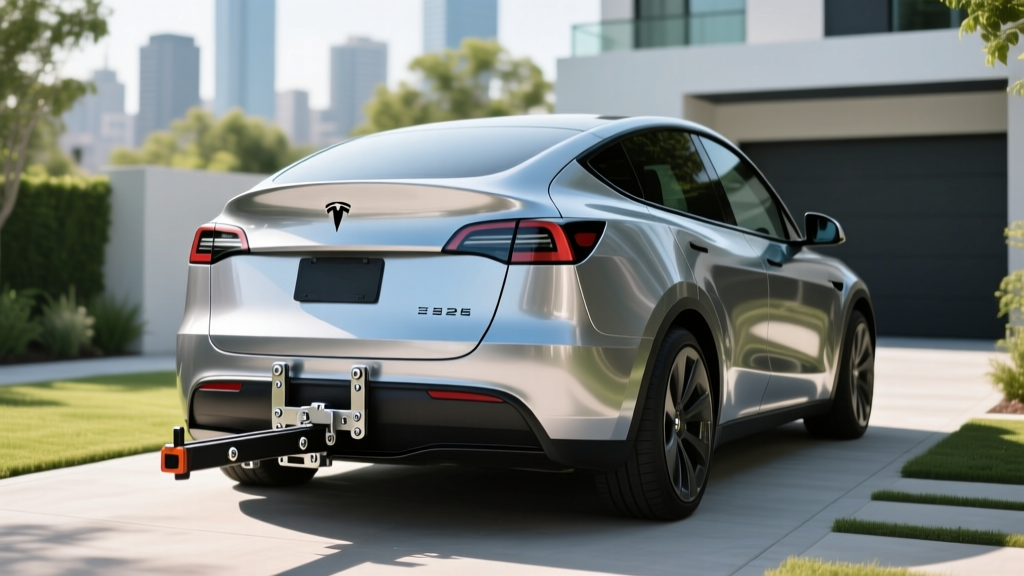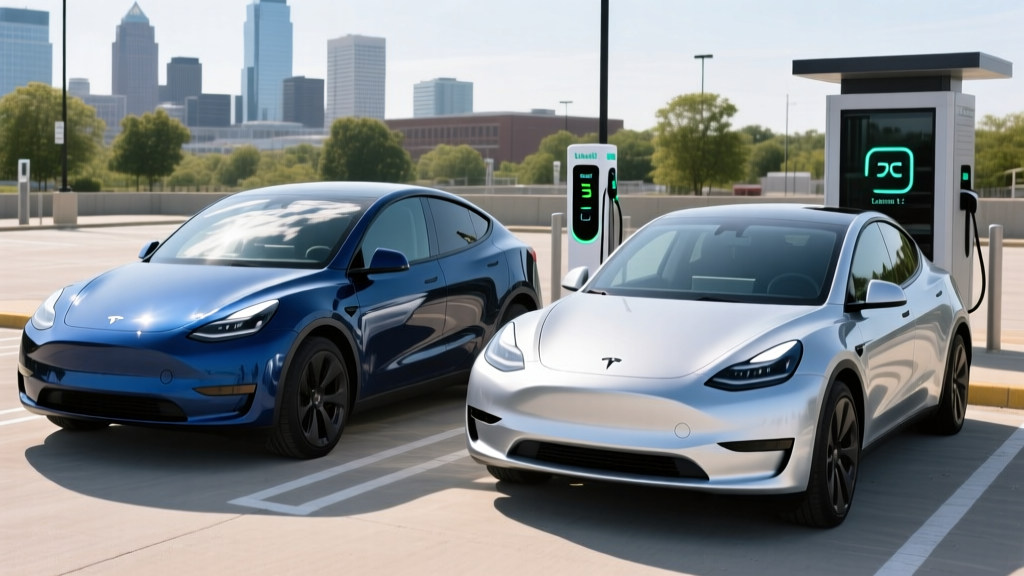
If you are shopping for a Tesla in Louisville, Kentucky, you are entering one of the more interesting EV markets in the Southeast. The city sits at the crossroads of I-65 and I-64, making it a natural hub for both daily commuting and long-distance electric road trips. But Kentucky's climate — hot, humid summers and winters that regularly dip below freezing — has real implications for EV range and charging behavior that most brochure specs simply gloss over.
This guide covers the two Tesla models most relevant to Louisville buyers in 2026: the refreshed Model 3 and the Model Y (including the Juniper update). We will walk through EPA range versus what you will actually see on the Gene Snyder Freeway in January, DC fast-charging realities on the local Supercharger network, and the specifics of federal §30D tax credit eligibility for Kentucky residents.
2026 Tesla Model 3: Range, Battery, and Efficiency for Louisville Drivers
The 2026 Model 3 continues to be Tesla's entry point, available in three primary configurations. The base Rear-Wheel Drive uses a lithium iron phosphate (LFP) battery, while the Long Range AWD and Performance trims use nickel-manganese-cobalt (NMC) chemistry for higher energy density.
| Spec | RWD (Base) | Long Range AWD | Performance |
|---|---|---|---|
| EPA Range | 272 mi | 341 mi | 315 mi |
| Battery (usable) | ~57.5 kWh (LFP) | ~75 kWh (NMC) | ~75 kWh (NMC) |
| 0-60 mph | 5.8 sec | 4.2 sec | 2.9 sec |
| Horsepower | 271 hp | 346 hp | 510 hp |
| Drivetrain | RWD | Dual-Motor AWD | Dual-Motor AWD |
| Efficiency | 132 MPGe / 25 kWh/100mi | 132 MPGe / 25 kWh/100mi | 119 MPGe / 28 kWh/100mi |
| Base MSRP | $38,990 | $47,740 | $53,240 |
EPA estimates assume a mix of city and highway driving at moderate temperatures. In Louisville's July heat (90°F+), expect the Long Range AWD to deliver roughly 300-315 miles on a full charge with A/C running. In January, when temperatures hover around 28-35°F, plan for a 20-30% reduction — roughly 240-270 miles from the Long Range variant. Highway driving at 75 mph on I-64 toward Lexington will further reduce range by 10-15% compared to city/regen-heavy routes like Bardstown Road. Source: fueleconomy.gov
2026 Tesla Model Y: The Family SUV Louisville Buyers Actually Want
The Model Y remains America's best-selling EV for good reason: crossover practicality, strong range, and access to Tesla's Supercharger network. For Louisville families hauling kids to youth sports or making weekend runs to Mammoth Cave or Cincinnati, the Model Y's cargo space and AWD traction are compelling. The 2026 Juniper refresh brought a quieter cabin, updated suspension tuning, and a redesigned interior with ventilated front seats — meaningful upgrades for Kentucky summers.
| Spec | Long Range AWD | Performance |
|---|---|---|
| EPA Range | 320 mi | 293 mi |
| Battery (usable) | ~75 kWh (NMC) | ~75 kWh (NMC) |
| 0-60 mph | 4.8 sec | 3.5 sec |
| Horsepower | 384 hp | 456 hp |
| Drivetrain | Dual-Motor AWD | Dual-Motor AWD |
| Efficiency | 122 MPGe / 28 kWh/100mi | 111 MPGe / 30 kWh/100mi |
| Cargo (rear seats up) | 30.2 cu ft | 30.2 cu ft |
| Cargo (rear seats folded) | 72.1 cu ft | 72.1 cu ft |
| Rear Legroom | 40.5 in | 40.5 in |
| Base MSRP | $46,630 | $51,630 |
The Model Y Long Range's 320-mile EPA figure is strong, but real-world Louisville driving tells a slightly different story. Expect ~275-295 miles in summer highway conditions and ~225-255 miles in winter with cabin heat engaged. The heat pump (standard on all 2026 Teslas) mitigates winter losses compared to older resistive-heating EVs, but physics still wins in single-digit wind chills. For the common Louisville-to-Nashville run (175 miles each way), a single charge suffices in most conditions, but plan a brief Supercharger stop in winter.
Charging Speeds: DC Fast Charging and Home Level 2 in Kentucky
Charging infrastructure is where Tesla ownership in Louisville genuinely shines. The city and surrounding area host multiple Supercharger stations, including locations along I-65 (near Elizabethtown and Bowling Green) and I-64 (toward Lexington). Most of these stalls now support V3/V4 architecture at up to 250 kW.
| Charging Method | Power (kW) | Speed (mi/hr added) | Time to Charge |
|---|---|---|---|
| Level 1 (120V household) | ~1.2 kW | ~3-4 mi/hr | Days (emergency only) |
| Level 2 (240V / 48A Wall Connector) | 11.5 kW | ~37 mi/hr | ~8 hours (10-100%) |
| DC Fast (V3 Supercharger) | Peak 250 kW | ~1,000 mi/hr peak | ~25 min (10-80%) |
| DC Fast (V4 Supercharger) | Peak 250+ kW | ~1,000+ mi/hr peak | ~20-23 min (10-80%) |
The charging curve reality: Tesla's 250 kW peak rate is not sustained across the full session. The battery management system tapers charge speed significantly above 50% state of charge, and sharply above 80%. A 10-80% session takes roughly 25 minutes, but pushing from 80-100% adds another 25-30 minutes. For road trips, the optimal strategy is to charge to 80% and drive on — you will spend less total time charging with multiple short stops than with one long stop to 100%.
For home Level 2 charging, the Tesla Wall Connector at 48 amps delivers 11.5 kW on a 240V/60A circuit. Most Louisville homes with a 200-amp electrical panel can accommodate this, but older homes in neighborhoods like Cherokee Triangle or Old Louisville may need a panel upgrade. Budget $500-$1,500 for a straightforward Wall Connector installation, or $2,000-$4,000+ if a panel upgrade to 200A is required. Always get a quote from a licensed electrician before committing.
Supercharger Network and Road Trip Practicality from Louisville
Louisville's position on the I-65 corridor means Tesla owners have some of the best road-trip charging in the region. Heading north to Chicago or south to Nashville and Atlanta, Superchargers are spaced roughly every 120-160 miles — well within even the winter-reduced range of a Model Y or Model 3.
Heading east on I-64 toward Lexington and the Appalachian corridor, coverage is adequate but sparser between smaller towns. The stretch toward Charleston, WV, requires more planning, and winter range loss makes this route one where you will want to precondition your battery (the car does this automatically when you navigate to a Supercharger) and arrive at chargers with a buffer.
One significant advantage in 2026: Tesla's North American Charging Standard (NACS) has been adopted by Ford, GM, Rivian, and others. While this means more competition at Supercharger stalls, Tesla has been adding V4 stalls with longer cables and CCS compatibility, expanding capacity at high-traffic locations.
Autopilot, FSD Supervised, and Louisville Driving
Tesla's Autopilot and Full Self-Driving (Supervised) are SAE Level 2 driver-assistance systems. They are not self-driving. The driver must remain attentive, keep hands on the wheel (or demonstrate engagement via the cabin camera), and be prepared to take over instantly. No production Tesla is capable of unsupervised autonomous driving on public roads.
On Louisville's well-marked interstates — I-65, I-64, I-265 (Gene Snyder) — Autopilot's lane centering and adaptive cruise control perform reliably. FSD Supervised adds automatic lane changes, on-ramp to off-ramp navigation, and traffic light/stop sign recognition. In practice, FSD Supervised handles the Watterson Expressway interchange competently but can be hesitant in construction zones and on poorly marked surface streets like parts of Dixie Highway.
Autopilot comes standard. FSD Supervised is an $8,000 add-on (or $99/month subscription as of early 2026). For most Louisville commuters, standard Autopilot is sufficient; FSD Supervised is worth testing via the monthly subscription before committing to the full purchase.
Federal Tax Credit (§30D): What Louisville Buyers Actually Qualify For
The federal EV tax credit under IRS §30D remains available for qualifying Tesla purchases in 2026, but eligibility depends on several factors that trip up many buyers. Here is the checklist:
- Vehicle MSRP cap: Sedans (Model 3) must be under $55,000 MSRP; SUVs/trucks/vans (Model Y) under $80,000. Both Tesla models qualify at base and most trimmed prices.
- Buyer income cap (MAGI): $150,000 single filer / $225,000 head of household / $300,000 joint filers. Exceed these and you are ineligible regardless of the vehicle.
- Battery sourcing requirements: A percentage of critical minerals and battery components must be sourced from the U.S. or FTA-partner countries. Tesla's supply chain has steadily increased domestic sourcing, but the exact qualifying credit amount ($3,750 or $7,500) depends on the specific build date and battery batch. Verify on fueleconomy.gov at time of purchase.
- Point-of-sale transfer: As of 2024, you can transfer the credit to the dealer at purchase, reducing your out-of-pocket cost immediately rather than waiting to claim it on your tax return.
- Tax liability: The credit is non-refundable — it can only reduce your federal tax liability to zero, not below. If your tax liability is less than the credit amount, you lose the difference.
| Model / Trim | Base MSRP | Est. §30D Credit | Effective Price |
|---|---|---|---|
| Model 3 RWD | $38,990 | $7,500* | ~$31,490 |
| Model 3 Long Range AWD | $47,740 | $7,500* | ~$40,240 |
| Model Y Long Range AWD | $46,630 | $7,500* | ~$39,130 |
| Model Y Performance | $51,630 | $7,500* | ~$44,130 |
*Credit amount subject to battery-sourcing compliance at time of delivery. Verify current eligibility on irs.gov. Consult a tax professional for your specific situation.
Model 3 vs. Model Y: Which Tesla Fits Your Louisville Life?
The decision between Model 3 and Model Y comes down to use case more than specs. Here is a practical framework for Louisville buyers:
Choose the Model 3 if:
- You commute solo or with one passenger (e.g., Hurstbourne to downtown via I-64)
- Maximum range per dollar is your priority (341 mi on Long Range)
- You want the lowest effective price after tax credits (~$31,490 for RWD)
- You rarely haul bulky cargo
- You have children or regularly carry 4-5 passengers
- You need cargo space for gear, strollers, or Costco runs (72.1 cu ft with seats folded)
- You take frequent road trips and want higher seating + easier entry
- You value the crossover form factor for Louisville's occasional snow/ice events with AWD
Warranty, Ownership Costs, and Long-Term Battery Health
Tesla's warranty coverage is competitive but not class-leading:
- Basic vehicle warranty: 4 years / 50,000 miles
- Battery and drive unit warranty: 8 years / 120,000 miles (Long Range/Performance) or 8 years / 100,000 miles (RWD), with a minimum 70% capacity retention guarantee
For Louisville owners, battery longevity benefits from the region's moderate climate — extreme heat (Arizona) and extreme cold (Minnesota) accelerate degradation more than Kentucky's seasonal swings. Tesla's LFP batteries in the Model 3 RWD offer a distinct advantage: they tolerate regular 100% charging without meaningful degradation penalty, unlike NMC batteries which Tesla recommends charging to 80% daily. If you plan to keep the car 8-10 years and charge at home nightly, the LFP Model 3 RWD is arguably the lowest-maintenance choice.
Insurance costs in Kentucky tend to run 10-20% higher for Teslas than comparable gas vehicles, driven by higher repair costs after collisions. Get quotes from GEICO, State Farm, and Progressive before purchasing — rates vary significantly by ZIP code and driving record.
Pros, Cons, and the Bottom Line for Louisville Tesla Buyers
- Access to Tesla's Supercharger network — the most reliable DC fast-charging infrastructure in Kentucky
- Best-in-class efficiency (kWh/100mi) translates to lower per-mile charging cost
- Over-the-air updates continuously add features
- Strong real-world range, especially Long Range variants
- LFP option (Model 3 RWD) for worry-free daily charging to 100%
- Point-of-sale tax credit transfer reduces upfront cost
- No physical instrument cluster — all info on central 15.4" screen
- FSD Supervised ($8,000) remains a Level 2 system, not autonomous driving
- Panel upgrade may be needed for Level 2 home charging in older Louisville homes
- Insurance premiums above segment average
- Minimalist interior not for everyone — no physical buttons for HVAC, wipers
- Service center wait times in Louisville can stretch to 2-3 weeks for non-urgent repairs
Frequently Asked Questions
What is the real-world range of a Tesla in Louisville, KY?
Expect 85-95% of EPA range in mild weather and 70-80% in winter (December-February). A Model Y Long Range rated at 320 miles EPA will deliver roughly 275-295 miles in summer and 225-255 miles in winter on Louisville's mix of city and highway driving.
How fast does a Tesla charge at Louisville Superchargers?
Most local Superchargers are V3 (250 kW peak). A Model Y Long Range charges from 10-80% in approximately 25 minutes. Peak speeds of ~1,000 miles-per-hour of range are only sustained in the lower portion of the battery (roughly 10-40% SoC), then taper progressively.
Does the Tesla Model Y qualify for the full $7,500 federal tax credit in Kentucky?
The Model Y qualifies at most trims under the $80,000 SUV MSRP cap. Whether you receive $3,750 or the full $7,500 depends on the battery's critical-mineral and component sourcing at the time of manufacture, plus your personal income (MAGI must be under $300,000 for joint filers). Check fueleconomy.gov for the specific VIN's eligibility before signing.
Is it worth buying a Tesla in Louisville vs. a Hyundai Ioniq 5 or Ford Mustang Mach-E?
Tesla's advantages in Louisville center on the Supercharger network (still the most reliable for road trips along I-65/I-64) and efficiency. The Ioniq 5 offers faster 800V charging at non-Tesla DC stations and a more conventional interior. The Mach-E provides a traditional dealer service experience. If road trips and lowest cost-per-mile matter most, Tesla wins. If you want a more conventional ownership experience and don't road-trip often, the competitors are strong alternatives.
Do I need a 200-amp electrical panel for Tesla home charging in Louisville?
Not necessarily, but it helps. The Tesla Wall Connector at 48A requires a 60A dedicated circuit, which most 200A panels can support. If your home has a 100A panel (common in older Louisville neighborhoods), you can either upgrade the panel ($2,000-$4,000) or install the Wall Connector at a lower amperage (e.g., 32A on a 40A circuit), which still adds ~25 miles of range per hour — plenty for overnight charging.
How does cold weather affect Tesla range in Kentucky winters?
Louisville averages about 40 days per year below 32°F. In these conditions, expect 20-30% range reduction due to battery chemistry slowdown and cabin heating demand. Tesla's standard heat pump is more efficient than resistive heaters, reducing this penalty compared to older EVs. Preconditioning the battery while plugged in (set via the Tesla app before your commute) recovers much of this loss and improves regenerative braking performance.