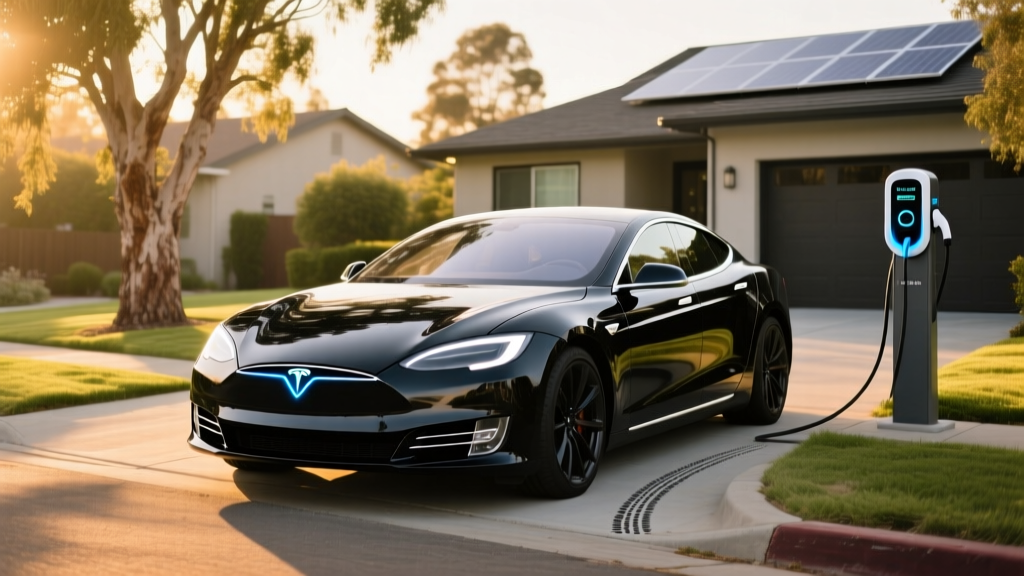
Los Gatos sits at the intersection of Silicon Valley wealth, mountain commuting, and some of California's best EV infrastructure. If you're shopping for a Tesla in Los Gatos, the flagship 2026 Model S remains the benchmark sedan — but ownership here comes with specific considerations: Highway 17 mountain passes, cold-weather trips to Tahoe, and a dense but sometimes congested Supercharger network. This review covers the Model S Long Range and Plaid with the exact numbers, real-world caveats, and local ownership context you need before signing.
2026 Tesla Model S: Spec Snapshot
The 2026 Model S carries over the refreshed architecture introduced in recent model years, with the 1200A tri-motor Plaid and the dual-motor Long Range as the two available trims. Here's the hard data:
| Spec | Model S Long Range | Model S Plaid |
|---|---|---|
| EPA Range | 402 miles | 359 miles |
| Battery (usable) | ~100 kWh (NMC) | ~100 kWh (NMC) |
| Drivetrain | Dual-Motor AWD | Tri-Motor AWD |
| Horsepower | 670 hp | 1,020 hp |
| 0–60 mph | 3.1 seconds | 1.99 seconds |
| Top Speed | 155 mph | 200 mph |
| Peak DC Fast Charge | 250 kW | 250 kW |
| 10–80% DC Charge | ~27 minutes | ~27 minutes |
| Level 2 Home Charge | 11.5 kW (~41 mi/hr) | 11.5 kW (~41 mi/hr) |
| Efficiency | 124 MPGe (27 kWh/100mi) | 116 MPGe (29 kWh/100mi) |
| Cargo Volume | 28 cu ft (rear + frunk) | 28 cu ft (rear + frunk) |
| Rear Legroom | 40.9 inches | 40.9 inches |
| Battery Warranty | 8 yr / 150,000 mi | 8 yr / 150,000 mi |
| Base MSRP | $74,990 | $89,990 |
Real-World Range: What the EPA Number Doesn't Tell You
EPA Sticker: 402 miles (Long Range) / 359 miles (Plaid)
Real-World Highway Expectation: ~320–350 miles at 70–75 mph, dry and mild
Cold-Weather / Mountain Expectation: ~260–290 miles on a Highway 17 → Tahoe run in winter
The Model S Long Range's 402-mile EPA figure is among the highest of any production EV sold in the U.S., per fueleconomy.gov. But EPA tests include significant low-speed and city driving, which favors EVs thanks to regenerative braking and zero idle consumption.
For Los Gatos owners, your real mileage depends heavily on your commute profile:
- Local / Highway 85 corridor commuting: Expect 370–390 miles. Stop-and-go traffic on the 85 or Winchester Blvd actually helps range because regen recovers energy.
- Sustained 70+ mph highway (e.g., US-101 to San Francisco or I-280): Expect 320–350 miles. Aerodynamic drag is the Model S's biggest range enemy above 65 mph.
- Highway 17 to Lake Tahoe (elevation gain ~6,000 ft, cold temps): Expect 260–290 miles on the outbound leg. Climbing eats energy fast, and cold battery chemistry reduces usable capacity by 10–15%. The heat pump helps cabin efficiency, but battery preconditioning consumes additional energy.
The Plaid's lower 359-mile EPA rating reflects its wider tires, tri-motor weight, and less aggressive efficiency tuning. Plan on roughly 80% of sticker for mixed real-world driving.
Charging: Supercharger Access and Home Setup in Los Gatos
Tesla's charging ecosystem remains its strongest competitive advantage, and Los Gatos owners benefit from dense local infrastructure. The Model S charges at up to 250 kW peak on V3 Superchargers — though, critically, that peak rate is sustained only between roughly 10–30% State of Charge (SoC). The charge curve tapers progressively above 50%, which is why a 10–80% session takes approximately 27 minutes rather than the ~16 minutes a flat 250 kW rate would suggest.
Local Supercharger Access
The closest Supercharger stations to Los Gatos include:
- Tesla Los Gatos (Santa Cruz Ave service center area): V3 stalls, convenient for local owners
- Westfield Oakridge (San Jose): ~15 min drive, V3 250 kW stalls
- Gilroy Premium Outlets: ~25 min south, useful before Highway 152 trips toward the Central Valley
For Highway 17 corridor trips to Santa Cruz or Tahoe, Superchargers in Scotts Valley, Monterey, and South Lake Tahoe provide reliable top-ups. Tesla's NACS (North American Charging Standard) connector is now the industry standard, and competing networks like Electrify America and EVgo increasingly offer NACS cables.
Home Level 2 Charging
The Model S accepts up to 11.5 kW on Level 2 (48 amps on a 60-amp circuit). With a Tesla Wall Connector installed on a dedicated 240V/60A circuit, you'll recover roughly 41 miles of range per hour — enough to fully replenish overnight even after a heavy driving day.
Los Gatos homes vary widely in electrical panel capacity. Many older properties near downtown may need a panel upgrade (200A service) to support a dedicated 60A EV circuit alongside existing loads. Budget $1,200–$3,500 for a standard Wall Connector installation, or $4,000–$8,000+ if a panel upgrade is required. Always get a load calculation from a licensed electrician before committing.
Pricing, Trims, and the Federal Tax Credit Reality
Here's where the math gets specific — and where many buyers get tripped up.
| Trim | Base MSRP | As-Tested (typical config) | §30D Federal Credit | Effective Price |
|---|---|---|---|---|
| Long Range | $74,990 | $78,000–$82,000 | Up to $7,500* | ~$67,490–$74,500 |
| Plaid | $89,990 | $93,000–$97,000 | Up to $7,500* | ~$82,490–$89,500 |
*Subject to IRS §30D eligibility requirements. See details below.
Do You Actually Qualify for the $7,500 Credit?
The Model S qualifies for the IRS §30D Clean Vehicle Credit — but only if you clear every requirement. Per irs.gov, the key rules for 2026 include:
- MSRP Cap: Sedans must be under $55,000 MSRP. The Model S exceeds this cap at $74,990+.
- Buyer Income Cap: Modified AGI ≤ $150,000 (single), $225,000 (head of household), $300,000 (joint).
- Battery Sourcing: Critical minerals and battery components must meet phased-in domestic/FtA sourcing thresholds.
- Point-of-Sale Transfer: Eligible buyers can transfer the credit to the dealer for an upfront price reduction.
Critical note: Because the Model S is classified as a sedan and its MSRP exceeds the $55,000 cap, it does not qualify for the §30D new-vehicle federal tax credit. This is a common point of confusion. The Model X (classified as an SUV with a $80,000 MSRP cap) may still qualify depending on sourcing rules and your income. Consult a tax professional before making purchase assumptions.
California's CVRP rebate and local utility incentives (PG&E offers EV rate plans and occasional rebates) may offset some cost, but the federal credit is off the table for new Model S sedans.
Performance, Ride Quality, and Daily Driving
The Model S Long Range hits 60 mph in 3.1 seconds with 670 horsepower from its dual-motor setup. That's sports-car territory in a five-passenger sedan. The Plaid's 1,020 hp and 1.99-second 0–60 time remain absurd by any automotive standard, though accessing it requires a pre-conditioned battery and specific launch procedures.
For Los Gatos daily driving, what matters more is the adaptive air suspension, which provides a compliant ride over the occasional rough patches on Los Gatos-Almaden Road and handles the Highway 17 descent into Scotts Valley with confidence. The low center of gravity from the underfloor battery pack keeps body roll minimal through the mountain curves.
Regenerative braking is strong enough for true one-pedal driving in most traffic conditions — a significant comfort advantage on the 85 and 280 during commute hours.
Interior, Cargo, and Technology
The Model S interior blends premium materials with Tesla's signature minimalism. The 17-inch center touchscreen runs Tesla's latest software, and the rear passengers get their own 8-inch display for climate and entertainment. Apple CarPlay and Android Auto are still not supported — Tesla's native infotainment handles navigation, media, and phone integration directly.
Cargo: 28 cubic feet total (rear trunk + front trunk/frunk). The hatchback-style liftgate provides better practical access than a traditional sedan trunk. Rear seats fold 60/40 for longer items.
Driver Assistance: Basic Autopilot (Traffic-Aware Cruise Control + Autosteer) is standard. Full Self-Driving (Supervised) remains a $8,000 add-on or $99/month subscription.
SAE Automation Level: Level 2. FSD (Supervised) requires continuous driver attention and does not make the Model S a self-driving vehicle. You are responsible for steering input, braking, and situational awareness at all times. Level 4 driverless operation is currently limited to geofenced robotaxi services like Waymo in specific metro areas.
Pros, Cons, and the Competition
Pros
- Class-leading 402-mile EPA range (Long Range)
- Access to Tesla Supercharger network — still the most reliable DC fast-charging system
- Over-the-air updates continuously add features
- Air suspension ride quality has improved significantly post-refresh
- Strong resale value relative to luxury EV competitors
- 8-year / 150,000-mile battery and drive unit warranty
Cons
- Does NOT qualify for §30D federal tax credit (sedan MSRP cap)
- No Apple CarPlay / Android Auto
- Panel gap quality still inconsistent on some deliveries
- Plaid's real-world range drops significantly under hard driving
- Service center wait times in the South Bay can stretch weeks for body work
- Yoke steering remains polarizing and not ideal for low-speed parking
Key Competitors for Los Gatos Buyers
The BMW i7 (EPA ~318 mi, $120K+) offers a more traditional luxury experience and qualifies for no additional credit either. The Mercedes-Benz EQS (~350 mi EPA, $105K+) provides a quieter, more opulent cabin but trails on charging speed. The Lucid Air Pure (~419 mi EPA, ~$70K) is the closest range rival and is built just down the road in Newark, CA — worth a serious cross-shop.
Who Should Buy a Tesla Model S in Los Gatos?
Choose the Model S Long Range if: You want maximum range for Bay Area commuting plus Tahoe road trips, value Supercharger access, and don't need the federal tax credit to make the math work.
Choose the Model S Plaid if: You want the ultimate performance sedan and range compromise is acceptable — you'll charge more often but never lack for power.
Look elsewhere if: Federal tax credit eligibility is essential to your purchase decision (consider the Model X, Model Y, or competitors below the MSRP cap), or you prefer CarPlay integration and traditional luxury dealership service.
Frequently Asked Questions
What is the real-world range of the 2026 Tesla Model S?
The Long Range achieves 402 miles EPA; expect 320–350 miles in sustained highway driving and 260–290 miles in cold mountain conditions (e.g., Highway 17 to Tahoe in winter). The Plaid delivers 359 miles EPA with roughly 280–310 miles in mixed real-world use.
How fast does the Model S charge at home and on the road?
On a 250 kW V3 Supercharger, 10–80% takes approximately 27 minutes (peak rate tapers above 50% SoC). At home on a Level 2 Tesla Wall Connector (11.5 kW / 48A), you gain about 41 miles of range per hour — a full overnight charge from near-empty takes roughly 10 hours.
Does the Tesla Model S qualify for the $7,500 federal EV tax credit?
No. Under current IRS §30D rules, new sedans must have an MSRP at or below $55,000 to qualify. The Model S starts at $74,990 and is therefore ineligible regardless of buyer income or battery sourcing. The Model X (SUV classification, $80,000 MSRP cap) may qualify — verify current sourcing rules with a tax professional.
Is the Tesla Model S worth buying vs. the Lucid Air or BMW i7?
The Model S wins on Supercharger network access, range (Long Range), and software. The Lucid Air Pure rivals it on range with a lower starting price and more conventional styling. The BMW i7 offers superior build quality and a traditional luxury service experience. Test-drive all three — your preference for tech-forward vs. traditional luxury will determine the winner.
How does cold weather affect the Model S battery in the Santa Cruz Mountains?
Battery chemistry (NMC) loses roughly 10–15% usable capacity in freezing temperatures. On a Los Gatos-to-Tahoe trip in January, expect range to drop to 260–290 miles due to combined cold and 6,000+ feet of elevation gain. Preconditioning the battery while plugged in before departure recovers some of this loss. The Model S heat pump is efficient for cabin heating, which helps preserve range relative to resistive heaters.
What is the battery warranty on the 2026 Model S?
Tesla covers the battery and drive unit for 8 years or 150,000 miles (whichever comes first), with a minimum 70% capacity retention threshold over that period. Battery degradation data from Tesla's fleet reports suggest most Model S packs retain 85–90% capacity at 100,000 miles under normal use.
Sources: EPA / fueleconomy.gov, IRS §30D Clean Vehicle Credit, Tesla official specifications.