Search "tesla linux" and you'll find a curious corner of the EV internet: owners booting Ubuntu from a USB drive on the center screen, developers poking at the underlying OS, and forums debating whether Tesla runs a custom Linux kernel or something closer to stock. The short answer is yes — Tesla's infotainment stack is built on a Linux foundation, and that architectural choice shapes everything from over-the-air (OTA) update cadence to how third-party apps behave on your dashboard. But for most buyers, the real question isn't the kernel version; it's whether the cars running that software — primarily the 2026 Model 3 and Model Y — are the right EVs to park in their driveway.
This review profiles Tesla's current volume sellers through the lens of what the Linux-based platform enables (and where it falls short), paired with the hard numbers buyers actually need: EPA range, DC fast-charge curves, post-credit pricing, and real-world ownership economics.
Which Teslas Run Linux, and Why It Matters
Every current-production Tesla — Model 3, Model Y, Model S, Model X, and Cybertruck — runs an infotainment system built on a custom Linux distribution. Tesla has used Linux since the original Model S in 2012, favoring it for the flexibility to build a deeply integrated vehicle OS without licensing fees to a third-party automotive platform. The current Hardware 4 (HW4) computer pairs an AMD Ryzen CPU with an RDNA 2 GPU, giving the Linux stack enough headroom to run a full Chromium-based web browser, Steam games (while parked), Netflix, and Tesla's visualization engine simultaneously.
For owners, the Linux foundation translates to a few tangible benefits:
- Frequent OTA updates — Tesla pushes software updates every few weeks, adding features (like adaptive high beams, new trip planners, or UI overhauls) without dealer visits.
- Open-ish ecosystem — Developers have reverse-engineered portions of the OS, leading to community tools for data logging and customization, though Tesla does not officially support third-party OS modifications.
- Desktop-class browser — The Chromium engine handles complex web apps far better than the embedded browsers in most competitor infotainment systems.
The trade-off? Tesla's Linux is a walled garden. Unlike Android Automotive OS (used by Volvo, Polestar, and GM), there's no Google Play Store, no native Apple CarPlay or Android Auto, and no sideloading apps. You get what Tesla ships — which is polished, but non-negotiable.
2026 Model 3 and Model Y: Spec Snapshot
| Spec | Model 3 Long Range AWD | Model Y Long Range AWD |
|---|---|---|
| EPA Range | 363 miles | 327 miles |
| Battery (usable) | ~75 kWh, NMC | ~75 kWh, NMC |
| Drivetrain | Dual-Motor AWD | Dual-Motor AWD |
| Horsepower | ~346 hp | ~384 hp |
| 0-60 mph | 4.2 sec | 4.8 sec |
| Peak DC Charge Rate | 250 kW | 250 kW |
| 10-80% DCFC Time | ~25 min | ~27 min |
| Level 2 (11.5 kW) | ~44 mi/hr | ~40 mi/hr |
| MPGe (combined) | 132 MPGe | 122 MPGe |
| Efficiency | 25 kWh/100 mi | 28 kWh/100 mi |
| Cargo Volume | 23 cu ft (trunk + frunk) | 76 cu ft (max, seats folded) |
| Base MSRP | $47,740 | $48,740 |
| Battery Warranty | 8 yr / 120,000 mi | 8 yr / 120,000 mi |
Sources: fueleconomy.gov, Tesla.com order pages (2026 model year). Prices reflect destination charge; exclude potential incentives.
Real-World Range: What the EPA Sticker Doesn't Tell You
Tesla's efficiency is genuinely class-leading. The Model 3's 25 kWh/100 mi figure means it squeezes more miles from each kilowatt-hour than nearly any other EV on sale. That efficiency is partly why the Linux-powered thermal management system — which preconditions the battery using navigation data — works so well: when you route to a Supercharger, the car warms or cools the pack to the optimal temperature, reducing charging time and preserving range.
But physics still applies. Highway speeds above 75 mph cut range by 15-20% versus the EPA cycle. Cold weather (below 32°F) adds resistance and cabin-heating load, lopping 20-30% off the sticker number. Tesla's heat pump (standard since 2021) mitigates this better than resistive heaters, but it doesn't eliminate the loss.
Charging Speed and Network Reality
Both the Model 3 and Model Y Long Range peak at 250 kW on DC fast chargers — specifically, on V3 and V4 Tesla Superchargers. Here's what that looks like in practice:
- 10-80% in ~25-27 minutes at a V3 Supercharger (250 kW stall), with the pack preconditioned via navigation routing.
- Sustained rate matters more than peak: Tesla's charge curve holds above 150 kW through ~50% State of Charge (SoC), then tapers. Competitors with higher peak numbers (like Hyundai's 350 kW E-GMP platform) don't always sustain longer.
- Level 2 home charging at 11.5 kW (48A circuit, 60A breaker) adds ~40-44 miles per hour — a full overnight recharge from 20% to 100% in roughly 7-8 hours.
- Level 1 (120V) trickle is ~3-4 miles per hour — usable only for topping off, not daily driving for most owners.
The Supercharger network remains Tesla's strongest ownership advantage. With over 25,000 stalls in North America and growing, Tesla drivers face fewer "charger broken" or "ICE'd" scenarios than CCS-reliant EV owners. The 2025+ adoption of the NACS connector by Ford, GM, Rivian, and others has opened Superchargers to non-Teslas, which increases congestion at popular corridors but also validates Tesla's infrastructure bet.
Pricing, Trims, and the Federal Tax Credit Picture
| Trim | MSRP (incl. destination) | §30D Credit Eligibility | Effective Price (if eligible) |
|---|---|---|---|
| Model 3 RWD | $40,240 | Partial ($3,750)* | ~$36,490 |
| Model 3 Long Range AWD | $47,740 | Partial ($3,750)* | ~$43,990 |
| Model 3 Performance | $54,740 | Partial ($3,750)* | ~$50,990 |
| Model Y Long Range AWD | $48,740 | Partial ($3,750)* | ~$44,990 |
| Model Y Performance | $53,740 | Partial ($3,750)* | ~$49,990 |
*As of the 2026 tax year, Tesla vehicles typically qualify for $3,750 of the $7,500 maximum under IRS §30D, due to critical-mineral and battery-component sourcing rules that shift annually. Full $7,500 eligibility depends on buyer income caps ($150K single / $300K joint AGI), MSRP caps ($55K sedans / $80K SUVs/trucks), and North American assembly — Tesla clears the assembly and MSRP hurdles, but battery sourcing remains the limiting factor. Always verify current eligibility at fueleconomy.gov and consult a tax professional. The credit can be transferred at point of sale as a purchase-price reduction.
Performance, Tech, and the Linux-Powered Cabin
The dual-motor AWD powertrain in both cars delivers confident all-weather traction and the kind of instant torque that makes merging effortless. The Model 3 Long Range's 4.2-second 0-60 time is brisk without being absurd; the Performance trims (3.1 seconds for Model 3, 3.5 seconds for Model Y) trade some range for supercar-rivaling acceleration.
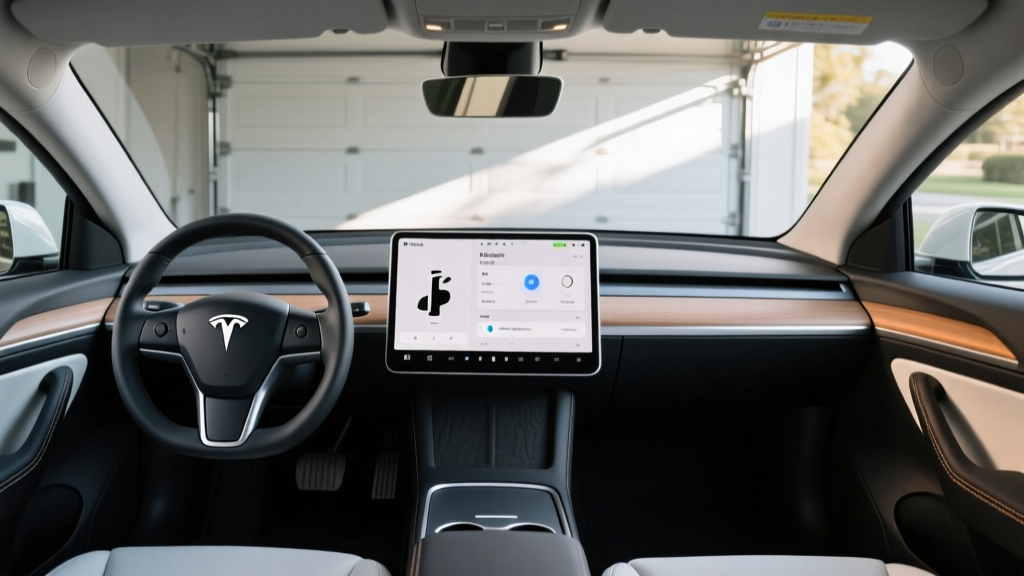
Inside, the Linux-based 15.4-inch touchscreen (Model 3) or 15-inch (Model Y) is the entire interface — no physical buttons for climate, mirrors, or glovebox. This minimalism is polarizing:
- Strengths: The UI is fast, visually clean, and receives continuous OTA improvements. Navigation is excellent, with real-time Supercharger availability and automatic preconditioning. The built-in dashcam and Sentry Mode (surveillance recording) are genuinely useful security features. Steam gaming while charging is a legitimate perk on road trips.
- Weaknesses: No Apple CarPlay or Android Auto — a dealbreaker for some buyers. Turn-signal stalks were removed on the refreshed Model 3 (Highland), replaced by steering-wheel buttons that frustrate some drivers in roundabouts. No heads-up display. Rear-seat entertainment relies on a separate 8-inch screen (Model 3) or tablet mounting.
On driver assistance, Tesla's Autopilot (standard) and Full Self-Driving Supervised ($8,000 option or $99/month subscription) remain SAE Level 2 systems — the driver must maintain hands-on-wheel awareness and full responsibility. FSD Supervised handles highway lane changes, on/off-ramps, and some city streets impressively, but it is not autonomous driving. Disengagements per mile have improved year-over-year, yet NHTSA continues to scrutinize Tesla's Autosteer crash data. Competitors like GM's Super Cruise (hands-off on mapped highways) and Ford's BlueCruise offer comparable Level 2 experiences with clearer operational boundaries.
Who Should Buy a Tesla (and Who Shouldn't)
Choose the Model 3 if: You prioritize efficiency (132 MPGe combined), want the longest real-world range in the segment, prefer a sedan driving position, and don't need more than 23 cu ft of cargo space. Ideal for commuters and solo/couple road-trippers.
Choose the Model Y if: You need crossover utility — 76 cu ft with seats folded, available third row (small children), and a taller ride height. Ideal for families, gear-haulers, and buyers who want Model 3 efficiency in a more practical package.
Look elsewhere if: You demand Apple CarPlay/Android Auto, prefer physical buttons and stalks, want a hands-off highway driver-assist (consider GM Super Cruise), or need a sub-$35,000 entry price (check the Chevy Equinox EV or used EV tax credits).
Pros and Cons at a Glance
Pros
- Class-leading efficiency (25-28 kWh/100 mi)
- Supercharger network access — still the most reliable DCFC ecosystem
- Frequent OTA updates add features post-purchase
- Strong resale value relative to EV segment average
- Excellent thermal management and battery preconditioning
- 8-year/120,000-mile battery warranty
Cons
- No CarPlay / Android Auto — Linux-based OS is a closed ecosystem
- Turn-signal buttons on steering wheel (Model 3 Highland) frustrate some drivers
- FSD Supervised costs $8K and is still Level 2, not autonomous
- Partial federal tax credit ($3,750) due to battery sourcing rules
- Ride quality firm on 19-inch wheels; road noise noticeable at highway speeds
- Service center wait times can stretch weeks in some metro areas
Frequently Asked Questions
Can I install Linux on my Tesla myself?
No. Tesla's Linux distribution is proprietary and locked. While researchers and hobbyists have demonstrated dual-boot setups via hardware modifications, doing so voids your warranty, disables OTA updates, and risks bricking vehicle systems. Tesla does not support or endorse third-party OS installations.
What is the real-world range of the Model 3 Long Range?
The EPA rates it at 363 miles. In real-world highway driving at 70 mph in moderate temperatures, expect ~300-320 miles. In winter (below freezing), plan for 240-270 miles. Preconditioning via scheduled departure or navigation routing helps preserve range.
How fast does a Tesla charge at home?
On a 48-amp Level 2 home charger (11.5 kW, requiring a 60-amp circuit), the Model 3 adds ~44 miles of range per hour. A full 20-100% charge takes about 7-8 hours. Installation typically costs $800-$2,000 depending on panel capacity and run length — budget for a licensed electrician and potential panel upgrade.
Does the Model Y qualify for the full $7,500 federal tax credit?
As of 2026, Tesla vehicles generally qualify for $3,750 under IRS §30D, not the full $7,500. The reduction is due to battery component and critical-mineral sourcing thresholds that tighten annually. The credit can be applied at point of sale. Buyer income caps ($300K joint / $150K single AGI) and MSRP limits ($80K for SUVs) also apply. Verify at IRS.gov before purchasing.
Is Tesla's FSD worth the $8,000 cost?
For most buyers, no — the $99/month subscription is a lower-risk way to try it. FSD Supervised is impressive on highways and improving in cities, but it remains a Level 2 assist requiring full driver attention. If you commute on well-mapped highways and value reduced fatigue, it has merit. If you expect autonomous driving, it will not meet that expectation.
How does Tesla's range compare to the Hyundai Ioniq 6 or BMW i4?
The Model 3 Long Range (EPA 363 mi) edges out the Ioniq 6 SE Long Range (~361 mi) and significantly beats the BMW i4 eDrive40 (~307 mi). However, the Ioniq 6 charges faster on 350 kW CCS chargers (10-80% in ~18 min) due to its 800V architecture. Tesla's advantage is sustained efficiency and Supercharger access; Hyundai's is peak charge speed on compatible third-party networks.