The Tesla Limousine Question: What Actually Exists?
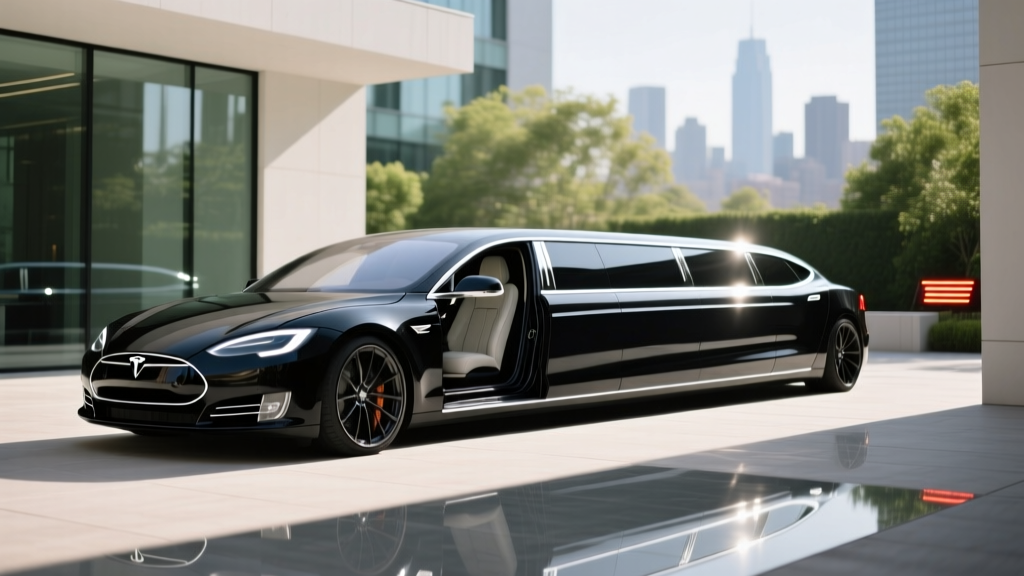
Search for "Tesla limousine" and you'll find a tangled mix of concept renders, stretched Model X one-offs, and chauffeured Model S sedans marketed as luxury town cars. Here's the reality: Tesla does not manufacture a factory limousine or stretched-wheelbase vehicle. What the market does offer is twofold — the 2026 Tesla Model S as the closest production equivalent to a premium electric chauffeur sedan, and a small ecosystem of aftermarket coachbuilders who have stretched Tesla platforms into custom limousines for livery and specialty use.
This review focuses on what you can actually buy and use today: the 2026 Tesla Model S in its role as a luxury electric transport vehicle, with a dedicated section on the custom Tesla limousine conversion market for those seeking true stretched-body vehicles.
2026 Tesla Model S: The Production "Tesla Limousine"
The Model S remains Tesla's flagship sedan and the default choice for operators who want a premium, all-electric vehicle for executive transport, hotel shuttle service, or private luxury use. It doesn't have a partition or a stretched wheelbase, but its rear-seat comfort, silence, and brand cachet make it the go-to for EV livery fleets.
| Spec | Long Range (AWD) | Plaid (Tri-Motor AWD) |
|---|---|---|
| EPA Range | 402 miles | 396 miles |
| Battery Capacity | ~100 kWh (NMC) | ~100 kWh (NMC) |
| Drivetrain | Dual-Motor AWD | Tri-Motor AWD |
| Horsepower | 670 hp | 1,020 hp |
| 0–60 mph | 3.1 sec | 1.99 sec |
| Top Speed | 155 mph | 200 mph |
| Max DC Fast Charge | 250 kW | 250 kW |
| 10–80% DC Time | ~30 min | ~30 min |
| Level 2 Home Charge | 11.5 kW (~34 mi/hr) | 11.5 kW (~34 mi/hr) |
| MPGe (Combined) | 124 MPGe | 116 MPGe |
| Efficiency | 27 kWh/100 mi | 29 kWh/100 mi |
| Cargo Volume | 28 cu ft (rear + frunk) | 28 cu ft (rear + frunk) |
| Rear Legroom | 35.4 in | 35.4 in |
| Base MSRP | $74,990 | $89,990 |
| Battery Warranty | 8 yr / 150,000 mi | 8 yr / 150,000 mi |
Real-World Range: What to Expect Beyond the EPA Sticker
EPA Estimate: 402 miles
Real-World Highway (70–75 mph): ~320–350 miles
Cold Weather (below 32°F): ~260–300 miles
City/Stop-and-Go with Regen: ~370–400 miles
The Model S Long Range posts an impressive 402-mile EPA estimate, but real-world conditions tell a more nuanced story. Highway driving at sustained speeds above 70 mph reduces efficiency by roughly 15–20% compared to the EPA's blended cycle. Cold weather compounds this — lithium-ion NMC cells lose efficiency in freezing temperatures, and cabin heating draws significant energy even with Tesla's heat pump system.
For livery operators planning airport runs or intercity transfers, a practical rule is to plan routes around 300 miles of usable range in moderate weather and 250 miles in winter conditions. This provides a safety buffer without risking low-SoC anxiety for passengers. According to data from fueleconomy.gov, the Model S Long Range achieves 124 MPGe combined, which translates to roughly 27 kWh per 100 miles under mixed driving.
Charging Speed: DC Fast Charge and Home Level 2
Charging infrastructure is where the Model S excels for commercial operators. Tesla's Supercharger network provides reliable, high-speed DC charging with the proprietary NACS connector — no adapter needed at Tesla stations.
| Charging Level | Power | Miles Added per Hour | Notes |
|---|---|---|---|
| Level 1 (120V) | ~1.4 kW | ~3–4 mi/hr | Emergency/trickle only |
| Level 2 (240V, 48A) | 11.5 kW | ~34 mi/hr | Home or depot charging; full charge in ~10 hrs |
| DC Fast (Supercharger V3) | Up to 250 kW (peak) | ~200 mi in 15 min | Peak rate tapers above 50% SoC |
| DC Fast (CCS adapter) | Up to ~150–250 kW | Varies by station | Requires Tesla CCS adapter; Electrify America, EVgo compatible |
A critical detail for fleet operators: the Model S charges at a peak of 250 kW on V3 Superchargers, but this rate is not sustained. The charging curve tapers significantly above 50% state of charge, and especially above 80%. A 10–80% session takes approximately 30 minutes, but an 80–100% top-off can add another 20+ minutes. For turnaround efficiency, operators should target 10–80% charging sessions and avoid waiting for a full charge.
For depot or home charging, a Level 2 Wall Connector at 11.5 kW adds roughly 34 miles of range per hour. An overnight 10-hour session replenishes approximately 340 miles — more than enough for daily livery duty cycles. Note that installation of a 60-amp circuit for Level 2 charging typically costs $800–$2,000 depending on panel capacity and run length, according to electrical industry estimates.
Pricing, Tax Credits, and Ownership Cost
| Item | Long Range | Plaid |
|---|---|---|
| Base MSRP | $74,990 | $89,990 |
| As-Tested (typical options) | $79,000–$82,000 | $95,000–$100,000 |
| §30D Federal Tax Credit | Not eligible (MSRP exceeds $55,000 sedan cap) | Not eligible (MSRP exceeds $55,000 sedan cap) |
| Estimated 5-Year Fuel Cost | ~$3,200 (electricity at $0.14/kWh) | ~$3,500 |
| Estimated 5-Year Maintenance | ~$1,500 | ~$1,500 |
Here's where the Model S faces a structural disadvantage: the IRS §30D federal tax credit imposes a $55,000 MSRP cap for sedans. Both the Long Range and Plaid trims far exceed this threshold, meaning neither qualifies for the up-to-$7,500 federal credit. Income caps ($150,000 single / $300,000 joint MAGI) and battery critical-mineral sourcing requirements further restrict eligibility even for qualifying vehicles.
For commercial fleet buyers, the calculus shifts. The fuel and maintenance savings over a gas-powered luxury sedan (BMW 7 Series, Mercedes S-Class) are substantial — roughly $2,500–$4,000 annually in fuel alone for a high-mileage livery vehicle. Over five years at 20,000 miles per year, total operating cost savings can offset a meaningful portion of the premium.
Custom Tesla Limousine Conversions: The Stretched Reality
For buyers seeking a true Tesla limousine — a stretched, multi-passenger vehicle with a partition, facing seats, and bar area — the aftermarket is the only path. A handful of coachbuilders have produced Tesla-based limousines:
- Stretched Model X: Several custom shops (primarily in the Middle East and Eastern Europe) have produced extended-wheelbase Model X conversions with seating for 8–10 passengers. These are one-off builds, not certified production vehicles, and pricing typically runs $200,000–$350,000+.
- Stretched Model S: Rarer than Model X conversions. A few examples exist from specialty builders, but structural modifications to the unibody and battery pack integration make these complex and expensive projects.
- Texas Limousine / aftermarket sedan stretches: Some US-based livery converters have explored Model S stretches, but NHTSA certification for modified vehicles adds significant regulatory cost.
Key considerations for custom conversions:
- Warranty voiding — Tesla's 8-year/150,000-mile battery warranty does not cover structurally modified vehicles.
- Insurance challenges — specialty insurers may require agreed-value policies at higher premiums.
- Charging compatibility — stretched vehicles may have relocated or modified charge ports.
- Resale liquidity — one-off conversions have extremely limited secondary markets.
For most buyers interested in the "Tesla limousine" concept, the practical answer is a stock Model S with a professional chauffeur rather than a physically stretched vehicle.
Driver Assistance: Autopilot and FSD for Chauffeur Use
Tesla Autopilot and Full Self-Driving (Supervised) are Level 2 driver-assistance systems per SAE classification. The driver must remain fully engaged, hands on or near the wheel, and eyes on the road at all times. These systems do NOT make the vehicle self-driving. Only Level 4 services like Waymo operate without a human driver.
For chauffeur-driven use, Autopilot (included) provides adaptive cruise control and lane centering that reduces driver fatigue on highway transfers. FSD (Supervised), available as a $8,000 add-on or $99/month subscription, adds automated lane changes, traffic light recognition, and navigation-guided driving. For livery operators, the subscription model may be preferable — allowing FSD activation during peak usage months.
Notable tech features include the 17-inch center touchscreen with rear-seat entertainment, over-the-air software updates, Sentry Mode for parked security, and the Tesla mobile app for remote climate preconditioning — valuable for having the cabin at temperature before passenger pickup.
Pros, Cons, and the Verdict
Pros
- 402-mile EPA range — longest of any production EV sedan
- Supercharger network access for reliable long-distance transport
- Silent, smooth powertrain ideal for luxury passenger experience
- Low operating cost vs. gas luxury sedans (~$0.04–0.06/mi electricity)
- Strong brand prestige for livery and executive transport
- 8-year/150,000-mile battery warranty
- Over-the-air updates keep the vehicle current
Cons
- No federal tax credit (exceeds $55K sedan MSRP cap)
- Rear legroom (35.4 in) trails S-Class and 7 Series competitors
- No factory limousine or stretched variant available
- 250 kW max DC charge rate trails 800V competitors (Hyundai, Porsche at 350 kW)
- Insurance premiums above average for luxury EVs
- Custom stretched conversions void warranty and are cost-prohibitive
- Panel gap and interior material quality questioned vs. German luxury rivals
Who Should Consider a Tesla as a Limousine or Livery Vehicle?
Choose the Model S if: You operate an executive transport service in a metro area with Supercharger access, prioritize low per-mile operating costs, and your clients value EV prestige and silence over traditional luxury-brand badges.
Look elsewhere if: You need a true partition-equipped stretched limousine (consider a custom Mercedes Sprinter conversion), your routes regularly exceed 350 miles between charging stops, or your clients expect S-Class-level rear-seat space and material quality.
Consider a custom Tesla limo conversion only if: You have a specialty event or entertainment use case, a budget exceeding $250,000, and acceptance of warranty and insurance complications.
Frequently Asked Questions
Does Tesla make a factory limousine?
No. Tesla does not produce any stretched-wheelbase or limousine vehicle. The closest production option is the Model S sedan, used widely in livery and chauffeur services. True Tesla limousines exist only as aftermarket custom conversions.
What is the real-world range of the Model S for livery use?
The EPA estimates 402 miles for the Long Range trim. In real-world highway driving at 70–75 mph, expect 320–350 miles. In cold weather below freezing, plan for 260–300 miles. For commercial use, budget routes around 300 miles to maintain a safety buffer.
How fast does the Model S charge on the road?
The Model S peaks at 250 kW on Tesla V3 Superchargers, adding up to 200 miles in 15 minutes. A 10–80% session takes approximately 30 minutes. The charge rate tapers significantly above 80%, so plan charging stops around the 10–80% window for efficiency.
Does the Tesla Model S qualify for the federal EV tax credit?
No. Under IRS §30D rules, sedans must have an MSRP at or below $55,000 to qualify. The Model S starts at $74,990, making it ineligible. Buyer income caps and battery-sourcing requirements impose additional restrictions on vehicles that do qualify.
How much does a custom Tesla limousine conversion cost?
Aftermarket stretched Tesla conversions (typically Model X-based) range from $200,000 to $350,000 or more. These are one-off builds from specialty coachbuilders. They void Tesla's factory warranty and require specialty insurance.
Is the Model S better than a Mercedes EQS for chauffeur service?
It depends on priorities. The Model S offers longer EPA range (402 vs. ~350 miles for the EQS) and Supercharger network access. The EQS provides superior rear-seat space, ride comfort, and interior material quality. For cost-per-mile efficiency, the Model S wins. For traditional luxury expectations, the EQS leads.
What is the Model S battery warranty?
Tesla covers the Model S battery and drive unit for 8 years or 150,000 miles, whichever comes first, with a minimum 70% capacity retention threshold. This warranty is voided by structural modifications such as limousine conversions.