Is There Actually a Tesla Model Called 'Lemonade'?
If you have been browsing EV forums, TikTok, or Reddit threads, you may have encountered the term Tesla Lemonade — a supposed upcoming Tesla model generating considerable buzz. Let us be direct: as of early 2026, there is no official Tesla vehicle named "Lemonade." Tesla's current production lineup consists of the Model 3, Model Y, Model S, Model X, Cybertruck, and the newly ramping next-generation Roadster (announced). No press release, SEC filing, or Tesla investor-day presentation has referenced a "Lemonade" nameplate.
The name appears to originate from a mix of fan renders, AI-generated concept art, and a community meme referencing Tesla's tradition of alphabet-soup naming (Model S/3/X/Y spelling "S3XY"). Some content creators have speculated that "Lemonade" could be a codename for Tesla's long-rumored sub-$25,000 compact EV — a vehicle Elon Musk has referenced in past earnings calls but which has not been formally unveiled with a production name.
Rather than review a vehicle that does not exist, this guide does something more useful: we break down what Tesla actually sells in 2026, compare the real lineup on the metrics that matter (range, charging speed, price, tax credit eligibility), and help you decide which production Tesla — or competitor — fits your needs today.
Tesla's Real 2026 Lineup: Spec Comparison
Below is a side-by-side look at every Tesla you can actually order right now, with EPA-verified figures and manufacturer-published data.
| Spec | Model 3 Long Range AWD | Model Y Long Range AWD | Model S Dual Motor | Cybertruck AWD |
|---|---|---|---|---|
| EPA Range | 363 mi | 320 mi | 402 mi | 340 mi |
| Battery (usable, est.) | ~75 kWh (NMC) | ~75 kWh (NMC) | ~95 kWh (NMC) | ~123 kWh (NMC, 4680 cells) |
| Peak DC Fast Charge | 250 kW | 250 kW | 250 kW | 250 kW (4680 architecture) |
| 10–80% DCFC Time | ~25 min | ~25 min | ~30 min | ~28 min |
| Level 2 Home Rate | 11.5 kW (~44 mi/hr) | 11.5 kW (~44 mi/hr) | 11.5 kW (~44 mi/hr) | 11.5 kW (~37 mi/hr) |
| 0–60 mph | 4.2 sec | 4.8 sec | 3.1 sec | 4.1 sec |
| Horsepower | 346 hp | 384 hp | 670 hp | 600 hp |
| Drivetrain | Dual-Motor AWD | Dual-Motor AWD | Dual-Motor AWD | Tri-Motor AWD (Beast) / Dual AWD |
| MPGe (combined) | 132 MPGe | 122 MPGe | 120 MPGe | 72 MPGe |
| Base MSRP | $47,740 | $48,990 | $79,990 | $79,990 |
| Cargo Volume (rear seats up) | 23 cu ft | 30 cu ft (+ 4.1 cu ft frunk) | 28 cu ft | ~55 cu ft (bed + vault) |
| Battery Warranty | 8 yr / 120,000 mi | 8 yr / 120,000 mi | 8 yr / 150,000 mi | 8 yr / 120,000 mi |
Sources: fueleconomy.gov (EPA data), Tesla specifications. Pricing reflects MSRP before destination; always confirm current figures at Tesla.com.
Real-World Range: What the EPA Sticker Doesn't Tell You
EPA vs. Reality: The EPA range figure assumes a specific mix of city and highway driving at moderate temperatures. In real-world testing:
- Highway driving at 75 mph: Expect 85–90% of the EPA sticker. A Model 3 Long Range rated at 363 miles will typically deliver 305–325 miles on a flat, warm-weather highway run.
- Cold weather (below 32°F): Range drops 20–35% depending on severity and whether you precondition. The Model S at 402 mi EPA may deliver 260–300 mi in a 20°F winter commute.
- Cybertruck penalty: Its brick-like aerodynamics hit efficiency hard above 70 mph. Expect 260–290 mi highway even in warm weather.
All current Teslas use a heat pump (since the 2021 refresh for Model 3/Y, standard on S/X), which significantly reduces cold-weather cabin-heating energy draw compared to older resistive heaters. Preconditioning the battery via the Tesla app before departure or before a Supercharger stop remains the single most impactful habit for preserving range and maximizing charge speed.
Charging Speed: Supercharger Network and Home Setup
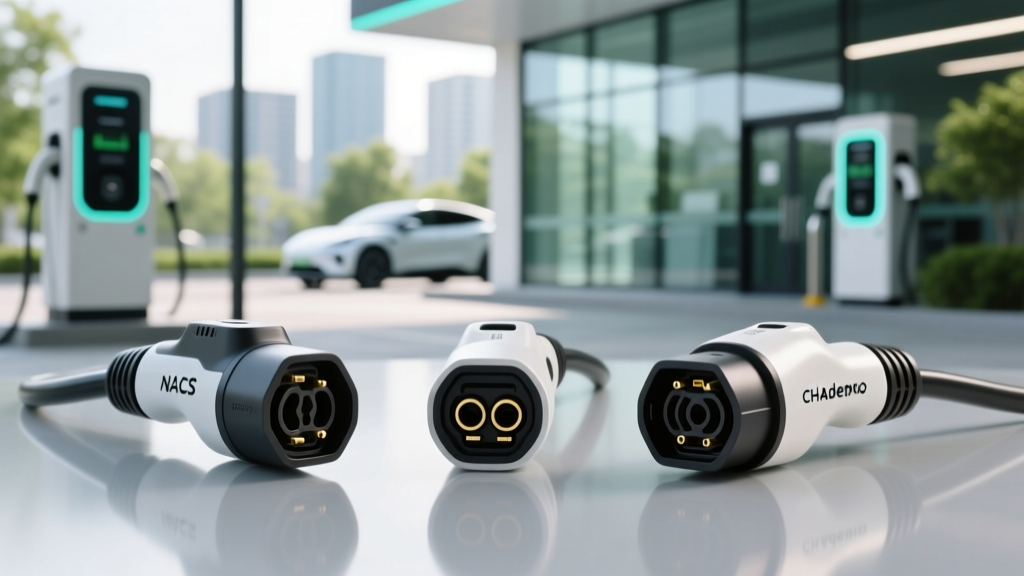
Tesla's Supercharger network — now open to non-Tesla EVs via Magic Dock adapters at select locations — remains the most reliable DC fast-charging ecosystem in North America. Every 2026 Tesla ships with the NACS (North American Charging Standard) connector natively, eliminating the need for adapters at Superchargers.
| Charging Level | Power | Typical Miles Added per Hour | Best Use Case |
|---|---|---|---|
| Level 1 (120V household) | ~1.4 kW | ~5 mi/hr | Emergency / overnight trickle |
| Level 2 (240V home wall connector) | 11.5 kW | 37–44 mi/hr | Daily home charging |
| DC Fast (V3 Supercharger) | Up to 250 kW | Up to ~1,000 mi/hr (peak) | Road trips |
| DC Fast (V4 Supercharger) | Up to 350 kW (cabinet) | Vehicle-limited to 250 kW currently | Future-proofing; current Teslas still cap at 250 kW |
Charging-curve reality check: The "250 kW" peak only holds between roughly 10–30% State of Charge (SoC). Above 50%, the rate tapers significantly; above 80%, it drops to roughly 40–60 kW to protect the NMC cells. This is why Tesla quotes 10–80% times rather than 0–100%. For daily driving, set your charge limit to 80% to maximize long-term battery health — Tesla's own battery management system recommends this for NMC chemistry.
Home installation cost: A Tesla Wall Connector (~$425 for the unit) plus professional installation typically runs $800–$2,500 total, depending on panel proximity and whether your home needs a 200-amp service upgrade ($1,500–$4,000 additional). Always get a quote from a licensed electrician before budgeting.
Pricing, Trims, and the Federal EV Tax Credit
Tesla's pricing fluctuates frequently — sometimes weekly — based on demand and production costs. The figures below represent early-2026 MSRPs. Always verify at Tesla.com before ordering.
| Model | Base MSRP | As-Tested (typical config) | §30D Credit Eligible? | Effective Price (if eligible) |
|---|---|---|---|---|
| Model 3 RWD | $38,990 | $39,990 | Yes (if sourced compliant) | ~$31,490 |
| Model 3 Long Range AWD | $47,740 | $49,740 | Yes (if sourced compliant) | ~$39,740 |
| Model Y Long Range AWD | $48,990 | $51,490 | Yes (if sourced compliant) | ~$41,490 |
| Model S Dual Motor | $79,990 | $84,990 | No (exceeds $55,000 sedan MSRP cap) | $79,990+ |
| Cybertruck AWD | $79,990 | $84,990 | Yes (truck MSRP cap is $80,000; base trim qualifies) | ~$72,490 |
Critical §30D tax credit caveats (2026 rules):
- Income caps: Modified AGI must not exceed $150,000 (single), $225,000 (head of household), or $300,000 (joint). Source: IRS.gov §30D.
- MSRP caps: $55,000 for sedans; $80,000 for SUVs, vans, and trucks. The Model S is a sedan above the cap and does not qualify. The Model Y qualifies as an SUV.
- Battery sourcing: A percentage of critical minerals and battery components must be sourced from the US or free-trade-agreement countries. Tesla has been shifting its supply chain, but eligibility can change mid-year. Always confirm the specific VIN's eligibility on the IRS qualified-vehicles list before purchasing.
- Point-of-sale transfer: As of 2024, you can transfer the credit to the dealer at purchase, reducing your out-of-pocket cost immediately rather than waiting for a tax refund. Tesla participates in this program.
Consult a tax professional for your specific situation. The rules above are current as of early 2026 and subject to legislative change.
Standout Tech and Notable Drawbacks
Pros
- Supercharger network access: Over 6,000 V3/V4 stalls in North America with industry-leading uptime and seamless plug-and-charge billing.
- Over-the-air updates: Tesla routinely adds features post-purchase — UI refinements, efficiency improvements, entertainment options, and Autopilot enhancements.
- Performance-per-dollar: A Model 3 Long Range hits 60 mph in 4.2 seconds at under $48K — a figure that rivals sports sedans costing twice as much.
- Minimalist interior + 15.4" touchscreen: All vehicle controls, navigation, and media are integrated into a single responsive display. Love it or hate it, it is functional and well-executed.
- Frunk + cargo flexibility: Model Y's 30 cu ft rear + 4.1 cu ft frunk provides genuine SUV utility in a compact footprint.
Cons
- No physical controls: No turn-signal stalk (Model 3 Highland / Model Y Juniper use steering-wheel buttons), no speedometer cluster, no Apple CarPlay/Android Auto.
- Panel gaps and build consistency: Improved significantly since 2022, but still a noted issue on some delivery vehicles compared to legacy luxury brands.
- Insurance costs: Teslas carry higher-than-average insurance premiums due to repair costs and parts pricing. Expect 15–30% more than a comparable ICE sedan.
- FSD (Supervised) is Level 2, not autonomous: Despite the "Full Self-Driving" name, Tesla's FSD requires continuous driver supervision. It is an SAE Level 2 system, not Level 4. You are responsible at all times.
- 250 kW charge ceiling: While competitors like the Hyundai Ioniq 5 (peak ~240 kW on 800V) and Porsche Taycan (peak ~320 kW on 800V) push higher, Tesla's 400V architecture caps at 250 kW. V4 Supercharger cabinets support higher speeds, but current vehicles cannot yet use them fully.
ADAS Clarification: Tesla Autopilot and FSD (Supervised) are SAE Level 2 driver-assistance systems. The driver must keep hands on the wheel (or demonstrate attentiveness via camera monitoring) and is legally responsible for the vehicle at all times. These are not self-driving systems. Only Level 4 services like Waymo One (available in select metro areas) operate without a human driver.
Who Should Buy a Tesla in 2026 — and Who Should Look Elsewhere?
Choose a Tesla if:
- You want the most mature public charging ecosystem for road trips.
- You value OTA updates and tech-forward features over traditional luxury materials.
- You prioritize performance-per-dollar in the EV space.
- You already have or can install Level 2 home charging.
Look at competitors if:
- You need Apple CarPlay/Android Auto (consider Hyundai Ioniq 5/6, Ford Mustang Mach-E, BMW i4).
- You want a luxury interior with physical controls (consider BMW i5, Mercedes EQE, Genesis GV60).
- You need faster peak charging on 800V architecture (Hyundai Ioniq 5, Kia EV6, Porsche Taycan).
- You want a budget EV under $35K (consider Chevrolet Equinox EV, Nissan Leaf, or the used-EV market).
The Bottom Line on the 'Tesla Lemonade' Rumor
Until Tesla officially announces a vehicle called "Lemonade" — or any compact/affordable EV with a confirmed name, specs, and production timeline — treat online claims with skepticism. Tesla's track record shows significant gaps between announcement and delivery (the Roadster 2.0 was announced in 2017 and has yet to reach customers as of early 2026). If a sub-$25,000 Tesla arrives, it will be covered extensively here with full specs, EPA data, and real-world testing.
In the meantime, the Model 3 and Model Y remain two of the most compelling EVs on the market — particularly when the §30D tax credit applies, bringing effective prices into the low $30Ks and low $40Ks respectively. The Supercharger network, strong resale values, and continuous software improvements make them rational choices for most EV buyers who can charge at home.
Frequently Asked Questions
Is the Tesla Lemonade a real car I can buy?
No. As of early 2026, there is no official Tesla vehicle named "Lemonade." The name appears to be a fan-created rumor or speculative codename for a potential future compact Tesla. No production timeline, specs, or pricing have been confirmed by Tesla.
What is Tesla's most affordable EV in 2026?
The Model 3 RWD starts at approximately $38,990 MSRP. If you qualify for the full $7,500 §30D federal tax credit (subject to income caps, MSRP caps, and battery-sourcing requirements), the effective price drops to roughly $31,490.
Does the Tesla Model Y qualify for the $7,500 federal tax credit?
It can, but eligibility depends on your income (must be under $300K joint / $150K single), the specific vehicle's battery-sourcing compliance, and the MSRP cap for SUVs ($80,000 — which the Model Y clears). Always verify on the IRS qualified clean vehicles list before purchasing.
How long does a Tesla battery last?
Tesla warranties its batteries for 8 years and 120,000–150,000 miles (depending on model) with a minimum 70% capacity retention. Real-world data from high-mileage owners and fleet studies suggest Tesla NMC packs retain roughly 85–90% capacity at 100,000 miles when charged primarily to 80% and avoiding frequent DC fast charging.
Can I charge a Tesla at non-Tesla charging stations?
Yes. Teslas with the NACS connector can charge at any NACS-equipped station. For CCS stations, Tesla sells a CCS adapter (~$250) that enables access to Electrify America and other CCS networks. As of 2025, most new public chargers in the US are adding NACS cables due to the industry-wide adoption of the standard.
Is Tesla's FSD (Full Self-Driving) actually self-driving?
No. FSD (Supervised) is an SAE Level 2 driver-assistance system. Despite the marketing name, the driver must remain fully attentive, keep hands on the steering wheel, and is legally responsible for the vehicle's operation at all times. It is not an autonomous driving system.