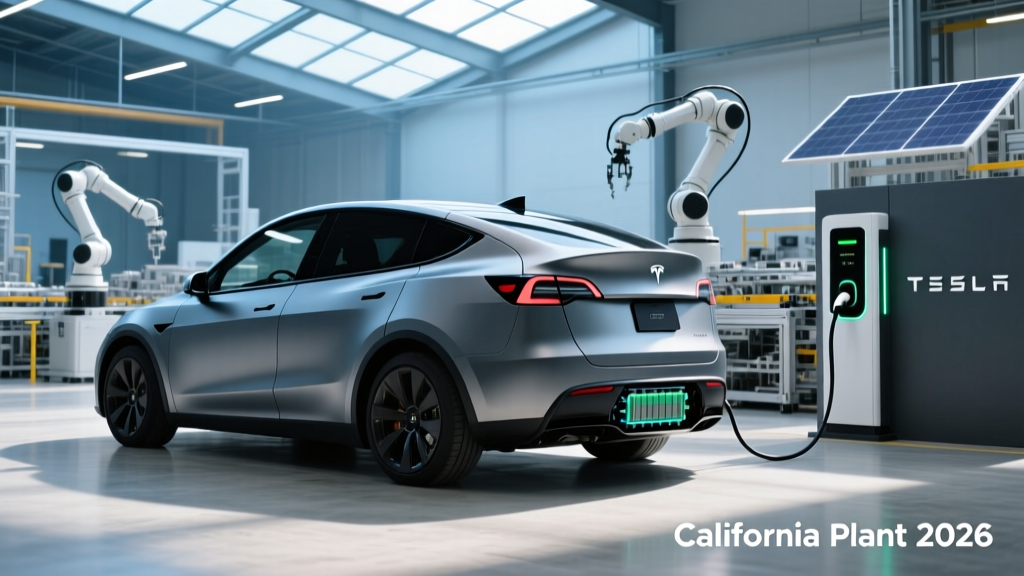
If you've searched for "Tesla leaves California" lately, you're not alone. The headline has circulated for years, and the reality behind it is both simpler and more consequential than the soundbite suggests. Tesla hasn't abandoned the Golden State—its engineering headquarters and a major factory still operate in Fremont—but the company has shifted volume manufacturing of its best-selling vehicle, the Model Y, to Giga Texas in Austin. For buyers in 2026, that relocation matters less as a political story and more as a product one: it changed battery sourcing, trim availability, and federal tax credit eligibility in ways that affect your wallet.
Below is a full profile of the 2026 Tesla Model Y as it's sold today—built primarily in Austin, with the Fremont plant now focused on Model S and Model X production and some specialty builds. We'll cover the real numbers: range, charging speed, pricing, and whether the §30D credit still applies.
2026 Tesla Model Y at a Glance: Core Specifications
| Specification | Long Range AWD | Performance |
|---|---|---|
| EPA Range | 320 miles | 298 miles |
| Usable Battery | ~75 kWh (NMC) | ~75 kWh (NMC) |
| Peak DC Fast Charge | 250 kW | 250 kW |
| 10–80% DCFC Time | ~27 minutes | ~27 minutes |
| Level 2 Home Charge (48A) | ~37 mi/hr | ~37 mi/hr |
| 0–60 mph | 4.8 seconds | 3.5 seconds |
| Horsepower | 384 hp (dual motor) | 456 hp (dual motor) |
| Drivetrain | AWD (dual motor) | AWD (dual motor) |
| Efficiency | 122 MPGe / 28 kWh/100mi | 111 MPGe / 30 kWh/100mi |
| Cargo (rear seats up) | 30.2 cu ft | 30.2 cu ft |
| Cargo (rear seats folded) | 72.1 cu ft | 72.1 cu ft |
| Rear Legroom | 41.6 inches | 41.6 inches |
| Base MSRP | $44,990 | $49,990 |
| §30D Credit Eligible | Yes (up to $7,500) | Yes (up to $7,500) |
| Battery/Powertrain Warranty | 8 years / 120,000 miles | 8 years / 120,000 miles |
Source: EPA fueleconomy.gov, Tesla official specs. Pricing excludes destination fee.
The California-to-Texas Shift: What It Means for Buyers
Tesla's Fremont factory—once the sole U.S. source for Model 3 and Model Y—still operates, but its role has narrowed. Since Giga Texas ramped up Model Y production in 2022–2023 and reached full volume by 2024, Austin has become the primary build site for U.S.-bound Model Y vehicles. Fremont continues to produce Model S, Model X, and some export-bound units.
Why does this matter to you? Three reasons:
- Battery sourcing and tax credits: Vehicles built at Giga Texas are more likely to use battery cells from U.S.-based suppliers (including CATL-free LFP packs from Panasonic's Kansas facility and other domestic sources), which directly impacts IRS §30D eligibility. The Model Y Long Range AWD qualifies for the full $7,500 credit in 2026, assuming the buyer meets income caps.
- Trim availability: The Austin-built Model Y uses the refreshed "Juniper" exterior and interior introduced in early 2025. If you see a listing for a Model Y with the older styling, it may be a Fremont leftover or used vehicle.
- Delivery logistics: West Coast buyers may see slightly longer delivery windows compared to Texas and Central U.S. buyers, since vehicles ship from Austin rather than down the I-5 corridor from Fremont.
Real-World Range: Beyond the EPA Sticker
EPA Estimated Range: 320 miles (Long Range AWD)
Real-World Expectation: Expect approximately 270–290 miles on mixed highway driving at 70–75 mph. In winter conditions (below 32°F), plan for a 20–30% reduction, bringing effective range to roughly 220–255 miles. City driving with regenerative braking can exceed the EPA estimate, sometimes reaching 330+ miles in mild weather.
The Model Y's efficiency remains one of its strongest competitive advantages. At 28 kWh per 100 miles (Long Range), it consumes less energy per mile than nearly every rival crossover, including the Hyundai Ioniq 5 (30 kWh/100mi) and Ford Mustang Mach-E (32 kWh/100mi). This efficiency advantage compounds on road trips: you charge less often, and each stop is shorter because you're adding more miles per kWh delivered.
The 75 kWh (usable) NMC pack uses a nickel-manganese-cobalt chemistry optimized for energy density. If you're comparing to Tesla's LFP (lithium iron phosphate) packs—found in the RWD Model 3—know that LFP offers longer cycle life and can be charged to 100% daily without degradation concerns, but at the cost of lower range and reduced cold-weather performance. The Model Y Long Range does not currently use LFP in the U.S. market.
Charging Speed: DC Fast and Home Level 2
| Charging Level | Power / Rate | Miles Added | Notes |
|---|---|---|---|
| Level 1 (120V household) | ~1.4 kW | ~3–4 mi/hr | Emergency/trickle only |
| Level 2 (240V, 48A Wall Connector) | 11.5 kW | ~37 mi/hr | Full overnight charge in ~7 hrs |
| DC Fast Charge (Supercharger V3) | 250 kW peak | ~200 mi in 15 min | 10–80% in ~27 min; tapers above 60% |
| DC Fast Charge (CCS adapter at EA/others) | Up to 150–175 kW typical | Varies by station | Non-Tesla networks via NACS-to-CCS adapter (included) |
A note on the charging curve: the Model Y's 250 kW peak rate is not sustained. In real-world testing, the vehicle holds approximately 200–250 kW from roughly 10% to 40% state of charge, then tapers progressively. From 60% to 80%, expect rates closer to 80–120 kW. This is normal for NMC packs and thermal management at this capacity, but it's why the 10–80% time of 27 minutes is a more honest metric than peak kW alone.
Tesla's Supercharger network remains the gold standard for reliability. With the NACS connector now adopted by Ford, GM, Rivian, and others, the network is more crowded than in 2023—but Tesla owners still benefit from seamless plug-and-charge integration and automatic preconditioning when you navigate to a Supercharger.
Performance, Interior, and Technology
The 2026 Model Y "Juniper" refresh brought meaningful interior upgrades: ventilated front seats, ambient lighting, a rear touchscreen for passengers, power-folding second-row seats, and a quieter cabin thanks to acoustic glass and improved insulation. The 15.4-inch front touchscreen handles nearly all vehicle controls—there are no physical instrument clusters or stalks for turn signals (they're on the steering wheel rim, which remains divisive).
Performance figures haven't changed dramatically. The Long Range AWD hits 60 mph in 4.8 seconds with 384 combined horsepower from its dual-motor setup. The Performance trim drops that to 3.5 seconds with 456 hp, adding a lowered sport suspension, 21-inch wheels, and performance brakes. Both use Tesla's standard AWD system with independent front and rear motors.
Driver assistance comes via Autopilot (standard, SAE Level 2), which includes adaptive cruise control and lane centering. Full Self-Driving (Supervised) is a $8,000 add-on (or $99/month subscription) that adds automatic lane changes, traffic light/stop sign recognition, and navigate-on-autopilot. Despite the name, FSD is still SAE Level 2—you must remain attentive, hands on or near the wheel, and ready to intervene at any moment. It is not autonomous driving.
Cargo space is generous: 30.2 cubic feet behind the second row, expanding to 72.1 cu ft with seats folded. The front trunk (frunk) adds 4.1 cu ft. Rear legroom of 41.6 inches is competitive with midsize crossovers, though the sloping roofline cuts into headroom for taller passengers.
Pricing and Federal Tax Credit (IRS §30D)
| Trim | Base MSRP | Est. After §30D Credit | Notes |
|---|---|---|---|
| Long Range AWD | $44,990 | ~$37,490 | Qualifies for full $7,500 if buyer meets income caps |
| Performance | $49,990 | ~$42,490 | Same credit; MSRP under $80,000 SUV cap |
The Model Y qualifies as an SUV under IRS rules, meaning its MSRP cap for §30D eligibility is $80,000 (versus $55,000 for sedans). Both trims clear this threshold easily. However, the credit is not automatic. You must meet all of the following:
- Income caps: Modified AGI ≤ $300,000 (married filing jointly), $225,000 (head of household), or $150,000 (single).
- Battery sourcing: A percentage of critical minerals must be sourced from the U.S. or FTA partners, and battery components must be manufactured or assembled in North America. The Austin-built Model Y currently meets these thresholds.
- Point-of-sale transfer: You can apply the $7,500 as a down-payment reduction at the dealership (Tesla showroom) rather than waiting for a tax refund. This requires filing IRS Form 8936 at tax time.
- No prior credit usage: You cannot have claimed the §30D credit for another new EV in the same tax year beyond the per-person limit.
Always verify current eligibility on the IRS Clean Vehicle Credit page before purchasing, as sourcing rules and eligible vehicle lists are updated periodically.
How It Compares to Key Rivals
The Model Y competes against a deepening field. Here's how it stacks up on the metrics that matter most:
- vs. Hyundai Ioniq 5: The Ioniq 5 charges faster (10–80% in ~18 min on an 800V architecture at up to 350 kW) and offers a more conventional interior with physical controls. But the Model Y wins on range (320 vs. 305 mi), efficiency, and Supercharger access.
- vs. Ford Mustang Mach-E: The Mach-E Extended Range offers 320 miles EPA and a more driver-focused cockpit. However, Tesla's software ecosystem, OTA updates, and Supercharger network remain more mature.
- vs. Porsche Macan EV: The Macan is more engaging to drive and more luxurious, but starts above $78,000 and delivers only ~308 miles of range. It's a different buyer.
Pros
- Class-leading efficiency (28 kWh/100mi)
- Supercharger network reliability and integration
- Over-the-air updates add features post-purchase
- Strong cargo capacity and frunk
- $7,500 federal credit reduces effective price significantly
- Juniper refresh improves cabin noise and comfort
Cons
- Turn signals on steering wheel rim (no stalks) frustrate some drivers
- DCFC speed (250 kW peak) lags 800V rivals at 350 kW
- Minimalist interior lacks physical buttons for climate/media
- FSD ($8,000) remains Level 2, not autonomous—value debatable
- No Apple CarPlay or Android Auto
- Insurance premiums run 15–25% above segment average
Who Should Buy the 2026 Model Y
The Model Y Long Range AWD is best suited for buyers who prioritize efficiency, road-trip charging convenience, and software-driven features over traditional automotive design cues. It's an excellent daily commuter that also handles 300+ mile road trips with minimal planning anxiety—provided you're near Supercharger corridors.
Families will appreciate the cargo space and rear-seat room, though the lack of rear-seat HVAC controls (beyond the small touchscreen) is a miss for parents with young children. Towing capacity is 3,500 lbs, adequate for a small trailer but not a boat or camper.
If you live in a region with sparse Supercharger coverage, or if you prefer physical controls and CarPlay integration, the Ioniq 5 or Mach-E may be a better fit. But for the majority of U.S. EV buyers—particularly those who can charge at home and want a proven, efficient crossover—the Austin-built Model Y remains the default recommendation for good reason.
Frequently Asked Questions
Did Tesla actually leave California?
No. Tesla moved its corporate headquarters to Austin, Texas, and shifted Model Y volume production to Giga Texas. The Fremont, California factory still operates, producing Model S, Model X, and some other vehicles. Engineering and R&D teams remain heavily based in California.
Does the 2026 Model Y qualify for the $7,500 federal tax credit?
Yes, both the Long Range AWD and Performance trims currently qualify for the full $7,500 under IRS §30D, provided the buyer meets income caps ($150K single / $300K joint) and the vehicle's battery sourcing meets critical-mineral and North American assembly requirements. The credit can be applied at point of sale. Verify current eligibility at irs.gov before purchasing.
What's the real-world highway range of the Model Y Long Range?
The EPA estimates 320 miles. In real-world highway driving at 70–75 mph in mild weather, expect approximately 270–290 miles. In freezing temperatures, that drops to roughly 220–255 miles due to battery resistance and cabin heating demands.
How fast does the Model Y charge at home on Level 2?
Using Tesla's Wall Connector at 48 amps (240V), the Model Y adds approximately 37 miles of range per hour, or about 11.5 kW. A full 10–100% charge takes roughly 7 hours. On a standard 32-amp Level 2 charger, expect ~28 mi/hr.
Is FSD (Full Self-Driving) worth $8,000?
For most buyers, no. FSD (Supervised) is an SAE Level 2 driver-assist system—you must remain fully engaged. It adds convenience features like automatic lane changes and intersection handling, but it does not make the car autonomous. The $99/month subscription is a lower-risk way to test it before committing.
What's the battery warranty on the Model Y?
Tesla covers the battery and drive unit for 8 years or 120,000 miles (whichever comes first), with a minimum 70% capacity retention guarantee over that period. This is competitive with Hyundai's 10-year/100,000-mile warranty but standard for the segment.