Tesla Leasing Buyout: The Decision Framework for 2026
If your Tesla lease is ending in 2026, you're facing one of the most consequential ownership decisions in the EV market. Tesla's lease buyout process differs meaningfully from traditional automakers, and the financial calculus depends on your specific model, residual value, current market pricing, and whether you qualify for the federal EV tax credit on a lease-end purchase.
This guide breaks down everything you need to know about executing a Tesla leasing buyout for the Model 3 and Model Y — the two vehicles that represent the vast majority of Tesla leases expiring this cycle. We'll cover residual values, real-world range and charging performance, tax credit eligibility under current IRS §30D rules, and a clear decision framework to help you determine whether buying out your lease makes financial sense.
- Buy out your lease if: Your residual value is below current market pricing, you've maintained the vehicle well, and you want to avoid a new monthly payment.
- Return the vehicle if: The residual exceeds current market value (common with 2023-2024 leases due to Tesla's aggressive price cuts), or you want the latest hardware refresh.
- Upgrade to a new Tesla if: You want the current Model 3 Highland refresh or refreshed Model Y, and can secure a competitive new lease or purchase with tax credit benefits.
Understanding Tesla's Lease Buyout Process
Tesla's lease structure has evolved significantly since the company resumed offering leases in 2023 after a multi-year hiatus. Unlike traditional automakers that use captive finance companies (BMW Financial, Toyota Financial), Tesla leases are typically structured through third-party partners or Tesla's own financing arm.
The buyout process follows a standard timeline: approximately 90 days before your lease maturity date, you'll receive a lease-end notification with your predetermined residual value — the price at which you can purchase the vehicle. This residual was set at lease signing and is based on the original MSRP, not current market conditions.
Here's where it gets interesting for 2026: many leases originated in 2023-2024 were signed when Tesla's MSRPs were higher than today's pricing. A Model 3 Long Range leased in early 2023 might have a residual of $38,000-$42,000, while the same vehicle new in 2026 starts significantly lower. This creates a situation where the buyout price exceeds what you'd pay for a brand-new equivalent.
To execute a buyout, you'll need to:
- Confirm your residual value in the Tesla app or your lease-end paperwork
- Secure financing (Tesla offers purchase financing, or you can use a third-party lender)
- Pay the residual plus applicable sales tax, title, and registration fees
- Complete the purchase before your lease maturity date
Unlike some automakers, Tesla does not typically offer lease-end purchase incentives or loyalty discounts. The price is the price — which makes the math critical.
Model 3 Lease Buyout: 2026 Specs and Real-World Performance
The Model 3 remains Tesla's volume sedan and the most common lease return in 2026. The current-generation Model 3 (codenamed Highland, launched for the 2024 model year) represents a significant refresh over pre-2024 models with improved ride quality, a redesigned interior, and the removal of stalks in favor of touchscreen-based turn signals and gear selection.
| Specification | Long Range RWD | Long Range AWD | Performance |
|---|---|---|---|
| EPA Estimated Range | 363 miles | 346 miles | 315 miles |
| Battery Capacity (usable) | ~75 kWh | ~75 kWh | ~75 kWh |
| Battery Chemistry | NMC (CATL/Panasonic) | NMC | NMC |
| 0-60 mph | 5.8 seconds | 4.2 seconds | 2.9 seconds |
| Horsepower | 295 hp | 382 hp | 510 hp |
| Drivetrain | RWD (single motor) | AWD (dual motor) | AWD (dual motor) |
| Max DC Fast Charge | 250 kW | 250 kW | 250 kW |
| 10-80% DC Fast Charge | ~25 minutes | ~25 minutes | ~25 minutes |
| Level 2 Home Charge Rate | 11.5 kW (~44 mi/hr) | 11.5 kW (~44 mi/hr) | 11.5 kW (~44 mi/hr) |
| MPGe (combined) | 132 MPGe | 125 MPGe | 113 MPGe |
| Efficiency (kWh/100mi) | 25 kWh/100mi | 27 kWh/100mi | 29 kWh/100mi |
| Cargo Volume | 23 cu ft (trunk) + 3.1 cu ft (frunk) | ||
| Rear Legroom | 35.2 inches | ||
| Battery/Drive Unit Warranty | 8 years / 120,000 miles (70% minimum retention) | ||
| Base MSRP (2026) | $42,380 | $47,380 | $54,380 |
EPA sticker: 363 miles. In practice, expect approximately 290-320 miles on highway trips at 70-75 mph in moderate temperatures (65-80°F). In cold weather (below 32°F), range drops to approximately 240-270 miles due to battery resistance and cabin heating demands. City driving with regenerative braking can approach or exceed the EPA estimate. The Model 3's heat pump (standard since 2021) significantly mitigates cold-weather losses compared to earlier Tesla models.
Charging Performance Deep Dive
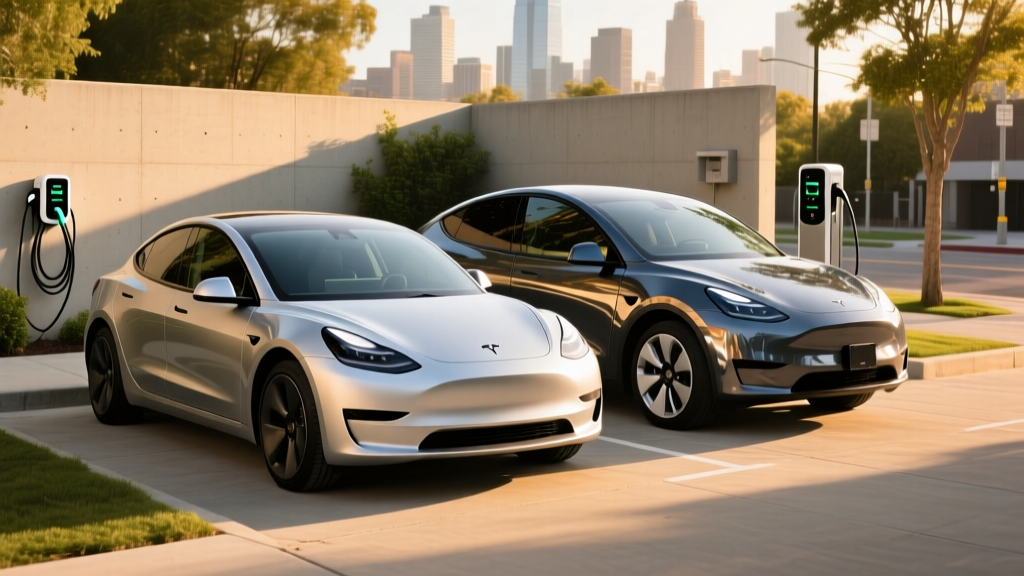
The Model 3's charging capability is one of its strongest ownership advantages. On Tesla's V3 Supercharger network (250 kW peak), the Long Range variants can add approximately 175 miles of range in 15 minutes under optimal conditions — meaning the battery has been preconditioned via the car's navigation system routing to the charger.
However, the charging curve matters more than peak kW. The Model 3 sustains its peak 250 kW rate only between approximately 10-30% State of Charge (SoC), then progressively tapers. From 50-80%, expect rates closer to 100-140 kW. This is why the 10-80% time of ~25 minutes is more meaningful than the peak kW figure alone.
For home charging on a Level 2 (240V) circuit with a Tesla Wall Connector or equivalent 48-amp charger, the Model 3 accepts up to 11.5 kW, adding roughly 44 miles of range per hour. A full overnight charge from 20-80% takes approximately 4 hours — more than sufficient for daily driving needs. Note: achieving 11.5 kW requires a 60-amp circuit; a standard 40-amp circuit (common in older homes) delivers approximately 7.7 kW or ~30 miles per hour.
Model Y Lease Buyout: The SUV Alternative
The Model Y is the best-selling vehicle in the world by volume and represents the majority of Tesla family leases. The 2025-2026 Model Y received the "Juniper" refresh with updated styling, improved interior materials, ambient lighting, and a rear entertainment screen — similar to the Model 3 Highland treatment.
| Specification | Long Range RWD | Long Range AWD | Performance |
|---|---|---|---|
| EPA Estimated Range | 335 miles | 315 miles | 285 miles |
| Battery Capacity (usable) | ~75 kWh | ~75 kWh | ~75 kWh |
| Battery Chemistry | NMC | NMC | NMC |
| 0-60 mph | 6.5 seconds | 4.8 seconds | 3.5 seconds |
| Horsepower | 295 hp | 382 hp | 456 hp |
| Drivetrain | RWD | AWD (dual motor) | AWD (dual motor) |
| Max DC Fast Charge | 250 kW | 250 kW | 250 kW |
| 10-80% DC Fast Charge | ~27 minutes | ~27 minutes | ~27 minutes |
| Level 2 Home Charge Rate | 11.5 kW (~37 mi/hr) | 11.5 kW (~37 mi/hr) | 11.5 kW (~37 mi/hr) |
| MPGe (combined) | 123 MPGe | 117 MPGe | 111 MPGe |
| Cargo Volume (rear seats up) | 34 cu ft | ||
| Cargo Volume (rear seats folded) | 72 cu ft | ||
| Rear Legroom | 40.5 inches | ||
| Battery/Drive Unit Warranty | 8 years / 120,000 miles (70% minimum retention) | ||
| Base MSRP (2026) | $44,380 | $49,380 | $54,380 |
EPA sticker: 315 miles. Highway cruising at 70-75 mph yields approximately 260-285 miles in moderate temperatures. Cold weather (below 32°F) reduces this to roughly 215-240 miles. The Model Y's larger frontal area and higher weight compared to the Model 3 account for the range gap despite sharing similar battery packs. For family road trips, plan charging stops at approximately 200-220 mile intervals for comfort and buffer.
Tax Credit Considerations for Lease Buyouts
This is where the 2026 Tesla leasing buyout decision gets nuanced. The federal EV tax credit under IRS §30D has specific rules that affect whether buying out your lease makes financial sense.
- Vehicle eligibility: Must be new (not previously titled). A lease buyout is considered a new purchase IF the vehicle was never titled to you during the lease — verify with your lease agreement.
- MSRP caps: Sedans (Model 3) must have an MSRP under $55,000; SUVs/trucks/vans (Model Y) must be under $80,000.
- Buyer income caps: Modified AGI must not exceed $300,000 (joint), $225,000 (head of household), or $150,000 (single).
- Battery sourcing: Increasingly strict critical mineral and battery component requirements apply. Check the specific VIN on IRS's qualified vehicle list.
- Credit amount: Up to $7,500, split between critical minerals ($3,750) and battery components ($3,750). Some Model 3/Y configurations qualify for the full amount; others may receive partial credit.
- Point-of-sale transfer: As of 2024, the credit can be transferred to the dealer at purchase, reducing your out-of-pocket cost immediately rather than waiting for tax filing.
Critical caveat: Whether your lease buyout qualifies for the §30D credit depends on how the lease was structured. If the leasing company (not Tesla) holds the title and you're purchasing from them at lease end, the transaction may be treated as a used vehicle purchase — which falls under the separate §25E used EV credit (up to $4,000, with lower income caps and a $25,000 maximum sale price). Consult a tax professional and review your specific lease agreement before counting on the credit.
Additionally, some states offer their own EV incentives that may apply to lease buyouts. Check with your state's energy or environmental agency for current programs.
| Model | Base MSRP | Destination | Potential §30D Credit | Effective Price (if eligible) |
|---|---|---|---|---|
| Model 3 Long Range RWD | $42,380 | $1,390 | Up to $7,500 | $36,270 |
| Model 3 Long Range AWD | $47,380 | $1,390 | Up to $7,500 | $41,270 |
| Model Y Long Range RWD | $44,380 | $1,390 | Up to $7,500 | $38,270 |
| Model Y Long Range AWD | $49,380 | $1,390 | Up to $7,500 | $43,270 |
Note: These are new-purchase prices. Your lease buyout residual may be higher or lower. Always compare your specific residual to the current new-purchase price with applicable credits.
Buyout vs. Return: The Financial Comparison
Let's run the numbers on a realistic scenario. Suppose you leased a 2023 Model Y Long Range AWD with a 36-month term and a residual value of $41,000 (set at lease inception based on the then-$52,990 MSRP).
Option A: Buy out the lease
- Residual payment: $41,000
- Sales tax (varies by state, ~7% average): $2,870
- Title/registration: ~$500
- Total out-of-pocket: ~$44,370
- Federal tax credit eligibility: Likely does NOT qualify (used purchase from leasing company)
- You own a 3-year-old Model Y with ~36,000 miles
Option B: Return the lease and buy a new 2026 Model Y Long Range AWD
- New MSRP: $49,380 + $1,390 destination = $50,770
- Federal tax credit (§30D): -$7,500 (if eligible)
- Effective purchase price: $43,270
- Sales tax on full amount: ~$3,029
- You own a brand-new Model Y with full warranty and Juniper refresh features
In this scenario, buying new is actually cheaper than the buyout — and you get a current-generation vehicle with full warranty. This math will vary based on your specific residual, state tax rates, and tax credit eligibility, but it illustrates why the comparison is essential.
Who Should Buy Out Their Tesla Lease?
Based on our analysis of 2026 market conditions, a Tesla leasing buyout makes the most sense for:
- Below-market residuals: If your residual is genuinely below what a comparable new or certified pre-owned Tesla would cost (after credits), the buyout saves money.
- Low mileage and excellent condition: If you've driven fewer miles than the lease allowed and the vehicle is in excellent shape, you're capturing equity that would otherwise go to the leasing company.
- Tax credit ineligibility for new purchase: If your income exceeds the §30D caps ($150K single / $300K joint), you can't access the new-vehicle credit anyway — making the buyout comparison simpler.
- Satisfaction with current hardware: If you're happy with your current Model 3 or Model Y generation and don't need the Highland/Juniper refresh features, keeping what you know has value.
- Avoiding new-vehicle depreciation: Teslas have experienced significant depreciation in recent years. A 3-year-old Tesla with a below-market residual may hold value better than a new one facing future price cuts.
Pros and Cons of Tesla Lease Buyout
- Known vehicle history — you've driven and maintained it
- No disposition fee (typically $395-$495 on Tesla leases)
- Potentially below-market price if residual was set before price cuts
- No need to shop, test drive, or negotiate a new purchase
- Avoids new-vehicle first-year depreciation hit
- Tesla's Supercharger network access remains included
- Battery warranty (8yr/120k mi) still has significant coverage remaining
- Residual may exceed current new-vehicle pricing after tax credits
- Likely ineligible for §30D federal tax credit (treated as used purchase)
- Older hardware generation (pre-Highland Model 3, pre-Juniper Model Y)
- Remaining warranty is reduced (e.g., 5 years of 8-year battery warranty left)
- No new-vehicle incentives or promotional financing rates
- Higher maintenance probability as vehicle ages past 50,000 miles
- Missing latest features (rear screen, ventilated seats, ambient lighting)
Technology and Driver Assistance
Whether buying out or returning, it's worth understanding what technology you're getting — or missing.
Current Tesla tech (2026 Model 3 Highland / Model Y Juniper):
- 15.4-inch center touchscreen with AMD Ryzen processor
- Rear 8-inch touchscreen for passengers (Model 3) / rear entertainment screen (Model Y)
- Ventilated front seats (Model 3 Highland)
- Ambient interior lighting
- Improved acoustic glass and sound insulation
- Updated Autopilot hardware (HW4) with improved camera resolution
Driver assistance (SAE Level 2 — driver must remain engaged):
- Basic Autopilot: Traffic-Aware Cruise Control + Autosteer (included standard)
- Enhanced Autopilot ($6,000): Navigate on Autopilot, Auto Lane Change, Autopark, Smart Summon
- Full Self-Driving (Supervised) ($8,000): All Enhanced features plus traffic light/stop sign control, city street Autosteer. Despite the name, FSD is SAE Level 2 — you must supervise at all times. It is not autonomous driving.
Frequently Asked Questions
Can I negotiate the buyout price on my Tesla lease?
No. Tesla's lease residual values are fixed at lease signing and are non-negotiable at lease end. Unlike some traditional dealers who may offer buyout discounts on lease returns, Tesla does not adjust the residual. Your only options are to pay the stated residual or return the vehicle.
Does my Tesla lease buyout qualify for the $7,500 federal tax credit?
In most cases, no. The IRS §30D new clean vehicle credit applies to new vehicles purchased from a dealer. A lease buyout from a third-party leasing company is typically treated as a used vehicle transaction. You may qualify for the §25E used EV credit (up to $4,000) if the sale price is $25,000 or less — which is unlikely for a 2023-2024 Model 3 or Y. Consult a tax professional for your specific situation and verify with the IRS qualified vehicle list.
What happens if my Tesla has excess wear or mileage at lease end?
Tesla's lease agreements typically allow 10,000-15,000 miles per year (depending on your lease terms). Excess mileage charges are typically $0.20-$0.25 per mile. Excess wear (dents, scratches beyond normal, tire wear below minimum tread depth, interior damage) may incur charges. If your excess charges would exceed the buyout cost difference, purchasing the vehicle eliminates those penalties entirely.
How is the real-world range of a 3-year-old Tesla?
Tesla's NMC batteries typically degrade approximately 5-10% over the first 3 years / 36,000-45,000 miles, based on aggregated fleet data. A Model 3 Long Range with an original EPA range of 358 miles (2023 spec) might realistically show 320-340 miles at 100% charge after 3 years of typical use. This degradation is within the battery warranty threshold (70% capacity retention for 8 years / 120,000 miles). Actual degradation depends heavily on charging habits — frequent DC fast charging and regularly charging to 100% accelerate degradation.
Can I sell my Tesla immediately after buying out the lease?
Technically yes, once you hold the title. However, Tesla's lease agreements may include provisions about immediate resale. Additionally, if you claimed any tax credit on the buyout (unlikely, as noted above), IRS rules require you to retain the vehicle for personal use — selling immediately could trigger credit recapture. Check your lease agreement and consult a tax advisor.
Is the Tesla Supercharger network still an advantage in 2026?
Yes, though the gap has narrowed. Tesla's Supercharger network remains the most reliable and extensive DC fast-charging network in North America, with over 25,000 stalls. However, with NACS (North American Charging Standard) adoption by Ford, GM, Rivian, and others, non-Tesla EVs now access Superchargers via adapters. The exclusivity advantage has diminished, but the integrated experience (plug-and-charge, automatic billing, in-car routing) still leads the industry. According to fueleconomy.gov, Tesla vehicles remain among the most efficient EVs on the market.
Should I buy out my lease or get a new Tesla?
Compare three numbers: (1) your lease residual + fees, (2) the price of a new equivalent Tesla after the §30D tax credit, and (3) the market value of your current vehicle on the used market. If the residual is lower than the new-after-credit price AND lower than the used market value, buying out is financially advantageous. If the residual exceeds both, return the lease and consider purchasing new. Run the specific numbers for your VIN, state, and tax situation.
The Tesla leasing buyout decision in 2026 is fundamentally a math problem. With Tesla's aggressive price reductions over the past two years and the availability of the $7,500 federal tax credit on new purchases, many lessees will find that buying new costs less than exercising their buyout option. However, those with favorable residuals, low mileage, and tax credit ineligibility may find genuine value in keeping the vehicle they know. Run your specific numbers, consult a tax professional on credit eligibility, and make the decision that fits your financial situation — not the emotional attachment to the car.