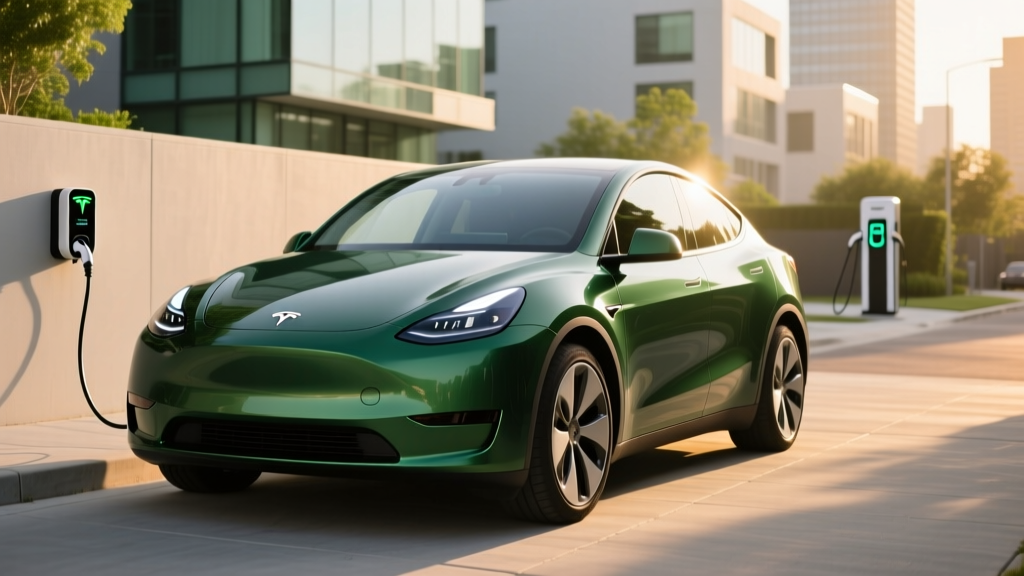
The Tesla Model Y remains the benchmark for compact electric SUVs, but with the 2025 'Juniper' refresh now fully established for the 2026 model year, the calculus between leasing and buying has shifted. For many buyers, a Tesla lease Model Y strategy offers a way to access Tesla's Supercharger network and industry-leading software without committing to long-term battery depreciation risks. This profile breaks down the exact specs, real-world range, and financial realities of putting a 2026 Model Y in your driveway.
2026 Tesla Model Y Lease & Pricing Snapshot
Tesla's leasing terms are notoriously dynamic, often adjusting weekly based on interest rates and residual values. However, leasing a Model Y in 2026 provides a unique advantage: the ability to lock in a monthly rate while the federal tax credit and lease-end purchase options remain in flux. Below is the current financial landscape for the two primary trims available in the US market.
| Trim Level | Base MSRP | Est. Monthly Lease (36 mo / 10k mi) | Lease-End Purchase Option |
|---|---|---|---|
| Long Range RWD (Base) | $44,990 | ~$459 - $499 | Available (Residual ~$28k) |
| Long Range AWD | $47,990 | ~$499 - $539 | Available (Residual ~$30k) |
| Performance AWD | $51,490 | ~$569 - $619 | Available (Residual ~$32k) |
Note: Lease estimates assume a $4,500 down payment and excellent credit. Actual rates vary by region and Tesla's current money factor.
Range, Battery, and Real-World Efficiency
The 2026 Model Y Long Range AWD features a 78.1 kWh usable battery pack utilizing NMC (Nickel Manganese Cobalt) chemistry, which provides higher energy density than the LFP packs found in the standard-range rear-wheel-drive models. The EPA rating remains a competitive 320 miles for the Long Range AWD.
EPA vs. Real-World Range Reality
EPA Estimate: 320 miles (Long Range AWD) / 277 miles (Performance)
Real-World Expectation: On a mixed highway commute at 70 mph, expect 285-295 miles. In freezing winter conditions (below 32°F), range can drop by 20-25%, resulting in 230-250 miles of usable range unless the cabin is preconditioned while plugged in.
Efficiency is where the Model Y shines. The Juniper aerodynamic refinements and heat pump standardization allow it to achieve 122 MPGe combined, or roughly 28 kWh/100 miles. This efficiency is critical for lessees who may exceed their mileage caps, as every kWh saved is money back in your pocket.
Charging Speed and Network Access
One of the strongest arguments for the Model Y is its native NACS (North American Charging Standard) port and seamless integration with the Supercharger network. While competitors are still adapting, Tesla owners have access to the most reliable public charging infrastructure available.
| Level | Power / Rate | Time / Speed |
|---|---|---|
| Level 1 (120V) | 1.4 kW | ~3-4 miles of range per hour |
| Level 2 (240V Home) | 11.5 kW (48A) | ~37 miles of range per hour |
| DC Fast Charge | 250 kW (Peak) | 10-80% in ~27 minutes |
The 250 kW peak is only sustainable up to roughly 40% State of Charge (SoC). Expect the charge curve to taper significantly past 80%, making it inefficient to charge to 100% on road trips unless absolutely necessary.
Performance and Driving Dynamics
The 2026 refresh has improved ride quality significantly through the use of frequency-selective dampers and additional acoustic glass, addressing the 'harshness' complaints of pre-2025 models.
- Long Range AWD: Dual-motor, 384 hp, 0-60 mph in 4.8 seconds.
- Performance: Dual-motor, 510 hp, 0-60 mph in 3.5 seconds.
Both trims offer standard SAE Level 2 driver-assist via Basic Autopilot. While FSD (Supervised) is available as an add-on, it is not a substitute for an attentive driver.
Federal Tax Credits and Lease-End Rules
When you lease a Model Y, the §30D tax credit technically belongs to the lessor (the bank). However, Tesla typically passes this benefit to the lessee in the form of a 'lease cash' incentive or a lower monthly payment. In 2026, the $7,500 credit is still subject to strict IRS battery sourcing and income requirements.
- MSRP Cap: Must be under $80,000 (All Model Y trims qualify).
- Income Cap: $150k single / $300k joint filers.
- Sourcing: Battery components and critical minerals must meet phased-in US/FTA requirements.
Pros, Cons, and the Competition
Why Lease the Model Y?
- Access to the 250kW Supercharger network.
- Best-in-class software and OTA updates.
- Strong residual values protect against steep depreciation.
- Class-leading cargo space (72 cu ft with seats folded).
Reasons to Look Elsewhere
- No physical stalks for turn signals (button-based).
- Minimalist interior lacks premium feel of rivals like the BMW iX.
- Insurance premiums remain higher than segment average.
- Lease-end purchase prices can sometimes exceed used market value.
Decision Framework: Who is this for?
The Tesla lease Model Y is ideal for the tech-forward commuter who wants the lowest-friction charging experience and plans to stay under 10,000-12,000 miles annually. If you live in an apartment without charging access, the Supercharger network makes this the most viable EV option. However, if you prefer luxury materials or physical controls, a lease on a Genesis GV60 or Hyundai Ioniq 5 might be more satisfying.
2026 Model Y FAQ
Can I buy the Model Y at the end of my lease?
Yes, Tesla leasing contracts currently include a purchase option at a predetermined residual value. This is a major advantage over some competitors who have restricted lease-end buyouts.
Is the Model Y getting a major redesign soon?
The 'Juniper' refresh launched in 2025, so the 2026 model is current. We do not expect another major platform revision until at least 2029.
How much does it cost to charge at home?
At a national average of $0.16/kWh, filling the 78.1 kWh battery from 0-100% costs approximately $12.50, providing roughly 300 miles of range.