Why Tesla Lease Deals With Zero Down Are Trending in 2026
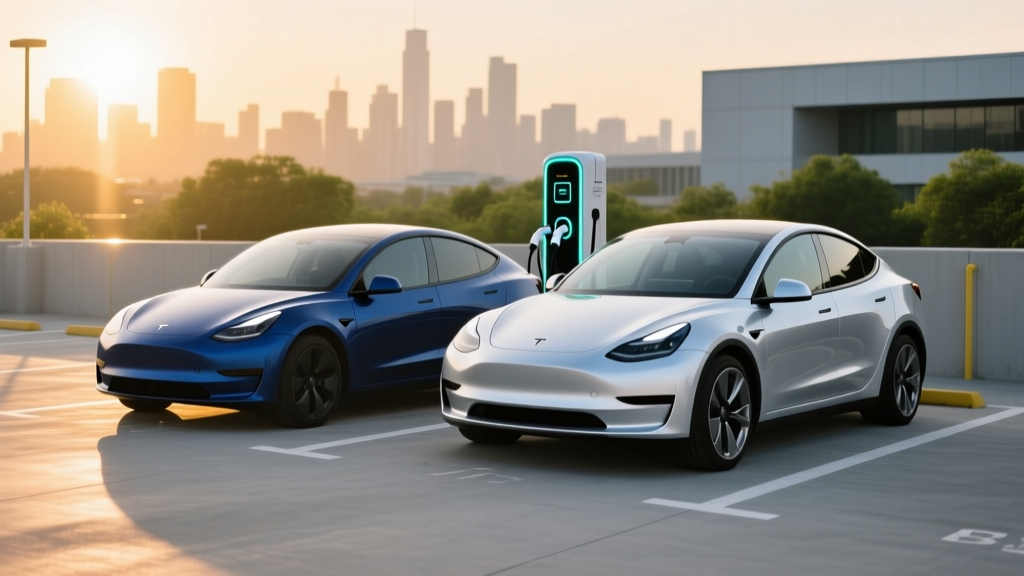
Searches for Tesla lease deals zero down have surged as buyers look for ways to get into a Model 3 or Model Y without a hefty upfront payment. Tesla periodically offers lease promotions — often through regional sales events or end-of-quarter pushes — that reduce or eliminate the traditional capitalized cost reduction (the leasing equivalent of a down payment). But zero-down leases come with trade-offs: higher monthly payments, strict mileage limits, and no equity at lease-end. This guide breaks down the real math, the EV specs that matter, and whether leasing beats buying when federal tax credits and long-term ownership costs enter the equation.
2026 Tesla Model 3: Range, Battery, and Efficiency
The 2026 Model 3 remains Tesla's entry point and one of the most efficient EVs on the market. Here are the core specifications across the current lineup:
| Spec | Model 3 RWD | Model 3 Long Range AWD | Model 3 Performance |
|---|---|---|---|
| EPA Range | 363 mi | 341 mi | 315 mi |
| Battery Capacity | ~60 kWh usable (LFP) | ~75 kWh usable (NMC) | ~75 kWh usable (NMC) |
| Efficiency | 132 MPGe / 25 kWh/100mi | 134 MPGe / 25 kWh/100mi | 121 MPGe / 28 kWh/100mi |
| 0-60 mph | 5.8 sec | 4.2 sec | 2.9 sec |
| Horsepower | 283 hp | 346 hp | 510 hp |
| Drivetrain | RWD | Dual-Motor AWD | Dual-Motor AWD |
| Base MSRP | $38,990 | $45,490 | $53,490 |
2026 Tesla Model Y: Family-Sized Specs
The refreshed Model Y continues as America's best-selling EV. It offers more cargo room and optional third-row seating, making it the lease candidate for families.
| Spec | Model Y Long Range AWD | Model Y Performance |
|---|---|---|
| EPA Range | 320 mi | 285 mi |
| Battery Capacity | ~75 kWh usable (NMC) | ~75 kWh usable (NMC) |
| Efficiency | 122 MPGe / 28 kWh/100mi | 111 MPGe / 30 kWh/100mi |
| 0-60 mph | 4.8 sec | 3.3 sec |
| Horsepower | 384 hp | 510 hp |
| Drivetrain | Dual-Motor AWD | Dual-Motor AWD |
| Cargo Volume | 72 cu ft (rear seats folded) | 72 cu ft (rear seats folded) |
| Rear Legroom | 41.6 in | 41.6 in |
| Base MSRP | $46,630 | $52,490 |
Charging Speed: DC Fast Charge and Home Level 2
Charging speed is where Tesla's Supercharger network advantage shows. Both the Model 3 and Model Y support fast charging that rivals the best in the segment, though the charge curve tapers significantly above 80% State of Charge (SoC).
| Charging Level | Model 3 RWD (LFP) | Model 3 LR / Performance | Model Y LR / Performance |
|---|---|---|---|
| Level 1 (120V) | ~3 mi/hr (1.4 kW) | ~3 mi/hr (1.4 kW) | ~3 mi/hr (1.4 kW) |
| Level 2 (240V, 48A) | ~44 mi/hr (11.5 kW) | ~44 mi/hr (11.5 kW) | ~44 mi/hr (11.5 kW) |
| DC Fast Charge (Peak) | 170 kW | 250 kW | 250 kW |
| 10-80% DCFC Time | ~30 min | ~18-22 min | ~20-25 min |
| Sustained Rate (20-60%) | ~120 kW avg | ~185 kW avg | ~175 kW avg |
A critical detail many lease shoppers overlook: the Model 3 RWD uses a lithium iron phosphate (LFP) battery with a lower peak DC charge rate of 170 kW compared to the 250 kW of NMC-equipped trims. On a road trip, that means roughly 8-12 extra minutes at each Supercharger stop. However, LFP batteries tolerate 100% SoC charging without accelerated degradation, so daily home charging to full is recommended — giving you the complete 363-mile range every morning.
For home Level 2 charging, Tesla's Wall Connector at 48 amps delivers roughly 44 miles of range per hour of charging. A full overnight charge (8-10 hours) easily replenishes even a near-empty battery. Expect a Tesla Wall Connector installation to cost between $800 and $2,000 depending on your electrical panel and run distance.
Breaking Down the Zero-Down Lease Math
A zero-down Tesla lease eliminates the upfront capitalized cost reduction, but the monthly payment absorbs that cost over the lease term. Here's how a typical 2026 Model 3 RWD zero-down lease might look:
| Lease Component | Typical Value |
|---|---|
| Vehicle MSRP (Model 3 RWD) | $38,990 |
| Money Down (Capitalized Cost Reduction) | $0 |
| Lease Term | 36 months |
| Annual Mileage Allowance | 10,000 mi/yr (30,000 total) |
| Estimated Residual Value (55%) | ~$21,445 |
| Money Factor (Lease Interest Equivalent) | ~0.0025 (approx. 6% APR) |
| Estimated Monthly Payment (before tax) | $640 - $720 |
| Due at Signing (first month + fees) | $750 - $950 |
| Disposition Fee at Lease-End | $395 |
| Excess Mileage Penalty | $0.25/mile over allowance |
Compare that to a $5,000 down payment scenario, where the same Model 3 lease might drop to $490-$550/month. The zero-down option costs roughly $4,500-$6,000 more over the 36-month term. If you have the cash available, putting money down on a lease is almost always the cheaper path — but zero-down preserves liquidity, which matters for some buyers.
Important caveat: Tesla's lease terms are typically non-negotiable through Tesla Financial. Unlike traditional dealer leases where you can haggle the capitalized cost, Tesla's pricing is fixed. However, Tesla occasionally offers promotional money factors (lower interest rates) or loyalty incentives during end-of-quarter pushes, which can reduce monthly payments without requiring a down payment.
Federal Tax Credit: Does Leasing a Tesla Qualify?
This is where Tesla leasing gets complicated. Under IRS §30D clean vehicle credit rules, the $7,500 federal tax credit applies only to purchased vehicles, not leased ones. When you lease, the leasing company (Tesla Financial) technically owns the vehicle, and they receive any applicable credit — not you.
That said, some automakers pass the commercial clean vehicle credit (§45W) savings to lessees through reduced monthly payments. Tesla has historically not passed this through as a transparent lease discount. The result: buying a Model 3 with the $7,500 credit applied at point of sale (if you meet all requirements) can sometimes produce a lower effective monthly cost than leasing with zero down.
- Vehicle MSRP cap: $55,000 for sedans (Model 3 qualifies), $80,000 for SUVs/trucks (Model Y qualifies)
- Buyer income cap: $150,000 single / $225,000 head of household / $300,000 joint (modified AGI)
- Battery critical minerals and component sourcing requirements (phased in through 2026)
- Vehicle must be assembled in North America (all US-market Model 3/Y qualify)
- Credit can be transferred to dealer at point of sale as a purchase price reduction
- Not available for leased vehicles — credit goes to the lessor
Tesla's Tech, Safety, and Driver Assistance
Every 2026 Model 3 and Model Y includes Tesla's standard Autopilot suite: Traffic-Aware Cruise Control and Autosteer (lane centering). This is a SAE Level 2 driver-assistance system — the driver must remain attentive with hands on or near the wheel at all times.
Full Self-Driving (Supervised) remains an optional add-on, typically $8,000 to purchase or $99/month to subscribe. FSD adds automatic lane changes, traffic light and stop sign recognition, and navigation-guided driving on highways and city streets. Real-world performance varies significantly by region and road complexity — it handles well-mapped divided highways competently but can struggle with construction zones, unprotected left turns, and poorly marked roads.
Both vehicles earned top marks from IIHS in crashworthiness testing, and NHTSA has awarded 5-star overall safety ratings to both the Model 3 and Model Y across multiple model years.
Standout tech features: 15.4-inch center touchscreen (all vehicle controls routed through it), over-the-air software updates, Sentry Mode (parked camera recording), Tesla Supercharger network access (17,000+ stalls in North America), and the Tesla mobile app for remote climate control, charging status, and vehicle location.
Notable drawbacks: No physical instrument cluster (all info on center screen), no Apple CarPlay or Android Auto, minimalist interior lacks traditional storage cubbies, and the turn-signal stalk has been removed on the refreshed Model 3 (signals activated via steering wheel buttons — a polarizing change).
Who Should Lease a Tesla With Zero Down?
- You drive under 10,000 miles per year (the standard lease allowance)
- You want to drive a new Tesla every 3 years without worrying about battery degradation or resale value
- You have reliable home charging access (Level 2 strongly recommended)
- You want to preserve cash for other investments rather than tying it up in a depreciating asset
- You live in a state with strong EV infrastructure and don't need to rely on sparse public charging
- You drive more than 10,000-12,000 miles per year (excess mileage penalties add up fast at $0.25/mi)
- You qualify for the full $7,500 federal tax credit and your state offers additional purchase incentives
- You plan to keep the vehicle 5+ years (Tesla's battery warranty covers 8 years/100,000-120,000 miles)
- You want the flexibility to modify, wrap, or customize the vehicle
- You want to build equity and avoid the $395 lease disposition fee
Pros and Cons at a Glance
- Class-leading efficiency: Model 3 RWD achieves 132 MPGe, among the highest of any EV
- Supercharger network: 17,000+ reliable DC fast-charging stalls across North America
- Zero-down lease eliminates upfront cash outlay beyond first month's payment + fees
- Over-the-air updates continuously add features and improve performance
- Strong safety ratings from both IIHS and NHTSA
- LFP battery (Model 3 RWD) tolerates daily 100% charging without accelerated degradation
- Low maintenance costs: no oil changes, minimal brake wear thanks to regenerative braking
- No federal tax credit for lessees — the $7,500 §30D credit goes to Tesla Financial, not you
- Higher monthly payments vs. putting $5,000+ down on the same lease
- 10,000 mi/yr allowance is restrictive for commuters and road-trippers
- $0.25/mile excess penalty can add $1,250+ for just 5,000 extra miles
- No physical gauges or CarPlay; all controls through center touchscreen
- Insurance premiums 15-30% higher than comparable gas sedans in many markets
- Lease-end wear-and-tear standards can result in surprise charges for tire wear or minor cosmetic issues
Warranty Coverage
Tesla's warranty applies whether you lease or buy, though the leasing company handles any claims processing:
- Basic Vehicle Limited Warranty: 4 years / 50,000 miles (whichever comes first)
- Battery & Drive Unit Warranty (Model 3 RWD, LFP): 8 years / 100,000 miles, with minimum 70% battery capacity retention
- Battery & Drive Unit Warranty (Model 3 LR/Performance, Model Y): 8 years / 120,000 miles, with minimum 70% battery capacity retention
For a typical 36-month lease, you'll be well within the basic warranty period. The battery warranty matters more for buyers planning long-term ownership — Tesla's real-world degradation data shows most packs retain 90%+ capacity after 100,000 miles, well above the 70% warranty threshold.
Frequently Asked Questions
Does Tesla actually offer zero-down lease deals?
Tesla occasionally offers promotional lease terms with reduced or zero capitalized cost reduction during end-of-quarter or end-of-year sales events. These are not always available and vary by region and model. Check Tesla's website or contact a local Tesla advisor for current offers. Third-party leasing companies may also structure zero-down leases on Teslas, though the monthly payment will be higher.
What is the real-world range of the Tesla Model 3 and Model Y?
The Model 3 RWD delivers an EPA-estimated 363 miles, but expect 290-320 miles in real-world highway driving and 230-270 miles in cold weather. The Model Y Long Range's 320-mile EPA estimate translates to roughly 260-290 miles highway and 210-245 miles in winter conditions.
How fast do the Model 3 and Model Y charge?
At a Tesla Supercharger, the Model 3 Long Range and Model Y peak at 250 kW DC, reaching 10-80% in approximately 18-25 minutes. The Model 3 RWD (LFP battery) peaks at 170 kW, taking roughly 30 minutes for the same 10-80% session. At home on a Level 2 Wall Connector (48A), both vehicles add approximately 44 miles of range per hour.
Do I get the $7,500 federal tax credit if I lease a Tesla?
No. Under current IRS §30D rules, the federal clean vehicle tax credit applies only to purchased vehicles. When you lease, the leasing entity (Tesla Financial) is the legal owner and receives any applicable credit. Some automakers pass equivalent savings to lessees, but Tesla has not historically done so transparently.
Is it better to buy or lease a Tesla in 2026?
Buying is generally more cost-effective if you qualify for the $7,500 tax credit, drive more than 10,000 miles per year, and plan to keep the vehicle 4+ years. Leasing with zero down makes sense if you want lower commitment, plan to upgrade every 3 years, and drive under the mileage allowance. Run the numbers for your specific situation — the break-even point typically favors buying around month 42-48 of ownership.
What happens at the end of a Tesla lease?
At lease-end, you return the vehicle to Tesla and pay a $395 disposition fee. The vehicle is inspected for excess wear and tear (tire tread depth, body damage, interior condition). Any damage beyond Tesla's wear guidelines or mileage overage ($0.25/mile) will be billed. Unlike some brands, Tesla does not always offer a purchase option at lease-end — check your specific lease agreement for buyout terms.
How much does home charging cost compared to gas?
At the US average electricity rate of ~$0.16/kWh, fully charging a Model 3 RWD's 60 kWh battery costs roughly $9.60 for 363 miles of range — about $0.026 per mile. A comparable gas sedan getting 30 MPG at $3.50/gallon costs $0.117 per mile. That's a fuel savings of approximately $91 per 1,000 miles, or roughly $900+ per year for a 10,000-mile driver.