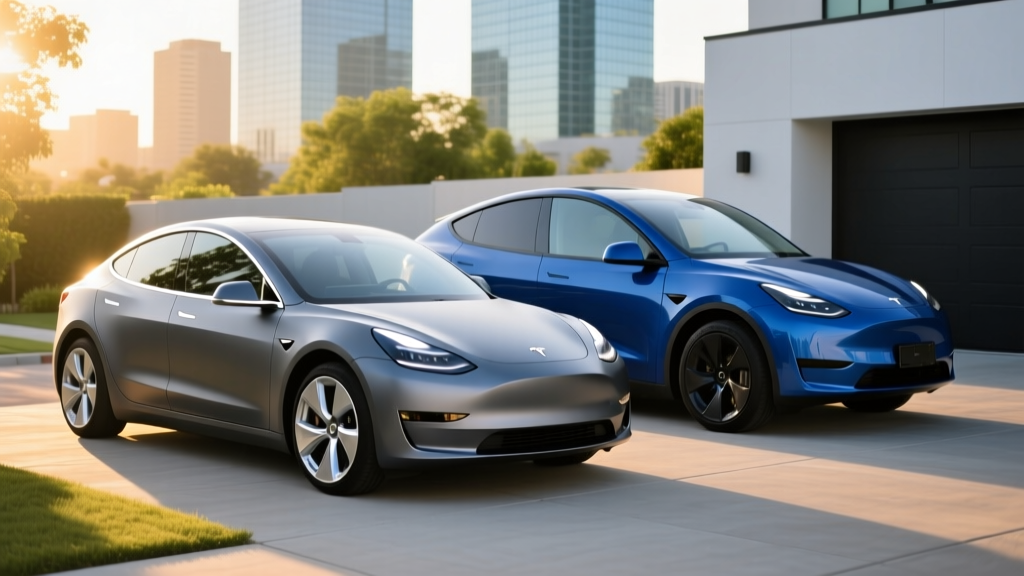
Leasing a Tesla in 2026 is a fundamentally different calculation than buying one. The appeal is straightforward: lower monthly payments, access to the latest hardware without long-term commitment, and the ability to walk away before battery degradation becomes a concern. But Tesla's leasing structure has quirks — no lease-end buyout on most contracts, strict mileage penalties, and a federal tax credit (§30D) that does not apply to lessees directly. Understanding the real math behind Tesla lease deals requires looking past the advertised monthly payment.
This guide dissects the 2026 Model 3 and Model Y — Tesla's volume lease vehicles — with exact range figures, charging specs, ownership costs, and the lease-vs-buy decision framework you need before signing.
2026 Tesla Model 3: Range, Battery, and Efficiency
The refreshed Model 3 (internally "Highland" and its 2026 iteration) remains Tesla's most efficient sedan. Three trims are available for lease, each with distinct battery chemistry and range profiles.
| Spec | RWD | Long Range AWD | Performance |
|---|---|---|---|
| EPA Range | 272 mi | 341 mi | 315 mi |
| Battery (usable) | 57.5 kWh (LFP) | 78.1 kWh (NMC) | 78.1 kWh (NMC) |
| Efficiency | 26 kWh/100mi (132 MPGe) | 25 kWh/100mi (135 MPGe) | 28 kWh/100mi (120 MPGe) |
| 0-60 mph | 5.8 sec | 4.2 sec | 2.9 sec |
| Horsepower | 283 hp | 384 hp | 510 hp |
| Drivetrain | RWD (single motor) | AWD (dual motor) | AWD (dual motor) |
| Base MSRP | $38,990 | $47,740 | $52,990 |
2026 Tesla Model Y: The Lease Volume Leader
The Model Y continues as the best-selling EV in the U.S. and the most common Tesla lease. The 2026 "Juniper" refresh brought a quieter cabin, updated suspension tuning, and a revised front fascia, but the powertrain and battery remain largely carryover.
| Spec | RWD | Long Range AWD | Performance |
|---|---|---|---|
| EPA Range | 260 mi | 320 mi | 293 mi |
| Battery (usable) | 57.5 kWh (LFP) | 78.1 kWh (NMC) | 78.1 kWh (NMC) |
| Efficiency | 27 kWh/100mi (127 MPGe) | 26 kWh/100mi (130 MPGe) | 29 kWh/100mi (116 MPGe) |
| 0-60 mph | 6.6 sec | 4.8 sec | 3.5 sec |
| Horsepower | 295 hp | 384 hp | 456 hp |
| Drivetrain | RWD (single motor) | AWD (dual motor) | AWD (dual motor) |
| Base MSRP | $44,990 | $49,990 | $53,990 |
The Model Y's crossover form factor yields 76 cu ft of cargo volume with rear seats folded (30.2 cu ft behind the second row) and 41.6 inches of rear legroom — enough for adult passengers on longer trips. The frunk adds 4.1 cu ft of secure storage.
Charging Speed: What You Actually Get
Charging speed is where Tesla still holds a tangible advantage over most competitors, thanks to both vehicle architecture and the Supercharger network. Here are the exact charge rates for 2026 Model 3 and Model Y Long Range variants:
| Charge Level | Power / Rate | Time or Miles Added |
|---|---|---|
| DC Fast Charge (peak) | 250 kW | 10-80% in ~25 min (Model 3); ~28 min (Model Y) |
| DC Fast Charge (sustained avg) | ~150-170 kW | Curve tapers significantly above 80% SoC |
| Level 2 (240V, 48A) | 11.5 kW | ~44 mi/hr (Model 3); ~40 mi/hr (Model Y) |
| Level 2 (240V, 32A) | 7.7 kW | ~30 mi/hr |
| Level 1 (120V, 12A) | 1.4 kW | ~4-5 mi/hr (emergency use only) |
For home charging, a Level 2 wall connector on a 60A circuit (48A continuous) is the practical standard. Most lessees install a Tesla Wall Connector ($475 hardware) with a licensed electrician — expect $800-$2,000 for installation depending on panel proximity and local permit costs. (IRS §30D credit does not cover home charger installation; that falls under the separate §30C credit, capped at $1,000.)
The Tax Credit Problem With Tesla Leases
This is the most misunderstood part of Tesla lease economics. The $7,500 federal EV tax credit (§30D) does not go to the lessee. Here's the mechanics:
- When you buy: You claim the §30D credit on your tax return (or transfer it to the dealer at point of sale as a price reduction), subject to income caps ($150K single / $300K joint AGI), MSRP caps ($55K sedans / $80K SUVs/trucks), and battery critical-mineral sourcing rules.
- When you lease: The leasing entity (Tesla Finance or a third-party bank) is the legal owner and claims the credit. Tesla may pass some or all of that value through as a lower "capitalized cost reduction" — effectively lowering your monthly payment — but they are not obligated to do so, and the pass-through amount is not always transparent.
| Factor | Lease (36 mo / 10K mi/yr) | Purchase |
|---|---|---|
| Base MSRP / Cap Cost | $49,990 | $49,990 |
| Federal §30D Credit | Claimed by lessor (partial pass-through typical) | Up to $7,500 (if eligible) |
| Est. Monthly Payment | $499-$599 (varies by money factor & down) | ~$680-$750 (72-mo loan at 5.5%) |
| Due at Signing | $3,500-$5,500 (first month + fees + cap reduction) | $7,500+ (down payment to offset loan) |
| End of Term | Return vehicle (no buyout option on most Tesla leases) | Own the vehicle outright |
| Mileage Overage | $0.20-$0.25/mile above limit | No penalty |
Key takeaway: If you qualify for the full $7,500 credit on a purchase, buying often pencils out better over 3-5 years. Leasing makes sense if you want lower monthly cash flow, plan to stay under 10,000-12,000 miles annually, or want to upgrade to new hardware every 36 months. Always ask Tesla Finance for the exact "money factor" (the lease equivalent of an interest rate) and the capitalized cost reduction attributed to the tax credit pass-through.
Tech, Autopilot, and Interior: What Lessees Get
Every 2026 Model 3 and Model Y ships with Basic Autopilot (traffic-aware cruise control and lane-keeping assist). This is an SAE Level 2 driver-assistance system — you must keep hands on the wheel and eyes on the road at all times. It is not self-driving.
FSD (Supervised) remains a $8,000 add-on or $99/month subscription. It adds automatic lane changes, traffic light/stop sign recognition, and city-street navigation, but requires constant supervision. For most lessees on a 36-month term, the monthly subscription is more rational than the upfront purchase — especially since FSD does not transfer at lease end.
Interior highlights for 2026:
- 15.4-inch center touchscreen (Model 3) / 15.4-inch center + optional rear screen (Model Y)
- Ventilated front seats, heated rear seats, heated steering wheel (all trims)
- Power-folding side mirrors, ambient lighting, acoustic glass (Highland/Juniper refresh)
- No turn signal stalk (steering-wheel-mounted buttons) — a common complaint for new drivers
- No Apple CarPlay or Android Auto — Tesla's proprietary infotainment only
Warranty Coverage During a Lease
Tesla's warranty comfortably covers any standard 36- or 48-month lease term:
- Basic Vehicle: 4 years / 50,000 miles
- Battery & Drive Unit: 8 years / 100,000 miles (Model 3 RWD with LFP); 8 years / 120,000 miles (Long Range & Performance)
- Capacity Retention: Tesla warrants a minimum 70% battery capacity retention during the warranty period
For a 36-month lease at 10,000 miles/year, you'll accumulate only 30,000 miles — well within all warranty thresholds. Battery degradation is essentially a non-issue for lessees. If you notice abnormal degradation or drive-unit failure, Tesla covers it fully.
Tesla Lease Deals vs. Key Competitors
Choose a Tesla Lease If:
- Supercharger network access is a priority (still the most reliable DC network in the U.S.)
- You want best-in-class efficiency (kWh/100mi)
- Software updates and tech features matter to you
- You drive under 12,000 miles/year
Consider Competitors If:
- You want a lease-end buyout option (Hyundai Ioniq 5, Ford Mustang Mach-E leases often allow this)
- You prefer physical controls, Apple CarPlay, or a traditional dealer experience
- You need more cargo space (Hyundai Ioniq 9, Kia EV9 for 3-row EV leases)
- You want the $7,500 credit applied directly to your pocket (buy, don't lease)
The Hyundai Ioniq 5 (EPA 318 mi Long Range, 240 kW peak charging, NACS adapter required for Superchargers) and Ford Mustang Mach-E (EPA 320 mi Extended Range, 150 kW peak CCS) are the most cross-shopped alternatives. Both offer competitive lease rates, and many dealers pass through the federal credit more transparently as a cap-cost reduction.
Frequently Asked Questions About Tesla Leases
Can I buy my Tesla at the end of the lease?
As of 2026, Tesla does not offer a lease-end buyout option on Model 3 or Model Y leases in most U.S. states. You must return the vehicle. This is a deliberate business decision by Tesla to recapture vehicles for their used-EV inventory or robotaxi fleet. If ownership at term-end matters to you, buy instead of lease, or explore third-party leasing companies that may offer buyout clauses.
Do Tesla lease deals include free Supercharging?
No. Tesla discontinued complimentary Supercharging for new Model 3 and Model Y purchases and leases. Expect to pay $0.25-$0.40/kWh at Superchargers depending on location and time of day. Budget roughly $80-$120/month in charging costs for 10,000 miles of annual driving if you rely primarily on DC fast charging.
Does a leased Tesla qualify for any incentives?
The $7,500 federal §30D credit is claimed by the leasing company, not you. Some states (California, Colorado, Massachusetts) offer additional rebates that may apply to lessees directly — check your state's energy office. The IRS treats a lease as a commercial transaction where the lessor is the vehicle owner. (IRS FAQ on §30D)
What happens if I exceed my lease mileage?
Tesla leases typically set overage penalties at $0.20-$0.25 per mile above the contracted limit. A 10,000-mile/year lease with 5,000 excess miles at return would cost $1,000-$1,250. If you anticipate driving more than 12,000 miles annually, a lease is rarely the right financial choice.
Is Tesla's insurance required on a lease?
Tesla does not require you to use Tesla Insurance, but you must carry full coverage (comprehensive + collision) as specified in the lease agreement. Tesla Insurance is available in most states and is often competitive, but always compare quotes from at least three carriers. EV insurance premiums average 15-25% higher than comparable gas vehicles due to repair costs.
What is the total cost of a 36-month Tesla Model Y lease?
For a 2026 Model Y Long Range AWD at $49,990 MSRP with a typical money factor and $4,500 due at signing, expect total out-of-pocket costs over 36 months of approximately $21,000-$23,000 (including signing, monthly payments, charging, and insurance). Compare this to a purchase where the $7,500 credit and eventual ownership equity often result in a lower net cost over 5 years.