Why June 2025 Tesla Leases Are Drawing Attention
Tesla's leasing strategy has shifted repeatedly over the past year, and the June 2025 window presents a specific set of economics worth dissecting. With refreshed Model 3 (Highland) production fully ramped and Model Y (Juniper) deliveries expanding across North America, Tesla has been using lease pricing as a demand lever — particularly on base RWD trims where monthly payments can undercut competing EVs from Hyundai, Ford, and BMW. But lease numbers only tell part of the story. The real question is whether the underlying vehicle specs, tax credit treatment, and real-world efficiency justify locking into a 36-month commitment.
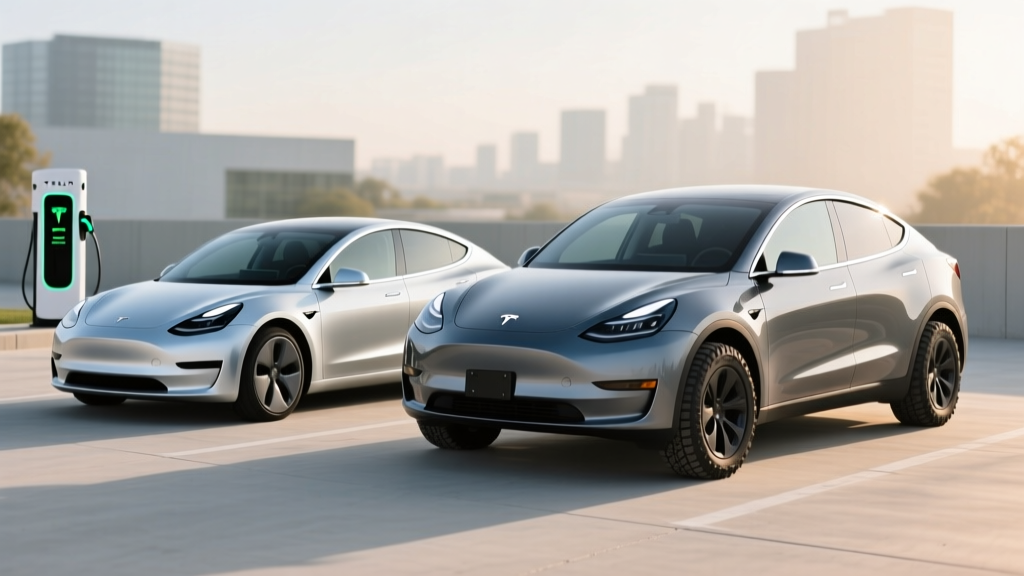
This review covers the two highest-volume Tesla lease candidates — the 2025 Model 3 and 2025 Model Y — with exact figures on range, charging, pricing after incentives, and the ownership trade-offs that don't show up in a monthly payment quote.
Spec Snapshot: 2025 Tesla Model 3 vs. Model Y
| Specification | Model 3 RWD (Base) | Model 3 Long Range AWD | Model Y RWD (Base) | Model Y Long Range AWD |
|---|---|---|---|---|
| EPA Range | 272 mi | 363 mi | 260 mi (est.) | 320 mi |
| Battery (usable) | ~57.5 kWh (LFP) | ~75 kWh (NMC) | ~57.5 kWh (LFP) | ~75 kWh (NMC) |
| Peak DC Fast Charge | 170 kW | 250 kW | 170 kW | 250 kW |
| 10-80% DC Time | ~25 min | ~22 min | ~25 min | ~22 min |
| Level 2 Home Rate | 11.5 kW (~44 mi/hr) | 11.5 kW (~44 mi/hr) | 11.5 kW (~37 mi/hr) | 11.5 kW (~37 mi/hr) |
| 0-60 mph | 5.8 sec | 4.2 sec | 6.6 sec (est.) | 4.8 sec |
| Horsepower | 271 hp | 346 hp | 271 hp | 384 hp |
| Drivetrain | RWD (single motor) | AWD (dual motor) | RWD (single motor) | AWD (dual motor) |
| MPGe (combined) | 132 MPGe | 131 MPGe | ~125 MPGe (est.) | 122 MPGe |
| kWh/100 mi | 25 | 26 | ~27 | 28 |
| Cargo Volume | 23 cu ft (trunk) + frunk | 23 cu ft (trunk) + frunk | 76 cu ft (seats folded) | 76 cu ft (seats folded) |
| Rear Legroom | 35.2 in | 35.2 in | 41.6 in | 41.6 in |
| Base MSRP | $38,990 | $47,740 | $44,990 | $48,990 |
| Warranty (Battery) | 8 yr / 100,000 mi | 8 yr / 120,000 mi | 8 yr / 100,000 mi | 8 yr / 120,000 mi |
Sources: fueleconomy.gov, Tesla spec sheets. Model Y RWD figures reflect early EPA filings and may shift with final certification.
Real-World Range: What the EPA Sticker Doesn't Tell You
Model 3 RWD: EPA 272 mi → Expect ~240-255 mi on mixed highway driving at 70 mph; ~200-220 mi in freezing temperatures with cabin heat.
Model 3 Long Range AWD: EPA 363 mi → Expect ~310-330 mi highway; ~260-285 mi in sub-30°F conditions.
Model Y Long Range AWD: EPA 320 mi → Expect ~275-295 mi highway; ~230-255 mi in cold weather.
LFP batteries (RWD trims) lose proportionally more range in extreme cold than NMC packs. Preconditioning via the Tesla app before departure recovers some of this loss.
Tesla's efficiency remains class-leading. The Model 3 RWD at 25 kWh/100 mi extracts more miles per unit of energy than virtually any competing sedan — the Hyundai Ioniq 6 SE achieves similar figures, but most rivals sit at 28-32 kWh/100 mi. The Highland refresh improved aerodynamic drag (Cd 0.219) and reduced rolling resistance, contributing to the Model 3 Long Range's exceptional 363-mile EPA figure.
For lessees, the practical implication: if your round-trip commute exceeds 150 miles or you regularly drive in northern-tier winters, the Long Range AWD trim provides a meaningful buffer. The RWD LFP models work well for urban and suburban drivers with reliable home charging and commutes under 80 miles daily.
Charging Speed: Supercharger Access Is the Lease Advantage
The single strongest argument for leasing a Tesla over a competitor remains Supercharger network access. Tesla's proprietary network now exceeds 6,500 stations in North America, and with NACS adoption by Ford, GM, Rivian, and others, the connector standard has won the format war — but Tesla owners still benefit from the most seamless plug-and-charge experience with no adapter required.
| Charging Level | Model 3 RWD / Model Y RWD | Model 3 LR / Model Y LR | Miles Added per Hour |
|---|---|---|---|
| Level 1 (120V, 12A) | 1.4 kW | 1.4 kW | ~3-5 mi/hr |
| Level 2 (240V, 48A) | 11.5 kW | 11.5 kW | 37-44 mi/hr |
| DC Fast (peak) | 170 kW | 250 kW | N/A (15-20 min sessions) |
Charging curve reality: The 250 kW peak on Long Range models holds roughly from 10% to 35% SoC, then tapers through the mid-range, dropping to ~100 kW by 60% and ~45 kW above 85%. The published 10-80% time of ~22 minutes reflects this integrated curve, not sustained peak power. The LFP RWD models peak at 170 kW with a similar taper profile, making the 10-80% gap roughly 3 minutes.
For home charging, a 48A Level 2 wall connector on a 60A circuit adds enough range overnight for virtually any daily driving pattern. Installation typically runs $800-$1,800 depending on panel proximity and local permitting — a cost lessees should factor into their total outlay since Tesla no longer includes free wall connectors with vehicle purchase or lease.
Tesla Lease Pricing and Tax Credit Math
Tesla lease terms have historically been less transparent than purchase pricing. Unlike traditional automakers that publish monthly lease specials, Tesla's lease offers appear dynamically on their website and change weekly based on residual values, money factors, and demand management. As of mid-2025, here's the framework:
| Cost Factor | Model 3 RWD Lease | Model Y LR AWD Lease |
|---|---|---|
| Base MSRP | $38,990 | $48,990 |
| Typical 36-mo / 10k mi lease | $329-$399/mo | $449-$549/mo |
| Due at signing (typical) | $3,500-$4,500 | $4,500-$5,500 |
| §30D Federal Credit (purchase) | Up to $7,500 | Up to $7,500 |
| Lease credit treatment | Passed through as cap cost reduction (varies) | Passed through as cap cost reduction (varies) |
| Effective monthly (with credit) | ~$229-$299/mo | ~$349-$449/mo |
Critical tax credit detail for leases: Under IRS §30D rules, the $7,500 federal EV tax credit technically belongs to the lessor (Tesla's financing entity), not the lessee. However, Tesla has historically passed this benefit through as a capitalized cost reduction, effectively lowering your monthly payment. This is not guaranteed — always confirm the exact pass-through amount in your lease agreement before signing.
The §30D credit itself carries eligibility requirements that may affect you if you later choose to purchase:
- MSRP cap: $55,000 for sedans (Model 3); $80,000 for SUVs/trucks (Model Y qualifies)
- Buyer income cap: $150,000 single / $300,000 joint (modified AGI)
- Battery sourcing: Critical minerals and battery component requirements phase in annually; Tesla's LFP cells (CATL-sourced for RWD trims) have faced scrutiny under sourcing rules — verify current-year eligibility on IRS.gov
- Point-of-sale transfer: Eligible buyers can transfer the credit to the dealer at purchase, reducing the transaction price directly
Performance, Tech, and Daily Driving Experience
Even the base Model 3 RWD delivers 271 hp and a 5.8-second 0-60 time — quicker than most gas-powered compact sedans and responsive in highway merging scenarios. The Long Range AWD's 4.2-second sprint is genuinely sports-car territory. Both benefit from Tesla's low center of gravity and well-tuned regenerative braking, which enables effective one-pedal driving in most conditions.
The Highland refresh brought meaningful improvements to the Model 3 cabin: ventilated front seats, ambient lighting, rear-seat touchscreen, improved sound insulation, and a revised suspension that absorbs road imperfections noticeably better than pre-2024 models. Build quality has improved, though panel gap consistency still varies by Fremont vs. Shanghai production origin.
Standout tech:
- 15.4-inch center touchscreen with Netflix/YouTube/arcade gaming while parked
- Over-the-air updates that add features post-purchase
- Basic Autopilot included (SAE Level 2 — requires active driver supervision at all times)
- FSD (Supervised) available as a $99/mo subscription — still Level 2, not autonomous
- Sentry Mode dashcam recording, Dog Mode climate control, and phone-as-key
Notable drawbacks:
- No physical instrument cluster or heads-up display — all info routes through the center screen
- Turn signals on the steering wheel (no stalk) take adaptation; controversial among reviewers
- No Apple CarPlay or Android Auto — Tesla's ecosystem is closed
- Insurance premiums run 15-30% higher than comparable gas sedans in most states
- Service center wait times can extend 2-4 weeks in high-volume metro areas
- Class-leading efficiency (25 kWh/100 mi on RWD)
- Best-in-class Supercharger network access
- Strong OTA update cadence
- Low total cost of ownership when charging at home
- Excellent resale/lease residual values
- No physical gauges or CarPlay
- Insurance costs above segment average
- LFP battery loses more range in extreme cold
- Service center capacity inconsistent by region
- Lease credit pass-through not contractually guaranteed
Who Should Lease a Tesla in June 2025?
- Have reliable Level 2 home charging (garage or driveway with 240V access)
- Commute under 100 miles round-trip and want minimal fuel cost ($0.04-$0.08/mi on residential electricity vs. $0.12-$0.18/mi for gas)
- Want to test EV ownership for 36 months without long-term battery degradation risk
- Live in a region with strong Supercharger density (most US metro areas and interstate corridors)
- Rely exclusively on apartment/curbside charging with no reliable Level 2 access
- Regularly tow — Model Y max towing is 3,500 lbs, and towing cuts range 30-40%
- Need Apple CarPlay for your workflow or fleet integration
- Drive in extreme cold (sub-10°F) daily — consider NMC Long Range or a PHEV alternative
Tesla vs. Key Competitors: Is the Lease Worth It?
The Model 3 RWD at ~$329/mo (before credit pass-through) competes directly with the Hyundai Ioniq 6 SE ($349-$399/mo typical), BMW i4 eDrive35 ($449+), and Ford Mustang Mach-E Select ($399+). Tesla's advantages are the Supercharger network and efficiency; Hyundai counters with faster 800V charging architecture (10-80% in ~18 min at 350 kW stations) and standard CarPlay.
For Model Y, the competitive set includes the Hyundai Ioniq 5, Kia EV6, and Ford Mach-E. The Model Y's 76 cu ft cargo volume with seats folded beats the Ioniq 5 (~53 cu ft) substantially, making it the stronger family hauler. However, the Ioniq 5's 800V architecture charges faster at compatible stations, and its real-world cold-weather performance on the NMC Long Range variant is comparable.
Bottom line: if Supercharger reliability matters more to you than peak charging speed or CarPlay, the Tesla lease delivers strong value. If you prioritize charging flexibility across networks or want a more traditional cockpit layout, test-drive the Ioniq 5 and Mach-E before committing.
Frequently Asked Questions
What is the real-world range of the Model 3 RWD on a Tesla lease?
The EPA rates the 2025 Model 3 RWD at 272 miles. In real-world highway driving at 70 mph, expect 240-255 miles in moderate temperatures and 200-220 miles in freezing conditions. The LFP battery's thermal characteristics mean more range loss in cold weather than the NMC Long Range variant. Preconditioning the battery via the Tesla app before driving helps mitigate this.
How fast does a leased Tesla charge at home and on the road?
On a 48A Level 2 home charger (240V), both Model 3 variants add roughly 44 miles of range per hour — a full overnight charge covers any daily commute. At DC fast chargers, the RWD model peaks at 170 kW (10-80% in ~25 minutes) while Long Range models peak at 250 kW (10-80% in ~22 minutes). Remember that kW is power (charge speed) while kWh is energy (battery capacity) — these are not interchangeable terms.
Does a Tesla lease qualify for the $7,500 federal EV tax credit?
Technically, the §30D credit belongs to the lessor, not the lessee. Tesla has historically passed this through as a cap cost reduction, lowering your monthly payment — but this is not contractually guaranteed. Verify the exact credit treatment in your lease documents. If you purchase instead, eligibility depends on your income (≤$150K single / ≤$300K joint), the vehicle's MSRP (under $55K for sedans, $80K for SUVs), and current battery-sourcing rules published by the IRS.
Is it better to lease or buy a Tesla in 2025?
Leasing makes sense if you want lower monthly payments, plan to upgrade in 3 years, and want to avoid battery degradation risk. Buying (especially with the $7,500 point-of-sale credit transfer) is better if you plan to keep the car 5+ years, drive high annual mileage (leases typically cap at 10K-15K mi/yr with $0.20-$0.25/mi penalties), and want to build equity. Tesla leases currently do not include a purchase option at lease-end, which is a significant limitation if you fall in love with the car.
What are the biggest drawbacks of a Tesla lease?
No lease-end purchase option, no guaranteed tax credit pass-through, mileage penalties for high drivers, and the reality that Tesla's insurance premiums run higher than average. Additionally, lessees are responsible for any damage beyond "normal wear" per Tesla's lease return guidelines, which can include wheel curb rash and minor paint chips.