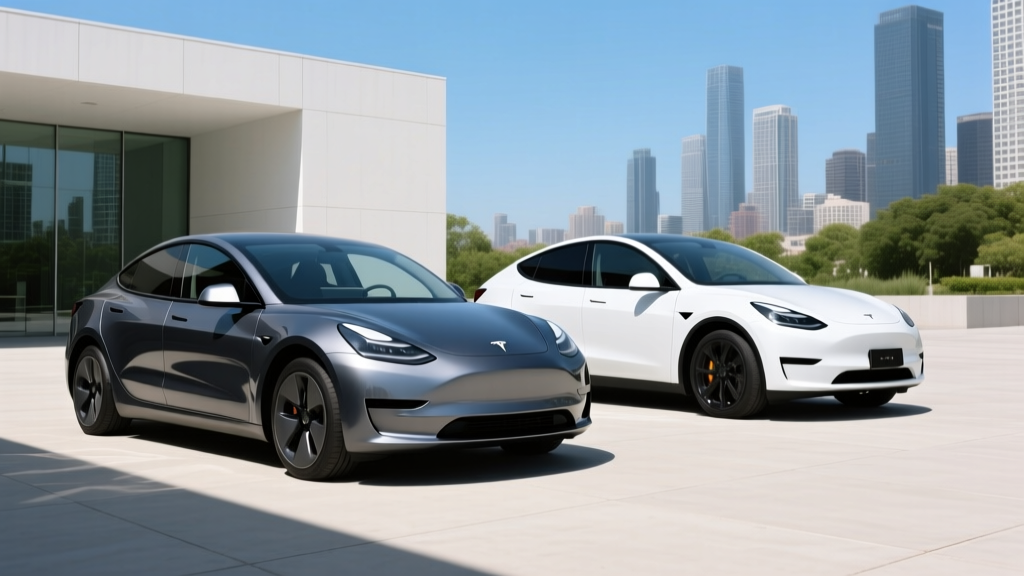
Tesla leasing has evolved significantly since the company first offered leases in limited markets. In 2026, Tesla provides direct leasing for the Model 3 and Model Y in most U.S. states, but the monthly cost, money-down requirements, and lease-end terms vary sharply by trim. If you've been searching how much is a Tesla lease, the short answer is that monthly payments range from roughly $329 to $600+ depending on model, trim, down payment, and your state — but the real decision hinges on mileage limits, total cost versus buying with a tax credit, and whether you want a buyout option at lease end.
Below, we dissect current Tesla lease pricing for the two most popular models, map out the true cost of leasing versus purchasing, and give you the exact specs you need to decide whether a leased Model 3 or Model Y fits your driving life.
Current Tesla Lease Pricing: Model 3 and Model Y Breakdown
Tesla's direct-to-consumer lease program is structured through Tesla Financial Services. Unlike traditional dealer leases, there is no negotiation — the terms are set by Tesla and vary by state due to tax and registration differences. Here is what lease pricing looks like in early 2026 for the most common configurations, assuming 36-month terms and 10,000 miles per year:
| Model & Trim | MSRP | Money Due at Signing | Est. Monthly Payment | Lease-End Buyout |
|---|---|---|---|---|
| Model 3 RWD | $38,990 | $4,500–$5,500 | $329–$399 | Available (varies) |
| Model 3 Long Range AWD | $44,990 | $5,000–$6,500 | $409–$489 | Available (varies) |
| Model 3 Performance | $52,990 | $6,000–$7,500 | $499–$589 | Available (varies) |
| Model Y Long Range AWD | $44,990 | $5,500–$7,000 | $399–$479 | Available (varies) |
| Model Y Performance | $51,490 | $6,000–$7,500 | $489–$569 | Available (varies) |
Key variables that change your payment: Putting more money down lowers the monthly payment but increases your risk if the car is totaled early. Choosing 12,000 or 15,000 miles per year adds $20–$50/month. State sales tax treatment (some states tax the full MSRP on leases, others tax only the monthly payment) can shift costs by hundreds over the lease term.
Tesla Model 3 Lease: Range, Charging, and What You're Getting
If you're leasing a Model 3, you're getting one of the most efficient EVs on the market. Here are the exact specs for the 2026 lineup:
| Spec | RWD | Long Range AWD | Performance |
|---|---|---|---|
| EPA Range | 272 mi | 341 mi | 315 mi |
| Battery (usable) | ~60 kWh (LFP) | ~75 kWh (NMC) | ~75 kWh (NMC) |
| Efficiency | 132 MPGe / 25 kWh/100mi | 134 MPGe / 25 kWh/100mi | 121 MPGe / 28 kWh/100mi |
| 0–60 mph | 5.8 sec | 4.2 sec | 2.9 sec |
| Horsepower | 271 hp | 384 hp | 510 hp |
| Drivetrain | RWD (single motor) | AWD (dual motor) | AWD (dual motor) |
| Max DC Fast Charge | 170 kW | 250 kW | 250 kW |
| 10–80% DC Charge | ~25 min | ~18 min | ~18 min |
| Level 2 Home Charge | 11.5 kW (~37 mi/hr) | 11.5 kW (~44 mi/hr) | 11.5 kW (~40 mi/hr) |
| Cargo (trunk + frunk) | 23 cu ft | 23 cu ft | 23 cu ft |
| Rear Legroom | 35.2 in | 35.2 in | 35.2 in |
| Battery Warranty | 8 yr / 100,000 mi | 8 yr / 120,000 mi | 8 yr / 120,000 mi |
Charging reality on a lease: The 250 kW peak charge rate on Long Range and Performance trims is a peak, not sustained. The charge curve tapers significantly above 60% state of charge. On a road trip, plan your DC fast stops around 10–80% sessions of about 18 minutes at a V3 or V4 Supercharger. For daily use, a home Level 2 charger (240V, 48A circuit) adds roughly 37–44 miles per hour of charging — enough to fully replenish overnight. LFP batteries in the RWD model can be charged to 100% daily without degradation concerns, while NMC packs in the Long Range and Performance trims should be kept at 80% daily and charged to 100% only before trips.
Tesla Model Y Lease: The Family SUV Option
The Model Y remains Tesla's best-selling vehicle for good reason — it offers crossover cargo space with sedan-like efficiency. Here's what the 2026 Model Y delivers:
| Spec | Long Range AWD | Performance |
|---|---|---|
| EPA Range | 320 mi | 285 mi |
| Battery (usable) | ~75 kWh (NMC) | ~75 kWh (NMC) |
| Efficiency | 123 MPGe / 27 kWh/100mi | 115 MPGe / 29 kWh/100mi |
| 0–60 mph | 4.8 sec | 3.5 sec |
| Horsepower | 384 hp | 510 hp |
| Drivetrain | AWD (dual motor) | AWD (dual motor) |
| Max DC Fast Charge | 250 kW | 250 kW |
| 10–80% DC Charge | ~22 min | ~22 min |
| Level 2 Home Charge | 11.5 kW (~37 mi/hr) | 11.5 kW (~33 mi/hr) |
| Cargo (rear seats up) | 34 cu ft | 34 cu ft |
| Cargo (rear seats folded) | 72 cu ft | 72 cu ft |
| Rear Legroom | 37.0 in | 37.0 in |
| Battery Warranty | 8 yr / 120,000 mi | 8 yr / 120,000 mi |
For lessees who need family space, the Model Y's 34 cu ft behind the rear seats and available third-row option (reducing cargo to ~12 cu ft but seating up to seven) make it the practical choice. The 22-minute 10–80% charge time at a 250 kW Supercharger makes road trips viable, though the Model Y's higher weight and drag mean real-world highway range sits closer to 270–285 miles for the Long Range trim.
Tax Credit Math: Lease vs. Buy — Which Saves More?
This is where the "how much is a Tesla lease" question gets complicated. The federal EV tax credit under IRS §30D provides up to $7,500 for qualifying new EVs, but it applies to purchases, not leases — at least not directly.
| Factor | Lease | Buy (Finance) |
|---|---|---|
| Monthly Payment | $409–$489 | $580–$650 (at 5.9% APR, $5k down) |
| Federal Tax Credit (§30D) | Not directly (see below) | Up to $7,500 (if eligible) |
| Effective Monthly After Credit | $409–$489 | $372–$442 (credit spread over 36 mo) |
| Money at Signing | $5,000–$6,500 | $5,000 |
| Equity at End | None (unless buyout) | Vehicle ownership (est. ~$22k equity) |
| Mileage Limit | 10,000 mi/yr (excess ~$0.25/mi) | Unlimited |
| Disposition Fee | ~$395–$495 | None |
The lease loophole: Under IRC Section 179A, the §30D credit on a leased vehicle goes to the lessor (Tesla Financial Services), not you. Tesla may pass some or all of this savings through as a reduced "capitalized cost" — essentially lowering your monthly payment. However, Tesla does not always pass through the full amount, and the pass-through is not guaranteed. When buying, you can claim the credit directly (or transfer it to the dealer as a point-of-sale discount under current IRS rules) if you meet these requirements:
- MSRP cap: $55,000 for sedans (Model 3), $80,000 for SUVs/trucks (Model Y)
- Income cap: AGI ≤ $150,000 single / $300,000 joint filers
- Battery sourcing: Critical minerals and battery components must meet phased percentage thresholds from U.S. or FTA-partner countries
- Assembly: Final assembly must occur in North America
Both the Model 3 and Model Y are assembled at the Fremont, CA and Austin, TX factories, satisfying the assembly requirement. Battery sourcing compliance varies by production batch — always verify the specific VIN's eligibility on the fueleconomy.gov credit lookup before signing.
Tech, Driver Assists, and What Lessees Should Know
Every 2026 Tesla lease includes the standard Autopilot suite — adaptive cruise control, lane centering, automatic emergency braking, and blind-spot monitoring. This is an SAE Level 2 driver-assistance system, meaning you must keep your hands on the wheel and eyes on the road at all times. It is not self-driving.
The optional FSD (Supervised) package ($8,000 one-time or $99/month subscription) adds automated lane changes, traffic light recognition, and city street navigation — but still requires full driver supervision. Lessees should note: the FSD subscription is tied to your Tesla account, not the vehicle, and does not transfer at lease end. The one-time purchase does not carry equity value if you return the car.
Other standout tech includes:
- 15.4-inch center touchscreen with no physical buttons (HVAC, mirrors, and glovebox all screen-controlled)
- Tesla app with remote climate preconditioning, location tracking, and Sentry Mode camera access
- Over-the-air updates that can add features during your lease term
- Access to the Tesla Supercharger network — the most reliable DC fast-charging network in the U.S.
- Standard heat pump (critical for cold-weather efficiency, reducing range loss vs. resistive heating)
Notable drawbacks: The minimalist interior lacks physical controls that some drivers prefer. Rear-seat comfort in the Model 3 is tight for adults over 6 feet. No Apple CarPlay or Android Auto — Tesla uses its proprietary infotainment system exclusively. Panel gaps and paint quality, while improved, still draw more complaints than legacy luxury brands.
Pros, Cons, and Who Should Lease a Tesla
- Lower monthly payments vs. financing, especially without a large down payment
- Battery degradation is Tesla's problem, not yours — the 8-year warranty outlasts the lease
- OTA updates keep the car current throughout the lease term
- Access to the Supercharger network with reliable plug-and-charge billing
- Ability to upgrade to the latest model every 3 years
- LFP battery in Model 3 RWD allows 100% daily charging without degradation concerns
- No equity buildup — you return the car or pay the buyout price
- 10,000 mi/yr default limit is tight for commuters; upgrading to 15k mi/yr adds cost
- Tesla's lease buyout pricing can be higher than market value at term end
- Federal §30D tax credit benefits may not fully pass through on a lease
- Excess wear-and-tear charges are at Tesla's discretion at return
- Cannot sell or trade the vehicle mid-lease to capitalize on market changes
- Lease if: You drive under 12,000 miles/year, want the lowest monthly payment, plan to upgrade every 3 years, and don't qualify for the full $7,500 tax credit due to income or sourcing rules.
- Buy if: You qualify for the full §30D credit, drive more than 12,000 miles/year, want equity at the end, or plan to keep the car 5+ years.
- Consider a competitor if: You need physical controls (Hyundai Ioniq 6), more rear-seat room (BMW i4), or a non-Tesla charging network preference (any CCS/NACS vehicle on Electrify America).
Frequently Asked Questions
What is the real-world range of a leased Tesla Model 3?
The EPA rates the Model 3 Long Range AWD at 341 miles, but real-world highway driving at 70–75 mph typically yields 290–305 miles. In cold weather below 30°F, expect 230–260 miles. The RWD model (272 EPA) delivers roughly 220–240 miles on the highway and as little as 180–200 miles in winter. Preconditioning the battery while plugged in recovers some of this loss.
How fast does a Tesla charge at home and on the road?
At home on a Level 2 charger (240V, 48A), the Model 3 adds 37–44 miles per hour — a full overnight charge. On the road, Long Range and Performance trims peak at 250 kW at V3/V4 Superchargers, charging 10–80% in about 18 minutes. The RWD model peaks at 170 kW with a 10–80% time of approximately 25 minutes. Charging slows significantly above 80% to protect the battery.
How much does a Tesla cost after tax credits?
If you buy (not lease) and qualify for the full $7,500 §30D credit, a Model 3 RWD at $38,990 MSRP effectively costs $31,490. A Model 3 Long Range at $44,990 drops to $37,490. On a lease, Tesla may pass through some of this credit as a lower capitalized cost, but the exact pass-through amount is not guaranteed or transparently disclosed.
Is a Tesla lease worth it vs. a Hyundai Ioniq 6 or BMW i4?
The Tesla lease wins on Supercharger network access and software updates. The Ioniq 6 offers more rear-seat room, physical controls, 800V architecture (faster peak charging at 350 kW-capable chargers), and often a lower lease price. The BMW i4 provides a more traditional luxury interior and comparable range. If Supercharger access is your priority, Tesla holds the edge; if interior quality and back-seat comfort matter more, test-drive the competitors.
What are the biggest pros and cons of a Tesla lease?
The biggest pro is low monthly cost with zero battery-degradation risk. The biggest con is the strict mileage limit and lack of equity — after 36 months and $15,000+ in payments, you own nothing unless you exercise the buyout option, which may be priced above open-market value.
Does a leased Tesla qualify for the federal EV tax credit?
The §30D credit on a leased vehicle goes to the lessor (Tesla Financial Services), not the lessee. Tesla may factor some savings into the lease terms, but this is not the same as claiming the credit yourself on a purchase. To claim the full credit directly, you must purchase the vehicle and meet all IRS income, MSRP, and battery-sourcing requirements. Always verify current eligibility on irs.gov before committing.