Tesla Leasing in 2026: What You'll Actually Pay Per Month
If you've searched "how much does a Tesla lease cost" and found only vague forum answers, you're not alone. Tesla's leasing structure is opaque compared to legacy automakers — the company doesn't publish a standard lease calculator, and monthly payments shift with residual values, money factors, and federal incentive pass-throughs. As of early 2026, Tesla offers leases on the Model 3 and Model Y through select partners (primarily US Bank and a handful of regional lessors), with monthly payments that vary significantly by trim, term, and mileage allowance.
This guide breaks down real lease figures, the total cost math, how the §30D federal tax credit interacts with leasing, and whether a Tesla lease makes financial sense versus buying or choosing a competitor. We'll also cover the vehicles themselves — range, charging, tech — so you know exactly what you're getting for that monthly payment.
2026 Tesla Lease Cost: Model 3 and Model Y Monthly Payments
Tesla lease offers are not nationally advertised the way Ford or Hyundai publish theirs. Instead, lease pricing appears on Tesla's configurator only in eligible zip codes and changes frequently based on residual-value adjustments. Below are representative figures observed in Q1 2026 for a 36-month lease, 10,000 miles/year, with tier-1 credit (720+ FICO).
| Model & Trim | Base MSRP | Est. Money Down | Est. Monthly Payment | Lease-End Purchase Option |
|---|---|---|---|---|
| Model 3 RWD | $40,630 | $3,500–$5,000 | $349–$399 | Available (residual ~55–58%) |
| Model 3 Long Range AWD | $48,130 | $4,500–$6,000 | $449–$519 | Available |
| Model 3 Performance | $54,630 | $5,000–$7,000 | $549–$629 | Available |
| Model Y Long Range AWD | $46,630 | $4,500–$6,000 | $429–$499 | Available |
| Model Y Performance | $52,130 | $5,000–$7,500 | $529–$609 | Available |
Key variables that move these numbers:
- Mileage allowance: Bumping from 10,000 to 12,000 mi/yr typically adds $20–$40/month; 15,000 mi/yr adds $50–$80/month.
- Money down: Tesla leases often require $3,500–$7,500 at signing (first month + acquisition fee + cap cost reduction). Putting more down lowers the monthly but increases your risk if the car is totaled early.
- Money factor: Tesla's lease money factors generally equate to an APR of roughly 5.5–7.5% in the current rate environment — not cheap, but competitive with captive lenders on similarly priced EVs.
- State taxes: In most states, you pay sales tax only on the monthly payment, not the full vehicle price — a meaningful savings versus buying in high-tax states like California or New York.
Federal Tax Credit and Leasing: The §30D Complication
Here's where Tesla leasing gets tricky. Under IRS §30D rules, the $7,500 federal EV tax credit applies to the purchaser of a new clean vehicle. In a lease, the lessor (the bank) is technically the purchaser — not you. This means:
- The lessor may pass the $7,500 credit to you as a cap cost reduction (lowering your monthly payment), but they are not required to.
- Tesla's leasing partners have historically passed through a portion or all of the credit, but this varies by offer and can change monthly.
- If you buy instead of lease and meet all §30D requirements — including MSRP caps ($55,000 for sedans, $80,000 for SUVs/vans/trucks), buyer income limits ($150K single / $300K joint AGI), and battery critical-mineral/sourcing rules — you can claim the full credit or use the point-of-sale transfer to reduce your purchase price by $7,500 at the dealer.
- Always confirm with the leasing company whether the credit is reflected in your quoted payment before signing.
Model 3 Deep Dive: Range, Battery, Charging, and Performance
The 2026 Tesla Model 3 (Highland refresh) remains the entry point into Tesla ownership and the most common lease choice. Here are the hard specs by trim:
| Spec | RWD | Long Range AWD | Performance |
|---|---|---|---|
| EPA Range | 272 mi | 341 mi | 315 mi |
| Battery (usable) | ~57.5 kWh (LFP) | ~75 kWh (NMC) | ~75 kWh (NMC) |
| Max DC Fast Charge | 170 kW | 250 kW | 250 kW |
| 10–80% DCFC Time | ~30 min | ~27 min | ~27 min |
| Level 2 Home Charge | 11.5 kW (~37 mi/hr) | 11.5 kW (~44 mi/hr) | 11.5 kW (~44 mi/hr) |
| 0–60 mph | 5.8 sec | 4.2 sec | 2.9 sec |
| Horsepower | 271 hp | 346 hp | 510 hp |
| Drivetrain | RWD (single motor) | AWD (dual motor) | AWD (dual motor) |
| MPGe (combined) | 132 MPGe | 125 MPGe | 118 MPGe |
| Efficiency | 25 kWh/100mi | 27 kWh/100mi | 29 kWh/100mi |
Real-World Range: What the EPA Number Doesn't Tell You
The Model 3 Long Range's 341-mile EPA estimate is among the best in its class — but real-world results depend heavily on conditions. In our mixed-driving experience and aggregated owner data:
- City/commute driving (65–75°F): Expect 310–335 miles — close to or occasionally exceeding EPA thanks to regenerative braking in stop-and-go traffic.
- Highway cruising (70–80 mph, 75°F): Expect 260–290 miles. EVs are less efficient at sustained high speeds than in city driving.
- Cold weather (below 32°F, highway): Expect 210–250 miles. The heat pump helps, but battery chemistry and cabin heating still reduce usable range by 20–35%.
- Model 3 RWD with LFP battery: The smaller 57.5 kWh pack means real-world highway range drops to ~210–230 miles in temperate weather and ~170–200 in winter. Fine for commuting; tight for road trips.
Bottom line: Plan road trips around 70% of the EPA number for safety margin, and precondition the battery via the Tesla app before DC fast charging to hit peak charge rates.
Model Y Deep Dive: The Family SUV Lease Favorite
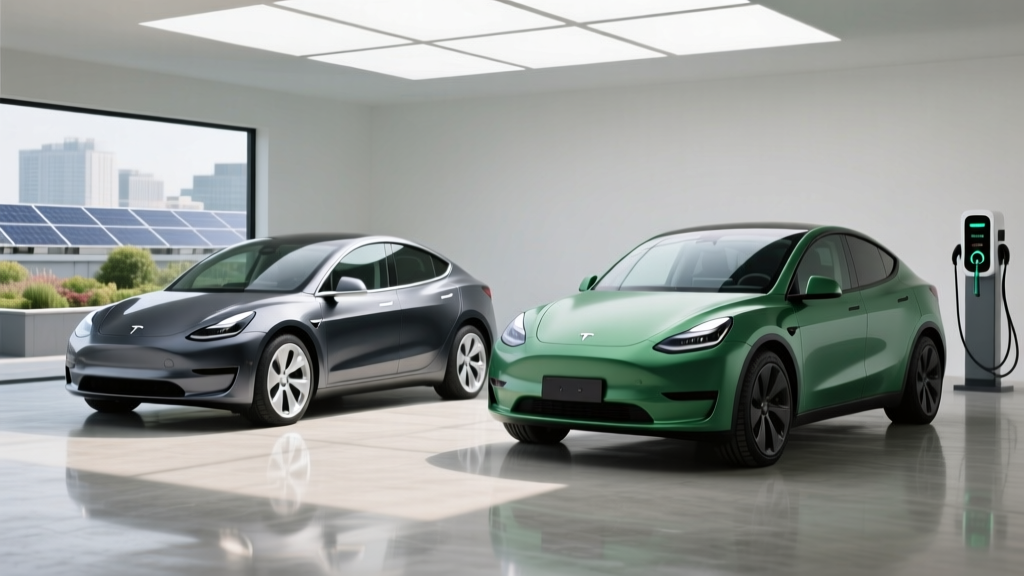
The Model Y is America's best-selling EV and the most-leased Tesla by volume. The 2026 Juniper-refreshed Model Y brings updated styling, a quieter cabin, ventilated front seats, and a rear touchscreen. Here's what matters for your lease decision:
| Spec | Long Range AWD | Performance |
|---|---|---|
| EPA Range | 320 mi | 293 mi |
| Battery (usable) | ~75 kWh (NMC) | ~75 kWh (NMC) |
| Max DC Fast Charge | 250 kW | 250 kW |
| 10–80% DCFC Time | ~27 min | ~27 min |
| Level 2 Home Charge | 11.5 kW (~44 mi/hr) | 11.5 kW (~44 mi/hr) |
| 0–60 mph | 4.8 sec | 3.5 sec |
| Horsepower | 384 hp | 510 hp |
| Cargo (rear seats up) | 30.2 cu ft | 30.2 cu ft |
| Cargo (rear seats folded) | 72.1 cu ft | 72.1 cu ft |
| MPGe (combined) | 117 MPGe | 110 MPGe |
The Model Y's cargo volume is its strongest practical advantage over the Model 3. With 30.2 cubic feet behind the second row and 72.1 with seats folded, it competes with midsize SUVs like the Toyota RAV4. Rear-seat legroom measures 40.5 inches — enough for adult passengers on longer trips. The optional third row (rarely equipped, tight for anyone over age 8) brings seating to seven but eliminates most cargo space.
On the road, the Juniper refresh delivers noticeably improved ride comfort over the pre-2025 Model Y. The suspension is more compliant over broken pavement, and cabin noise at 70 mph is substantially lower — a meaningful quality-of-life improvement for daily commuters and road trippers alike.
Charging, Tech, Safety, and Warranty: What Leaseholders Need to Know
Charging Infrastructure
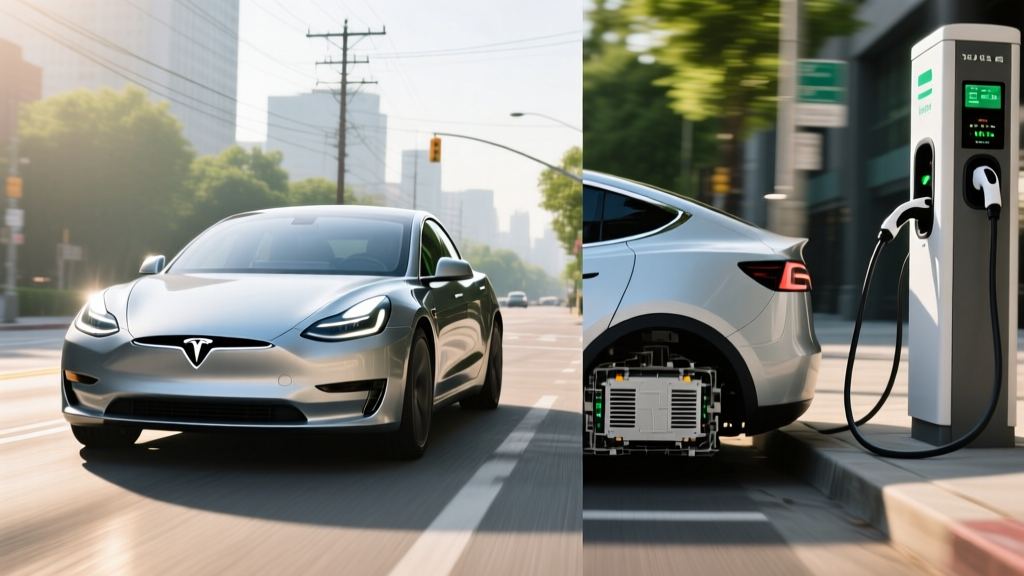
Both the Model 3 and Model Y come with the NACS (North American Charging Standard) connector natively, giving them the widest fast-charging access of any EV on the road. Tesla's Supercharger network exceeds 6,500 U.S. stations and 30,000+ stalls as of early 2026, with V4 cabinets delivering up to 350 kW at newer locations.
| Charging Level | Power (kW) | Miles Added/Hour | Notes |
|---|---|---|---|
| Level 1 (120V outlet) | 1.4–1.9 kW | 3–5 mi/hr | Emergency/trickle only |
| Level 2 (240V home) | 7.7–11.5 kW | 25–44 mi/hr | Full overnight charge in 7–10 hrs |
| DC Fast (Supercharger) | Up to 250 kW | ~1,000+ mi/hr (peak) | 10–80% in ~27 min; tapers above 80% |
Home charging reality: Most Tesla leaseholders install a Level 2 wall connector ($400–$500 for the unit) on a 60A circuit. A licensed electrician typically charges $800–$2,500 for installation depending on panel proximity and local permit requirements. If your home has a 200A panel with spare capacity, expect the lower end; a panel upgrade to 200A can push total costs to $3,500–$5,000. Always get a quote from a licensed electrician before committing.
Preconditioning matters. When you navigate to a Supercharger using the Tesla's built-in navigation, the car automatically warms the battery to optimal temperature. Arriving without preconditioning — especially in cold weather — can reduce peak charge rates by 30–50% and add 10–15 minutes to your stop. Always use the nav-to-charger workflow.
Driver Assistance: Autopilot and FSD (Supervised)
SAE Automation Level: Level 2. Tesla Autopilot and Full Self-Driving (Supervised) are driver-assistance systems, not self-driving. The driver must remain attentive, keep hands on the wheel, and be prepared to take over at any moment. These systems do not meet SAE Level 3 or above. Only fully driverless services like Waymo operate at Level 4.
Standard Autopilot includes Traffic-Aware Cruise Control and Autosteer (lane centering). FSD (Supervised) — a $8,000 option or $99/month subscription — adds automatic lane changes, Navigate on Autopilot, Autopark, and traffic light/stop sign recognition. As of early 2026, FSD (Supervised) is impressive on highways but still requires active supervision in construction zones, unmapped areas, and complex urban intersections.
Lease consideration: FSD does not transfer at lease end, and its $8,000 upfront cost is largely lost at return. If you want FSD during your lease, the $99/month subscription is the more rational choice — cancel anytime before return.
Battery and Vehicle Warranty
| Component | Model 3 RWD | Model 3 LR / Perf & Model Y |
|---|---|---|
| Basic Vehicle | 4 years / 50,000 mi | 4 years / 50,000 mi |
| Battery & Drive Unit | 8 years / 100,000 mi | 8 years / 120,000 mi |
| Battery Retention Threshold | 70% capacity | 70% capacity |
For a 36-month / 30,000–36,000-mile lease, you'll remain well within all warranty coverage. Battery degradation over 3 years is typically 5–8% based on aggregated fleet data — meaning a Model 3 Long Range that started at 341 EPA miles will likely show ~315–325 miles at 100% charge after three years of mixed use. Tesla's warranty covers replacement if the battery drops below 70% of original capacity within the warranty window.
Tesla Lease vs. Buy vs. Competitors: The Decision Framework
Lease vs. Buy Math
A 36-month lease on a Model 3 Long Range at ~$479/month with $5,000 down totals roughly $22,244 over three years (including down payment). If you bought the same car at $48,130, applied the $7,500 point-of-sale credit (assuming eligibility), and financed at 6.5% APR for 60 months, your total payments over 3 years would be ~$29,400 — but you'd own an asset worth approximately $28,000–$31,000 at that point (depending on EV depreciation trends).
Lease if: you want lower monthly payments, plan to upgrade every 3 years, don't want to worry about resale value or battery degradation, and drive under 12,000 miles/year.
Buy if: you qualify for the $7,500 §30D credit (which is more reliably captured as a buyer), drive over 12,000 miles/year, want to keep the car 5+ years, or want the flexibility to sell anytime without lease-termination penalties.
Versus Key Competitors
Choose Tesla Model 3 lease if: Supercharger network access is your top priority, you want the strongest software/OTA experience, and you value the lowest per-mile electricity cost in the segment (25 kWh/100mi on the RWD is best-in-class efficiency).
Choose Hyundai Ioniq 6 lease if: you want a more traditional dealership experience with transparent lease terms, 800V ultra-fast charging (10–80% in ~18 min at 350 kW chargers), and a more distinctive design. EPA range up to 361 miles on the SE Long Range.
Choose BMW i4 lease if: you prioritize interior build quality, a quieter ride, and a more conventional luxury-sedan feel. Lease deals through BMW Financial Services often include the $7,500 credit as a cap cost reduction, and monthly payments on the eDrive40 can dip into the $400s with competitive incentives.
Choose Tesla Model Y lease if: you need SUV cargo space, want Supercharger access for family road trips, and value the available (if tight) third-row option that no competitor matches at this price point.
Biggest Pros and Cons of Leasing a Tesla
Pros
- Lowest monthly payment path into a Tesla without a large down payment
- Full warranty coverage for the entire lease term — no out-of-pocket repair risk
- Supercharger network remains the most reliable and extensive DCFC system in the U.S.
- OTA updates continuously add features — your car improves over the lease
- Sales tax savings in most states (tax on monthly payment only, not full vehicle price)
- Best-in-class efficiency (Model 3 RWD at 25 kWh/100mi) means lowest charging cost per mile
Cons
- Tax credit pass-through is uncertain — the lessor keeps the §30D credit unless they explicitly pass it to you
- No equity at lease end — you've paid for 3 years of depreciation with nothing to show for it
- Mileage penalties at $0.20–$0.25/mile for overage can add up fast on road trips
- Wear-and-tear standards can be strict; Tesla's lease-return inspection has drawn complaints for aggressive damage charges
- No early termination flexibility — ending a Tesla lease early is expensive and logistically difficult
- FSD investment is lost at lease return if purchased upfront instead of subscribed
- Limited lease availability — not offered in all states or zip codes
Who Should Lease a Tesla — And Who Shouldn't
The Tesla lease is ideal for:
- Commuters driving 20–50 miles/day with home Level 2 charging — the Model 3 RWD at ~$349–$399/month is one of the cheapest ways to drive a premium EV, and the 272-mile EPA range is more than adequate with overnight charging.
- Tech-forward buyers who want Tesla's infotainment, app integration, and OTA improvements without a long ownership commitment.
- Families who road-trip 2–4 times/year and want Supercharger reliability — the Model Y Long Range at 320 EPA miles and ~27-minute DC fast charging makes highway travel practical.
- Buyers uncertain about long-term EV commitment who want to test the lifestyle for 3 years before deciding on a longer purchase.
Skip the lease and buy (or look elsewhere) if:
- You drive more than 15,000 miles/year — mileage overage penalties will erase any monthly savings.
- You qualify for the full $7,500 §30D credit and can capture it more reliably as a buyer via point-of-sale transfer.
- You want to keep the car 5+ years — total cost of ownership favors buying when you spread the purchase over a longer horizon.
- You live in an apartment without charging access and rely solely on public charging — the cost and convenience gap versus a hybrid narrows significantly.
Frequently Asked Questions
Does a Tesla lease qualify for the $7,500 federal EV tax credit?
Not directly to you. Under IRS §30D, the tax credit goes to the vehicle's legal purchaser — which in a lease is the leasing company (the bank), not the lessee. Some lessors pass the credit through as a cap cost reduction, effectively lowering your monthly payment, but this is not guaranteed. Always ask the leasing company explicitly whether the $7,500 credit is factored into your quoted payment. If you buy instead and meet all eligibility criteria (MSRP under $55,000 for sedans / $80,000 for SUVs, income under $150K single / $300K joint, and battery sourcing requirements), you can claim the credit or use the point-of-sale transfer. See current rules at IRS.gov.
What is the real-world range of a leased Tesla Model 3?
The 2026 Model 3 Long Range carries a 341-mile EPA estimate. In real-world mixed driving at moderate temperatures, expect 300–325 miles. Highway-only driving at 75+ mph reduces this to 260–290 miles. In sub-freezing winter conditions, plan for 210–250 miles. The RWD model with its smaller LFP battery delivers roughly 210–240 real-world miles in temperate weather and 170–200 in winter.
How fast does a Tesla charge at home and on the road?
At home on a Level 2 (240V) wall connector, the Model 3 and Model Y charge at up to 11.5 kW, adding 37–44 miles of range per hour. A full overnight charge (8–10 hours) replenishes the battery completely. On Tesla Superchargers, peak rates reach 250 kW, with a 10–80% session taking approximately 27 minutes. Charging slows significantly above 80% to protect battery health — expect 80–100% to take an additional 15–20 minutes.
Can I buy my Tesla at the end of the lease?
Yes. Unlike some automakers that eliminated lease buyout options, Tesla's leasing partners generally include a purchase option at lease end. The buyout price is based on the residual value set at lease signing (typically 55–58% of MSRP for a 36-month term). Compare this residual to the current market value of equivalent used Teslas before deciding — if the residual is below market, buying out the lease can be a good deal.
Is leasing a Tesla worth it versus a Hyundai Ioniq 5 or BMW i4?
It depends on your priorities. Tesla's lease payments are competitive, and the Supercharger network advantage is real for road trippers. However, Hyundai's Ioniq 5 and Ioniq 6 often feature more transparent lease terms through Hyundai Motor Finance, 800V ultra-fast charging, and dealer-applied incentives that can push monthly payments into the low $300s. BMW's i4 lease deals frequently bundle the federal credit into the cap cost, making effective payments attractive for luxury-segment buyers. If Supercharger access and Tesla's software ecosystem matter most, the Tesla lease wins. If transparent pricing and dealer support matter more, test the competitors.
What happens if I exceed my Tesla lease mileage limit?
Tesla lease agreements typically charge $0.20–$0.25 per mile over the agreed limit at lease return. On a 10,000 mi/yr lease (30,000 total), driving 40,000 miles would result in a $2,000–$2,500 overage bill. If you anticipate high mileage, select a 12,000 or 15,000 mi/yr lease upfront — the monthly increase ($20–$80/month) is almost always cheaper than paying overage penalties.
Does Tesla offer leases in every state?
No. Tesla's lease program availability varies by state and zip code, partly due to state-specific licensing and financing regulations. Some states with direct-sales restrictions may not offer Tesla leases at all. Check Tesla's configurator with your zip code to confirm availability in your area.