The $200-a-Month Tesla Lease: Myth, Math, or Momentary Deal?
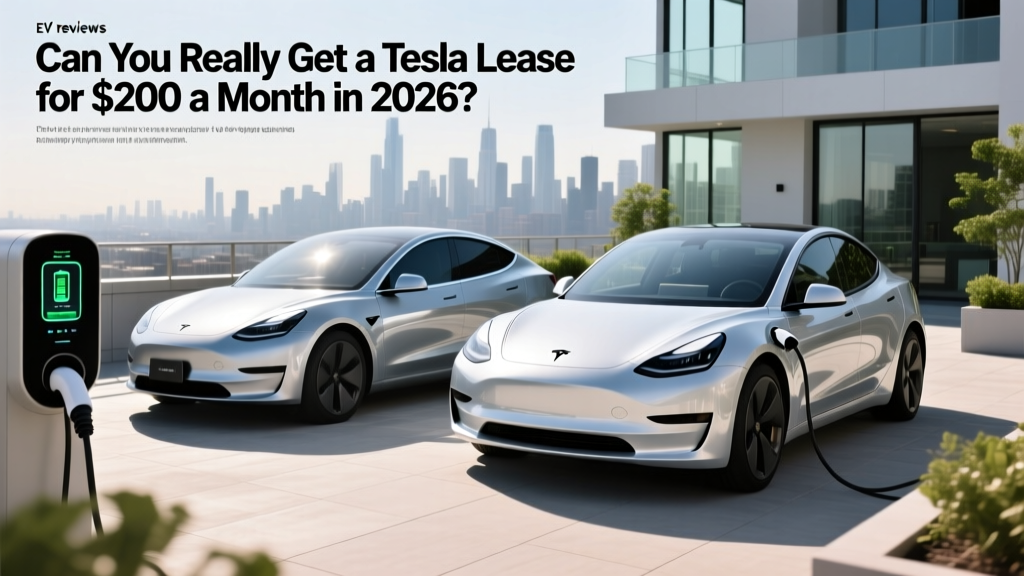
Search forums and social media long enough, and you'll find claims of drivers locking in a Tesla lease for $200 a month. In 2026, that figure is theoretically possible—but only under a narrow set of conditions that most shoppers won't meet without strategic planning. This article dissects the real math behind Tesla leasing, using the 2026 Model 3 as our baseline, so you can determine whether a sub-$200 payment is achievable or whether buying (or choosing a competitor) makes more financial sense.
Tesla doesn't offer traditional leases through third-party banks the way legacy automakers do. Instead, Tesla Financial Services handles leasing directly in select states, and availability changes frequently. Understanding the total cost picture—monthly payment, mileage limits, charging costs, and what happens at lease-end—is essential before you sign.
2026 Tesla Model 3: Core Specs at a Glance
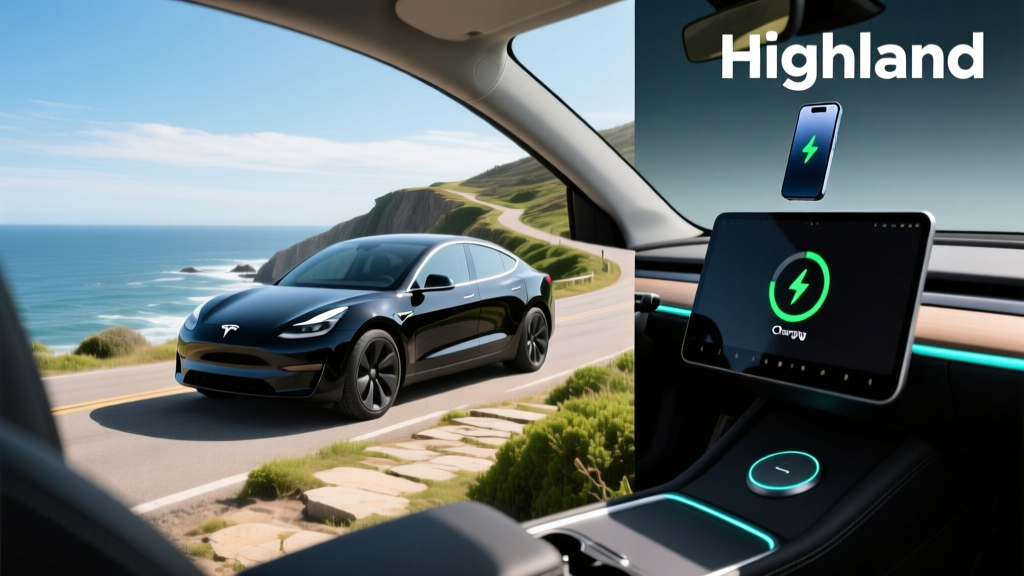
Before we run the lease numbers, here's what you're actually driving. The 2026 Model 3 continues with the refreshed "Highland" platform introduced in late 2023, with minor software and efficiency updates for the current model year.
| Spec | RWD (Base) | Long Range AWD | Performance |
|---|---|---|---|
| EPA Range | 363 mi | 363 mi | 341 mi |
| Battery (usable) | ~60 kWh (LFP) | ~75 kWh (NMC) | ~75 kWh (NMC) |
| Drivetrain | Rear-Wheel Drive | Dual-Motor AWD | Dual-Motor AWD |
| Horsepower | 271 hp | 346 hp | 510 hp |
| 0–60 mph | 5.8 sec | 4.2 sec | 2.9 sec |
| MPGe (combined) | 132 MPGe | 130 MPGe | 124 MPGe |
| Efficiency | 25 kWh/100 mi | 26 kWh/100 mi | 27 kWh/100 mi |
| Base MSRP | $38,990 | $45,990 | $53,990 |
| Battery Warranty | 8 yr / 100,000 mi | 8 yr / 120,000 mi | 8 yr / 120,000 mi |
Sources: EPA fueleconomy.gov, Tesla Model 3 specs.
Real-World Range: What the EPA Sticker Doesn't Tell You
EPA Estimated: 363 miles
Real-World Highway (70 mph, moderate temps): ~290–310 miles
Real-World Cold Weather (below 32°F, mixed driving): ~220–260 miles
City/Commuter Driving (regenerative braking active): ~330–360 miles
The Model 3's efficiency is among the best in its class. At 25 kWh/100 mi for the RWD variant, it extracts more miles per kilowatt-hour than the Hyundai Ioniq 6 (27 kWh/100 mi) and BMW i4 (28 kWh/100 mi). However, the EPA test cycle includes substantial low-speed and regenerative-braking segments that inflate the sticker number versus sustained highway driving.
On a 300-mile road trip at 75 mph in 45°F weather, expect to arrive with roughly 15–20% state of charge remaining—enough buffer for most drivers, but plan a Supercharger stop if temperatures drop below freezing or you're running the cabin heater aggressively. The LFP battery in the RWD model also loses slightly more capacity in extreme cold compared to the NMC packs in Long Range trims, though Tesla's heat pump (standard on all 2026 Model 3 trims) mitigates this substantially.
Charging Speed: DC Fast, Level 2, and Level 1 Breakdown
| Charging Level | Max Rate | Speed (Approx.) | 10–80% Time |
|---|---|---|---|
| DC Fast Charge (Supercharger V3/V4) | 170 kW peak (RWD) / 250 kW peak (LR/Perf) | ~175 mi added in 15 min (LR) | ~25 min (RWD) / ~22 min (LR) |
| Level 2 (240V, 48A Wall Connector) | 11.5 kW | ~44 mi/hr | ~7 hours (full charge) |
| Level 2 (240V, 32A mobile connector) | 7.7 kW | ~30 mi/hr | ~10 hours (full charge) |
| Level 1 (120V, 12A standard outlet) | 1.4 kW | ~5 mi/hr | N/A (overnight adds ~50 mi) |
A critical detail for RWD lessees: the LFP battery charges at a lower peak DC rate (170 kW vs. 250 kW for NMC). On a V3 Supercharger, the RWD model's charge curve tapers earlier—sustaining ~150 kW through 40% SoC before dropping to ~90 kW by 60%. The Long Range NMC pack holds closer to 250 kW through 30% SoC, making it meaningfully faster on road trips.
For daily home charging, a Tesla Wall Connector on a 60-amp circuit delivers 11.5 kW, replenishing a full day's commute (40 miles) in under an hour. Installation typically costs $800–$2,000 depending on panel proximity and local permitting. Most lessees should budget for this upfront, as Level 1 alone won't keep up with a 12,000-mile/year lease allowance.
Can You Actually Lease a Tesla for $200/Month? The Math
Tesla's lease program operates differently from traditional automaker leases. Tesla Financial Services sets money factors (the lease equivalent of an interest rate), residuals, and terms with less promotional flexibility than, say, Hyundai Capital's aggressive EV lease subsidies. Here's a realistic breakdown for the 2026 Model 3 RWD:
| Component | Scenario A: Standard | Scenario B: Max Incentive |
|---|---|---|
| Base MSRP | $38,990 | $38,990 |
| Federal Tax Credit (§30D applied to lease) | Not directly (see below) | Passed through by lessor: –$7,500 |
| Adjusted Capitalized Cost | $38,990 | $31,490 |
| Residual Value (56%) | $21,834 | $21,834 |
| Depreciation (36 months) | $17,156 | $9,656 |
| Monthly Depreciation | $476 | $268 |
| Money Factor (est. 0.0028 = ~6.7% APR) | ~$170/mo rent charge | ~$147/mo rent charge |
| Estimated Monthly Payment (pre-tax) | ~$646 | ~$415 |
The $200/month path requires stacking multiple aggressive assumptions:
- A Tesla promotional money factor buy-down (rare, but Tesla has offered $0.99–1.99% APR lease events in prior years)
- The $7,500 federal credit passed through as a cap-cost reduction (Tesla Financial has applied this inconsistently—sometimes as a lease credit, sometimes not)
- A substantial down payment ($5,000–$8,000) amortized into the deal
- A state with no sales tax on leases, or tax applied only to the monthly payment
- 10,000 miles/year allowance (going to 12K or 15K adds $20–$50/month)
In practice, most lessees in 2026 report Model 3 monthly payments between $399 and $549 with modest down payments ($2,500–$4,000). A true $200/month payment would require a ~$10,000 cap-cost reduction upfront, effectively pre-paying the lease.
Federal Tax Credit Eligibility for Tesla Leases
When you lease an EV, the lessor (Tesla Financial Services) technically claims the $7,500 federal credit under the commercial clean vehicle provision, not the lessee. Whether Tesla passes that savings to you as a cap-cost reduction is at their discretion. As of early 2026, Tesla has applied the credit to qualifying leases, but this is not guaranteed and has changed without notice in prior years.
If you buy instead of lease: The §30D credit is claimed on your tax return, subject to:
• MSRP cap: $55,000 for sedans (Model 3 qualifies)
• Income cap: $150,000 single / $300,000 married filing jointly (AGI)
• Battery sourcing: critical minerals and component requirements phase in annually
• Point-of-sale transfer: available at participating dealers for immediate price reduction
For the 2026 Model 3 RWD, the LFP battery is manufactured by CATL (China). Under current IRS rules, vehicles with battery components from a "foreign entity of concern" (FEOC) are disqualified from the full §30D credit. As of 2026, this means the purchase pathway may only qualify for a partial credit ($3,750) or none at all, depending on the latest sourcing determinations. The lease pathway sidesteps this restriction because the commercial credit under §45W has different sourcing rules—making leasing paradoxically the better path to the full $7,500 benefit. Confirm current eligibility at IRS.gov before committing.
Interior, Cargo, and Daily Usability
The refreshed Model 3 interior is a study in minimalism. The 15.4-inch center touchscreen controls everything—climate, mirrors, glovebox, and the optional FSD (Supervised) visualization. There is no instrument cluster; speed and navigation appear on the left third of the main screen.
| Measurement | Value |
|---|---|
| Front Legroom | 42.7 in |
| Rear Legroom | 35.2 in |
| Cargo (rear trunk) | 21.0 cu ft |
| Frunk (front trunk) | 3.1 cu ft |
| Total Cargo | 24.1 cu ft |
| Seating | 5 passengers |
Rear legroom is tighter than the Hyundai Ioniq 6 (37.2 in) and noticeably snug for adults over 6 feet on longer trips. The trunk is deep and practical for groceries and luggage, but the frunk is small—useful for charging cables, not much else. The cabin is significantly quieter than pre-refresh Model 3s thanks to acoustic glass and improved insulation.
Standout tech: Tesla's navigation with real-time Supercharger routing, over-the-air updates that add features post-purchase, Sentry Mode dashcam recording, and the Tesla app's remote preconditioning and location tracking. The optional FSD (Supervised) package ($8,000 purchase or $99/month subscription) provides automated lane changes, traffic-light recognition, and city-street navigation—but remains SAE Level 2, requiring constant driver supervision.
Notable drawbacks: No Apple CarPlay or Android Auto. Turn signals are on steering-wheel buttons (not a stalk), which some drivers find unintuitive. Rear visibility is compromised by the sloping roofline—rely on the backup camera. No physical buttons for climate or volume.
Model 3 vs. Key Competitors: Is It Worth the Lease?
| Vehicle | EPA Range | Base MSRP | 10–80% DC | Max DC kW |
|---|---|---|---|---|
| Tesla Model 3 RWD | 363 mi | $38,990 | ~25 min | 170 kW |
| Hyundai Ioniq 6 SE | 361 mi | $37,500 | ~18 min | 235 kW |
| BMW i4 eDrive40 | 307 mi | $52,200 | ~31 min | 200 kW |
| Polestar 2 Std Range | 276 mi | $42,900 | ~28 min | 150 kW |
- Best-in-class efficiency (25 kWh/100 mi)
- Access to Tesla Supercharger network (17,000+ US stalls)
- Over-the-air updates continuously add features
- Strong resale/lease residual values
- Excellent app integration and remote features
- Standard heat pump for cold-climate efficiency
- Stalkless turn signals take adjustment
- No Apple CarPlay/Android Auto
- LFP battery charges slower on DC (RWD only)
- Rear seat legroom tighter than competitors
- Lease terms less flexible than legacy automakers
- FSD subscription adds $99/mo on top of lease
The Ioniq 6 charges faster and costs less upfront, but lacks Supercharger access (though Hyundai's NACS adoption is expanding). The BMW i4 offers a premium interior and more rear space but costs $13,000 more. For pure commuting value and charging infrastructure, the Model 3 remains the default recommendation—provided you accept Tesla's interface philosophy.
Who Should Lease the Model 3 (and Who Shouldn't)?
Ideal for: Solo commuters or couples driving 8,000–12,000 miles/year who have home Level 2 charging access, want minimal maintenance, and value the Supercharger network for occasional road trips. The 10,000-mile/year lease aligns well with a 25-mile-each-way commute plus weekend errands.
Not ideal for: Families needing rear-seat space for car seats or teenagers (the Model Y is substantially roomier). Drivers who regularly exceed 12,000 miles/year—lease overage charges are $0.20–$0.25/mile, which erodes savings quickly. Anyone planning to keep the vehicle 5+ years (buying with the tax credit and no mileage cap is more economical long-term).
Frequently Asked Questions
Can I negotiate a Tesla lease like a traditional car lease?
No. Tesla uses fixed pricing and fixed money factors. There is no dealer negotiation, no dealer markup to fight, and no competing bank offers to leverage. What you see on Tesla's website is what you get—though promotional lease events (typically end-of-quarter) can temporarily lower the money factor.
What happens at the end of a Tesla lease?
Unlike most automaker leases, Tesla has historically not offered a purchase option at lease-end (this has varied by state and contract year). You typically return the vehicle and walk away or lease a new one. Confirm the current purchase-option policy in your state before signing, as Tesla has reversed this policy multiple times.
Does the $200/month Tesla lease actually exist in 2026?
Only with a very large down payment ($8,000–$10,000+) applied as a cap-cost reduction, combined with the $7,500 lease credit pass-through and a promotional money factor. With a standard $2,500–$3,500 due at signing, expect $400–$550/month. Advertisements showing $199/month typically bury a $9,999 down payment in the fine print.
Is leasing a Tesla better than buying in 2026?
Leasing is advantageous if you want to access the full $7,500 federal credit (sidestepping FEOC battery-sourcing restrictions on purchases), plan to drive 10,000 miles/year or fewer, and prefer swapping vehicles every 3 years. Buying is better if you drive high mileage, want to keep the car 5+ years, or want to modify the vehicle (wraps, aftermarket wheels—lease contracts restrict these).
What does home charging installation cost for a Model 3?
A Tesla Wall Connector ($475 for the unit) installed on an existing 60-amp circuit typically runs $800–$1,500 for labor and permitting. If your electrical panel needs an upgrade to 200 amps (common in older homes), add $2,000–$4,000. Always get a quote from a licensed electrician before committing to a lease—you need reliable Level 2 charging to make the math work.
How does the Supercharger network compare to other charging networks?
Tesla's Supercharger network has the highest reliability rate in the industry (~97% uptime per J.D. Power EV Experience Index). With NACS adoption, Ford, GM, Rivian, and Hyundai/Kia vehicles now access Superchargers via adapter—reducing Tesla's exclusivity advantage but increasing stall congestion at popular corridors during peak travel.