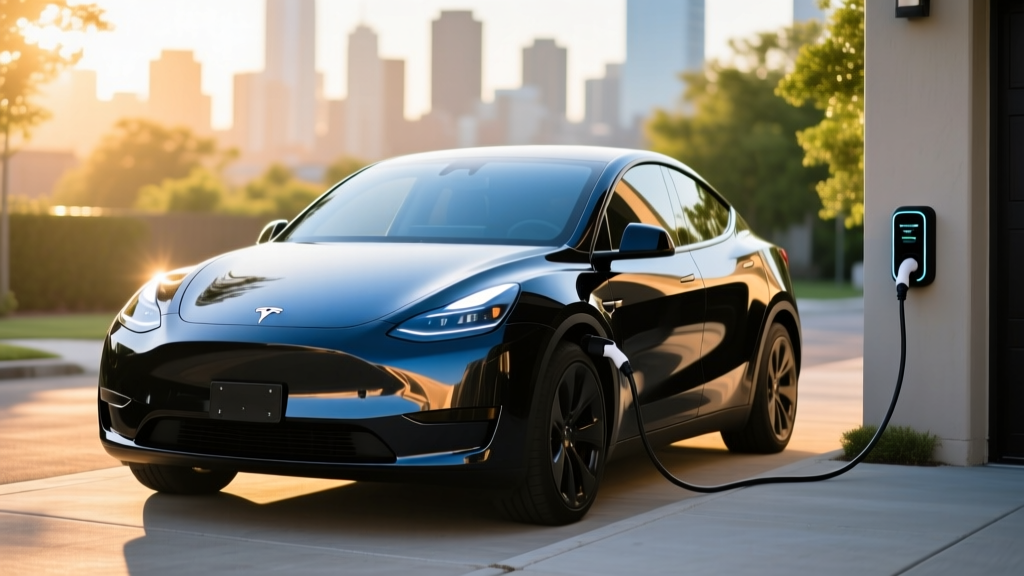
The headline is everywhere: Tesla layoffs have once again made news in 2026, with workforce reductions touching manufacturing, service, and Supercharger teams across multiple quarters. For prospective buyers, the question isn't just about corporate restructuring — it's about what those cuts mean for build quality, service wait times, charging reliability, and long-term ownership. In this review, we put the 2026 Tesla Model Y Long Range AWD through a data-driven evaluation to answer the real question: is it still worth your money?
Quick Verdict: The Model Y After Tesla Layoffs
The 2026 Model Y Long Range AWD remains one of the most efficient and well-packaged compact electric SUVs on the market. Its 320-mile EPA range, 250 kW peak DC fast charging, and access to the 20,000+ station Supercharger network are difficult to match at its price point. However, the 2025–2026 Tesla layoffs have thinned service-center staffing in several metro areas, and some buyers report longer wait times for warranty repairs. The vehicle itself hasn't gotten worse — but the ownership ecosystem around it has become leaner, which matters if you need hands-on support.
Range, Efficiency, and Real-World Expectations
The 2026 Model Y Long Range AWD carries a 78.1 kWh usable battery (NMC chemistry, nickel-manganese-cobalt) and achieves an EPA-estimated 320 miles of range. Efficiency is rated at 122 MPGe combined, or roughly 28 kWh per 100 miles — best-in-class for the segment.
Real-World Highway (70–80 mph, mild weather): ~265–280 miles
Cold Weather (below 30°F, highway): ~220–245 miles
City / Suburban Mixed: ~290–310 miles
Why the gap? EV range drops at sustained highway speeds due to aerodynamic drag, and lithium-ion cells lose usable capacity in cold temperatures because the battery management system reserves energy for thermal regulation. The Model Y's heat pump helps, but physics still applies.
| Spec | Value |
|---|---|
| EPA Range | 320 miles |
| Battery (Usable) | 78.1 kWh, NMC |
| Efficiency | 122 MPGe / 28 kWh/100mi |
| Peak DC Fast Charge | 250 kW |
| 10–80% DC Charge Time | ~27 minutes |
| Level 2 Home Charging | 11.5 kW (~44 mi/hr) |
| 0–60 mph | 4.8 seconds |
| Horsepower | 384 hp (dual motor) |
| Drivetrain | AWD (dual motor) |
| Cargo Volume (rear seats up) | 30.2 cu ft |
| Cargo Volume (rear seats folded) | 72.1 cu ft |
| Rear Legroom | 41.6 inches |
| Battery Warranty | 8 years / 120,000 miles |
| Basic Warranty | 4 years / 50,000 miles |
Charging Speed: DC Fast, Level 2, and the Supercharger Advantage
Charging remains one of the Model Y's strongest selling points — and also one area where Tesla layoffs have raised eyebrows. In early 2025, Tesla cut portions of its Supercharger expansion team, slowing the pace of new station openings. Existing network reliability, however, remains strong, with most stations reporting 95%+ uptime according to third-party trackers.
| Charge Level | Power (kW) | Miles Added per Hour | Typical Use Case |
|---|---|---|---|
| Level 1 (120V household) | ~1.4 kW | ~4–5 mi/hr | Emergency / overnight trickle |
| Level 2 (240V, 48A Wall Connector) | 11.5 kW | ~44 mi/hr | Home daily charging |
| DC Fast (V3 Supercharger) | 250 kW peak | ~180 mi in 15 min | Road trips |
| DC Fast (CCS adapter, EA/others) | Up to 250 kW | Varies by station | Non-Tesla networks |
The Model Y's charge curve peaks at 250 kW up to roughly 40% state of charge, then tapers progressively. Expect 10–80% in approximately 27 minutes at a V3 Supercharger. Above 80%, charging slows dramatically to protect the NMC cells — a full 80–100% top-off can add another 25+ minutes. For daily driving, Tesla recommends charging to 80% to preserve long-term battery health.
At home, the Tesla Wall Connector on a 60-amp circuit delivers 11.5 kW, adding about 44 miles of range per hour. A full overnight charge from 20% to 80% takes roughly 4.5 hours. Installation costs for a dedicated 240V/60A circuit typically run $800–$2,000 depending on panel proximity and local permitting — factor this into your purchase budget.
Performance and Driving Dynamics
The dual-motor AWD powertrain produces 384 horsepower and delivers a 4.8-second 0–60 mph time. That's quick enough to merge confidently and pass without hesitation, though it trails the Performance trim's 3.5-second sprint. The regenerative braking system is aggressive enough for one-pedal driving in most city conditions, and the heat pump ensures efficient cabin heating without the steep range penalty older EVs suffer in winter.
Ride quality has improved with the 2025 Juniper refresh — revised damping and acoustic glass reduce road noise noticeably. The trade-off: the Model Y still rides firmly compared to a Hyundai Ioniq 5 or Ford Mustang Mach-E, and rough pavement transmits more than you'd expect in a $48,000+ vehicle.
Pricing, Trims, and Federal Tax Credit Eligibility
The 2026 Model Y lineup has simplified. Here's where pricing stands before incentives:
| Trim | Base MSRP | Est. After §30D Credit* | EPA Range |
|---|---|---|---|
| Long Range AWD | $47,990 | $40,490 | 320 mi |
| Performance AWD | $52,490 | $44,990 | 295 mi |
*Federal tax credit estimates assume buyer eligibility under IRS §30D rules. Actual credit depends on multiple factors.
- MSRP Cap: SUVs/vans/pickups must be ≤$80,000 (Model Y qualifies)
- Buyer Income Cap: AGI ≤$150,000 (single) / ≤$300,000 (joint)
- Battery Sourcing: Critical minerals and battery components must meet phased-in domestic/free-trade sourcing thresholds — Tesla's LFP Standard Range models have faced sourcing challenges; the NMC Long Range has generally qualified but verify at purchase
- Point-of-Sale Transfer: Eligible buyers can apply the credit as a down-payment reduction at purchase rather than waiting for tax filing
Rules change frequently. Confirm current eligibility on IRS.gov and with your tax professional before committing.
Tech, Interior, and the Autopilot Reality Check
The 15.4-inch center touchscreen runs Tesla's latest software, which remains the most responsive and feature-rich infotainment system in any EV. Navigation, media, climate, and vehicle controls are all screen-based — no physical buttons for climate or mirrors, which some buyers love and others find distracting.
Standard Autopilot includes adaptive cruise control and lane centering. Full Self-Driving (Supervised), a $8,000 option, adds automatic lane changes, traffic light recognition, and city-street navigation. Let's be precise about what this is:
Both Autopilot and FSD (Supervised) require continuous driver attention. You must keep your hands near the wheel and eyes on the road. These are driver-assistance systems, not self-driving systems. Tesla monitors engagement via a cabin camera, and the system will issue escalating warnings — eventually disengaging — if you look away. Only Level 4 services like Waymo operate without a human driver in defined geofenced areas.
Standout tech includes Sentry Mode (360° parked surveillance), Dog Mode (climate-maintained cabin for pets), over-the-air updates that add features post-purchase, and the Tesla app's remote preconditioning and location tracking. The 2026 Juniper interior adds ventilated front seats, ambient lighting, and a rear touchscreen for passengers — meaningful upgrades over the pre-2025 cabin.
Drawbacks: no Apple CarPlay or Android Auto (Tesla uses its own interface exclusively), no heads-up display, and the minimalist interior means adjusting mirrors or windshield wipers requires tapping through menus. These are deliberate design choices, but they frustrate buyers accustomed to traditional controls.
How Do Tesla Layoffs Affect Buyers in 2026?
The 2025–2026 Tesla layoffs have touched several areas relevant to ownership:
- Service Centers: Reduced staffing at some locations has led to longer appointment wait times in major metros (Los Angeles, New York, Dallas). Mobile service ranger teams have also been trimmed in some regions.
- Supercharger Expansion: The team responsible for new station buildout was cut significantly in 2025. While existing stations remain reliable, the pace of new corridor coverage has slowed — a concern for buyers in rural or underserved areas.
- Customer Support: Phone and chat support wait times have increased according to owner forums. Tesla has pushed buyers toward in-app support tickets.
- Manufacturing Quality: Fremont and Austin build quality has remained consistent by most accounts, and Tesla's panel-gap reputation has improved since the 2023 production changes. Layoffs haven't visibly affected assembly-line output quality.
The vehicle itself is unaffected — Tesla doesn't cut corners on the production line. But if you live in an area with limited service infrastructure, the leaner support network is a real consideration. Buyers in Tesla-dense markets (California, Texas, Florida) will notice less impact than those in the Mountain West or rural Southeast.
Model Y vs. the Competition: Is It Still the Default Choice?
| Spec | Tesla Model Y LR AWD | Hyundai Ioniq 5 Limited AWD | Ford Mustang Mach-E Premium AWD |
|---|---|---|---|
| EPA Range | 320 mi | 290 mi | 305 mi |
| Battery | 78.1 kWh NMC | 84.0 kWh NMC | 88.0 kWh NMC |
| Peak DC Charge | 250 kW | 240 kW | 150 kW |
| 10–80% Time | ~27 min | ~18 min | ~38 min |
| 0–60 mph | 4.8 sec | 5.1 sec | 5.2 sec |
| Cargo (seats up) | 30.2 cu ft | 27.2 cu ft | 29.7 cu ft |
| Base MSRP (AWD) | $47,990 | $52,600 | $48,995 |
| NACS Native | Yes | Yes (2025+) | Yes (2025+) |
The Model Y wins on range, cargo space, and Supercharger network access. The Ioniq 5 charges faster (its 800V architecture sustains higher kW longer, yielding a quicker 10–80% time despite a slightly lower peak) and offers a more comfortable ride and physical climate controls. The Mach-E provides the most traditional driving feel and dealer-service familiarity for buyers uncomfortable with Tesla's direct-to-consumer model.
- You want maximum range per dollar in the segment
- Supercharger network reliability matters for road trips
- You prefer OTA updates and app-based vehicle management
- You live near a well-staffed Tesla service center
- Faster sustained DC charging is a priority (10–80% in ~18 min)
- You want physical buttons and a more compliant ride
- Dealer-based service and traditional support matter to you
- You want EV ownership with a familiar dealership service experience
- You prefer a more traditional SUV driving position and feel
Pros and Cons
- Best-in-class 320-mile EPA range and 122 MPGe efficiency
- Supercharger network — 20,000+ stations, highest reliability in the industry
- Spacious 30.2 cu ft cargo area with practical hatchback design
- Over-the-air updates continuously add features
- Strong resale value relative to most EV competitors
- Heat pump standard for efficient cold-weather operation
- Tesla layoffs have stretched service-center capacity in some regions
- No Apple CarPlay / Android Auto — Tesla-only interface
- Minimalist interior frustrates buyers who want physical controls
- FSD (Supervised) is expensive ($8,000) and still Level 2 only
- Firm ride quality transmits road imperfections
- Supercharger expansion pace has slowed post-layoffs
Frequently Asked Questions
What is the real-world range of the 2026 Tesla Model Y?
The EPA rates it at 320 miles. In real-world highway driving at 70–80 mph in moderate temperatures, expect 265–280 miles. In cold weather below 30°F, plan for 220–245 miles. City driving with regenerative braking recovers more energy, yielding closer to 290–310 miles.
How fast does the Model Y charge at home and on the road?
On a Level 2 home charger (11.5 kW Tesla Wall Connector), it adds about 44 miles per hour — a full 20–80% charge takes roughly 4.5 hours. On a V3 Supercharger (250 kW peak), 10–80% takes approximately 27 minutes, though the charge curve tapers significantly above 80%.
How much does the Model Y cost after federal tax credits?
The Long Range AWD starts at $47,990. If you qualify for the full $7,500 federal credit under §30D, your effective price drops to approximately $40,490. Eligibility depends on your AGI (≤$150K single / ≤$300K joint), the vehicle's MSRP (under the $80K SUV cap), and current battery-sourcing requirements. Verify on IRS.gov before purchasing.
Do Tesla layoffs affect Supercharger reliability?
Existing Supercharger stations maintain ~95%+ uptime and remain the most reliable public charging network in the U.S. However, layoffs to the expansion team have slowed the pace of new station openings. If you live in an area already well-served by Superchargers, the impact is minimal. If you're in an underserved corridor, growth may take longer than originally planned.
Is the Model Y worth buying vs. the Hyundai Ioniq 5 or Ford Mach-E?
It depends on your priorities. The Model Y wins on range (320 vs. 290–305 mi), cargo space, and charging network. The Ioniq 5 charges faster from 10–80% (~18 min vs. ~27 min) and offers a more comfortable ride with physical controls. The Mach-E provides a traditional dealership service experience. Test-drive all three before deciding.
Does the 2026 Model Y qualify for the federal EV tax credit?
The Long Range AWD has generally qualified for the full $7,500 credit, but eligibility depends on current-year battery-sourcing rules, which the IRS updates periodically. Tesla's NMC cells have maintained compliance more consistently than its LFP Standard Range variants. Always confirm at the point of sale and consult a tax professional.
What is the battery warranty on the Model Y?
Tesla covers the battery and drive unit for 8 years or 120,000 miles, whichever comes first, with a minimum 70% capacity retention guarantee. If degradation falls below that threshold within the warranty period, Tesla will repair or replace the battery to bring it above 70%.
Sources: EPA Fueleconomy.gov — 2026 Tesla Model Y, Tesla Model Y Specifications, IRS §30D Clean Vehicle Credits