Tesla's dominance in the electric vehicle market has never been without controversy, but a growing wave of litigation is now testing the automaker's resilience in an unprecedented way. As of early 2026, Tesla faces potential $14.5 billion liability from over 20 lawsuits spanning claims of Autopilot and Full Self-Driving (FSD) safety failures, misleading range advertising, defective battery packs, and discriminatory service practices. For current owners and prospective buyers, these legal battles raise practical questions: Are Tesla vehicles still a sound purchase? How do the allegations affect real-world ownership? And what does this mean for the broader EV market?
This analysis breaks down the major lawsuit categories, examines how they intersect with Tesla's current vehicle lineup—particularly the 2026 Model Y and Model 3—and provides the data-driven ownership context that buyers need to make informed decisions.
The Legal Landscape: A Breakdown of Tesla's Major Lawsuits
The $14.5 billion figure represents the aggregate potential exposure across more than two dozen active and recently settled cases. These lawsuits cluster into four primary categories, each with distinct implications for EV buyers:
1. Autopilot and FSD Safety Litigation
The most financially significant cluster involves claims that Tesla's Autopilot and FSD (Supervised) driver-assistance systems are dangerously defective. The National Highway Traffic Safety Administration (NHTSA) has investigated over 100 incidents involving Tesla vehicles operating under Autopilot, resulting in numerous injuries and fatalities. Multiple wrongful-death lawsuits allege that Tesla marketed these Level 2 systems in ways that encouraged driver over-reliance while failing to implement adequate driver-monitoring safeguards.
A key legal turning point: in late 2025, a California jury found Tesla partially liable in an Autopilot-related crash, awarding $243 million in damages. While Tesla has appealed, the precedent has emboldened additional plaintiffs.
2. Misleading Range Advertising
A class-action lawsuit filed in 2024 and expanded in 2025 alleges that Tesla systematically inflated EPA range estimates through software manipulation—specifically, by programming vehicles to display optimistic range projections on the dashboard that did not reflect real-world driving conditions. A Reuters investigation revealed that Tesla allegedly created a "diversion team" to cancel service appointments from customers complaining about range discrepancies.
This lawsuit seeks damages for all US buyers of Tesla vehicles sold between 2016 and 2025, with potential exposure in the billions.
3. Battery Defect and Degradation Claims
Multiple lawsuits allege premature battery degradation beyond what Tesla's warranty covers, with some owners reporting 20-30% capacity loss within the first four years. These cases argue that Tesla's 8-year/100,000-mile battery warranty (which guarantees 70% capacity retention) masks an inherent chemistry or thermal-management flaw in certain battery packs.
4. Service and Warranty Discrimination
A Department of Justice lawsuit filed in 2025 alleges that Tesla systematically denied warranty service and vehicle purchases to customers who had previously filed complaints or participated in arbitration. Additional lawsuits allege discriminatory practices in service access and parts availability.
2026 Tesla Model Y: Core Specs and Ownership Data
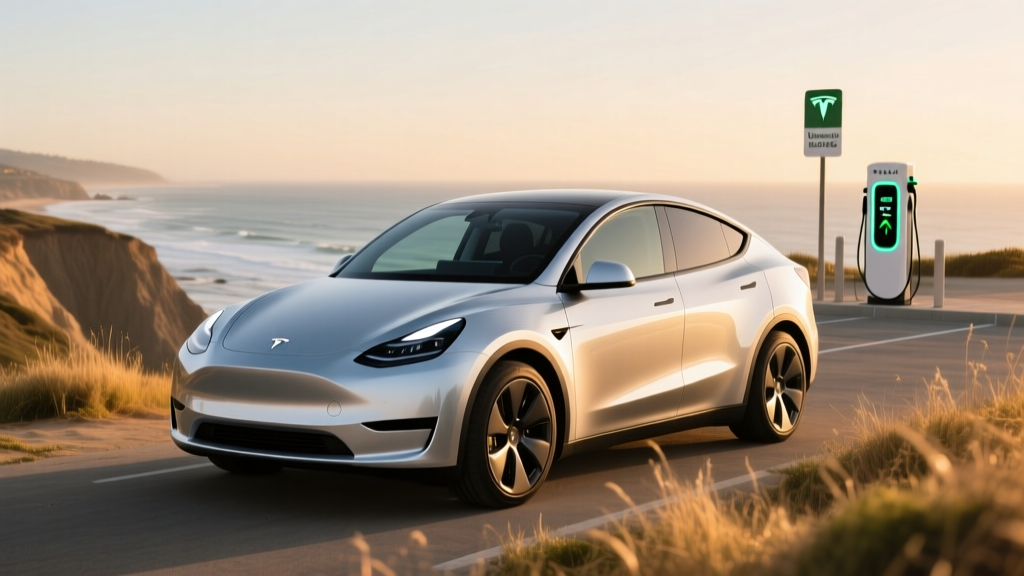
Despite the legal headwinds, the 2026 Tesla Model Y remains one of the best-selling EVs globally. Here are the exact specifications buyers need, with real-world context layered over the sticker figures:
| Spec | Value |
|---|---|
| EPA Range | 320 miles |
| Battery Capacity | ~75 kWh usable (NMC lithium-ion) |
| Max DC Fast Charge | 250 kW peak (V3 Supercharger) |
| 10-80% DC Charge Time | ~27 minutes (with preconditioning) |
| Level 2 Home Charging | 11.5 kW / ~37 miles per hour |
| 0-60 mph | 4.8 seconds |
| Horsepower | 384 hp (dual-motor AWD) |
| Efficiency | 122 MPGe combined / 27 kWh/100 mi |
| Cargo Volume | 30.2 cu ft (rear seats up) / 72.1 cu ft (folded) |
| Rear Legroom | 40.5 inches |
| Base MSRP | $44,990 |
| Battery/Powertrain Warranty | 8 years / 120,000 miles (70% retention) |
Real-World Range: What the Lawsuits Highlight
EPA Sticker: 320 miles
Real-World Highway (70-75 mph, mild weather): ~265-280 miles
Real-World City/Mixed (moderate speeds, regen active): ~290-310 miles
Cold Weather (below 32°F, heater on): ~210-240 miles (30-35% reduction)
The range-advertising lawsuits specifically target the gap between displayed range and achievable range. Tesla's dashboard range estimator has historically shown figures closer to the EPA sticker, but real-world driving—especially sustained highway speeds or cold temperatures—consistently delivers less. Always plan road trips using the lower real-world figures.
Tesla's heat pump (standard on all 2026 models) mitigates some cold-weather loss compared to resistive heating, but the physics of lithium-ion batteries at low temperatures mean range reduction is unavoidable. The Model Y's NMC chemistry offers higher energy density than LFP alternatives but is somewhat more sensitive to temperature extremes.
Charging Performance: DC Fast Charging and Home Setup
| Charge Level | Power | Miles Added Per Hour | Notes |
|---|---|---|---|
| Level 1 (120V household) | ~1.4 kW | 3-5 mi/hr | Emergency only; overnight adds ~40 miles |
| Level 2 (240V home) | 11.5 kW | ~37 mi/hr | Full charge in ~7 hours; requires 60A circuit |
| DC Fast (V3 Supercharger) | 250 kW peak | ~1,000 mi/hr (peak) | 10-80% in ~27 min; tapers sharply above 80% |
| DC Fast (V4 Supercharger) | 250 kW peak | ~1,000 mi/hr (peak) | Newer cabinet design; same peak for Model Y |
Charging-curve reality: The Model Y peaks at 250 kW only briefly between roughly 10-30% state of charge. From 30-60%, it sustains around 150-180 kW. Above 80%, the rate drops to under 50 kW to protect battery health. This is why Tesla (and all experienced EV owners) recommend charging to 80% at DC fast chargers—the last 20% can take as long as the first 70%.
Preconditioning matters: Always use the Tesla navigation system to route to a Supercharger. This triggers battery preconditioning, warming the pack to optimal temperature for faster charging. Without preconditioning, especially in cold weather, peak charge rates may be cut by 40-50%.
Connector: All 2026 Tesla vehicles use the NACS (North American Charging Standard) connector natively. Tesla's Supercharger network now also serves non-Tesla EVs with NACS ports or CCS adapters, which has increased station congestion at popular locations—a growing owner complaint.
Pricing, Trims, and Federal Tax Credit Eligibility
| Trim | MSRP | Est. After §30D Credit |
|---|---|---|
| Long Range RWD | $42,990 | $35,490 (if eligible) |
| Long Range AWD | $44,990 | $37,490 (if eligible) |
| Performance AWD | $49,990 | $42,490 (if eligible) |
Federal §30D tax credit eligibility is not guaranteed. The $7,500 credit requires meeting all of the following criteria, per current IRS rules:
- Buyer income caps: AGI ≤ $150,000 (single) / $225,000 (head of household) / $300,000 (joint)
- MSRP cap: Vehicle MSRP must not exceed $55,000 (SUVs/vans) — all Model Y trims qualify
- Battery sourcing: A percentage of critical minerals and battery components must be sourced from the US or FTA partners — this requirement tightens annually and Tesla's eligibility has shifted between model years
- Point-of-sale transfer: As of 2024+, the credit can be transferred to the dealer at purchase for an immediate price reduction, but you must still meet income requirements when filing taxes
- Final assembly: Vehicle must be assembled in North America — Model Y (Fremont/Austin) qualifies
Consult a tax professional before relying on the credit. Eligibility depends on your specific tax situation, the vehicle's build date, and the battery-sourcing rules in effect at the time of purchase. Tesla's website shows credit-adjusted prices, but these assume full eligibility.
Driver-Assist Technology: What the Lawsuits Challenge
Tesla's Autopilot (standard) and FSD Supervised ($8,000 option or $99/month subscription) are among the most capable—and most controversial—Level 2 driver-assist systems on the market.
These systems do not make the vehicle autonomous. They require continuous driver supervision. Known limitations include:
- Difficulty detecting stationary emergency vehicles on highways
- Lane-keeping errors in construction zones with shifted lane markings
- Phantom braking (sudden deceleration without obstacles) — subject of a separate NHTSA investigation
- Reduced performance in heavy rain, fog, or direct sun glare on cameras
- No LiDAR redundancy — vision-only system (unlike Waymo's multi-sensor approach)
Autopilot (included): Adaptive cruise control, lane-centering, automatic emergency braking, blind-spot monitoring. Competent for highway driving but requires active steering-wheel torque to confirm driver engagement.
FSD Supervised ($8,000 / $99/mo): Adds automatic lane changes, navigation-based on/off-ramp handling, traffic-light and stop-sign recognition, and limited city-street steering. In 2026 testing, FSD handles many routine scenarios smoothly but still requires intervention roughly every 50-150 miles depending on road complexity. It remains a Level 2 system regardless of the "Full Self-Driving" name.
Who Should Buy the 2026 Model Y (and Who Shouldn't)
- Tech-forward commuters who value over-the-air updates and Tesla's Supercharger network
- Two-row SUV families needing 30+ cu ft cargo with a compact footprint
- Road-trip enthusiasts in regions with dense Supercharger coverage
- Solar/home-battery owners who want integrated energy ecosystem (Powerwall, solar, vehicle)
- You prioritize dealer service networks — Tesla's service-center wait times remain a top complaint and are central to the discrimination lawsuits
- You need third-row seating — the Model Y's optional third row is extremely tight; consider the Kia EV9 or Rivian R1S
- You want physical buttons — everything routes through the 15.4" touchscreen, including climate and mirror adjustments
- Litigation risk concerns you — a large liability judgment could affect Tesla's financial position and residual values
Competitive Position: Model Y vs. Key Rivals
| Attribute | Tesla Model Y LR AWD | Hyundai Ioniq 5 AWD | Ford Mustang Mach-E ER AWD |
|---|---|---|---|
| EPA Range | 320 mi | 290 mi | 290 mi |
| Peak DC Charge | 250 kW | 240 kW (350 kW capable) | 150 kW |
| 10-80% Time | ~27 min | ~18 min (on 350 kW) | ~41 min |
| 0-60 mph | 4.8 sec | 4.5 sec | 4.8 sec |
| Cargo (rear up) | 30.2 cu ft | 27.2 cu ft | 29.7 cu ft |
| Base MSRP | $44,990 | $49,500 | $48,995 |
| Dealer Service | Limited (direct) | Extensive | Extensive |
The Model Y still leads in range and cargo space, and Tesla's Supercharger network remains the most reliable DC fast-charging ecosystem in North America—though competitors are gaining access, narrowing this advantage. The Ioniq 5 charges faster on compatible 350 kW stations, and both Hyundai and Ford offer traditional dealer service networks that some buyers prefer, especially given Tesla's service-related legal exposure.
Frequently Asked Questions
What is the real-world range of the 2026 Tesla Model Y?
The EPA rates the Model Y Long Range AWD at 320 miles. In real-world highway driving at 70-75 mph in moderate temperatures, expect 265-280 miles. In cold weather (below 32°F), range can drop to 210-240 miles. The range-advertising lawsuits specifically challenge the gap between Tesla's displayed range and achievable range—plan trips conservatively.
How fast does the Model Y charge at home and on the road?
On a Level 2 home charger (240V, 60A circuit), the Model Y charges at 11.5 kW, adding approximately 37 miles of range per hour—a full charge takes about 7 hours. On a V3 Supercharger, it peaks at 250 kW and charges from 10-80% in approximately 27 minutes, though charge speed tapers significantly above 80%.
Does the 2026 Model Y qualify for the federal EV tax credit?
The Model Y qualifies on paper (MSRP under $55,000 SUV cap, assembled in North America). However, the full $7,500 §30D credit depends on your income (AGI caps apply), the battery-sourcing rules in effect at time of purchase, and your individual tax situation. The credit can be transferred at point of sale for an immediate discount. Always verify current eligibility at fueleconomy.gov and consult a tax professional.
Is the Tesla Model Y still worth buying given the lawsuits?
The vehicle itself remains highly capable—class-leading range, strong Supercharger access, and continuous OTA updates. However, the lawsuits raise legitimate concerns about service reliability, Autopilot safety expectations, and potential long-term impacts on resale value if a major liability judgment occurs. Buyers who prioritize the Supercharger network and Tesla's tech ecosystem may find the vehicle compelling; those who want robust dealer service and less legal uncertainty might prefer the Hyundai Ioniq 5, Kia EV6, or Ford Mach-E.
What are the biggest pros and cons of the 2026 Model Y?
Pros: 320-mile EPA range, 250 kW Supercharger access with preconditioning, spacious 30.2 cu ft cargo area, strong OTA update cadence, integrated home-energy ecosystem, competitive pricing at $44,990 base.
Cons: No physical buttons (all touchscreen), service-center wait times remain long, Autopilot/FSD litigation creates uncertainty, NMC battery more temperature-sensitive than LFP, Supercharger congestion increasing as non-Tesla EVs gain access, vision-only driver-assist lacks LiDAR redundancy.
How do the lawsuits affect Tesla's financial stability and resale values?
A $14.5 billion aggregate liability is significant but not existential for a company with Tesla's revenue scale. However, individual large jury verdicts could pressure insurance premiums, influence consumer confidence, and affect residual values. Used Tesla prices have already softened since 2023; additional adverse legal outcomes could accelerate depreciation. Buyers planning to own for 5+ years should factor this risk into their total-cost-of-ownership calculations.
Sources: NHTSA.gov, fueleconomy.gov (EPA), IRS §30D Clean Vehicle Credits, Tesla official specifications.