If you've searched for Tesla Las Vegas E Sahara, you're likely researching a visit to one of Tesla's most prominent Las Vegas Boulevard-adjacent galleries — or you're comparing which Tesla model makes the most sense for Nevada's extreme desert heat. The E Sahara Avenue location serves as a Tesla Gallery and Delivery Center, meaning you can explore the lineup, schedule test drives, and take delivery, even though final orders are placed online.
This guide cuts through the marketing to give you the exact specs, real-world range expectations in Mojave Desert conditions, charging infrastructure realities across Southern Nevada, and 2026 federal tax credit rules you need before walking through those doors.
2026 Tesla Lineup at a Glance: What's on the Floor
As of the 2026 model year, the E Sahara gallery typically showcases Tesla's core consumer lineup: the refreshed Model Y (including the Long Range and Performance variants), the Model 3 (Highland refresh), and the flagship Model S. The Cybertruck is also available for order and occasional display, though inventory and display rotation vary by location.
Below is a side-by-side spec table for the models most buyers cross-shop at this gallery.
| Spec | Model Y Long Range AWD | Model 3 Long Range AWD | Model S Long Range |
|---|---|---|---|
| EPA Range | 320 mi | 341 mi | 402 mi |
| Battery (usable, est.) | ~75 kWh (NMC) | ~75 kWh (NMC) | ~95 kWh (NMC) |
| Peak DC Fast Charge | 250 kW | 250 kW | 250 kW |
| 10–80% DCFC Time | ~25 min | ~25 min | ~30 min |
| Level 2 Home Charge | 11.5 kW (~44 mi/hr) | 11.5 kW (~44 mi/hr) | 11.5 kW (~44 mi/hr) |
| 0–60 mph | 4.8 sec | 4.2 sec | 3.1 sec |
| Horsepower | 384 hp | 384 hp | 670 hp |
| Drivetrain | Dual-Motor AWD | Dual-Motor AWD | Dual-Motor AWD |
| MPGe (combined) | 117 MPGe | 132 MPGe | 120 MPGe |
| Base MSRP | $48,990 | $47,740 | $79,990 |
Sources: fueleconomy.gov, Tesla.com. Specs reflect 2026 model year estimates and are subject to change.
Real-World Range in Las Vegas Desert Conditions
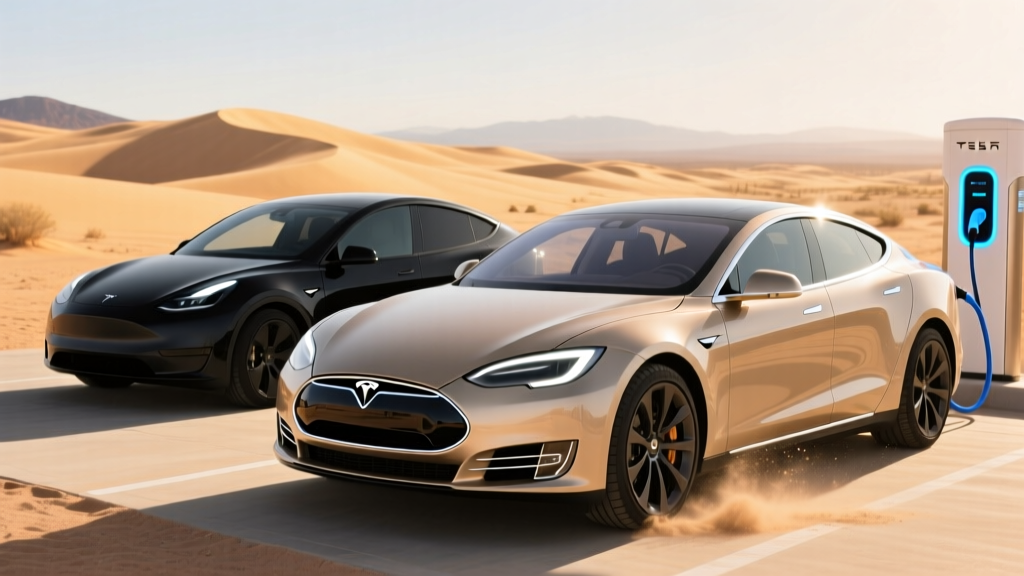
EPA range figures assume moderate temperatures and mixed driving. In Las Vegas — where summer ambient temperatures routinely exceed 110°F (43°C) — expect the following adjustments:
- Model Y LR: EPA 320 mi → Real-world ~265–285 mi in summer highway driving (80+ mph on I-15)
- Model 3 LR: EPA 341 mi → Real-world ~280–305 mi under similar conditions
- Model S LR: EPA 402 mi → Real-world ~330–360 mi
High cabin AC load, battery thermal management draw, and high-speed aerodynamic drag all conspire against range in extreme heat. Conversely, Las Vegas winters are mild enough that cold-weather range loss (typically 20–30% in sub-freezing climates) is minimal here.
Tesla's thermal management system is among the best in the industry — the heat pump and liquid-cooled battery pack actively manage temperatures, which is critical in the Mojave. However, preconditioning your car while plugged in (via the Tesla app) before driving in peak summer heat will preserve range by cooling the battery on grid power rather than battery power.
Charging in Southern Nevada: Superchargers, Home, and Destination
Las Vegas is one of the better-equipped EV cities in the Southwest, thanks in part to the I-15 corridor's heavy traffic between LA and Vegas. Tesla Superchargers are plentiful — key stations include the Las Vegas Boulevard corridor, Summerlin, Henderson, and the Primm border stop.
| Charging Level | Power (kW) | Miles Added per Hour | Typical Use Case |
|---|---|---|---|
| Level 1 (120V outlet) | ~1.4 kW | ~3–5 mi/hr | Emergency / overnight trickle |
| Level 2 (240V home) | 11.5 kW | ~44 mi/hr | Daily home charging |
| DC Fast (V3 Supercharger) | Up to 250 kW | ~750+ mi/hr (peak) | Road trips, quick top-ups |
Charging curve reality: Tesla's 250 kW peak rate on V3 Superchargers is not sustained across the entire session. The vehicle charges fastest between 10–50% State of Charge (SoC), then progressively tapers. A 10–80% session takes roughly 25 minutes for the Model Y, but pushing from 80–100% can add another 20+ minutes. For road trips, plan stops around the 10–80% window to minimize time plugged in.
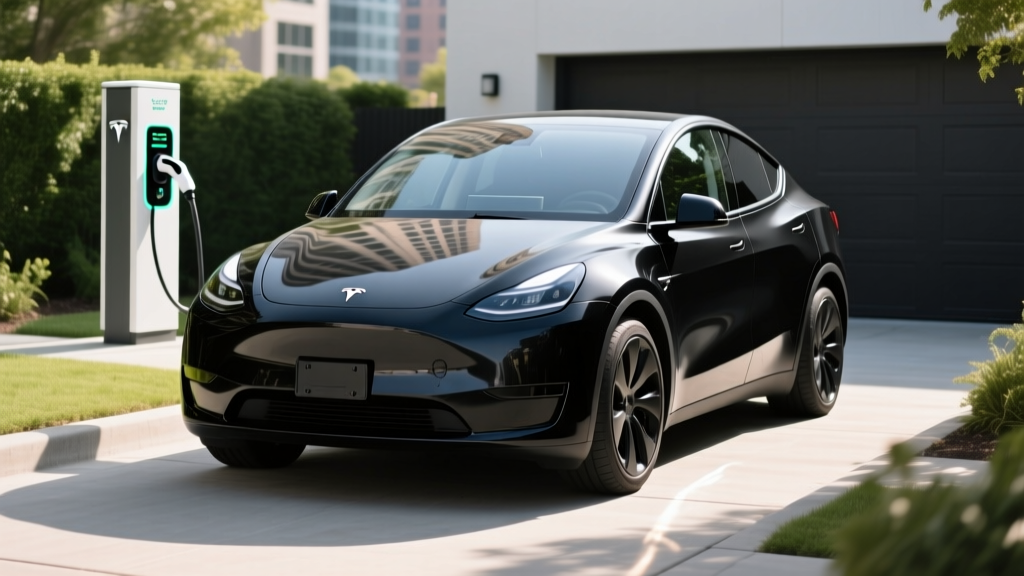
Home charging setup: Most Las Vegas homeowners install a Tesla Wall Connector on a 60-amp circuit, delivering the full 11.5 kW (48A continuous). This adds roughly 44 miles of range per hour — more than enough to fully replenish overnight. Expect a licensed electrician to charge $800–$2,000 for installation depending on panel proximity and whether your home's electrical panel needs an upgrade to 200 amps. Nevada's dry climate means outdoor-rated installations are straightforward.
Pricing, Trims, and the 2026 Federal EV Tax Credit
Tesla's pricing shifts periodically, but here are the 2026 model-year MSRPs and how the federal IRS §30D clean vehicle credit applies:
| Model / Trim | Base MSRP | §30D Credit (max) | Effective Price | Eligibility Notes |
|---|---|---|---|---|
| Model 3 LR AWD | $47,740 | Up to $7,500 | ~$40,240 | Under $55K MSRP cap; battery sourcing rules apply |
| Model Y LR AWD | $48,990 | Up to $7,500 | ~$41,490 | Under $80K SUV MSRP cap; sourcing dependent |
| Model Y Performance | $53,990 | Up to $7,500 | ~$46,490 | Under $80K SUV cap |
| Model S LR | $79,990 | $0 | $79,990 | Exceeds $55K sedan cap — NOT eligible |
The full $7,500 credit is NOT automatic. You must meet ALL of the following:
- Income cap: Modified AGI ≤ $150K (single) / $300K (joint) / $225K (head of household)
- MSRP cap: ≤ $55,000 for sedans (Model 3) / ≤ $80,000 for SUVs and trucks (Model Y)
- Battery sourcing: Critical minerals and battery components must meet phased-in domestic/free-trade requirements — percentages increase annually through 2029
- Point-of-sale transfer: As of 2024+, you can transfer the credit to the dealer at purchase, reducing your out-of-pocket cost immediately rather than waiting for tax filing
- Assembly: Vehicle must undergo final assembly in North America (all US-market Teslas qualify — Fremont and Austin plants)
Battery sourcing requirements tighten each year. Verify current eligibility on fueleconomy.gov before purchasing. Consult a tax professional for your specific situation.
Performance, Efficiency, and Daily Livability
The dual-motor AWD powertrain across all three models provides confident acceleration and all-weather traction — though in Las Vegas, AWD's primary benefit is traction on rare rainy days and mountain drives to Mt. Charleston or Lee Canyon rather than snow.
Model 3 Long Range delivers the best efficiency in the lineup at 132 MPGe combined, translating to roughly 25–27 kWh per 100 miles. Its lower curb weight and sleeker profile give it an edge on highway commutes along I-15 or the 215 Beltway.
Model Y Long Range sacrifices a few MPGe for significantly more cargo versatility: 76 cubic feet with the rear seats folded (compared to 23 cu ft in the Model 3's trunk). Rear legroom is generous at 41.6 inches, making it the clear family choice.
Model S Long Range is the performance flagship — 670 hp and a 3.1-second 0–60 time put it in supercar territory, with the range to boot. However, its sedan MSRP of $79,990 disqualifies it from the §30D credit entirely.
Interior and Tech Highlights
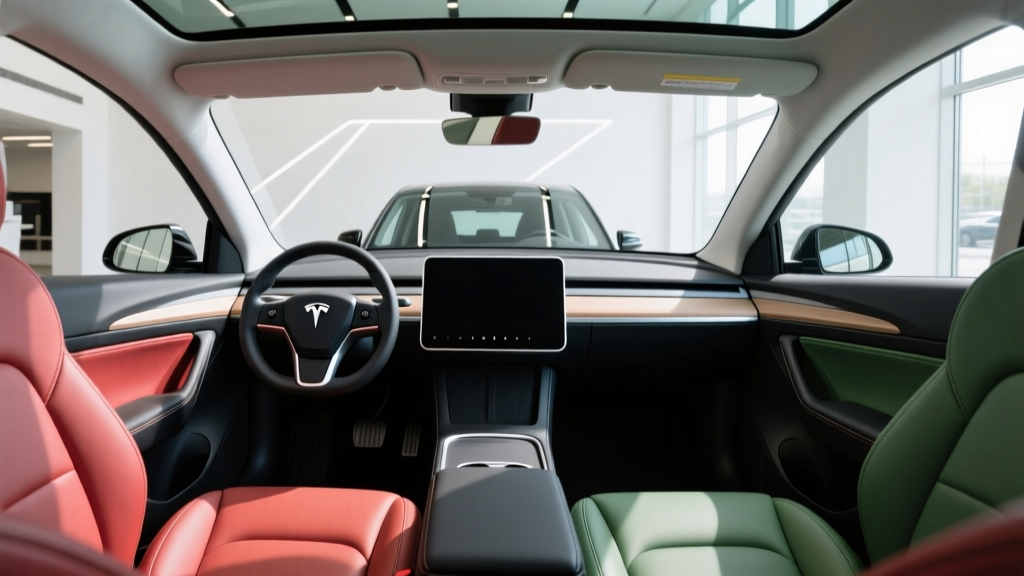
- 15.4-inch center touchscreen (Model 3/Y) or 17-inch (Model S) with Tesla's proprietary OS
- No Apple CarPlay or Android Auto — Tesla's native navigation, media, and phone integration are robust but closed-ecosystem
- Over-the-air (OTA) updates continuously add features
- Glass roof with UV/IR tinting — essential for Vegas sun, though some owners add aftermarket sunshades for summer
- HEPA air filtration (Bioweapon Defense Mode on Model S/Y) — genuinely useful during wildfire smoke events and dust storms
Autopilot and FSD: What Las Vegas Drivers Need to Know
Tesla's Autopilot and Full Self-Driving (Supervised) are SAE Level 2 driver-assistance systems. This means:
- The driver MUST remain engaged, hands on or near the wheel, eyes on the road
- The system handles steering, acceleration, and braking under driver supervision
- The driver is legally responsible for the vehicle at all times
- This is NOT autonomous/self-driving — only Level 4 services like Waymo operate without a human driver
For Las Vegas commuting, Autopilot (included standard) handles highway lane-keeping and adaptive cruise competently on I-15 and US-95. FSD (Supervised), available as an $8,000 add-on or $99/month subscription, adds automated lane changes, navigation-on-autopilot, and traffic light/stop sign recognition. In our experience, FSD performs well on well-marked Nevada highways but requires vigilant supervision on surface streets with construction zones or faded lane markings.
Warranty Coverage and Long-Term Ownership
| Coverage | Model 3 / Model Y | Model S |
|---|---|---|
| Basic Vehicle | 4 yr / 50,000 mi | 4 yr / 50,000 mi |
| Battery & Drive Unit | 8 yr / 120,000 mi (Model 3) 8 yr / 120,000 mi (Model Y) | 8 yr / 150,000 mi |
| Battery Retention Guarantee | ≥70% capacity during warranty period | ≥70% capacity during warranty period |
Tesla's battery warranty guarantees at least 70% capacity retention over the warranty period. In practice, Tesla's NMC battery packs have shown strong longevity — most owner-reported data suggests 10–12% degradation over the first 100,000 miles under normal use. The desert heat is a factor: sustained high SoC (above 90%) combined with extreme ambient temperatures accelerates degradation. Tesla recommends daily charging to 80–90% for NMC packs and only charging to 100% when needed for long trips.
Pros, Cons, and the Verdict
✅ Pros
- Best-in-class Supercharger network — the most reliable DC fast-charging ecosystem
- OTA updates keep the car improving post-purchase
- Strong efficiency (kWh/100mi) across the lineup
- Class-leading cargo space in Model Y for the segment
- Robust thermal management for extreme heat
- Point-of-sale tax credit transfer reduces upfront cost
❌ Cons
- No Apple CarPlay or Android Auto
- FSD (Supervised) remains Level 2 despite the "Full Self-Driving" name
- Model S priced out of federal tax credit eligibility
- Glass roof can feel hot in peak Vegas summer — aftermarket shade recommended
- Service center wait times in Las Vegas can stretch weeks for non-critical repairs
- Build quality variability — panel gaps remain a noted concern among owners
Who Should Buy from Tesla Las Vegas on E Sahara?
Choose the Model 3 Long Range if: You're a commuter prioritizing efficiency and value, want the lowest effective price after the §30D credit (~$40K), and don't need substantial cargo space.
Choose the Model Y Long Range if: You need family-friendly rear seat room and cargo versatility, plan road trips to national parks (Zion, Bryce, Grand Canyon are all within a single charge), and want SUV pricing that still qualifies for the federal credit.
Choose the Model S if: Performance and range are your top priorities, budget is flexible at ~$80K+, and you accept that the sedan MSRP cap eliminates tax credit eligibility.
The E Sahara gallery is well-positioned for test drives through central Las Vegas, giving you a feel for real-world ride quality on varied road surfaces. Schedule an appointment through Tesla's website before visiting — walk-in availability for test drives is limited.
Frequently Asked Questions
What is the real-world range of the Tesla Model Y in Las Vegas summer heat?
Expect approximately 265–285 miles from a full charge during summer highway driving at speeds above 75 mph with AC running. The EPA rates it at 320 miles, but extreme heat, high speeds, and cabin cooling reduce usable range by roughly 10–17%. City driving with regenerative braking recovers some efficiency.
How fast does a Tesla charge at a V3 Supercharger?
Tesla V3 Superchargers deliver up to 250 kW peak. The Model Y and Model 3 Long Range achieve a 10–80% charge in approximately 25 minutes. However, peak rate is only sustained between roughly 10–50% SoC — the charge curve tapers significantly above 60%. Plan road trip stops around the 10–80% window.
Does the Tesla Model Y qualify for the $7,500 federal tax credit in 2026?
Yes, the Model Y qualifies — its MSRP is under the $80,000 SUV cap, it's assembled in the US, and it meets the battery sourcing requirements as of the 2026 model year. However, you must also meet the income cap ($300K joint / $150K single). The credit can be transferred at point of sale to reduce your purchase price immediately. Verify current eligibility at fueleconomy.gov.
Is the Tesla Model Y worth buying vs. the Hyundai Ioniq 5 or Ford Mustang Mach-E?
The Model Y's decisive advantage is the Supercharger network — still the most reliable and extensive DC fast-charging ecosystem in the US. The Ioniq 5 offers faster 10–80% charging (18 minutes on 350 kW chargers) and a more comfortable ride, while the Mach-E provides a more traditional crossover feel. If road-trip charging reliability is your top priority, the Model Y wins. If ride comfort and CarPlay matter more, test-drive the Ioniq 5.
What home charging setup do I need in Las Vegas?
Install a Tesla Wall Connector on a dedicated 60-amp, 240V circuit for the full 11.5 kW charge rate (~44 miles of range per hour). Budget $800–$2,000 for professional installation by a licensed electrician, plus $400 for the Wall Connector itself. If your home has a 100-amp electrical panel, a panel upgrade to 200 amps may be required — adding $1,500–$3,000. Nevada's dry climate simplifies outdoor installations.
How long will the Tesla battery last in Nevada's extreme heat?
Tesla's NMC battery packs are warranted for 8 years / 120,000 miles with guaranteed 70%+ capacity retention. Real-world data from high-mileage owners suggests 85–90% capacity retention at 100,000 miles under normal conditions. To maximize longevity in extreme heat: charge to 80–90% daily (not 100%), precondition while plugged in, and avoid leaving the car at high SoC in direct sunlight for extended periods.