If your household runs on electrons, chances are your kids want in on the action. The search for a Tesla kids car has become one of the most popular queries among EV-owning families, and for good reason: a miniature, battery-powered Tesla replica lets young drivers mirror what Mom or Dad does every morning — plug in, buckle up, and go. But the ride-on toy market is flooded with options, and not every electric kids car labeled "Tesla" is worth your money.
This guide breaks down the current landscape of Tesla-branded and Tesla-inspired ride-on cars for children, covering battery specs, run time, speed limits, build quality, and pricing. We'll also explain how these toy batteries compare conceptually to real EV traction batteries, so you can talk specs with your future engineer.
What Exactly Is a Tesla Kids Car?
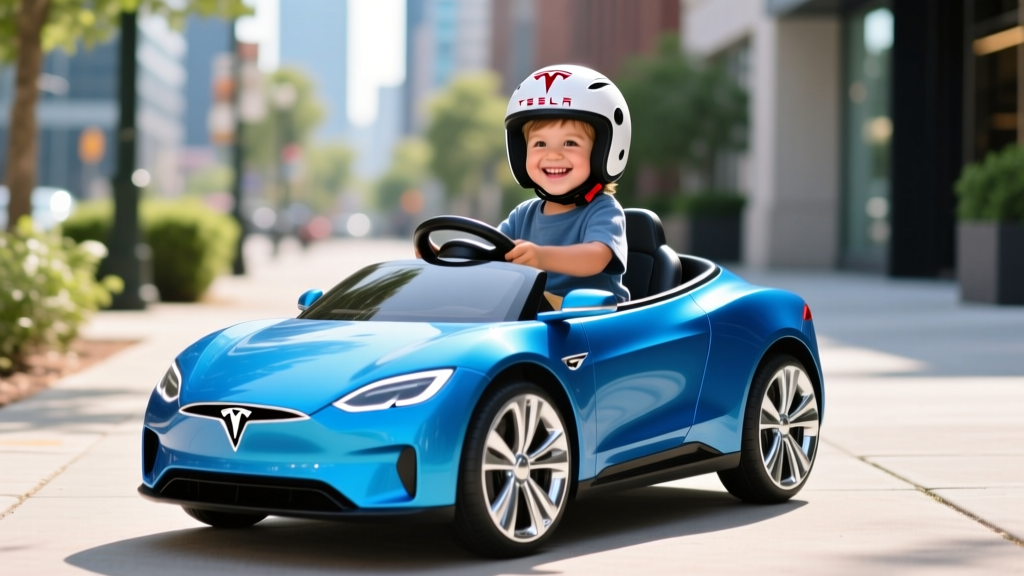
A Tesla kids car is a battery-powered ride-on toy designed to resemble a Tesla vehicle — most commonly the Model S, Model 3, Roadster, or Cybertruck. These are officially licensed or licensed-look products manufactured by toy companies, not by Tesla's automotive division. Tesla's own Tesla Shop has periodically sold a licensed kids' Model S ride-on, though availability rotates seasonally.
The category breaks down into three tiers:
- Licensed Tesla ride-ons: Produced under official license, featuring Tesla badging, accurate styling, and sometimes working details like a functional touchscreen replica or horn sounds.
- Tesla-inspired ride-ons: Look similar but lack official branding. Often cheaper, sometimes with looser design accuracy.
- Tesla die-cast and RC models: Not ride-on — these are remote-controlled or display-scale models for collectors and older kids.
For this review, we focus on the ride-on category — the vehicles kids sit in and drive themselves — because that's what most parents mean when they search for a Tesla kids car.
Battery, Run Time, and "Charging" Specs
Understanding kids car batteries requires a quick translation from real EV terminology. Where a full-size Tesla Model Y carries a ~75 kWh lithium-ion pack, a kids ride-on runs on a fraction of that — typically a 12V, 7Ah sealed lead-acid (SLA) battery storing roughly 0.084 kWh of energy. Some premium models now use 24V systems or lithium iron phosphate (LFP) cells for lighter weight and longer cycle life.
| Spec | 12V Standard | 24V Premium |
|---|---|---|
| Battery Voltage | 12V | 24V |
| Battery Capacity | 7–12 Ah (SLA) | 4.4–7 Ah (Li-ion/LFP) |
| Energy Stored | ~0.08–0.14 kWh | ~0.10–0.17 kWh |
| Top Speed | 2.5–3.5 mph | 4–6 mph |
| Run Time | 45–60 min | 60–90 min |
| Charge Time (wall outlet) | 8–12 hours | 4–6 hours |
| Max Rider Weight | 55–66 lbs | 88–130 lbs |
| Motor Power | 25–45W per motor | 100–200W per motor |
Real-world run time note: Manufacturer claims of "up to 90 minutes" assume flat, smooth pavement, a lighter rider, and moderate speed. On grass, gravel, or inclines — or with a heavier child — expect run times to drop 30–40%. Cold weather (below 50°F) also reduces SLA battery performance noticeably, just as it does with real EV packs.
Charging reality: Unlike real EVs that accept DC fast charging at 150–250 kW, kids cars charge exclusively from a standard 120V wall outlet using an included AC adapter. There's no "fast charge" option. A fully depleted 12V SLA battery needs 8–12 hours — essentially overnight. Premium lithium models cut that to 4–6 hours. If your child wants to drive daily, buying a second battery for swap-outs is the practical workaround.
Speed, Safety, and Age Appropriateness
Most Tesla kids cars fall into the 2.5–5 mph speed range, appropriate for ages 3–8. Here's how to match speed to your child:
- 12V models (2.5–3.5 mph): Best for ages 3–5. Slow enough for toddlers to learn steering without panic. Many include a parental remote control override.
- 24V models (4–6 mph): Suited for ages 5–8. Fast enough to be exciting on a driveway or sidewalk, but still well below bicycle speed.
- 36V+ models (8+ mph): Rare in Tesla styling but available in off-road kids UTV form. For ages 8+ with helmet and supervision.
Safety features to look for:
- Parental remote control: A 2.4 GHz remote lets you override steering and speed — essential for younger riders near streets or driveways.
- Seat belt or lap strap: Most include a basic 2-point harness. Not a substitute for supervision.
- Speed limiter / soft start: Prevents jerky acceleration that can tip smaller riders.
- Automatic brake: Foot-pedal release triggers motor braking. Premium models add a hand brake.
Top Tesla Kids Car Models Compared
| Feature | Licensed Tesla Model S (12V) | Cybertruck Ride-On (24V) | Tesla Roadster Replica (12V) |
|---|---|---|---|
| Official License | Yes (Tesla Shop) | Licensed variants available | Typically unlicensed |
| Voltage | 12V SLA | 24V Lithium | 12V SLA |
| Top Speed | 3 mph | 5 mph | 3 mph |
| Run Time | ~50 min | ~75 min | ~45 min |
| Age Range | 3–6 | 4–8 | 3–6 |
| Parental Remote | Yes | Yes | Varies |
| Working Headlights | LED | LED light bar | LED |
| MP3/Bluetooth Audio | Yes (aux + USB) | Yes (Bluetooth) | Varies |
| Typical Price | $250–$350 | $400–$600 | $200–$300 |
Licensed Tesla Model S Kids Car: The most widely available and recognizable option. Sold periodically through the Tesla Shop and third-party retailers. Features accurate Model S proportions, a faux touchscreen that plays sounds, and opening doors. Build quality is solid for the price point, though the plastic wheels struggle on grass.
Cybertruck Ride-On (24V): The angular Cybertruck design translates surprisingly well to kids car form, and 24V premium versions offer meaningful performance upgrades — faster speed, better hill-climbing, and longer run time thanks to lithium batteries. The stainless-steel-look body panels (actually painted plastic) are a hit with kids who've seen the real thing.
Tesla Roadster Replica: Less common and usually unlicensed, these low-slung sporty ride-ons prioritize looks over practicality. Lower ground clearance means driveway-only use. Fun for car-show-curious kids but harder to find replacement parts for.
Pricing and What You Actually Get
Unlike real EVs, there's no federal tax credit for a kids ride-on car — but the prices are a fraction of the real thing:
| Tier | Price Range | What's Included | Best For |
|---|---|---|---|
| Budget (unlicensed) | $150–$250 | 12V car, charger, basic remote | Occasional use, younger kids |
| Mid-range (licensed) | $250–$400 | 12V car, parental remote, audio, LED lights | Regular use, Tesla fans |
| Premium (24V lithium) | $400–$700 | 24V car, lithium battery, remote, premium build | Older kids, outdoor terrain |
Replacement battery cost: A 12V 7Ah SLA replacement runs $20–$35. A 24V lithium pack costs $60–$120. SLA batteries typically last 1–2 years with regular use; lithium packs last 3–5 years. Factor this into your total cost of ownership — yes, even for a toy.
Tesla Kids Car vs. Competitors: Power Wheels, Rollplay, and More
The Tesla-styled ride-on competes against several established brands:
- Fisher-Price Power Wheels: The market leader in licensed kids cars (Jeep, Ford, Barbie). Excellent build quality and parts availability, but no Tesla license. Models like the Power Wheels Jeep Wrangler offer comparable 12V performance at $250–$350.
- Rollplay (by KidsEmbrace): Offers licensed BMW, Audi, and Porsche ride-ons with similar 12V specs. Build quality matches Tesla-licensed options. Good alternative if your child prefers a different brand.
- Peg Perego: Italian-made ride-ons with slightly better motors and suspension. Premium pricing ($350–$500) but noticeably better on grass and gravel.
Choose a competitor (Power Wheels, Rollplay) if: Your child prefers trucks, Jeeps, or other brands; you want the widest parts/service network; you prioritize off-road capability over EV styling.
Pros and Cons at a Glance
Pros
- Recognizable Tesla styling delights EV families
- Licensed models include solid build quality
- Parental remote control adds safety for young riders
- Quiet electric motors — no noise complaints
- Bluetooth/MP3 audio on most mid-range+ models
- Teaches basic EV concepts (plugging in, battery management)
Cons
- 8–12 hour charge time is slow (SLA models)
- Run time drops significantly on grass or hills
- Plastic wheels offer poor traction on wet surfaces
- Licensed Tesla models go in and out of stock
- No real suspension — rough on uneven pavement
- SLA batteries degrade within 1–2 years and need replacement
Frequently Asked Questions
What is the real-world run time of a Tesla kids car?
A 12V Tesla kids car typically delivers 45–60 minutes on smooth, flat pavement with a lighter rider. On grass or inclines, expect 30–40 minutes. Cold weather further reduces SLA battery performance by 20–30%. A 24V lithium model extends this to 60–90 minutes under similar conditions.
How fast does a Tesla kids car charge?
Kids cars charge from a standard 120V wall outlet only — there is no fast-charging option. A 12V SLA battery requires 8–12 hours for a full charge. A 24V lithium battery charges in 4–6 hours. Think of it like Level 1 charging on a real EV: slow but sufficient for overnight replenishment.
Does a Tesla kids car qualify for any tax credit?
No. The IRS §30D Clean Vehicle Credit applies only to new, highway-capable four-wheeled vehicles with a gross vehicle weight under 14,000 lbs that meet battery-sourcing and MSRP requirements. Toy ride-ons do not qualify.
Is the Tesla kids car worth buying vs. Power Wheels?
If your child specifically wants a Tesla, the licensed Model S ride-on delivers accurate styling and decent quality at $250–$350. However, Fisher-Price Power Wheels models offer broader parts availability, proven long-term durability, and similar 12V performance. It comes down to whether Tesla branding matters to your child.
What age is a Tesla kids car appropriate for?
Most 12V Tesla kids cars are designed for ages 3–6 with a weight limit of 55–66 lbs. 24V premium models extend to ages 4–8 with limits up to 130 lbs. Always check the specific product's age and weight rating, and supervise younger riders at all times.
Can I upgrade the battery in a Tesla kids car?
Some owners upgrade from a 12V SLA to a 12V lithium battery for lighter weight and longer cycle life. Upgrading voltage (12V to 24V) requires replacing motors and electronics and is not recommended unless the manufacturer supports it. Always use the charger designed for your specific battery chemistry.