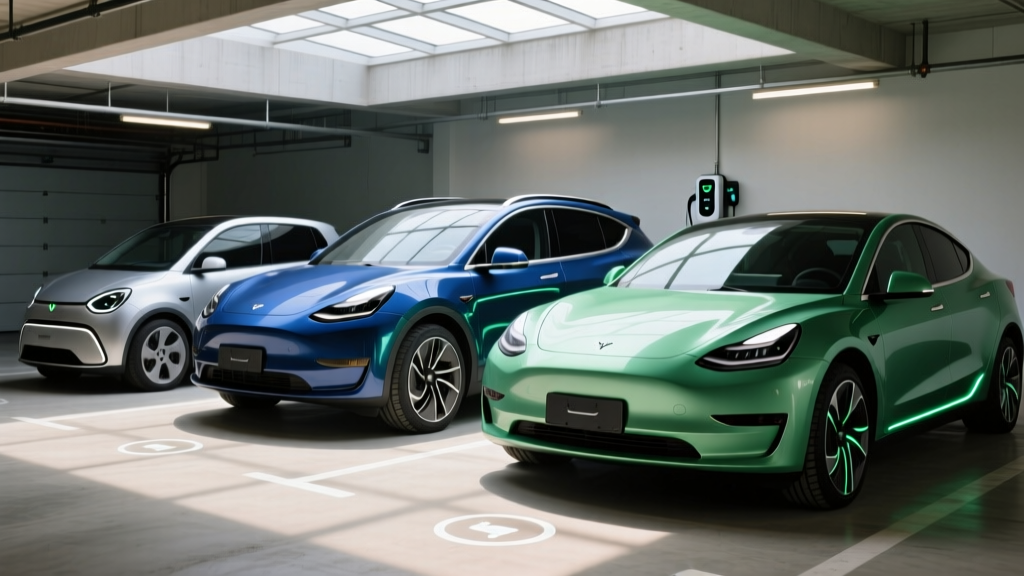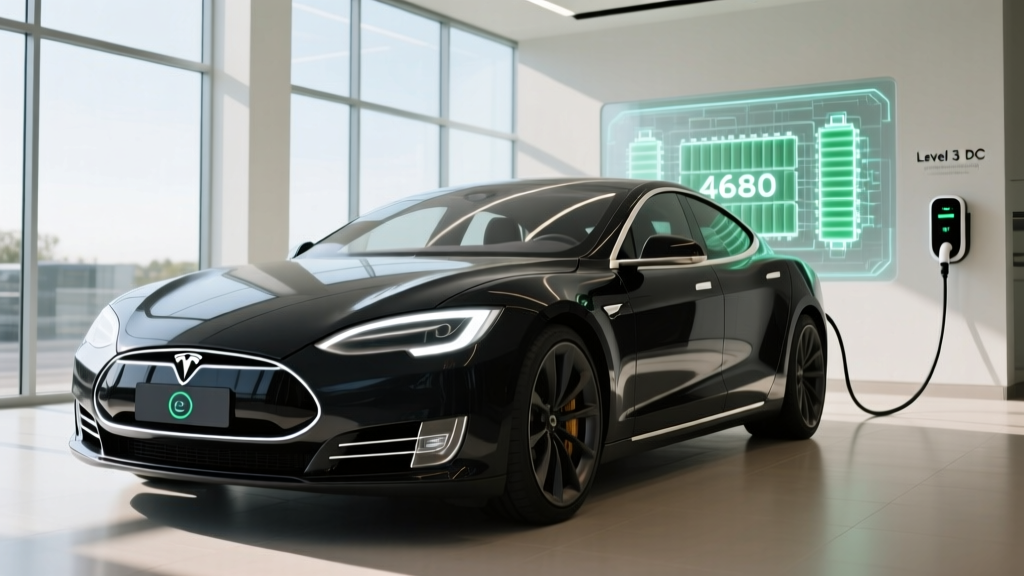
Mid-summer is historically one of the best windows to negotiate on a Tesla. Inventory builds ahead of Q3 delivery targets, lease pull-ahead offers appear, and Tesla's referral and inventory-discount programs tend to sweeten. If you've been searching for Tesla July deals, this guide breaks down exactly what's on the table for 2026 — and more importantly, whether the underlying vehicle is worth your money at any price.
We're focusing on the three models most buyers cross-shop right now: the refreshed Model 3 (Highland and Long Range), the Model Y (Juniper refresh), and the Cybertruck. For each, we'll give you the exact EPA range, charging curve reality, real-world efficiency, and post-tax-credit pricing — the numbers that actually matter when you're signing a purchase agreement.
2026 Tesla Lineup: Quick Spec Comparison
| Spec | Model 3 RWD | Model 3 Long Range AWD | Model Y Long Range AWD | Cybertruck AWD |
|---|---|---|---|---|
| Base MSRP | $38,990 | $44,990 | $47,990 | $79,990 |
| EPA Range | 272 mi | 363 mi | 320 mi | 340 mi |
| Battery (usable) | ~57.5 kWh (LFP) | ~75 kWh (NMC) | ~75 kWh (NMC) | ~123 kWh (NMC) |
| Peak DC Charge | 170 kW | 250 kW | 250 kW | 250 kW |
| 10–80% DC Time | ~30 min | ~25 min | ~25 min | ~35 min |
| Level 2 Rate | 11.5 kW (~44 mi/hr) | 11.5 kW (~44 mi/hr) | 11.5 kW (~44 mi/hr) | 11.5 kW (~30 mi/hr) |
| 0–60 mph | 5.8 sec | 4.2 sec | 4.8 sec | 4.1 sec |
| Horsepower | 271 hp | 440 hp | 384 hp | 600 hp |
| MPGe (combined) | 132 MPGe | 125 MPGe | 115 MPGe | 76 MPGe |
| Drivetrain | RWD | Dual-Motor AWD | Dual-Motor AWD | Dual-Motor AWD |
Source: fueleconomy.gov and Tesla's 2026 specification sheets. Specs reflect current production models.
What's Actually Discounted in Tesla's July 2026 Promotions
Tesla rarely advertises traditional "dealer discounts" — they sell direct, and pricing is set nationally. But July deals typically come in three forms:
- Inventory vehicle price cuts: Tesla quietly reduces prices on in-stock units that have sat for 14+ days. In July 2026, we're seeing $1,500–$3,000 off select Model Y Long Range and Model 3 Long Range configurations, particularly in white and gray exterior colors.
- Lease pull-ahead offers: If you're currently leasing a Tesla, the company has been waiving remaining lease payments (up to 3 months) when you upgrade to a new Model Y or Model 3 through July 31.
- Free Supercharging credits: Some inventory Model 3 and Model Y units include 5,000–10,000 free Supercharger miles — worth roughly $350–$700 at current rates.
- Referral discounts: Tesla's referral program continues to offer $500 off new vehicle orders when using an existing owner's referral link, stackable with inventory discounts.
Cybertruck deals are notably absent. Demand remains strong, and Tesla has no incentive to discount. If you see a "deal" on a Cybertruck, it's likely a third-party listing or a canceled-order resale at sticker.
Real-World Range: What the EPA Sticker Doesn't Tell You
EPA vs. Reality — What to Expect
- Model 3 RWD (272 mi EPA): Expect ~245 mi highway at 70 mph; ~200–220 mi in sub-30°F winter conditions. The LFP battery's lower energy density and lack of heat pump option on base trim amplify cold-weather losses.
- Model 3 Long Range (363 mi EPA): Expect ~310–325 mi highway; ~260–280 mi in cold weather. The heat pump and NMC chemistry help retain capacity.
- Model Y Long Range (320 mi EPA): Expect ~275–290 mi highway (the taller, heavier crossover profile costs efficiency); ~230–250 mi in winter.
- Cybertruck AWD (340 mi EPA): Expect ~280–300 mi highway at 70 mph; ~230–250 mi in cold weather. The stainless-steel exoskeleton and 6,800-lb curb weight hit efficiency hard above 65 mph.
The LFP (lithium iron phosphate) battery in the Model 3 RWD deserves special attention. LFP chemistry is more durable over the long term — Tesla recommends charging to 100% daily — but it has lower energy density and worse cold-weather performance than the NMC (nickel manganese cobalt) packs in the Long Range models. If you live in the upper Midwest or Northeast, the 30–40 mile cold-weather penalty on the RWD is meaningful on a 272-mile EPA sticker.
Charging Speed: The Curve That Matters More Than Peak kW
| Charging Level | Model 3 / Model Y | Cybertruck |
|---|---|---|
| Level 1 (120V, 12A) | ~1.4 kW — 3–4 mi/hr | ~1.4 kW — 2–3 mi/hr |
| Level 2 (240V, 48A) | 11.5 kW — ~44 mi/hr | 11.5 kW — ~30 mi/hr |
| DC Fast (V3 Supercharger) | Peak 250 kW (LR/AWD); 170 kW (RWD) | Peak 250 kW |
| DC Fast (V4 Supercharger) | Peak 250 kW (current vehicle limit) | Peak 250 kW |
| 10–80% DC Time | ~25 min (LR); ~30 min (RWD) | ~35 min |
| 80–100% taper | Add ~25 additional min | Add ~30 additional min |
Tesla's V3 Superchargers deliver up to 250 kW, but that peak is sustained only between roughly 10–30% State of Charge (SoC). Above 50%, the curve tapers significantly — expect ~100–120 kW through the 50–80% window. This is why the 10–80% metric is more useful than peak kW: it captures the area under the curve, not just the headline number.
For home charging, a 48-amp Level 2 wall connector on a 60-amp circuit adds roughly 44 miles per hour of charging for Model 3/Y. That's a full overnight replenishment for any daily commute under 200 miles. Installation typically runs $800–$2,000 depending on panel proximity and local permitting, assuming you have a 200-amp service panel with spare capacity.
One advantage Tesla retains: Supercharger network access. With over 6,500 V3/V4 stalls in North America, Tesla owners still enjoy the most reliable DC fast-charging experience in terms of uptime and plug-and-charge simplicity. Non-Tesla EVs now access Superchargers via NACS adapters, but the native experience (automatic billing, preconditioning routing) remains seamless only in a Tesla.
Federal Tax Credit: What You Actually Qualify For
| Model | Base MSRP | §30D Credit | Effective Price | MSRP Cap Status |
|---|---|---|---|---|
| Model 3 RWD | $38,990 | Up to $7,500 | From $31,490 | Under $55K sedan cap ✓ |
| Model 3 Long Range | $44,990 | Up to $7,500 | From $37,490 | Under $55K sedan cap ✓ |
| Model Y LR AWD | $47,990 | Up to $7,500 | From $40,490 | Under $80K SUV cap ✓ |
| Cybertruck AWD | $79,990 | Up to $7,500 | From $72,490 | Under $80K truck cap ✓ |
Every 2026 Tesla model currently falls under the IRS §30D MSRP caps ($55,000 for sedans; $80,000 for SUVs, vans, and trucks). But the full $7,500 credit is not guaranteed. Eligibility depends on three factors, per IRS guidance:
- Buyer income caps: Modified AGI must not exceed $150,000 (single), $225,000 (head of household), or $300,000 (joint).
- Battery component sourcing: A percentage of battery components must be manufactured or assembled in North America, and critical minerals must be sourced from the U.S. or FTA partners. Tesla has largely met these thresholds for 2026, but the exact credit split ($3,750 for components + $3,750 for minerals) can shift with supply chain changes. Verify the current month's eligibility on the IRS clean vehicle credit page before ordering.
- Point-of-sale transfer: As of 2024, you can transfer the credit to the dealer (Tesla) at purchase, reducing your out-of-pocket cost immediately rather than waiting for tax filing. Tesla's checkout flow supports this.
Practical note: Consult a tax professional before assuming the full credit. If your tax liability is less than $7,500 and you don't use the point-of-sale transfer, the credit is non-refundable — you can't claim more than you owe.
Who Each Tesla Model Suits Best
Model 3 RWD ($38,990): The best value in Tesla's lineup for commuters who drive under 150 miles round-trip and have reliable home charging. The LFP battery's tolerance for daily 100% charging means you effectively get 272 usable miles every morning. Not ideal for frequent road trippers (170 kW peak charge is slower) or cold-climate drivers (no heat pump on base trim).
Model 3 Long Range AWD ($44,990): The sweet spot for buyers who want one-car-does-everything capability. 363 miles EPA is enough for LA-to-Vegas or NYC-to-DC with a single short Supercharger stop. The dual-motor AWD, heat pump, and 250 kW charging make it genuinely versatile. This is the Tesla we'd recommend to most buyers who can stretch the budget.
Model Y Long Range AWD ($47,990): The family hauler. With 76 cu ft of cargo space (seats folded), a usable frunk, and seating for five adults, it replaces a midsize SUV at a lower operating cost. The 320-mile EPA range is adequate, and the 250 kW charging keeps road trips practical. It's the best-selling EV in America for a reason.
Cybertruck AWD ($79,990): A niche product for truck buyers who want EV torque (600 hp, 0–60 in 4.1 sec) and don't mind the polarizing design. The 123 kWh battery is massive, but so is the truck — efficiency is 76 MPGe combined, roughly half the Model 3's. Towing capacity is rated at 11,000 lbs, but expect range to drop to ~180–200 miles when towing near max. This is a lifestyle truck, not a fleet workhorse.
Pros and Cons: Honest Assessment
Pros
- Supercharger network remains the gold standard for reliability and coverage
- Class-leading efficiency (Model 3: 132 MPGe combined, 25 kWh/100mi)
- Over-the-air updates continuously add features post-purchase
- Strong resale value relative to most EV competitors
- Lowest maintenance costs in the segment (no oil, minimal brake wear with regen)
- July inventory discounts can stack with the $7,500 tax credit
Cons
- Minimalist interior isn't for everyone — no physical stalks on refreshed models, all controls via touchscreen
- Insurance premiums run 15–30% higher than comparable gas vehicles (Tesla-specific body repair costs)
- Autopilot is SAE Level 2 only — not self-driving. Full Self-Driving (Supervised) requires constant driver engagement and costs $8,000 extra or $99/month
- Model 3 RWD lacks heat pump, reducing cold-weather usability
- Cybertruck panel gaps and build quality remain inconsistent across delivery batches
- No Apple CarPlay or Android Auto — Tesla's proprietary infotainment only
How Teslas Compare to Key Competitors in July 2026
At these prices, the cross-shops are real:
- Model 3 LR vs. Hyundai Ioniq 6 Long Range: The Ioniq 6 offers 361 miles EPA and 800V architecture (faster peak charging at 350 kW). But it uses CCS, limiting it to Electrify America and other third-party networks — still less reliable than Superchargers. If charging convenience is your top priority, Tesla wins. If you want the fastest DC charging and don't mind adapter life, the Ioniq 6 is compelling at ~$43,000.
- Model Y LR vs. Ford Mustang Mach-E Extended Range: The Mach-E offers a more traditional interior with physical controls and Apple CarPlay. Range is comparable (~312 mi EPA). But the Mach-E's charging peaks at 150 kW on most public infrastructure, and Ford's dealer network introduces service variability. The Model Y remains the default for buyers who want simplicity.
- Cybertruck vs. Ford F-150 Lightning: The Lightning is a more conventional truck with a lower starting price (~$55,000 for XLT) and proven fleet durability. The Cybertruck is faster, more distinctive, and has a larger battery — but costs $25,000 more and has unproven long-term reliability on the stainless steel body and steer-by-wire system.
Bottom Line: Are Tesla's July Deals Worth It?
If you've been waiting for the right moment, July 2026 is a reasonable entry point. The combination of inventory discounts ($1,500–$3,000 on select Model Y and Model 3 configurations), the $7,500 federal tax credit (if you qualify), and Tesla's referral program ($500 off) can knock $5,000–$10,000 off effective pricing. That puts a Model 3 RWD under $30,000 net and a Model Y Long Range in the low $40s — prices that compete directly with well-equipped gas crossovers on total cost of ownership over five years.
But don't buy on deals alone. Buy because the vehicle fits your life: your commute, your charging access, your climate, your road-trip habits. Tesla's Supercharger advantage is real, but if you have reliable Level 2 at home and rarely road-trip, a Hyundai or Ford might offer a better interior and comparable range at similar pricing. Test drive both before signing.
Frequently Asked Questions
What is the real-world range of the 2026 Tesla Model 3 Long Range?
The EPA rates it at 363 miles. In real-world highway driving at 70 mph, expect 310–325 miles. In sub-30°F conditions, plan for 260–280 miles. The heat pump and NMC battery chemistry help mitigate cold-weather losses compared to the base RWD model.
How fast does a Tesla Model Y charge at home and on the road?
At home on a 240V/48A Level 2 charger, the Model Y Long Range adds about 44 miles per hour — a full charge overnight. On a V3 Supercharger, it peaks at 250 kW and charges from 10–80% in approximately 25 minutes. Expect the full 10–100% session to take about 50 minutes due to taper above 80% SoC.
Does the Tesla Model Y qualify for the full $7,500 federal EV tax credit in 2026?
The Model Y Long Range AWD at $47,990 falls under the $80,000 SUV MSRP cap. If your modified AGI is under the income thresholds ($300K joint / $150K single) and the battery meets current sourcing requirements, you can claim up to $7,500 — either as a tax credit or transferred at point of sale. Always verify current sourcing compliance on irs.gov before ordering.
Is Autopilot or FSD actually self-driving?
No. Both Autopilot and Full Self-Driving (Supervised) are SAE Level 2 driver-assistance systems. You must keep your hands on the wheel and eyes on the road at all times. Tesla's camera-only system handles highway lane-keeping and adaptive cruise well, but it does not navigate autonomously, handle all construction zones, or drive without supervision. Only Level 4 services like Waymo operate without a driver.
How does the Tesla Model 3 compare to the Hyundai Ioniq 6 for road trips?
The Ioniq 6 has comparable EPA range (~361 mi) and faster peak DC charging (up to 350 kW on 800V architecture). However, Tesla's Supercharger network offers more reliable uptime and broader coverage than third-party CCS networks. If you road-trip frequently and value charging predictability, the Model 3 Long Range has the edge. If you mostly charge at home and want the fastest public charging when you do use it, the Ioniq 6 is a strong alternative.
What's the battery warranty on a 2026 Tesla?
Tesla covers the battery and drive unit for 8 years or 100,000 miles (whichever comes first) on the Model 3 RWD, and 8 years or 120,000 miles on Long Range and Model Y variants. The warranty guarantees at least 70% capacity retention during the coverage period. Real-world degradation data from Tesla's fleet suggests most packs retain 85–90% capacity at 100,000 miles under normal use.