The Tesla Cabin in 2026: Minimalism With Real Trade-Offs
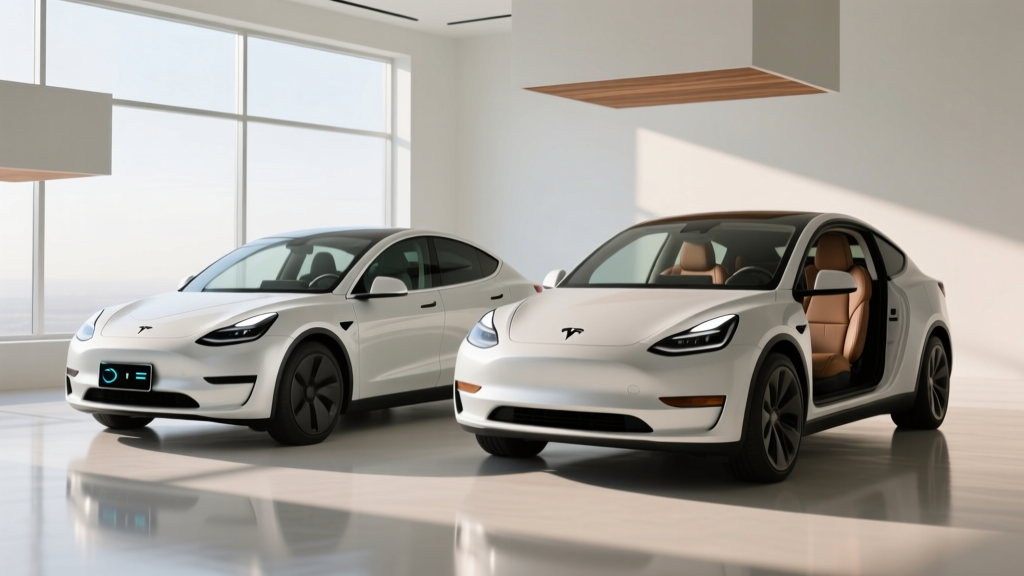
Tesla's interior philosophy has always polarized buyers: one massive screen, almost no physical buttons, and a dashboard that looks more like a Scandinavian living room than a car cockpit. For 2026, the Model 3 (refreshed as the "Highland" generation) and Model Y ("Juniper" refresh) carry forward this ethos with incremental material upgrades, a rear touchscreen for passengers, ambient lighting, and ventilated front seats. But the question for prospective buyers isn't whether the cabin looks clean in photos — it's whether Tesla's interior design features actually serve daily driving needs, and what you sacrifice in the name of minimalism.
This review examines the 2026 Tesla Model 3 Long Range AWD and Model Y Long Range AWD as the volume sellers, covering cabin design, real-world usability, and the full ownership picture: range, charging, performance, pricing, and federal tax credit eligibility.
2026 Tesla Model 3 & Model Y: Core Specs at a Glance
| Spec | Model 3 LR AWD | Model Y LR AWD |
|---|---|---|
| EPA Range | 341 miles | 320 miles |
| Battery (usable) | ~75 kWh (NMC) | ~75 kWh (NMC) |
| Drivetrain | Dual-motor AWD | Dual-motor AWD |
| Horsepower | ~346 hp | ~384 hp |
| 0–60 mph | 4.2 sec | 4.6 sec |
| Max DC Fast Charge | 250 kW | 250 kW |
| 10–80% DC Time | ~27 min | ~27 min |
| Level 2 Home Rate | 11.5 kW (~44 mi/hr) | 11.5 kW (~44 mi/hr) |
| MPGe (combined) | 134 MPGe | 122 MPGe |
| Efficiency | 25 kWh/100mi | 28 kWh/100mi |
| Cargo (rear seats up) | 21 cu ft (trunk) | 30.2 cu ft (rear) |
| Cargo (seats folded) | 23 cu ft total | 72.1 cu ft total |
| Rear Legroom | 35.2 in | 36.0 in |
| Battery Warranty | 8 yr / 120,000 mi | 8 yr / 120,000 mi |
| Base MSRP | $47,740 | $50,740 |
Sources: fueleconomy.gov, Tesla.com. Specs reflect 2026 model year Long Range AWD trims.
Tesla Interior Design Features: What's Actually Inside
The centerpiece of any Tesla interior remains the central touchscreen. In the 2026 Model 3 Highland and Model Y Juniper, it's a 15.4-inch display running Tesla's proprietary infotainment OS. All vehicle controls — climate, mirrors, glovebox, drive mode — route through this screen. There is no instrument cluster behind the steering wheel. There is no traditional gear selector; you choose Drive, Reverse, or Park via the touchscreen or steering-column stalk depending on the build date.
Materials and Build Quality
The 2026 Highland/Juniper refresh brought measurable improvements over the pre-2024 cabins. Tesla now uses a textile dashboard material with a soft-touch wrap, replacing the hard plastics that drew criticism in earlier Model 3 builds. Vegan leather (synthetic polyurethane) seats are standard across all trims. Panel gap consistency has improved — though it still varies by Fremont vs. Shanghai production origin. The ambient lighting strip runs across the dash and doors, adding a visual warmth the older cabins lacked.
Ventilated Seats and Rear Screen
For 2026, ventilated front seats are standard on Long Range and Performance trims — a feature previously absent and a common complaint in warm climates. The rear passenger 8-inch touchscreen (first introduced in the Model 3 Highland) allows back-seat riders to control rear climate, seat heaters, and media independently. It's a genuine usability win for families, though the screen is small enough that it's best for climate and music rather than video.
What's Missing
Tesla's interior design features deliberately exclude several things competitors include. There are no physical climate knobs or volume buttons. There is no head-up display. There is no Apple CarPlay or Android Auto — Tesla's ecosystem is closed. The turn signals are on the steering wheel in the 2026 Model 3 and Y (unlike the controversial yoke-mounted buttons in some Model S/X builds), which most buyers will find intuitive. However, the lack of a physical speedometer cluster means you glance slightly right and down for speed — a non-issue for some, a dealbreaker for others.
Real-World Range: What to Expect Beyond the EPA Sticker
Model 3 LR AWD: EPA 341 mi — Expect ~290–310 mi on highway trips at 70–75 mph; ~240–260 mi in sub-freezing winter conditions.
Model Y LR AWD: EPA 320 mi — Expect ~270–290 mi highway; ~220–245 mi in cold weather.
Tesla's heat pump (standard) mitigates some cold-weather cabin draw, but battery chemistry still loses 15–25% range below 32°F. Highway driving at sustained speeds above 70 mph reduces range vs. EPA's mixed-cycle test. Source: fueleconomy.gov
Tesla's EPA range figures are among the most accurate in the industry for city and suburban driving. The Model 3's 341-mile rating translates well to stop-and-go commutes where regenerative braking recovers energy. On sustained highway runs — the most common road-trip scenario — expect to use 70–80% of the sticker figure, depending on speed, elevation, and temperature. The Model Y's taller, heavier crossover profile costs it roughly 20 miles of real-world highway range versus the Model 3.
Both vehicles use NMC (nickel manganese cobalt) lithium-ion battery packs with approximately 75 kWh of usable capacity. NMC offers higher energy density than LFP (lithium iron phosphate), which is why it appears in the Long Range trims. The base RWD Model 3 uses an LFP pack — cheaper, longer cycle life, but lower range and cold-weather performance. If you regularly charge to 100%, LFP tolerates it better; NMC prefers an 80% daily charge ceiling for longevity.
Charging Speed: DC Fast Charging and Home Setup
| Level | Power / Rate | Miles Added | Typical Use Case |
|---|---|---|---|
| Level 1 (120V) | ~1.4 kW | ~3–4 mi/hr | Overnight trickle, emergencies |
| Level 2 (240V, 48A) | 11.5 kW | ~44 mi/hr | Home daily charging (Wall Connector) |
| DC Fast (Supercharger V3) | Peak 250 kW | ~170 mi in 15 min | Road trips, rapid top-ups |
| DC Fast (V4 Supercharger) | Peak 250+ kW | Similar to V3 for current vehicles | Newer stations; future vehicles may pull more |
The 2026 Model 3 and Model Y peak at 250 kW on DC fast chargers — specifically Tesla's V3 and V4 Superchargers. A 10–80% session takes approximately 27 minutes under ideal conditions (warm battery, low state of charge at plug-in). The charge curve tapers significantly above 80%, as is standard for NMC chemistry; an 80–100% fill can add another 20–25 minutes. Preconditioning — which the car initiates automatically when a Supercharger is set as your navigation destination — warms the battery to optimize charge acceptance and is critical for achieving peak rates in cold weather.
At home, the Tesla Wall Connector on a 60-amp circuit delivers 11.5 kW (48 amps), adding roughly 44 miles of range per hour of charging. An overnight session of 8–10 hours easily refills a depleted battery. Installation costs vary: expect $800–$2,000 for a straightforward Wall Connector install on an existing 200-amp panel, or $2,500–$5,000+ if your home needs a panel upgrade. Always get a quote from a licensed electrician — your panel capacity determines feasibility.
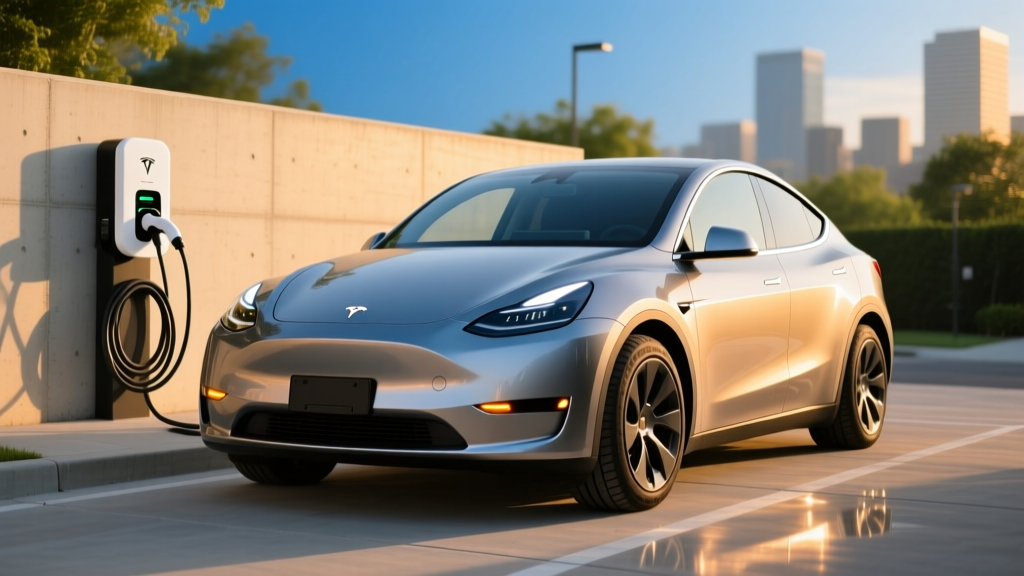
Tesla's Supercharger network remains the most reliable public DC fast-charging ecosystem in the U.S., with consistent uptime and plug-and-charge billing. With the NACS connector standard on all Teslas, non-Tesla EVs are now gaining Supercharger access via adapters, but Tesla owners retain native compatibility with no adapter needed.
Pricing, Trims, and Federal Tax Credit Eligibility
| Trim | MSRP | Est. After §30D Credit | Notes |
|---|---|---|---|
| Model 3 RWD (LFP) | $38,990 | ~$31,490 | Eligible for up to $7,500 if income/sourcing rules met |
| Model 3 LR AWD | $47,740 | ~$40,240 | Eligible; below $55K sedan MSRP cap |
| Model 3 Performance | $54,990 | ~$47,490 | Eligible; below $55K sedan cap |
| Model Y LR AWD | $50,740 | ~$43,240 | Eligible; below $80K SUV MSRP cap |
| Model Y Performance | $54,490 | ~$46,990 | Eligible; below $80K SUV cap |
All 2026 Tesla Model 3 and Model Y trims currently qualify for the federal §30D EV tax credit of up to $7,500, which can be transferred to the dealer at point of sale as an instant price reduction. However, eligibility is not automatic. According to IRS.gov, buyers must meet:
- Income caps: Modified AGI ≤ $150,000 (single), $225,000 (head of household), $300,000 (joint).
- MSRP caps: Sedans (Model 3) ≤ $55,000; SUVs/trucks/vans (Model Y) ≤ $80,000.
- Battery sourcing: Critical minerals and battery components must meet phased-in domestic/free-trade sourcing thresholds, which tighten annually through 2032.
- Point-of-sale transfer: You can assign the credit to Tesla at purchase, reducing your out-of-pocket cost immediately rather than waiting for a tax refund.
Tesla's battery sourcing has historically met the §30D thresholds for the Model 3 and Model Y, but the rules change annually. Always verify current eligibility on the fueleconomy.gov tax credit page before purchasing, and consult a tax professional for your specific situation.
Performance, Efficiency, and Daily Driving
The Model 3 Long Range AWD delivers 346 horsepower and a 4.2-second 0–60 mph time — quick enough to merge aggressively and pass confidently at highway speeds. The Model Y Long Range AWD is slightly heavier and taller, yielding 384 hp and a 4.6-second sprint. Both feel immediate and smooth in a way internal-combustion vehicles at this price point cannot match, thanks to instant electric torque.
Efficiency is where Tesla continues to lead the industry. The Model 3 LR AWD achieves 134 MPGe combined (25 kWh/100mi), making it one of the most efficient AWD EVs available. The Model Y returns 122 MPGe combined (28 kWh/100mi). For context, that translates to roughly $0.04–$0.06 per mile on home electricity at $0.15/kWh — compared to $0.12–$0.16/mile for a 30-MPG gas car at $3.50/gallon.
Tesla's Autopilot (standard) and Full Self-Driving (Supervised) ($8,000 option or $99/month subscription) provide SAE Level 2 driver assistance. This means the system handles steering, acceleration, and braking on highways, but the driver must remain fully engaged — eyes on the road, hands ready to take over. FSD Supervised adds automated lane changes, city-street navigation, and traffic-light recognition, but it is not autonomous driving. It requires constant supervision, and NHTSA continues to scrutinize Level 2 systems for driver engagement compliance.
Cargo Space, Practicality, and Who This EV Suits
The Model 3 offers 21 cubic feet of trunk space (plus a small front trunk, or "frunk") — adequate for weekly groceries and carry-on luggage for two, but tight for large cargo. The Model Y is dramatically more practical: 30.2 cubic feet behind the rear seats and 72.1 cubic feet with seats folded, rivaling midsize gas SUVs. The Model Y also offers an optional third row (very small, best for children), making it a legitimate family hauler.
Rear-seat legroom is 35.2 inches in the Model 3 and 36.0 inches in the Model Y — competitive with compact and midsize sedans/SUVs respectively. The flat floor (no transmission tunnel) makes the middle rear seat genuinely usable, unlike many gas-powered competitors.
- Class-leading efficiency (25–28 kWh/100mi)
- Supercharger network — best public charging reliability
- Over-the-air updates continuously add features
- Spacious Model Y cargo area (72 cu ft)
- Strong resale value relative to EV market
- Instant torque, smooth daily driving
- No physical buttons — all controls on touchscreen
- No Apple CarPlay / Android Auto
- No head-up display
- Panel gap quality still inconsistent
- FSD is expensive and not truly autonomous
- Insurance costs above segment average
Best For
- Commuters: Model 3 LR — efficient, quiet, 341-mile range covers most weekly driving on a single charge.
- Families: Model Y LR — cargo space, optional third row, rear climate screen, and Supercharger access for road trips.
- Tech-forward buyers: Anyone who prefers screen-based controls and values OTA feature updates.
Look Elsewhere If
- You want physical buttons and a traditional instrument cluster (consider Hyundai Ioniq 6 or BMW i4).
- You need Apple CarPlay integration (consider Hyundai, Kia, or Ford EVs).
- You tow frequently — neither Model 3 nor Model Y is rated for heavy towing (Model Y: 3,500 lb max).
Frequently Asked Questions
What is the real-world range of the 2026 Tesla Model 3 and Model Y?
The Model 3 LR AWD achieves an EPA-estimated 341 miles, with real-world highway driving yielding approximately 290–310 miles and cold-weather driving around 240–260 miles. The Model Y LR AWD is EPA-rated at 320 miles, with real-world highway range of roughly 270–290 miles and cold-weather range of 220–245 miles.
How fast do the Model 3 and Model Y charge?
Both peak at 250 kW on Tesla Superchargers, achieving a 10–80% charge in approximately 27 minutes. At home on a Level 2 Wall Connector (11.5 kW), they add roughly 44 miles of range per hour, fully recharging overnight.
How much does a 2026 Tesla cost after the federal tax credit?
With the §30D credit of up to $7,500 applied at point of sale, a Model 3 LR AWD drops from $47,740 to approximately $40,240, and a Model Y LR AWD drops from $50,740 to approximately $43,240 — assuming you meet income, MSRP, and battery-sourcing requirements. Verify current eligibility at IRS.gov.
Is the Tesla Model 3 or Model Y worth buying over competitors?
Against the Hyundai Ioniq 6 (361-mi range, CarPlay, physical buttons) or the Ford Mustang Mach-E (more traditional interior), Tesla's advantages are the Supercharger network, OTA updates, efficiency, and resale value. Its disadvantages are the screen-only interface, no CarPlay, and FSD's cost. If you prioritize charging infrastructure and tech iteration, Tesla leads. If you prefer traditional controls and ecosystem flexibility, competitors are compelling.
Do the 2026 Model 3 and Model Y qualify for the federal EV tax credit?
Yes, all trims currently qualify for up to $7,500 under §30D, subject to buyer income caps ($150K single / $300K joint), MSRP caps ($55K sedans / $80K SUVs), and battery-sourcing requirements. The credit can be transferred to Tesla at purchase for an instant price reduction. Rules tighten annually — confirm eligibility before ordering.
What is Tesla's battery warranty?
Both the Model 3 and Model Y Long Range carry an 8-year / 120,000-mile battery and drive unit warranty, covering defects and capacity retention below 70%. This is competitive with the industry standard (Hyundai offers 10/100,000; most others match 8/100,000).