Why the Tesla Interior Camera Matters for EV Owners
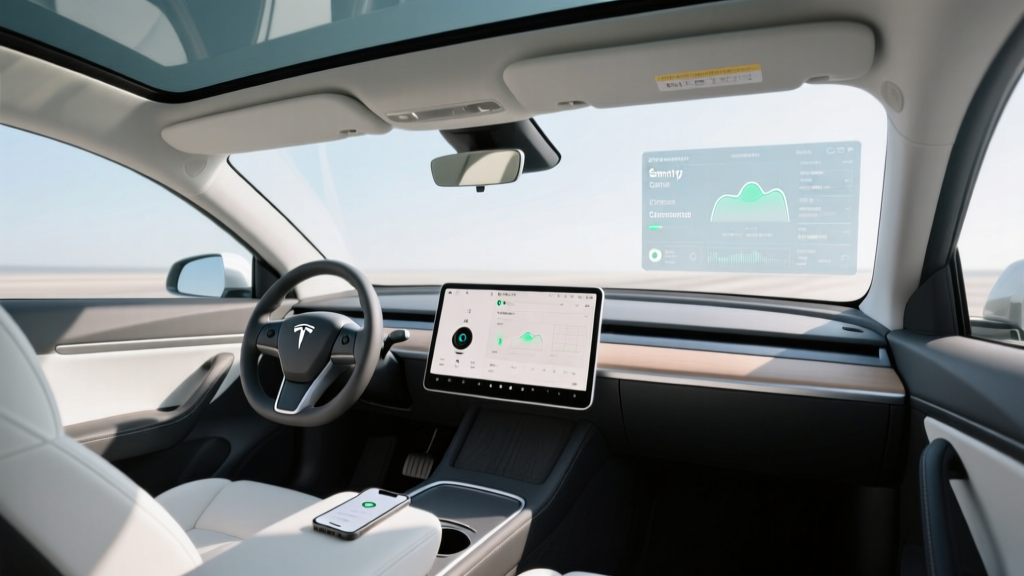
If you've sat behind the wheel of any Tesla Model 3, Model Y, Model S, or Model X built after mid-2019, you've been within view of a small cabin-facing camera mounted near the rearview mirror. In 2026, that Tesla interior camera plays a more central role than ever — from monitoring driver attentiveness during FSD (Supervised) sessions to powering Sentry Mode's in-cabin security recordings. Yet it remains one of the most misunderstood hardware components in the EV world.
This guide breaks down exactly what the Tesla interior camera sees, how it's used across Tesla's software stack, what privacy controls you have as an owner, and how cabin monitoring ties into the broader ownership experience — including range, charging, and the real cost of running a Tesla in 2026.
What the Tesla Interior Camera Actually Does
The cabin camera is a wide-angle, low-resolution sensor positioned above the rearview mirror. It is not a high-definition recording device designed for livestreaming your face. Its primary functions in 2026 include:
- Driver attentiveness monitoring: When FSD (Supervised) or Autopilot is engaged, the camera tracks whether your eyes are directed toward the road. If it detects prolonged distraction, the system issues escalating warnings and can eventually disengage and lock you out of Autopilot for the remainder of the drive.
- Sentry Mode cabin recording: When Sentry Mode detects a security threat (motion, impact, broken glass), the cabin camera can capture a short clip of the interior — useful for identifying break-in suspects or documenting vandalism.
- Dashcam integration: Tesla's built-in dashcam system can include the cabin camera feed alongside the front, rear, and side repeater cameras when you manually trigger a save or when an automatic event occurs.
Privacy Controls: What You Can Turn Off (and What You Can't)
Tesla provides several software toggles under Settings > Safety and Settings > Privacy that govern cabin camera behavior:
- Data Sharing toggle: You can opt out of sharing cabin camera clips with Tesla. When disabled, footage stays on your vehicle's USB drive or local storage and is not transmitted.
- Cabin camera for driver monitoring: As of 2026, you cannot fully disable the camera's role in FSD/Supervised attentiveness monitoring without losing access to those features. The camera is a safety prerequisite.
- Sentry Mode cabin recording: This can be toggled independently. Some owners disable it for privacy when parked at home but enable it in public lots.
Tesla states that cabin camera data is processed on-device (via the vehicle's onboard computer) and that images are not transmitted to Tesla servers unless you explicitly opt into data sharing or a safety event triggers an upload. For the most current data-handling policies, refer to Tesla's Privacy Policy.
Tesla Interior Camera Across the 2026 Lineup
Every current Tesla vehicle sold in the US includes a cabin camera as standard hardware. Here's how it integrates with each model's broader spec sheet — because the camera is just one piece of the ownership puzzle.
| Spec | Model 3 Long Range AWD | Model Y Long Range AWD | Model S Dual Motor |
|---|---|---|---|
| EPA Range | 363 mi | 320 mi | 402 mi |
| Battery (usable) | ~75 kWh (NMC) | ~75 kWh (NMC) | ~95 kWh (NMC) |
| Max DC Fast Charge | 250 kW | 250 kW | 250 kW |
| 10–80% DCFC Time | ~25 min | ~27 min | ~30 min |
| Level 2 Home Charge | 11.5 kW (~44 mi/hr) | 11.5 kW (~44 mi/hr) | 11.5 kW (~34 mi/hr) |
| 0–60 mph | 4.2 sec | 4.8 sec | 3.1 sec |
| Horsepower | ~346 hp | ~384 hp | ~670 hp |
| Drivetrain | Dual-Motor AWD | Dual-Motor AWD | Dual-Motor AWD |
| MPGe (combined) | 132 MPGe | 122 MPGe | 120 MPGe |
| Cargo Volume | 23 cu ft (trunk+frunk) | 76 cu ft (seats folded) | 28 cu ft (trunk+frunk) |
| Battery Warranty | 8 yr / 120,000 mi | 8 yr / 120,000 mi | 8 yr / 150,000 mi |
| Base MSRP (2026) | $47,740 | $48,990 | $79,990 |
Source: fueleconomy.gov and Tesla.com. Specs reflect current 2026 model year; verify at time of purchase.
Real-World Range: What the EPA Sticker Doesn't Tell You
Model 3 LR AWD: EPA 363 mi — Expect ~300–320 mi on mixed highway driving at 70 mph. In freezing temperatures (below 32°F), range can drop 20–30%, yielding ~250–280 mi.
Model Y LR AWD: EPA 320 mi — Expect ~270–290 mi highway. Cold weather: ~220–250 mi.
Model S DM: EPA 402 mi — Expect ~340–360 mi highway. Cold weather: ~290–320 mi.
Tesla's heat pump (standard on all current models) mitigates some cold-weather loss compared to older resistive-heating EVs, but physics still applies.
Range efficiency also depends on your driving style. Tesla's regenerative braking system — effectively one-pedal driving when set to "Hold" mode — can recover meaningful energy in stop-and-go traffic, pushing real-world city efficiency closer to or even above EPA estimates. Highway driving at sustained speeds above 75 mph is where every EV, Tesla included, sheds the most range.
Charging Speed and Infrastructure in 2026
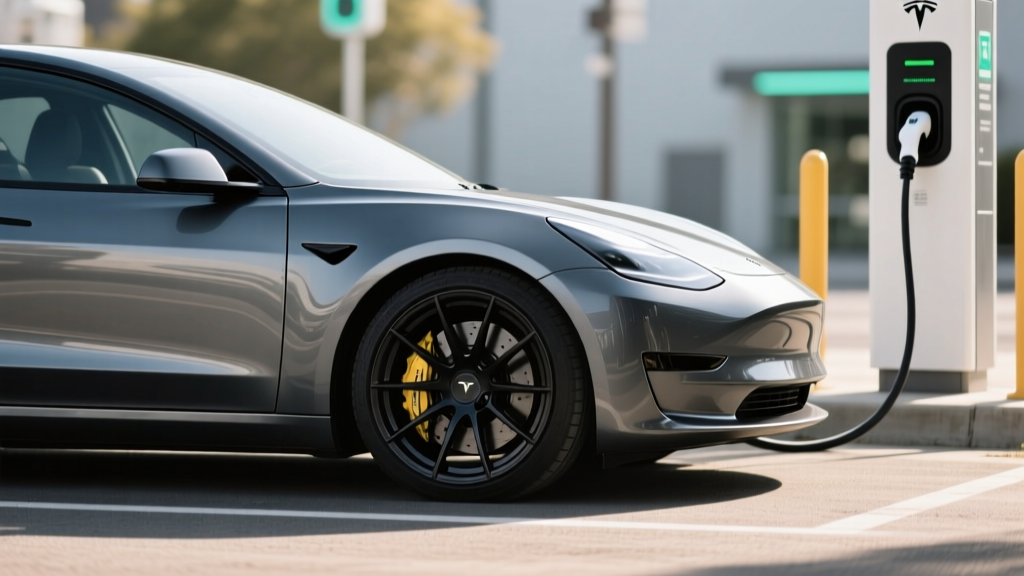
Tesla's Supercharger network remains the gold standard for DC fast charging reliability in the US, with over 20,000 V3 (250 kW) and an expanding number of V4 stalls nationwide. Here's what charging actually looks like:
| Charging Level | Power (kW) | Miles Added per Hour | Best Use Case |
|---|---|---|---|
| Level 1 (120V outlet) | 1.4 kW | ~3–5 mi/hr | Overnight trickle / emergency |
| Level 2 (240V, home Wall Connector) | 11.5 kW | ~34–44 mi/hr | Daily home charging |
| DC Fast Charge (V3 Supercharger) | Up to 250 kW | ~1,000+ mi/hr (peak) | Road trips, 10–80% in ~25 min |
Charging curve reality: The 250 kW peak rate applies only at low states of charge (roughly 10–30%). Above 50% SoC, the rate tapers significantly — by 80%, you're typically pulling 40–60 kW. This is why the 10–80% metric matters more than peak kW. Plan road-trip stops around the 10–80% window for the most efficient use of time.
With the North American Charging Standard (NACS) now adopted by Ford, GM, Rivian, Hyundai, and others, Tesla Superchargers serve non-Tesla EVs as well. Tesla owners retain native NACS compatibility — no adapter needed — and can also use Electrify America, EVgo, and ChargePoint stations with a CCS adapter (sold separately by Tesla for ~$250).
Pricing, Tax Credits, and Ownership Cost
| Model / Trim | Base MSRP | §30D Credit Eligible? | Effective Price (if eligible) |
|---|---|---|---|
| Model 3 Long Range AWD | $47,740 | Yes (up to $7,500) | ~$40,240 |
| Model 3 Performance | $54,990 | Yes (up to $7,500) | ~$47,490 |
| Model Y Long Range AWD | $48,990 | Yes (up to $7,500) | ~$41,490 |
| Model Y Performance | $53,490 | Yes (up to $7,500) | ~$45,990 |
| Model S Dual Motor | $79,990 | No (exceeds MSRP cap) | $79,990 |
Federal tax credit caveats (§30D): Eligibility for the up-to-$7,500 credit depends on multiple factors that change periodically. As of 2026, key requirements include:
- MSRP cap: Sedans must be priced at or below $55,000; SUVs, vans, and trucks at or below $80,000.
- Buyer income cap: Modified AGI must not exceed $150,000 (single), $225,000 (head of household), or $300,000 (joint).
- Battery sourcing: Critical minerals and battery components must meet escalating domestic-sourcing thresholds. Tesla's US-built battery cells (via Panasonic at Gigafactory Nevada and 4680 production in Texas) generally satisfy these requirements for Model 3 and Model Y.
- Point-of-sale transfer: Eligible buyers can apply the credit as an instant rebate at purchase rather than waiting for tax filing.
Always verify current eligibility on IRS.gov and consult a tax professional before relying on credit assumptions.
Standout Tech and Notable Drawbacks
- Best-in-class Supercharger network (native NACS, no adapter)
- Over-the-air updates continuously improve vehicle
- Cabin camera enhances security (Sentry Mode) and safety (driver monitoring)
- Excellent efficiency (kWh/100mi) among EVs in class
- Minimalist interior with 15.4" touchscreen centralizes controls
- Strong resale value relative to EV market average
- No traditional instrument cluster — all info on center screen
- Cabin camera privacy concerns for some owners
- FSD (Supervised) requires $8,000 add-on or $99/mo subscription; still Level 2
- Build quality inconsistencies still reported (panel gaps, trim)
- Turn signal stalks removed on refreshed Model 3/Y (steering-wheel buttons)
- No Apple CarPlay or Android Auto
The cabin camera sits at the intersection of Tesla's tech-forward philosophy and the privacy trade-offs that come with it. For most owners, it works silently in the background — only becoming visible when Sentry Mode triggers a notification on your phone or when FSD issues an attentiveness alert. The camera is not a dealbreaker for the vast majority of Tesla buyers, but it's worth understanding what it does before you take delivery.
Who Should Buy a Tesla in 2026?
- You want access to the most reliable and extensive DC fast-charging network in the US
- You value OTA software updates that add features post-purchase
- You commute 30–80 miles daily and can charge at home on Level 2
- You want strong efficiency (25–28 kWh/100mi) to minimize electricity costs
- You prefer a traditional instrument cluster and physical buttons
- You want Apple CarPlay / Android Auto integration
- You need 800V architecture for faster peak DC charging (Ioniq 5: 350 kW capable)
- Cabin camera privacy is a firm dealbreaker
Frequently Asked Questions
Does the Tesla interior camera record all the time?
No. The cabin camera does not continuously record or store footage. It activates for driver monitoring when Autopilot or FSD (Supervised) is engaged, and it records short clips only when Sentry Mode detects a security event or when you manually save a dashcam clip. Clips are stored locally on your USB drive, not uploaded to Tesla unless you opt into data sharing.
Can I disable the Tesla interior camera?
You can disable Sentry Mode cabin recording and opt out of data sharing, but you cannot disable the camera's role in FSD/Autopilot driver-attentiveness monitoring without losing access to those features. The camera is considered a safety-critical sensor.
Does the cabin camera affect my insurance rate?
Not directly. However, Tesla's own insurance product (available in many states) uses real-time driving data — including Autopilot engagement and safety scores — which may indirectly correlate with cabin camera monitoring. Check with your insurer for specifics.
What is the real-world range of a 2026 Tesla Model 3 Long Range?
The EPA rates it at 363 miles. In real-world mixed highway driving at 70 mph, expect approximately 300–320 miles. In freezing weather, that drops to roughly 250–280 miles. Preconditioning the battery while plugged in can recover some of that cold-weather loss.
How fast does a Tesla charge at home on Level 2?
Using a Tesla Wall Connector on a 60-amp circuit (48 amps continuous), you'll get up to 11.5 kW — roughly 44 miles of range per hour on a Model 3. A full overnight charge (8 hours) adds approximately 300+ miles, more than enough for any daily commute.
Does the Tesla Model Y qualify for the federal EV tax credit in 2026?
The Model Y Long Range AWD ($48,990 MSRP) falls under the $80,000 SUV cap and is assembled in the US with qualifying battery components, making it eligible for up to $7,500 under §30D — provided your income does not exceed the applicable AGI thresholds. Always verify on IRS.gov.
Is FSD (Supervised) worth the $8,000 cost?
For most drivers, not yet. FSD (Supervised) is an SAE Level 2 system that requires your full attention. It handles highway interchanges, stop signs, and some city streets impressively, but it is not autonomous. The $99/month subscription is a more practical way to test it before committing. If you primarily drive highways, standard Autopilot (included) covers adaptive cruise and lane-centering well.