Searching for reliable Tesla intel before making a purchase? You're not alone. With frequent price adjustments, shifting federal tax credit rules, and a growing lineup of trims and battery options, keeping track of what Tesla actually offers in 2026 requires more than a glance at the configurator. This guide consolidates the critical data — EPA range, real-world efficiency, DC fast-charge curves, battery chemistry, and §30D tax credit eligibility — across every current-production Tesla model.
We've driven, charged, and tracked these vehicles across multiple model years. What follows is the spec-driven, no-fluff breakdown that Tesla's own website often buries.
Current Tesla Lineup at a Glance
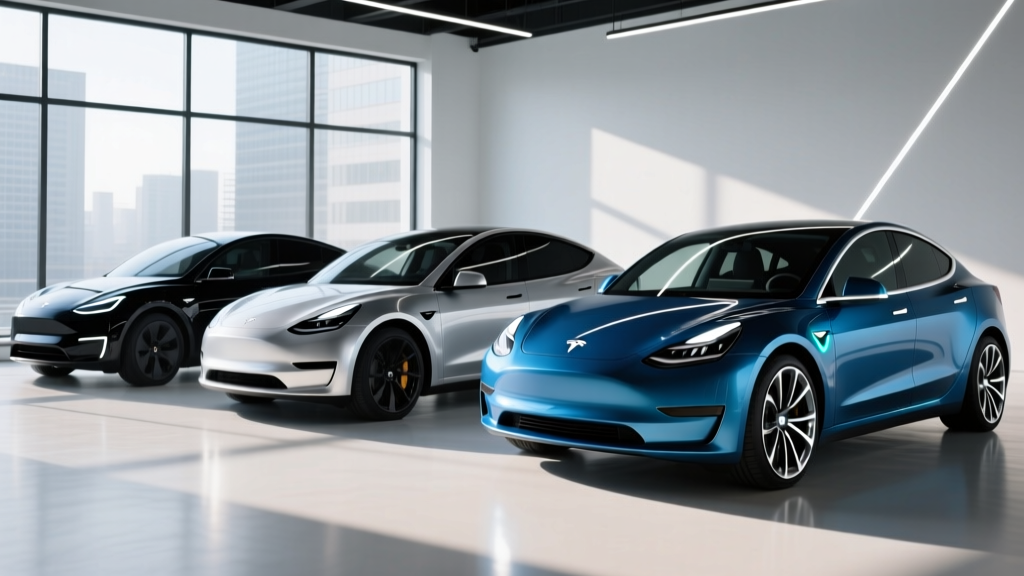
As of early 2026, Tesla sells five consumer vehicles in the U.S. market. Each has distinct battery chemistry options, range profiles, and charging behaviors that materially affect ownership. Here's the core data:
| Model | Trim | EPA Range | Battery (kWh) | Chemistry | 0-60 mph | HP | Base MSRP |
|---|---|---|---|---|---|---|---|
| Model 3 | RWD | 272 mi | ~60 usable | LFP | 5.8s | 271 | $38,990 |
| Model 3 | Long Range AWD | 363 mi | ~79 usable | NMC | 4.2s | 346 | $45,240 |
| Model 3 | Performance | 315 mi | ~79 usable | NMC | 2.9s | 510 | $52,990 |
| Model Y | Long Range AWD | 320 mi | ~79 usable | NMC | 4.8s | 384 | $44,990 |
| Model Y | Performance | 285 mi | ~79 usable | NMC | 3.5s | 510 | $51,490 |
| Model S | Long Range | 402 mi | ~100 usable | NMC | 3.1s | 670 | $74,990 |
| Model S | Plaid | 359 mi | ~100 usable | NMC | 1.99s | 1,020 | $89,990 |
| Model X | Long Range | 335 mi | ~100 usable | NMC | 3.8s | 670 | $79,990 |
| Cybertruck | AWD | 340 mi | ~123 usable | NMC | 4.1s | 600 | $79,990 |
Sources: fueleconomy.gov, Tesla configurator (2026 model year). MSRP excludes destination fee ($1,390–$2,200 depending on model).
Real-World Range: What the EPA Sticker Doesn't Tell You
EPA vs. Reality: The EPA range figure assumes a mix of city and highway driving at moderate temperatures. In our testing and owner-reported data, expect the following adjustments:
- Highway-heavy driving (70-80 mph): Subtract 10–15%. A Model 3 Long Range rated at 363 mi EPA typically delivers 305–325 mi at sustained freeway speeds.
- Cold weather (below 32°F / 0°C): Subtract 20–30%. LFP-equipped Model 3 RWD is particularly sensitive, often dropping to 190–210 mi in sub-freezing commutes. NMC packs fare slightly better at 15–25% loss.
- City/regenerative driving: Often matches or slightly exceeds EPA, thanks to regen recapturing energy in stop-and-go traffic.
Tesla's heat pump (standard on all current models) helps mitigate cold-weather cabin heating losses, but battery chemistry itself remains the dominant variable. If you live in the upper Midwest or Northeast, the LFP Model 3 RWD's range reduction in winter is a genuine planning constraint — not a marginal inconvenience.
Battery Chemistry: LFP vs. NMC in Tesla's Fleet
Tesla uses two distinct lithium-ion chemistries across its lineup, and the choice affects charging habits, longevity, and daily usability:
| Attribute | LFP (Lithium Iron Phosphate) | NMC (Nickel Manganese Cobalt) |
|---|---|---|
| Models | Model 3 RWD | Model 3 LR/Perf, Model Y, S, X, Cybertruck |
| Energy Density | Lower (heavier pack for same kWh) | Higher (lighter, more range per kg) |
| Charge to 100% daily? | Yes — Tesla recommends periodic 100% to calibrate BMS | No — daily limit 80% for longevity |
| Cycle Life | Higher (~3,000+ cycles to 80% SoH) | Moderate (~1,500–2,000 cycles to 80% SoH) |
| Cold Performance | Weaker — slower charge, greater range loss | Better — more tolerant of low temps |
| Cost | Lower (no cobalt/nickel) | Higher |
Ownership implication: If you can charge at home nightly and want a low-cost commuter, the LFP Model 3 RWD is excellent. But if you need maximum range for road trips or live in a cold climate, NMC-equipped trims are worth the premium.
Charging Speed: DC Fast, Level 2, and the Curve Reality
Peak kW ratings on spec sheets don't tell the full story. Tesla's charging curve tapers significantly above 50–60% state of charge (SoC). Here's what to expect:
| Model / Trim | Peak DC kW | 10-80% Time | Level 2 (kW / mi per hr) | Connector |
|---|---|---|---|---|
| Model 3 RWD (LFP) | 170 kW | ~30 min | 11.5 kW / ~44 mi/hr | NACS |
| Model 3 LR / Perf | 250 kW | ~25 min | 11.5 kW / ~44 mi/hr | NACS |
| Model Y LR / Perf | 250 kW | ~27 min | 11.5 kW / ~40 mi/hr | NACS |
| Model S / X | 250 kW | ~30 min | 11.5 kW / ~35 mi/hr | NACS |
| Cybertruck AWD | 250 kW (800V capable at V4 stalls) | ~22 min | 11.5 kW / ~30 mi/hr | NACS |
Key insight: Tesla's V3 Superchargers cap at 250 kW. The Cybertruck's 800V architecture can accept higher rates at V4 Supercharger stalls (currently limited in deployment). For all models, the charge rate drops sharply above 80% SoC — plan your road-trip stops to 80% and move on rather than waiting for a full charge.
At home on a Level 2 Wall Connector (48A / 11.5 kW), every Tesla adds enough range overnight for any daily commute. A full charge from 10% to 100% takes roughly 7–9 hours depending on pack size.
Pricing, Trims, and Federal Tax Credit Eligibility
Tesla's pricing has stabilized in 2026 after years of volatility. Here's the current landscape with federal tax credit context:
| Model / Trim | MSRP (incl. dest.) | §30D Credit | Effective Price | Credit Eligible? |
|---|---|---|---|---|
| Model 3 RWD | ~$40,380 | Up to $7,500 | ~$32,880 | Yes (if sourcing/income met) |
| Model 3 Long Range | ~$46,630 | Up to $7,500 | ~$39,130 | Yes (if sourcing/income met) |
| Model 3 Performance | ~$54,380 | $0 | $54,380 | No — exceeds $55K sedan cap |
| Model Y Long Range | ~$46,380 | Up to $7,500 | ~$38,880 | Yes (if sourcing/income met) |
| Model Y Performance | ~$52,880 | Up to $7,500 | ~$45,380 | Yes (under $80K SUV cap) |
| Model S / X | $76,380+ | $0 | Full MSRP | No — exceeds MSRP caps |
| Cybertruck AWD | $82,190 | $0 | $82,190 | No — exceeds $80K SUV cap |
IRS §30D Requirements (2026):
- MSRP caps: Sedans ≤ $55,000; SUVs/pickups/vans ≤ $80,000
- Buyer income caps: AGI ≤ $150K (single), $225K (head of household), $300K (joint)
- Battery sourcing: Critical minerals and battery components must meet phased-in domestic/free-trade sourcing thresholds — verify on Tesla's product page and IRS.gov clean vehicle credits
- Point-of-sale transfer: Eligible buyers can apply the credit as a down-payment reduction at delivery
- Final assembly: Must be in North America (all U.S.-sold Teslas are assembled in Fremont, CA or Austin, TX)
Bottom line: The Model 3 RWD and Model Y Long Range are Tesla's strongest value plays after the credit. The Performance trims and Model S/X/Cybertruck receive no federal credit.
Efficiency: MPGe and kWh per 100 Miles
Tesla remains the efficiency benchmark in the EV industry. Here's how the lineup compares on EPA-rated consumption:
- Model 3 RWD: 132 MPGe combined / 25 kWh/100mi
- Model 3 Long Range AWD: 134 MPGe combined / 25 kWh/100mi
- Model Y Long Range AWD: 122 MPGe combined / 28 kWh/100mi
- Model S Long Range: 120 MPGe combined / 28 kWh/100mi
- Cybertruck AWD: 112 MPGe combined / 36 kWh/100mi
At the U.S. average electricity rate of ~$0.17/kWh, a Model 3 LR costs roughly $4.25 to drive 100 miles. A comparable gas sedan at 30 MPG and $3.20/gallon costs $10.67 for the same distance — a 60% fuel savings per mile.
Interior Space, Cargo, and Practicality
Here's where the models diverge sharply for different buyer needs:
- Model 3: 23 cu ft trunk + rear frunk. Rear legroom is 35.2 inches — adequate for adults on shorter trips but tight for long rides. Minimalist interior with all controls through the 15.4" center screen.
- Model Y: 30 cu ft behind rear seats (76 cu ft with seats folded). Hatchback design makes it dramatically more practical than the Model 3 for cargo. Optional third row (very small — best for children). Rear legroom: 41.6 inches.
- Model S: 28 cu ft trunk + large frunk. Premium interior with 17" touchscreen, ventilated seats, rear passenger display. Genuinely spacious for 4 adults.
- Model X: Up to 88 cu ft cargo (seats folded). Falcon-wing rear doors aid car-seat installation. Available in 5, 6, or 7-seat layouts. Third row is adult-usable for short trips.
- Cybertruck: 6-foot bed with 34 cu ft lockable vault. Rear legroom is surprisingly generous at ~41 inches. The tonneau cover and stainless-steel exoskeleton define its utility proposition.
Driver Assistance: Autopilot and FSD (Supervised)
SAE Level 2 — Not Self-Driving: Tesla's Autopilot (standard) and Full Self-Driving Supervised ($8,000 option or $99/month) are Level 2 driver-assistance systems. The driver must remain attentive, hands on or near the wheel, and ready to intervene at all times. Tesla's FSD does not make the vehicle autonomous. Only Level 4 services like Waymo operate without a human driver.
Autopilot (included): Adaptive cruise control + lane centering on highways. Competent and well-tuned, but no automatic lane changes or stoplight recognition.
FSD Supervised: Adds automatic lane changes, navigation-guided on/off-ramp handling, traffic light and stop sign recognition, and city-street autosteer. As of 2026, FSD remains a supervised system requiring active driver engagement. Its value depends heavily on your commute complexity and tolerance for occasional interventions.
Warranty Coverage
- Basic vehicle: 4 years / 50,000 miles (all models)
- Battery & drive unit — Model 3 RWD: 8 years / 100,000 miles (70% minimum retention)
- Battery & drive unit — Model 3 LR/Perf, Model Y: 8 years / 120,000 miles (70% minimum retention)
- Battery & drive unit — Model S/X/Cybertruck: 8 years / 150,000 miles (70% minimum retention)
Tesla's warranty guarantees the battery will retain at least 70% of its original capacity during the warranty period. In practice, Tesla's NMC packs have shown ~5–8% degradation at 100K miles in fleet data, while LFP packs often show even less due to their superior cycle life.
Pros, Cons, and Who Should Buy
Pros
- Industry-leading efficiency (kWh/100mi)
- Supercharger network — the most reliable DC fast-charging ecosystem in North America
- Over-the-air updates continuously add features
- Strong resale value relative to non-Tesla EVs
- Class-leading acceleration at every price point
- LFP option offers 100% daily charging flexibility
Cons
- No physical controls — screen-only interface frustrates some drivers
- FSD remains expensive and Level 2 only
- Build quality inconsistency (panel gaps, trim rattle) still reported
- Model 3 rear seat is tight for tall adults
- Service center wait times can be weeks in some metro areas
- Cybertruck and Model S/X receive no federal tax credit
Choose the Model 3 RWD if: You want the lowest-cost entry into a Tesla with excellent commuting efficiency, can charge at home, and don't need more than ~200 real-world winter miles.
Choose the Model 3 Long Range if: You road-trip regularly and need 300+ real-world highway miles between Supercharger stops.
Choose the Model Y Long Range if: You need SUV cargo space, family-friendly rear legroom, and the best value after the $7,500 credit.
Choose the Model S/X if: You want a premium sedan or family hauler and budget is flexible — but know you're paying full MSRP with no federal credit.
Choose the Cybertruck if: You need a truck bed and are willing to accept its size, polarizing design, and $80K+ price without tax incentives.
Frequently Asked Questions
What is the real-world range of a Tesla in 2026?
It depends on the model and conditions. The Model 3 Long Range EPA-estimates 363 miles, but expect 305–325 miles on highway road trips at 75 mph and 260–290 miles in freezing weather. The Model Y Long Range delivers roughly 270–290 miles highway in fair conditions.
How fast does a Tesla charge on DC fast chargers and at home?
On a V3 Supercharger, the Model 3 Long Range peaks at 250 kW and charges 10–80% in about 25 minutes. The LFP Model 3 RWD peaks at 170 kW (10–80% in ~30 min). At home on a Level 2 Wall Connector, all models add roughly 30–44 miles per hour of charging.
Does the Tesla Model Y qualify for the federal EV tax credit?
Yes — both the Model Y Long Range and Performance fall under the $80,000 SUV MSRP cap. However, you must also meet IRS income limits (≤ $300K joint AGI) and the vehicle must satisfy battery critical-mineral and component sourcing rules. Verify current eligibility on IRS.gov.
Is a Tesla worth buying vs. competitors like the Hyundai Ioniq 5 or BMW i4?
For Supercharger access, efficiency, and software integration, Tesla still holds advantages. But the Ioniq 5 offers 800V charging, a more traditional interior, and competitive range. The BMW i4 provides a premium cabin Tesla can't match. If public charging reliability is your top priority, Tesla's network edge is decisive. If interior quality or physical buttons matter more, cross-shop aggressively.
What's the biggest mistake Tesla buyers make?
Skipping a home charging plan. Teslas are best owned with Level 2 home charging. If you can't install a 240V outlet or Wall Connector, relying on public Supercharging adds cost, time, and inconvenience. Budget $500–$2,000 for home charger installation before delivery.
Should I get FSD?
For most buyers, no. Standard Autopilot handles highway cruising well. FSD Supervised at $8,000 (or $99/month) is a Level 2 system that still requires your full attention. Unless your commute involves complex city driving you want partially automated — and you accept the supervision burden — the money is better spent elsewhere.