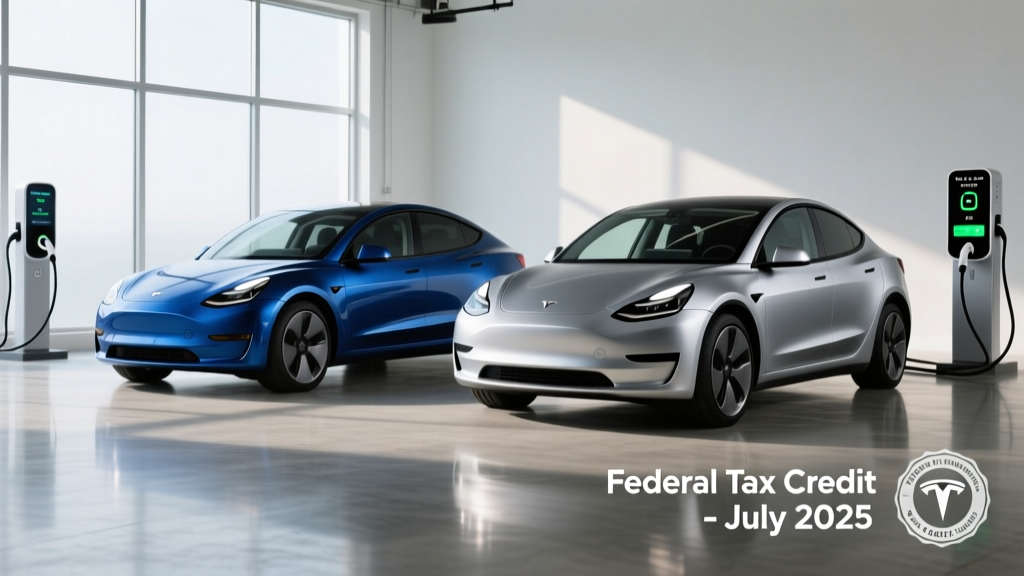
Mid-2025 marks a pivotal moment for Tesla buyers. With the federal EV tax credit landscape shifting and Tesla's lineup settling into the refreshed Model 3 "Highland" and updated Model Y "Juniper" platforms, understanding exactly which vehicles qualify — and how much you actually save — requires parsing IRS rules, battery-sourcing requirements, and trim-level MSRP caps. This guide breaks down every Tesla incentive available as of July 2025, paired with the real-world specs buyers need to make an informed decision.
Which Tesla Models Qualify for Federal Incentives in July 2025?
Under IRS §30D, the federal clean vehicle credit offers up to $7,500 for qualifying new EVs. As of mid-2025, Tesla's eligible lineup includes the Model 3 Rear-Wheel Drive, Model 3 Long Range AWD, and Model Y Long Range AWD. The Model S and Model X do not qualify — their MSRPs exceed the §30D cap of $55,000 for sedans and $80,000 for SUVs/vans/pickups. The Cybertruck, starting above $80,000 for eligible trims, also falls outside the credit window for most configurations.
Critically, the point-of-sale transfer option remains available, meaning qualified buyers can apply the credit directly at purchase rather than waiting to claim it on their tax return. Tesla's checkout process supports this transfer, reducing your effective purchase price on day one.
- MSRP Cap: $55,000 for sedans (Model 3); $80,000 for SUVs (Model Y)
- Buyer Income Cap: $150,000 single / $225,000 head of household / $300,000 joint (modified AGI)
- Battery Sourcing: Critical minerals and battery components must meet phased-in domestic/free-trade-agreement thresholds — $3,750 each for minerals and components
- Final Assembly: Must occur in North America (all US-market Teslas are assembled in Fremont, CA or Austin, TX)
- Point-of-Sale Transfer: Available — credit applied at purchase to reduce out-of-pocket cost
Source: IRS Clean Vehicle Credit
Tesla Model 3: Specs, Range, and Real-World Efficiency
The refreshed Model 3 (internally called "Highland") entered production in late 2023 and carries into the 2025 model year with meaningful updates to ride quality, cabin noise, and efficiency. Two main trims are available for incentive-eligible buyers.
| Spec | Model 3 RWD | Model 3 Long Range AWD |
|---|---|---|
| EPA Range | 272 miles | 341 miles |
| Battery (usable) | ~57.5 kWh (LFP) | ~75 kWh (NMC) |
| MPGe (combined) | 132 MPGe | 131 MPGe |
| Efficiency | 25 kWh/100 mi | 26 kWh/100 mi |
| 0–60 mph | 5.8 sec | 4.2 sec |
| Horsepower | 271 hp | 346 hp |
| Drivetrain | RWD (single motor) | AWD (dual motor) |
| Base MSRP | $38,990 | $45,990 |
| Price After $7,500 Credit | ~$31,490 | ~$38,490 |
| Battery Warranty | 8 yr / 100,000 mi | 8 yr / 120,000 mi |
Source: fueleconomy.gov — 2025 Tesla Model 3
EPA rates the Model 3 LR at 341 miles. In mixed highway driving at 70–75 mph, expect approximately 280–300 miles before needing to charge. In cold weather (below 32°F), range can drop 20–30%, yielding roughly 220–250 miles on a full charge. The LFP-equipped RWD model is more tolerant of regular 100% charging, which partially offsets its shorter EPA figure for daily commuters who charge nightly at home.
Tesla Model Y: The SUV That Dominates Sales
The Model Y received the "Juniper" refresh for the 2025 model year, bringing styling alignment with the updated Model 3, a slightly revised interior, and efficiency improvements. It remains the best-selling EV in the US and one of the best-selling vehicles period.
| Spec | Model Y Long Range AWD |
|---|---|
| EPA Range | 320 miles |
| Battery (usable) | ~75 kWh (NMC) |
| MPGe (combined) | 122 MPGe |
| Efficiency | 28 kWh/100 mi |
| 0–60 mph | 4.8 sec |
| Horsepower | 384 hp |
| Drivetrain | AWD (dual motor) |
| Base MSRP | $44,990 |
| Price After $7,500 Credit | ~$37,490 |
| Battery Warranty | 8 yr / 120,000 mi |
| Cargo Volume | 30.2 cu ft (rear seats up) / 72.1 cu ft (folded) |
| Rear Legroom | 36.5 inches |
Source: fueleconomy.gov — 2025 Tesla Model Y
The 320-mile EPA figure holds up reasonably well in moderate climates with city/suburban driving. Sustained highway travel at 75 mph typically yields 265–285 miles. Winter conditions in northern states can reduce that to 210–240 miles. Tesla's heat pump (standard on all current models) mitigates cabin-heating energy draw but does not eliminate cold-weather battery chemistry losses.
Charging Speed: DC Fast Charge and Home Level 2
Charging infrastructure remains Tesla's strongest competitive advantage. The Supercharger network, now exceeding 6,000 stations and 60,000 stalls in North America, offers reliable, plug-and-charge DC fast charging. Here's what the numbers look like for current Model 3 and Model Y trims.
| Charging Level | Model 3 RWD (LFP) | Model 3 LR / Model Y (NMC) |
|---|---|---|
| Level 1 (120V, 12A) | ~3 mi/hr | ~4 mi/hr |
| Level 2 (240V, 48A) | ~30 mi/hr (11.5 kW) | ~44 mi/hr (11.5 kW) |
| DC Fast Charge (peak) | 170 kW | 250 kW |
| 10–80% DCFC Time | ~28 min | ~25 min |
| Connector | NACS (native) | NACS (native) |
A few notes from real-world charging experience: The 250 kW peak on NMC models is not sustained. The charge curve tapers significantly above 60% State of Charge, dropping to roughly 80–100 kW by 80% SoC. If you're road-tripping, plan stops around the 15–20 minute mark to capture the fastest portion of the curve and move on. The LFP battery in the RWD Model 3 charges more slowly overall but can be charged to 100% daily without degradation concerns — a meaningful advantage for commuters with predictable routes.
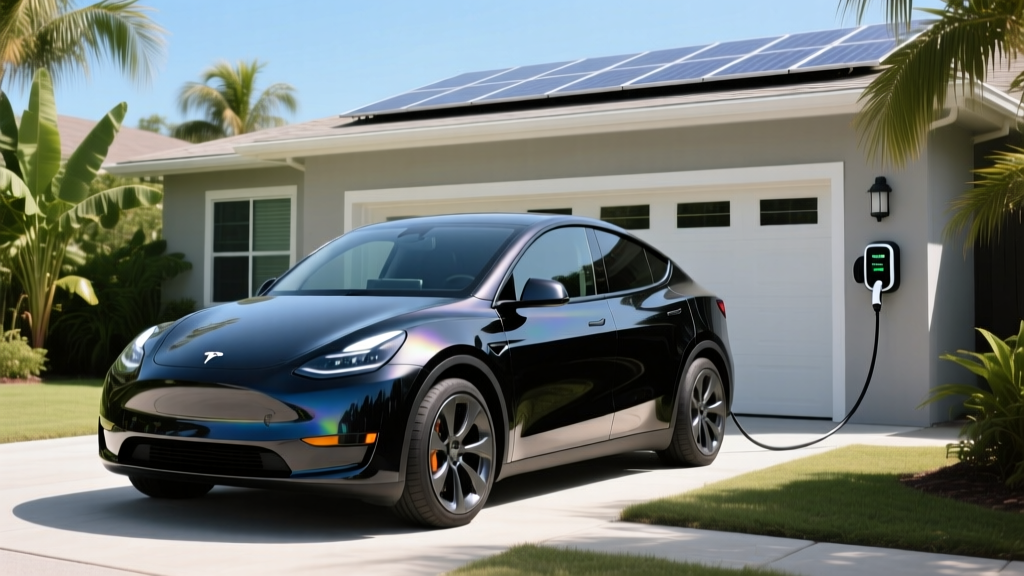
For home Level 2 charging, Tesla's Wall Connector ($420) delivers up to 48 amps on a 60-amp circuit. Installation costs vary widely: expect $800–$2,500 total (equipment + electrician + permit) if your electrical panel has sufficient capacity. A 200-amp panel upgrade can add $1,500–$3,000.
Pricing Breakdown: What You Actually Pay After Incentives
| Model / Trim | Base MSRP | Federal Credit | Effective Price | Destination Fee |
|---|---|---|---|---|
| Model 3 RWD | $38,990 | −$7,500 | $31,490 | +$1,390 |
| Model 3 Long Range AWD | $45,990 | −$7,500 | $38,490 | +$1,390 |
| Model 3 Performance | $52,990 | −$7,500 | $45,490 | +$1,390 |
| Model Y Long Range AWD | $44,990 | −$7,500 | $37,490 | +$1,390 |
| Model Y Performance | $48,990 | −$7,500 | $41,490 | +$1,390 |
These effective prices assume full $7,500 credit eligibility. If your vehicle's battery sourcing falls short on either the critical-minerals or battery-components requirement, the credit drops to $3,750 or $0. As of mid-2025, Tesla's US-built vehicles with domestically sourced battery cells (from Panasonic's Nevada Gigafactory and other suppliers) generally meet the full threshold, but buyers should verify at point of sale. Tesla's ordering page displays credit eligibility for your specific configuration.
Several states also offer additional incentives — California's CVRP, Colorado's state credit, and various utility rebates can stack on top of the federal credit. Check your state's energy office or utility provider for current programs, as these vary by jurisdiction and change frequently.
Tech, Driver Assistance, and Interior
Tesla's minimalist interior centers on a 15.4-inch touchscreen that handles navigation, media, climate, and vehicle settings. The Highland/Juniper refresh added ventilated front seats, ambient lighting, rear-seat ventilation controls, and significantly improved sound insulation. Build quality, historically a Tesla criticism, has meas improved on 2024–2025 vehicles.
Driver Assistance (SAE Level 2): Basic Autopilot is standard and includes adaptive cruise control and lane-centering. Full Self-Driving (Supervised) is an $8,000 option (or $99/month subscription) that adds automated lane changes, traffic-light recognition, and navigation-guided driving. FSD Supervised remains SAE Level 2 — the driver must remain attentive, hands on or near the wheel, and ready to intervene at all times. This is not autonomous driving.
- Drive without an attentive, licensed driver in the seat
- Handle all weather conditions (heavy rain, snow, construction zones)
- Replace driver judgment at complex intersections or unmapped areas
- Qualify as SAE Level 3 or above — you are legally responsible for the vehicle
The infotainment system supports Netflix, YouTube, and gaming while parked, over-the-air updates, and Tesla's app-based phone-as-key functionality. Notably absent: Apple CarPlay and Android Auto. If smartphone mirroring is a dealbreaker, Tesla is not the right fit.
Pros and Cons: The Honest Assessment
- Best-in-class Supercharger network — reliable, fast, ubiquitous
- $7,500 federal credit brings Model 3 RWD to ~$31,490 effective
- Class-leading efficiency (25–28 kWh/100 mi)
- LFP battery option allows daily 100% charging without degradation worry
- OTA updates continuously add features post-purchase
- Strong resale value relative to most EV competitors
- No Apple CarPlay / Android Auto
- FSD (Supervised) is expensive and still requires full driver attention
- Insurance premiums run 15–30% higher than comparable ICE vehicles
- Minimalist interior lacks physical controls some drivers prefer
- Model Y cargo area is shorter than competing SUVs (Hyundai Ioniq 5, Ford Mustang Mach-E)
- Service center availability varies by region — wait times can be long in rural areas
Who Should Buy a Tesla in July 2025?
The commuter: If you drive 30–60 miles daily and can charge at home, the Model 3 RWD at ~$31,490 after the federal credit is arguably the best value in the EV market. The LFP battery's tolerance for daily full charges means you wake up to 272 miles every morning.
The family: The Model Y Long Range offers 320 miles of EPA range, dual-motor AWD for inclement weather, and enough cargo space for strollers, groceries, and weekend gear. At ~$37,490 after the credit, it competes directly with gas SUVs on total cost of ownership over five years.
The road-tripper: Tesla's Supercharger network makes long-distance EV travel the least stressful of any brand. The Model 3 Long Range's 341-mile EPA range and 25-minute 10–80% charge time mean stops are brief and infrequent. No other EV ecosystem matches this for cross-country driving.
Who should look elsewhere: If you need Apple CarPlay, prefer physical buttons, want a traditional dealership experience, or live in an area without reliable Tesla service access, competitors like the Hyundai Ioniq 5, Chevrolet Equinox EV, or Ford Mustang Mach-E deserve a look.
Tesla Incentives July 2025: Frequently Asked Questions
Does every Tesla qualify for the $7,500 federal tax credit?
No. Only models under the §30D MSRP cap ($55,000 for sedans, $80,000 for SUVs) qualify. As of July 2025, the Model 3 (all trims) and Model Y (all trims) are eligible. The Model S, Model X, and most Cybertruck configurations exceed the cap and do not qualify. Buyer income must also fall under the AGI limits ($150K single / $300K joint).
Can I transfer the tax credit to Tesla at point of sale?
Yes. The §30D point-of-sale transfer allows you to apply the $7,500 credit directly to your purchase, reducing your out-of-pocket cost or down payment immediately rather than waiting to claim it on your next tax return. Tesla's ordering flow supports this.
What's the real-world range of the Model Y in winter?
In sustained sub-freezing temperatures, expect 20–30% range reduction from the 320-mile EPA figure. That translates to roughly 210–250 miles of real-world range. Preconditioning the battery while plugged in and using seat heaters (which draw less energy than cabin air heating) can help recover some of that loss.
How long does the Tesla battery last?
Tesla warrants its NMC batteries (Model 3 LR, Model Y) for 8 years or 120,000 miles, whichever comes first, with a minimum 70% capacity retention. The LFP battery in the Model 3 RWD is warranted for 8 years or 100,000 miles. Real-world data from Tesla's fleet suggests average degradation of approximately 10–15% over 150,000 miles for NMC packs, with LFP showing similar or slightly better longevity due to its chemistry stability.
Is Tesla insurance more expensive?
Generally, yes. EV insurance premiums tend to run 15–30% higher than equivalent gas vehicles due to higher repair costs and parts pricing. Tesla offers its own insurance product in many states, which uses real-time driving data to set rates — safe drivers can sometimes save significantly. Always get quotes from multiple providers before purchasing.
Does the Model 3 or Model Y support NACS or CCS charging?
All current Tesla vehicles use the NACS (North American Charging Standard) connector natively. This is the same connector Tesla has used since 2012 (previously proprietary, now standardized as SAE J3400). Tesla Superchargers use NACS. For non-Tesla public chargers using CCS1, Tesla sells a CCS adapter (~$250) that enables access to Electrify America, EVgo, and other networks.