Why Tesla in Winter Demands a Closer Look
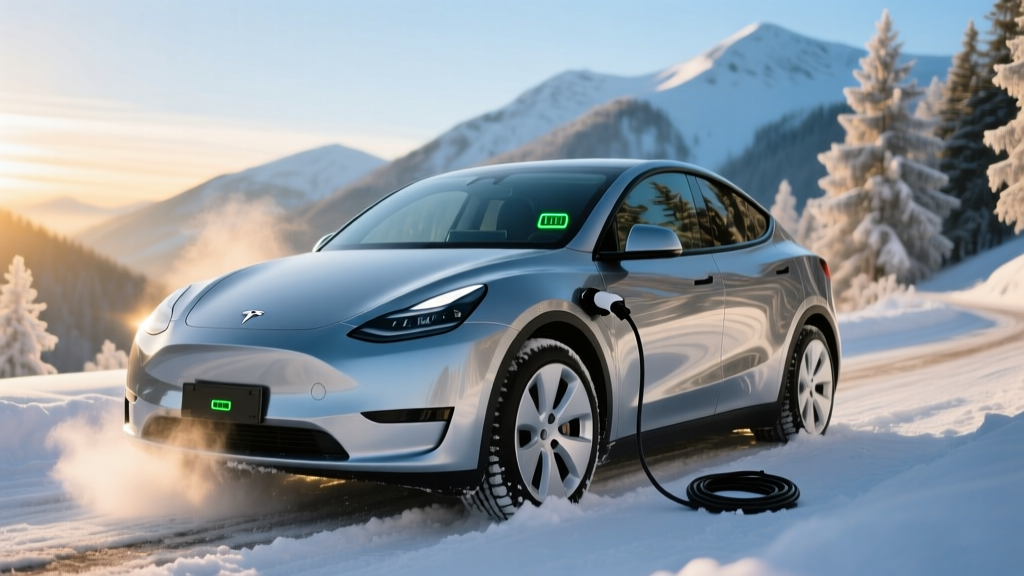
Search forums, Reddit threads, or any EV group in January and you'll find the same question repeated hundreds of times: how does a Tesla in winter actually perform? It's a fair concern. Cold temperatures compress battery chemistry, thicken lubricants, and force the cabin heater to work overtime — all of which eat into the EPA range sticker you see on the showroom window.
But Teslas aren't defenseless against the cold. Since 2021, every Model Y and Model 3 sold in North America has shipped with an octovalve thermal management system and a heat pump — hardware specifically engineered to claw back efficiency when temperatures drop below freezing. In 2026, Tesla continues to refine its battery preconditioning algorithms, making winter charging faster and more predictable than earlier generations.
This profile uses the 2026 Tesla Model Y Long Range AWD as our primary reference vehicle — the highest-volume Tesla and the one most buyers considering a Tesla in winter conditions will actually purchase. Where relevant, we'll note how the Model 3, Model S, and Model X compare.
2026 Tesla Model Y Long Range: Core Specifications
| Attribute | 2026 Model Y Long Range AWD |
|---|---|
| EPA Range | 320 miles |
| Battery Capacity | ~75 kWh usable (NMC chemistry, 2170 cells) |
| Drivetrain | Dual-Motor AWD |
| Horsepower | ~384 hp (combined) |
| 0–60 mph | 4.8 seconds |
| Max DC Fast Charge | 250 kW peak (V3 Supercharger) |
| 10–80% DC Fast Charge | ~25 minutes (preconditioned) |
| Level 2 Home Charge Rate | 11.5 kW (~44 mi/hr on Wall Connector) |
| Efficiency | 122 MPGe combined / 28 kWh/100 mi |
| Cargo Volume | 30.2 cu ft (rear seats up) / 72.1 cu ft (folded) |
| Front Trunk (Frunk) | 4.1 cu ft |
| Legroom (front/rear) | 41.8 in / 37.7 in |
| Towing Capacity | 3,500 lbs |
| Base MSRP | $44,990 |
| Battery Warranty | 8 years / 120,000 miles (min 70% retention) |
| Basic Vehicle Warranty | 4 years / 50,000 miles |
Source: fueleconomy.gov and Tesla's official 2026 specification pages.
Real-World Winter Range: What the EPA Sticker Doesn't Tell You
Real-World Expectation (mild weather, mixed driving): ~280–300 miles
Real-World Winter Range (20°F, highway 70 mph, cabin heat on): ~210–250 miles
Extreme Cold (0°F, short trips, frequent cabin reheating): ~180–210 miles
Let's be direct: a Tesla in winter loses range. This isn't a Tesla-specific problem — it's a lithium-ion chemistry reality that affects every EV on the road. But the magnitude of loss matters, and Tesla's thermal management system keeps that loss closer to 20–30% rather than the 40%+ some competitors experience.
Here's what's happening under the floorboards. At freezing temperatures, the electrolyte inside the NMC battery cells becomes more viscous, increasing internal resistance. That resistance means less usable energy and slower charge acceptance. Simultaneously, the cabin heater, seat heaters, steering wheel heater, and battery thermal conditioning all draw from the same 75 kWh pool.
The octovalve heat pump is Tesla's key advantage. Instead of using resistive heating (which converts electricity to heat at a 1:1 ratio), the heat pump scavenges ambient heat and waste heat from the drive motors and battery, delivering cabin warmth at roughly 3:1 efficiency. On a 30°F day, that can save 2–4 kW of continuous draw compared to a PTC heater — adding up to 20–30 extra miles on a long trip.
Cold-weather range reconciliation: If your daily commute is 40 miles round-trip in 20°F weather, a fully charged Model Y Long Range still gives you roughly 4–5 days of driving before needing a charge. For road trips, plan charging stops at roughly 180-mile intervals when temperatures hover near freezing, and you'll arrive at each Supercharger with a comfortable buffer.
Winter Charging Speeds: DC Fast, Level 2, and the Preconditioning Advantage
| Charging Method | Max Power | Speed (Miles Added/Hour) | Winter Notes |
|---|---|---|---|
| Level 1 (120V outlet) | 1.2 kW | ~3–4 mi/hr | Negligible in winter; may not offset cabin heat draw |
| Level 2 (240V, Wall Connector) | 11.5 kW | ~44 mi/hr | Full overnight charge in ~7 hours; preconditioning uses grid power |
| DC Fast (V3 Supercharger) | 250 kW peak | ~1,000 mi/hr (peak) | Cold battery without preconditioning: peaks at ~90–120 kW |
| DC Fast (V4 Supercharger) | Up to 350 kW | Varies by vehicle acceptance | Model Y currently caps at ~250 kW acceptance |
The single most important thing you can do for winter DC fast charging is navigate to the Supercharger using the car's built-in navigation. This triggers battery preconditioning — the car begins warming the battery pack 10–20 minutes before arrival using a combination of resistive heating and drive-motor waste heat. A preconditioned battery at 30°F can accept the full 250 kW peak curve; a cold-soaked battery that skipped preconditioning may peak below 120 kW and take 40+ minutes for a 10–80% session instead of 25.
At home, Level 2 charging in winter is actually more efficient than you might expect. If your Wall Connector is on a dedicated 60A circuit, the 11.5 kW charge rate also powers the battery thermal system — meaning the energy used to keep the battery warm comes from your house panel, not the battery itself. Schedule charging to finish right before departure, and the car wakes up with a warm battery and no range sacrificed to self-heating.
Charge curve reality check: The 250 kW peak at a V3 Supercharger only holds between roughly 10–30% state of charge. From 30–60%, expect ~150–180 kW. From 60–80%, the rate tapers to ~80–100 kW. This is normal lithium-ion behavior, and it's slightly more pronounced in cold weather even with preconditioning.
Pricing, Trims, and Federal Tax Credit Eligibility
| Trim | MSRP | Est. After §30D Credit | Drivetrain | EPA Range |
|---|---|---|---|---|
| Model Y Long Range AWD | $44,990 | ~$37,490* | Dual-Motor AWD | 320 mi |
| Model Y Performance | $48,990 | ~$41,490* | Dual-Motor AWD | 293 mi |
| Model 3 Long Range AWD | $42,490 | ~$34,990* | Dual-Motor AWD | 341 mi |
| Model 3 Performance | $47,490 | ~$39,990* | Dual-Motor AWD | 315 mi |
*Estimated pricing assumes full $7,500 §30D federal tax credit eligibility. Actual credit depends on buyer income, battery component sourcing, and MSRP caps. Consult a tax professional and verify current rules at IRS.gov.
The §30D clean vehicle credit in 2026 still offers up to $7,500, split between a $3,750 critical minerals requirement and a $3,750 battery component requirement. Tesla manufactures vehicles at the Fremont, California and Austin, Texas Gigafactories, which helps with the North American assembly requirement. However, battery mineral sourcing rules tighten annually, and eligibility can shift mid-year.
Key eligibility thresholds for 2026:
- MSRP cap: SUVs (including Model Y) must be under $80,000; sedans (Model 3) under $55,000. All current Tesla consumer trims qualify.
- Income cap: Modified AGI must not exceed $150,000 (single), $225,000 (head of household), or $300,000 (joint).
- Point-of-sale transfer: Since 2024, buyers can transfer the credit to the dealer at purchase, reducing the upfront price rather than waiting for a tax refund.
- Battery sourcing: Required percentages of critical minerals and battery components must be sourced from the US or FTA partners. Tesla's supply chain has progressively shifted to comply, but verify current-year status at purchase.
Performance, Tech, and the Winter Driving Experience
The dual-motor AWD system in the Model Y Long Range delivers power to both axles independently, with torque vectoring that reacts in milliseconds. In snow and ice, this gives Tesla a traction advantage over single-motor EVs and many mechanical AWD systems. The low center of gravity from the floor-mounted battery pack also reduces body roll on slippery surfaces.
Traction control and stability systems are software-defined, meaning Tesla can update them over-the-air. The "Chill" acceleration mode, accessible from the touchscreen, softens throttle response — useful when launching on packed snow where aggressive torque can break traction.
Standout tech features:
- 15.4-inch center touchscreen with navigation, streaming, and vehicle controls
- Autopilot (Level 2 driver-assist) with adaptive cruise, lane centering, and automatic emergency braking
- Full Self-Driving (Supervised) — an optional $8,000 upgrade adding automated lane changes, intersection handling, and parking assist (still requires active driver supervision)
- Sentry Mode with cabin-overheat protection and now cabin-cold protection
- Over-the-air updates continuously improve thermal management algorithms
- Phone-as-key with Bluetooth proximity unlock (no fumbling with gloves)
Notable drawbacks:
- No physical buttons or stalks — turn signals are on the steering wheel (2024+ refresh), wiper and light controls are touchscreen-only, which is frustrating with gloves
- Rear visibility is limited by the sloping roofline; relies heavily on cameras
- No Apple CarPlay or Android Auto — Tesla's proprietary infotainment only
- Panel gaps and paint quality remain inconsistent compared to legacy luxury brands
- Insurance premiums run 15–30% higher than comparable non-EV crossovers in most states
Who Should Buy a Tesla for Winter Driving?
- You live in a region with moderate-to-severe winters (Great Lakes, Northeast, Mountain West) and need reliable AWD
- You have access to home Level 2 charging — this unlocks preconditioning and eliminates cold-soak range loss
- Your typical daily driving is under 150 miles round-trip, leaving ample winter range buffer
- You take 2–4 road trips per year and want access to the Supercharger network (17,000+ stalls in North America)
- You value over-the-air updates that improve cold-weather performance year over year
- You regularly drive 300+ miles in sub-zero temperatures between charging options
- You need physical buttons, traditional gauges, or Apple CarPlay
- You require a NACS-to-CCS adapter for frequent non-Tesla DC fast charging (less relevant now that NACS is the industry standard)
- Your budget is under $35,000 and you cannot access the full §30D credit
Model Y vs. Key Winter Competitors
The Model Y doesn't exist in a vacuum. Here's how it stacks up against two popular alternatives for cold-climate buyers:
| Attribute | 2026 Tesla Model Y LR AWD | 2026 Hyundai Ioniq 5 Limited AWD | 2026 Ford Mustang Mach-E Premium AWD ER |
|---|---|---|---|
| EPA Range | 320 mi | 290 mi | 312 mi |
| Battery | ~75 kWh NMC | 84 kWh NMC | 91 kWh NMC (extended) |
| Max DC Charge | 250 kW | 240 kW (peak) | 150 kW |
| 10–80% Time | ~25 min | ~18 min (800V arch) | ~36 min |
| Heat Pump | Standard | Standard | Standard (2025+) |
| 0–60 mph | 4.8 sec | 5.1 sec | 5.1 sec |
| Base MSRP | $44,990 | $49,500 | $46,995 |
| DC Network | Supercharger (native NACS) | NACS (via adapter or native 2026) | NACS (via adapter or native 2026) |
The Ioniq 5's 800-volt architecture gives it a charging-speed edge in the 10–80% sprint, especially useful on winter road trips when you want minimal time standing in the cold. The Mach-E offers a more traditional crossover interior with physical buttons and a more compliant ride. But the Model Y's combination of Supercharger network access, proven heat pump efficiency, and the lowest starting MSRP in this comparison keeps it at the top of the winter-EV shortlist.
Practical Winter Ownership Tips for Tesla Owners
Based on real-world cold-climate ownership across multiple model years, here are the highest-impact practices:
- Always precondition before departure. Use the Tesla app to set a departure time. The car warms the battery and cabin while still plugged in, preserving range.
- Use seat and steering wheel heaters as primary warmth. They draw ~100W combined vs. 2,000–4,000W for cabin air heating. Set the cabin temp to 65°F and let contact heaters do the rest.
- Navigate to every Supercharger. Even if you know the route, entering it in nav triggers battery preconditioning — the difference between a 25-minute and a 45-minute stop.
- Keep charge limit at 80% for daily use, 100% for winter road trips. NMC batteries tolerate 100% better in cold weather than in heat, so occasional full charges for trips are fine.
- Install winter tires. Tesla's all-season tires are adequate for light snow, but dedicated winter tires (Michelin X-Ice Snow, Nokian Hakkapeliitta) dramatically improve braking and cornering on ice. The instant torque of an EV amplifies the benefit.
- Use "Chill" mode on icy roads. Softens throttle mapping, reducing the chance of wheelspin on acceleration.
- Plug in whenever possible. Even Level 1 (120V) keeps the battery management system active and the pack slightly warmed, reducing cold-soak degradation over weeks of extreme cold.
Frequently Asked Questions
What is the real-world range of a Tesla Model Y in winter?
Expect 210–250 miles of usable range at 20°F with highway driving and cabin heat active, down from the 320-mile EPA estimate. In extreme cold (0°F) with short trips, plan for 180–210 miles. The heat pump and preconditioning significantly reduce loss compared to EVs without these systems.
How fast does a Tesla charge in cold weather?
With battery preconditioning (triggered by navigating to a Supercharger), a Model Y Long Range charges at up to 250 kW and reaches 10–80% in approximately 25 minutes. Without preconditioning in freezing temperatures, peak charge rate can drop to 90–120 kW, extending the session to 35–45 minutes. Home Level 2 charging at 11.5 kW is largely unaffected by cold when the car is plugged in and preconditioning from grid power.
How much does a 2026 Tesla Model Y cost after tax credits?
The Model Y Long Range AWD starts at $44,990 MSRP. If you qualify for the full $7,500 §30D federal tax credit (income under $300,000 joint, vehicle meets battery-sourcing requirements), the effective price drops to approximately $37,490. The credit can be transferred at point of sale, reducing your upfront payment. Always verify current-year eligibility at IRS.gov and with a tax professional.
Does the Tesla Model Y qualify for the federal EV tax credit in 2026?
As of early 2026, the Model Y qualifies for up to $7,500 under §30D, subject to buyer income caps ($150K single / $300K joint), the $80,000 SUV MSRP cap (which the Model Y clears), and battery critical-mineral and component sourcing requirements. Tesla's North American manufacturing helps with assembly requirements, but sourcing percentages tighten annually. Confirm at purchase time.
Is a Tesla worth buying for winter driving vs. competitors?
For most cold-climate buyers with home charging access, the Model Y Long Range AWD offers the best combination of winter range retention (heat pump), charging infrastructure (Supercharger network), and pricing in the electric crossover segment. The Hyundai Ioniq 5 charges faster at DC stations, and the Ford Mach-E has a more conventional interior, but neither matches Tesla's integrated winter ecosystem. If you lack home charging and rely entirely on public infrastructure, the Supercharger advantage becomes even more decisive.
Does Autopilot work in snow and winter conditions?
Autopilot (Level 2) can function in light snow, but performance degrades when lane markings are obscured by snow, slush, or salt residue. The camera-based system has no lidar or radar redundancy (Tesla removed radar from 2022+ vehicles). Heavy snowfall, fog, and ice on camera lenses will trigger system warnings and disengage Autopilot. Always remain prepared to take full manual control in winter weather.
How does the Tesla battery warranty cover winter degradation?
Tesla's battery warranty covers 8 years or 120,000 miles (whichever comes first) for the Model Y Long Range, guaranteeing a minimum of 70% capacity retention. Normal winter range loss due to temperature is temporary and reversible — it does not count as degradation. Permanent capacity loss from calendar aging and charge cycles is what the warranty covers, and Tesla's NMC packs historically lose 8–12% over the first 100,000 miles based on fleet data.
For the latest EPA efficiency data, visit fueleconomy.gov. For safety ratings, check NHTSA and IIHS.