Why Colorado Changes the Tesla Ownership Equation
Colorado has become one of the most EV-friendly states in the U.S., with a robust charging corridor along the I-25/I-70 front range, aggressive state rebates, and high-altitude driving conditions that affect range and performance in ways most buyers overlook. If you're researching a Tesla in Colorado, you need more than the EPA sticker — you need to know how a Model Y or Model 3 handles a January commute from Boulder to Denver, what happens to charging speeds in the mountains, and whether you actually qualify for the federal tax credit under current §30D rules.
This guide covers the two Tesla models most relevant to Colorado buyers in 2026 — the refreshed Model 3 (Highland and subsequent updates) and the Model Y (Juniper refresh) — with exact specs, real-world range data, charging performance, pricing, and ownership considerations specific to the Centennial State.
2026 Tesla Model 3: Specs, Range, and Colorado Performance
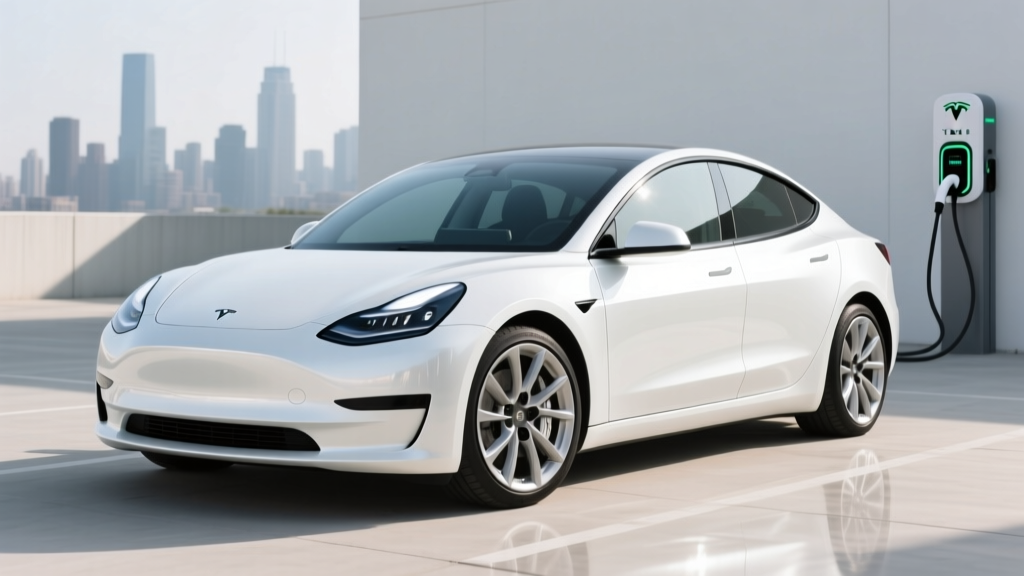
The 2026 Tesla Model 3 continues the Highland-refresh design introduced in late 2023, with minor software and battery-management updates. It remains one of the most efficient sedans in the EV market, but Colorado's elevation and winter temperatures demand a closer look at real-world numbers.
| Spec | RWD (Standard Range) | Long Range AWD | Performance |
|---|---|---|---|
| EPA Range | 272 mi | 341 mi | 315 mi |
| Battery Capacity (usable) | ~60 kWh (LFP) | ~75 kWh (NMC) | ~75 kWh (NMC) |
| Drivetrain | Rear-Wheel Drive | Dual-Motor AWD | Dual-Motor AWD |
| Horsepower | 271 hp | 346 hp | 510 hp |
| 0–60 mph | 5.8 sec | 4.2 sec | 2.9 sec |
| Efficiency (MPGe) | 132 MPGe combined | 131 MPGe combined | 125 MPGe combined |
| Efficiency (kWh/100 mi) | 25 kWh | 26 kWh | 27 kWh |
| Max DC Fast Charge | 170 kW | 250 kW | 250 kW |
| 10–80% DC Fast Charge | ~25 min | ~27 min | ~27 min |
| Level 2 Home Charge Rate | 11.5 kW (~44 mi/hr) | 11.5 kW (~44 mi/hr) | 11.5 kW (~44 mi/hr) |
| Cargo Volume | 23 cu ft (rear trunk + frunk combined) | ||
| Rear Legroom | 35.3 in | ||
| Battery/Drive Unit Warranty | 8 yr / 100,000 mi | 8 yr / 120,000 mi | |
| Base MSRP (2026) | $38,990 | $47,740 | $54,990 |
The EPA 341-mile Long Range figure assumes mixed driving at moderate temperatures. In Colorado, expect ~280–300 miles on a full charge during summer highway driving (I-70 at 70–80 mph with A/C), and ~230–260 miles in winter (below 32°F, cabin heating, mountain passes). The LFP RWD model is more affected by cold — plan for ~200–220 miles of usable range in January. Colorado's 5,000–6,000 ft elevation actually helps slightly with efficiency on flat segments (less air density), but mountain climbs on I-70 West to the Eisenhower Tunnel can consume 15–20% of your battery in 40 miles.
2026 Tesla Model Y: The Colorado Family Hauler
The 2026 Model Y (Juniper refresh) carries over the structural updates from the 2025 model year — quieter cabin, revised suspension, ventilated front seats, and a rear touchscreen. It's the best-selling EV in the U.S. for good reason, but its higher weight and crossover profile mean range and charging behavior differ meaningfully from the Model 3.
| Spec | Long Range AWD | Performance AWD |
|---|---|---|
| EPA Range | 320 mi | 293 mi |
| Battery Capacity (usable) | ~75 kWh (NMC) | ~75 kWh (NMC) |
| Drivetrain | Dual-Motor AWD | Dual-Motor AWD |
| Horsepower | 384 hp | 510 hp |
| 0–60 mph | 4.8 sec | 3.5 sec |
| Efficiency (MPGe) | 122 MPGe combined | 115 MPGe combined |
| Efficiency (kWh/100 mi) | 28 kWh | 30 kWh |
| Max DC Fast Charge | 250 kW | 250 kW |
| 10–80% DC Fast Charge | ~27 min | ~27 min |
| Level 2 Home Charge Rate | 11.5 kW (~37 mi/hr) | 11.5 kW (~37 mi/hr) |
| Cargo Volume (rear seats up) | 30 cu ft | |
| Cargo Volume (rear seats folded) | 72 cu ft | |
| Rear Legroom | 38.4 in | |
| Battery/Drive Unit Warranty | 8 yr / 120,000 mi | |
| Base MSRP (2026) | $46,630 | $53,990 |
The EPA 320-mile Long Range rating drops to ~260–280 miles on summer highway trips and ~210–240 miles in winter conditions. If you regularly drive from Denver to Breckenridge or Steamboat Springs in January, plan conservatively: that 105-mile mountain route (with 6,000+ ft of elevation gain) can use 40–50% of your battery one way, even with preconditioning. The heat pump (standard on all 2026 Teslas) helps significantly vs. resistive heating, but it's not a magic fix below 10°F.
Charging a Tesla in Colorado: Superchargers, Home Setup, and Mountain Gaps
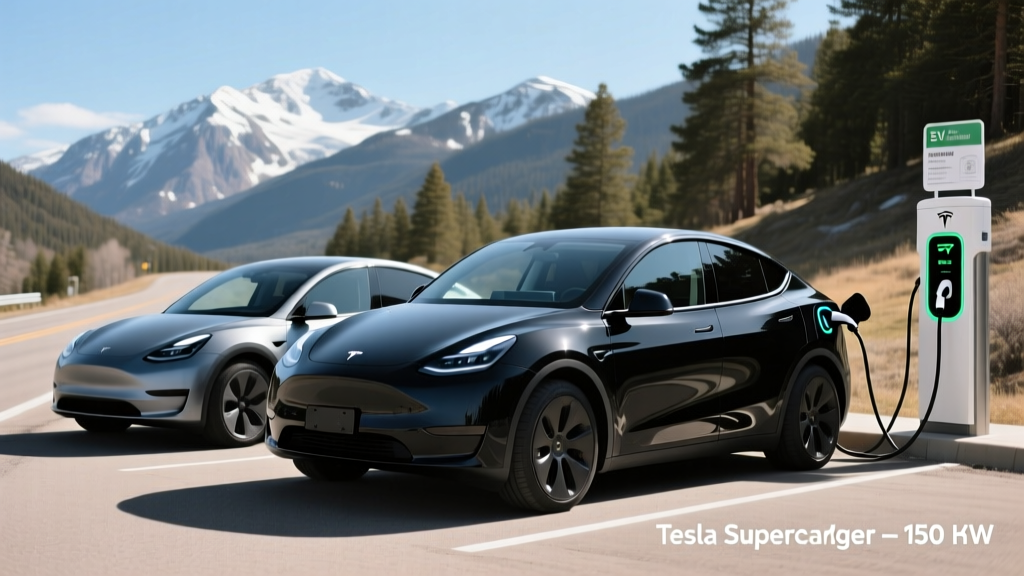
Colorado's Tesla Supercharger network is among the best in the country for a state this size, with V3 (250 kW) and some V4 stalls concentrated along the I-25 corridor (Fort Collins → Denver → Colorado Springs → Pueblo) and key I-70 stops (Silverthorne, Glenwood Springs, Grand Junction). However, mountain charging gaps exist — notably between Silverthorne and Glenwood Springs, where terrain and distance combine to create range stress in winter.
| Charging Level | Power (kW) | Approx. Miles Added per Hour | Typical Use Case |
|---|---|---|---|
| Level 1 (120V outlet) | 1.4–1.9 kW | 3–5 mi/hr | Emergency / overnight trickle |
| Level 2 (240V, Wall Connector) | 11.5 kW | 37–44 mi/hr | Home daily charging |
| DC Fast Charge (V3 Supercharger) | Up to 250 kW | ~1,000 mi/hr (peak) | Road trips, 10–80% in ~27 min |
| DC Fast Charge (V4 Supercharger) | Up to 250 kW (currently) | ~1,000 mi/hr (peak) | Same as V3; future CCS integration |
Home charging reality in Colorado: Most Colorado homeowners can install a Tesla Wall Connector on a 60-amp circuit for $800–$1,500 (equipment + electrician) if the panel has capacity. Older homes in Denver, Boulder, or Fort Collins may need a 200-amp panel upgrade ($2,000–$4,000) before adding a dedicated 60A EV circuit. Xcel Energy's EV Rate program offers time-of-use pricing that can cut home charging costs to roughly $0.06–$0.08/kWh overnight — making a full Model Y charge cost under $5.
Charge-curve reality check: The 250 kW peak rate on V3 Superchargers only holds from roughly 10–30% SoC. Above 50%, charging tapers to ~100 kW; above 80%, it drops further to ~40–50 kW. The "10–80% in 27 minutes" figure accounts for this taper, but if you're charging from 5% to 95% on a cold day, expect 45–55 minutes total. Always precondition your battery (navigate to a Supercharger in the Tesla app) to warm the pack and hit peak rates.
Pricing, Tax Credits, and Total Cost for Colorado Buyers
Federal tax credit eligibility under IRS §30D remains complex in 2026. The full $7,500 credit requires meeting both critical-mineral and battery-component sourcing thresholds, plus buyer income and MSRP caps. As of 2026, the Model 3 RWD (LFP battery) has historically struggled to meet the battery-component requirement due to CATL sourcing, while the Long Range and Model Y (NMC, with North American assembly) have more consistently qualified — but this shifts with supply-chain changes.
| Model / Trim | Base MSRP | Est. Federal Credit (§30D) | Colorado State Credit (2026) | Est. Net Price |
|---|---|---|---|---|
| Model 3 RWD | $38,990 | $3,750 (partial — critical minerals only)* | Up to $5,000** | ~$30,240 |
| Model 3 Long Range AWD | $47,740 | $7,500 (if sourcing requirements met)* | Up to $5,000** | ~$35,240 |
| Model Y Long Range AWD | $46,630 | $7,500 (if sourcing requirements met)* | Up to $5,000** | ~$34,130 |
| Model Y Performance | $53,990 | $7,500 (if sourcing requirements met)* | Up to $5,000** | ~$41,490 |
* Federal credit eligibility depends on battery sourcing, buyer AGI (≤$150K single / ≤$300K joint for new vehicles), and MSRP caps ($55K sedans / $80K SUVs). Verify at IRS.gov and confirm with your tax professional before purchase. Point-of-sale transfer is available at Tesla delivery.
** Colorado's Innovative Motor Vehicle Credit for EVs varies by MSRP and income. Confirm current amounts at the Colorado Legislature or through your dealer.
Tech, Driver Assistance, and What Tesla Gets Right (and Wrong) in 2026
All 2026 Teslas ship with the latest version of Tesla's infotainment system — a 15.4-inch center screen (Model 3) or 15.4-inch center + 8-inch rear screen (Model Y). Navigation, streaming, and the Tesla app integration remain best-in-class for responsiveness. Over-the-air updates continue to add features post-delivery.
Tesla's Autopilot (standard) and Full Self-Driving Supervised ($8,000 option or $99/month) are SAE Level 2 driver-assistance systems. They require the driver to remain fully engaged, hands on or near the wheel, and eyes on the road at all times. They are not autonomous. FSD Supervised handles highway lane changes, city intersections, and stop signs with increasing competence, but it makes errors — especially in construction zones, on unmapped mountain roads, and in heavy snow. Colorado's winding passes and sudden weather changes demand heightened vigilance. Never treat FSD as self-driving.
Standout features:
- Sentry Mode with live camera access via app (valuable in urban Denver/Boulder parking)
- Dog Mode and Camp Mode for Colorado's outdoor lifestyle
- Heat pump standard — critical for sub-zero mornings in the high country
- Frunk + trunk flexibility (especially Model Y's 72 cu ft with seats folded)
- Supercharger network access — still the most reliable public DC fast-charging network in Colorado
Notable drawbacks:
- No physical stalks on refreshed Model 3/Y (turn signals are steering-wheel buttons — polarizing in roundabouts and mountain switchbacks)
- No Apple CarPlay or Android Auto — Tesla's ecosystem is closed
- Minimal service center presence outside the Front Range (Grand Junction, Durango, and mountain towns have limited Tesla service options)
- Insurance costs in Colorado run 15–25% higher than comparable gas vehicles (per III.org data)
Who Should Buy a Tesla in Colorado — And Who Shouldn't
✅ Pros
- Best-in-class Supercharger network along I-25 and key I-70 corridors
- AWD standard on Long Range/Performance — essential for Colorado winters
- Heat pump and preconditioning handle sub-zero starts better than most EVs
- Strong federal + state incentive stacking can drop net price below $35K
- Low running costs: ~$0.04–$0.08/mile on Xcel EV rate vs. ~$0.12–$0.15/mile for gas
- Over-the-air updates add features post-purchase
❌ Cons
- Winter range loss of 25–35% is real — plan trips conservatively
- Mountain charging gaps on I-70 West (Silverthorne to Glenwood Springs) require planning
- Limited Tesla service infrastructure outside the Front Range
- Turn-signal buttons instead of stalks take weeks to adapt to
- FSD Supervised is not reliable enough for mountain or heavy-snow driving
- Insurance premiums higher than average in Colorado
Choose a Tesla in Colorado If:
- You live on or near the Front Range (Fort Collins → Pueblo) with reliable home charging access
- Your daily commute is under 80 miles round-trip (easily handled even in winter)
- You want AWD, a heat pump, and the most mature public charging network in the state
- You qualify for the federal §30D credit and Colorado's state incentive, bringing net cost well below $40K
Consider Alternatives If:
- You live in western Colorado (Grand Junction, Durango, Montrose) where Tesla service is sparse and charging options are thinner
- You regularly tow — the Model Y's 3,500-lb tow rating is adequate but not class-leading (consider a Rivian R1S or Ford F-150 Lightning for heavier loads)
- You want Apple CarPlay, physical controls, or a dealer service network (look at the Hyundai Ioniq 5 or Kia EV6)
- Your budget is under $35K net — the Model 3 RWD gets close with incentives, but the Chevy Equinox EV or Nissan Ariya may offer more space at a lower net price
Frequently Asked Questions
What is the real-world range of a Tesla in Colorado winters?
Expect 25–35% less than the EPA sticker when temperatures drop below freezing. A Model 3 Long Range (EPA 341 mi) delivers roughly 230–260 real-world miles in January. A Model Y Long Range (EPA 320 mi) drops to ~210–240 miles. Preconditioning, seat heaters (instead of cabin air), and moderate speeds help recover some of that loss.
How fast does a Tesla charge at home in Colorado?
With a Tesla Wall Connector on a 60-amp / 240V circuit, both the Model 3 and Model Y charge at 11.5 kW, adding roughly 37–44 miles of range per hour. A full overnight charge (8 hours) adds ~300 miles — more than enough for daily driving. Installation typically costs $800–$1,500 if your panel has capacity.
Does a 2026 Tesla qualify for the $7,500 federal tax credit?
It depends on the trim and current battery-sourcing rules. The Model 3 Long Range and Model Y (NMC, assembled in Fremont/Austin) have more consistently met §30D requirements, while the Model 3 RWD (LFP, CATL cells) often qualifies for only the $3,750 critical-minerals half. Buyer income must be ≤$150K single / ≤$300K joint, and MSRP must be under $55K (sedans) or $80K (SUVs). Always verify at IRS.gov before purchasing.
Is a Tesla worth buying vs. a Hyundai Ioniq 5 or Ford Mustang Mach-E in Colorado?
The Tesla wins on Supercharger network reliability and software integration. The Ioniq 5 offers faster peak charging (up to 350 kW on 800V architecture), Apple CarPlay, and a more conventional control layout. The Mach-E provides a Ford dealer service network across Colorado, including western towns. If Supercharger access on I-70 and I-25 is your priority, Tesla still has the edge. If you want physical buttons, CarPlay, or broader service coverage, the Ioniq 5 or Mach-E are strong alternatives.
Can I drive a Tesla from Denver to Aspen or Steamboat Springs in winter without range anxiety?
Yes, but with planning. Denver to Aspen (~200 miles) requires a Supercharger stop in Silverthorne or Glenwood Springs depending on conditions. Denver to Steamboat (~160 miles) is doable on a full charge in summer, but winter driving with elevation gain and cold temps can push consumption to 400+ Wh/mile — plan to charge in Silverthorne. Always precondition before departure and check Supercharger stall availability in the Tesla app.
What's the battery warranty on a 2026 Tesla?
The Model 3 RWD covers 8 years or 100,000 miles (whichever comes first) with a minimum 70% capacity retention guarantee. The Model 3 Long Range, Model 3 Performance, and all Model Y trims cover 8 years or 120,000 miles, also with 70% retention. Tesla's warranty is competitive but not class-leading — Hyundai/Kia offer 10-year/100,000-mile battery coverage.