Tesla didn't just enter the auto industry — it rewired it. From forcing legacy automakers to accelerate their EV timelines to establishing the North American Charging Standard (NACS) now adopted by Ford, GM, Rivian, and others, Tesla's impact on auto industry electrification is measurable in every competitor's spec sheet. But in 2026, the question has shifted: does Tesla's current lineup still lead, or has the competition it inspired caught up?
This review examines Tesla's 2026 lineup — the refreshed Model 3 Highland, the Juniper-refresh Model Y, the Cybertruck, and the Model S/X — through the lens of a data-driven EV buyer. We'll cover real-world range, charging speeds, pricing after federal tax credits, and where each model stands against the rivals Tesla's own disruption helped create.
Tesla's 2026 Lineup at a Glance
| Model | EPA Range | Battery (kWh) | Chemistry | 0-60 mph | HP | Base MSRP |
|---|---|---|---|---|---|---|
| Model 3 RWD | 272 mi | ~57.5 usable | LFP | 5.8s | 271 | $38,990 |
| Model 3 Long Range AWD | 341 mi | ~75 usable | NMC | 4.2s | 366 | $44,990 |
| Model Y Long Range AWD | 320 mi | ~75 usable | NMC | 4.8s | 384 | $44,990 |
| Cybertruck AWD | 340 mi | ~123 usable | NMC | 4.1s | 600 | $79,990 |
| Model S LR | 402 mi | ~95 usable | NMC | 3.1s | 670 | $74,990 |
Sources: EPA / fueleconomy.gov, Tesla.com (2026 model year specs).
Real-World Range: What the EPA Sticker Doesn't Tell You
EPA vs. Reality: The Model 3 Long Range posts an EPA-estimated 341 miles. In real-world highway driving at 70-75 mph, expect approximately 280-305 miles. In sub-freezing winter conditions (20-30°F), plan for 230-260 miles — a 25-35% reduction common to all EVs due to battery resistance and cabin heating demands. City driving with regenerative braking recovers energy and often exceeds EPA figures.
Tesla's efficiency remains among the best in the industry. The Model 3 RWD achieves roughly 25 kWh/100 mi (133 MPGe combined per the EPA), meaning it extracts more miles per kilowatt-hour than most rivals. The LFP battery in the RWD model trades energy density for longevity — you'll sacrifice about 70 miles of range versus Long Range, but the LFP chemistry tolerates daily 100% charging without degradation concerns, which is a practical advantage for commuters.
The Model Y Long Range delivers 320 miles EPA but functions as a realistic 265-285 mile highway vehicle. The Cybertruck, despite its 340-mile EPA rating with the optional range extender, is a brick aerodynamically — expect 270-290 miles at highway speeds, and less when towing. The Model S remains the range king at 402 miles EPA, translating to roughly 340-360 real-world highway miles.
Charging Speed: Supercharger Dominance and Home Setup
| Model | Max DC Fast Charge | 10-80% Time | Level 2 Home (kW) | Level 2 Miles/Hr |
|---|---|---|---|---|
| Model 3 RWD (LFP) | 170 kW | ~25 min | 11.5 kW | ~44 mi/hr |
| Model 3 Long Range | 250 kW | ~18 min | 11.5 kW | ~44 mi/hr |
| Model Y Long Range | 250 kW | ~20 min | 11.5 kW | ~44 mi/hr |
| Cybertruck | 350 kW (800V) | ~15 min | 17.2 kW | ~52 mi/hr |
| Model S/X | 250 kW | ~22 min | 11.5 kW | ~41 mi/hr |
Tesla's Supercharger network — now exceeding 6,500 stations and 65,000+ connectors in North America — remains the single most compelling charging ecosystem. With the NACS connector now the de facto standard, competitors are gaining access, but Tesla owners still benefit from native navigation-integrated preconditioning: the car automatically heats or cools the battery en route to a Supercharger, ensuring you hit peak charge rate on arrival.
The charge curve matters. A Model 3 Long Range peaks at 250 kW but only between roughly 10-30% state of charge (SoC). From 50-80%, the rate tapers to 80-120 kW. This is why the 10-80% time is a more honest metric than peak kW. The Cybertruck's 800-volt architecture enables 350 kW peaks at V4 Superchargers, but only at equipped stations.
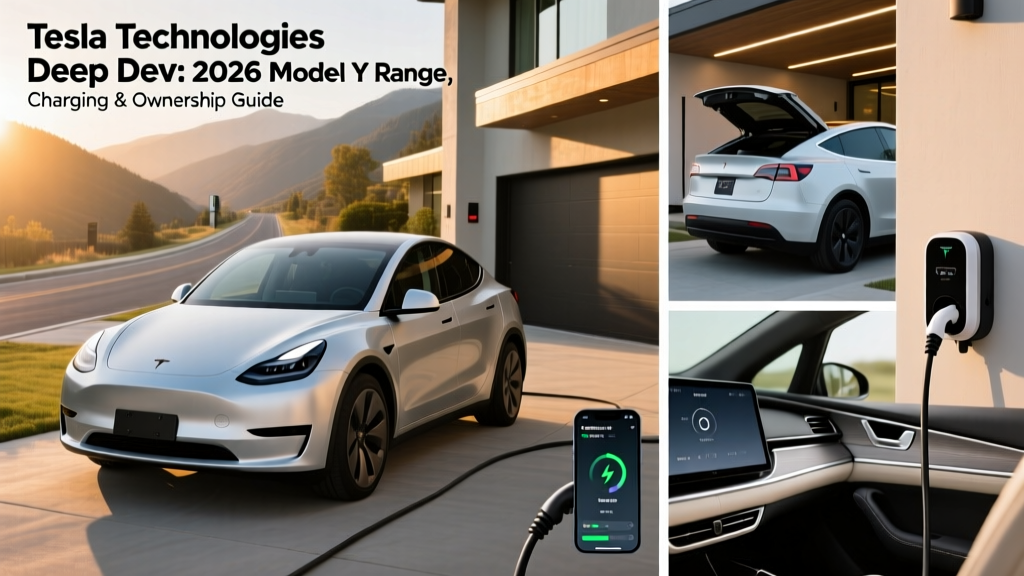
For home charging, a Tesla Wall Connector on a 60-amp circuit delivers 11.5 kW (44 miles of range per hour) for most models. Cybertruck owners with a 48-amp onboard charger can accept up to 17.2 kW on a hardwired 80-amp circuit, which requires a 100-amp dedicated breaker — consult a licensed electrician, as many homes need a panel upgrade to support this.
Pricing and Federal Tax Credit Eligibility (2026)
| Model / Trim | MSRP | §30D Credit | Effective Price | MSRP Cap Compliant? |
|---|---|---|---|---|
| Model 3 RWD | $38,990 | Up to $7,500 | ~$31,490 | Yes (sedan cap: $55K) |
| Model 3 Long Range | $44,990 | Up to $7,500 | ~$37,490 | Yes |
| Model Y Long Range | $44,990 | Up to $7,500 | ~$37,490 | Yes (SUV cap: $80K) |
| Cybertruck AWD | $79,990 | $0 | $79,990 | Yes, but sourcing TBD |
| Model S LR | $74,990 | $0 | $74,990 | Yes, but sourcing TBD |
The IRS §30D federal tax credit has strict requirements for 2026:
- MSRP caps: Sedans/wagons ≤ $55,000; SUVs/pickups/vans ≤ $80,000
- Buyer income caps: AGI ≤ $150K single / $225K head of household / $300K joint
- Battery sourcing: Critical minerals and battery components must meet phased-in domestic/free-trade-area thresholds (increasing annually through 2029)
- Point-of-sale transfer: Eligible buyers can apply the credit as a down-payment reduction at purchase
The Model 3 RWD and Long Range, plus the Model Y Long Range, have consistently qualified for the full $7,500 credit, though Tesla's battery-sourcing compliance can shift. Always verify current eligibility on the fueleconomy.gov credit lookup before purchasing. The Cybertruck and Model S/X, despite meeting MSRP caps, have faced sourcing-rule disqualification — check before committing.
How Tesla Compares to the Competition It Created
Tesla's impact on auto industry electrification is most visible in the rivals it now faces. The Hyundai Ioniq 6 (361 mi EPA, ~$38K) matches or beats Model 3 range at a similar price. The Ford Mustang Mach-E (312 mi EPA LR, ~$43K) challenges Model Y directly. The Rivian R1T and Chevy Silverado EV compete with Cybertruck in the electric truck segment.
Best value sedan: Model 3 RWD at ~$31,490 after credit — hard to beat for a 272-mile EV with Supercharger access.
Best family SUV: Model Y — cargo space (76 cu ft max), efficiency, and charging speed remain the benchmark, though the Hyundai Ioniq 5 and Kia EV6 are close rivals.
Where Tesla still leads decisively: software integration, Supercharger reliability, and over-the-air updates that add features post-purchase. Where it trails: interior material quality (especially versus Hyundai/Genesis), panel gap consistency, and service center wait times in some metro areas.
Driver Assistance: Autopilot and FSD (Supervised)
SAE Level 2 — Not Self-Driving: Tesla Autopilot and Full Self-Driving (Supervised) are Level 2 driver-assistance systems. The driver must remain fully engaged, hands on or near the wheel, eyes on the road. These systems do not replace driver attention. Level 4 autonomous driving (no human required) is currently only available in limited robotaxi services like Waymo.
Tesla's vision-only approach (no LiDAR) remains controversial. FSD (Supervised) handles highway lane changes, on-ramps, and city street navigation impressively in many scenarios, but requires constant vigilance. At $8,000 (or $99/month subscription in 2026), FSD is an expensive add-on that does not yet deliver full autonomy. Basic Autopilot (included) provides competent adaptive cruise and lane centering for highway commuting.
What FSD does NOT do: Navigate construction zones reliably, handle all weather conditions, recognize every traffic control device, or drive without human supervision. Treat it as an advanced cruise assist, not a chauffeur.
Cargo, Space, and Practicality
The Model Y offers 76 cubic feet of cargo space with rear seats folded (30 cu ft behind second row), plus a small front trunk (frunk). Rear legroom is 41.6 inches — adequate for adults on long trips.
The Model 3 provides 23 cu ft of trunk space (plus frunk), with 35.3 inches of rear legroom — tighter than the Model Y and some competitors like the Hyundai Ioniq 6 (37.7 in rear).
The Cybertruck's 6.5-foot bed with motorized tonneau and 3,500-lb payload capacity positions it as a genuine work truck, though its 6,600+ lb curb weight and 20-inch width create parking challenges. Towing capacity is 11,000 lbs — but towing at max capacity cuts range roughly in half.
Warranty and Battery Longevity
Tesla's battery and drive unit warranty covers 8 years / 100,000 miles for Model 3 RWD and 8 years / 120,000 miles for Long Range and Model Y variants, with a minimum 70% capacity retention threshold. The Cybertruck, Model S, and Model X carry 8 years / 150,000 miles.
LFP batteries (Model 3 RWD) show minimal degradation in real-world fleet data — typically under 5% loss after 100,000 miles, partly because owners can charge to 100% daily without harm. NMC batteries (Long Range, Model Y, S/X) benefit from daily charging to 80% with periodic 100% calibration charges. Tesla's basic vehicle warranty is 4 years / 50,000 miles — shorter than Hyundai's 5/60K or Rivian's 5/60K, which is a notable drawback at this price point.
Pros, Cons, and Who Should Buy
Pros
- Supercharger network — most reliable public charging in North America
- Industry-leading efficiency (kWh/100mi)
- Over-the-air updates continuously add features
- LFP option (Model 3 RWD) enables worry-free 100% daily charging
- Strong resale value relative to most EVs
Cons
- Basic vehicle warranty (4yr/50K) trails competitors
- Service center capacity strained in many regions
- Interior material quality lags Hyundai, BMW, Mercedes
- FSD cost ($8,000) with no guaranteed Level 4 timeline
- No Apple CarPlay / Android Auto — Tesla-only infotainment
Choose Tesla if: You want Supercharger reliability, value software integration, and prioritize efficiency-per-dollar. The Model 3 RWD at ~$31,500 after tax credit is arguably the best value EV in America for single commuters or couples.
Look elsewhere if: You need a longer basic warranty (Hyundai/Kia), want CarPlay, prefer a traditional dealer service experience, or need guaranteed FSD-level autonomy today (it doesn't exist from any automaker at consumer level).
Frequently Asked Questions
What is the real-world range of Tesla's 2026 models?
The Model 3 Long Range delivers roughly 280-305 highway miles and 230-260 in freezing weather, versus its 341-mile EPA rating. The Model Y Long Range averages 265-285 real-world highway miles. City driving with regenerative braking often matches or slightly exceeds EPA figures.
How fast does a Tesla charge at home and on the road?
On a Level 2 Tesla Wall Connector (11.5 kW), most models gain about 44 miles of range per hour — a full overnight charge from 20-80% takes 4-5 hours. DC fast charging at a V3 Supercharger (250 kW peak) delivers 10-80% in approximately 18-22 minutes depending on the model.
How much does a Tesla cost after federal tax credits?
The Model 3 RWD starts at $38,990 and can drop to approximately $31,490 with the full $7,500 §30D credit, assuming you meet income caps and the vehicle meets battery-sourcing requirements. Always verify eligibility on fueleconomy.gov before purchasing.
Is Tesla still worth buying versus competitors in 2026?
For value and charging infrastructure, yes — the Model 3 RWD and Model Y remain benchmarks. For interior quality, consider Hyundai Ioniq 5/6 or BMW i4. For truck utility, the Rivian R1T and Ford F-150 Lightning offer more conventional truck ergonomics than Cybertruck.
Does Tesla qualify for the $7,500 federal EV tax credit?
The Model 3 (RWD and Long Range) and Model Y Long Range have consistently qualified for the full $7,500 credit in 2026, subject to buyer income limits ($150K single / $300K joint) and battery-sourcing compliance. The Cybertruck, Model S, and Model X have faced periodic disqualification — check current status before purchase.
What is Tesla's biggest impact on auto industry electrification?
Beyond forcing every major automaker to invest billions in EV platforms, Tesla's most lasting structural impact may be NACS — the charging connector standard now adopted by Ford, GM, Rivian, Volvo, and others, unifying North American charging under one plug type for the first time.