If you've ever finished a road-trip meal only to return to your Tesla and find a $12 idle fee on your Supercharger receipt, you're not alone. The Tesla idle fee is one of the most misunderstood — and easily avoided — costs in the EV ecosystem. As Tesla's Supercharger network has expanded to over 6,500 stations and 70,000+ stalls globally (and opened to non-Tesla EVs via NACS adapters), idle fees have become a more frequent pain point for both Tesla owners and drivers of Ford, Rivian, GM, and other NACS-equipped vehicles.
This guide breaks down exactly how Tesla's idle fee works in 2026, when it triggers, what it costs, and the practical steps you can take to never pay one again — plus a look at how the broader Supercharger experience factors into the total cost of Tesla ownership for the current Model 3, Model Y, Model S, and Model X lineup.
What Is the Tesla Idle Fee and Why Does It Exist?
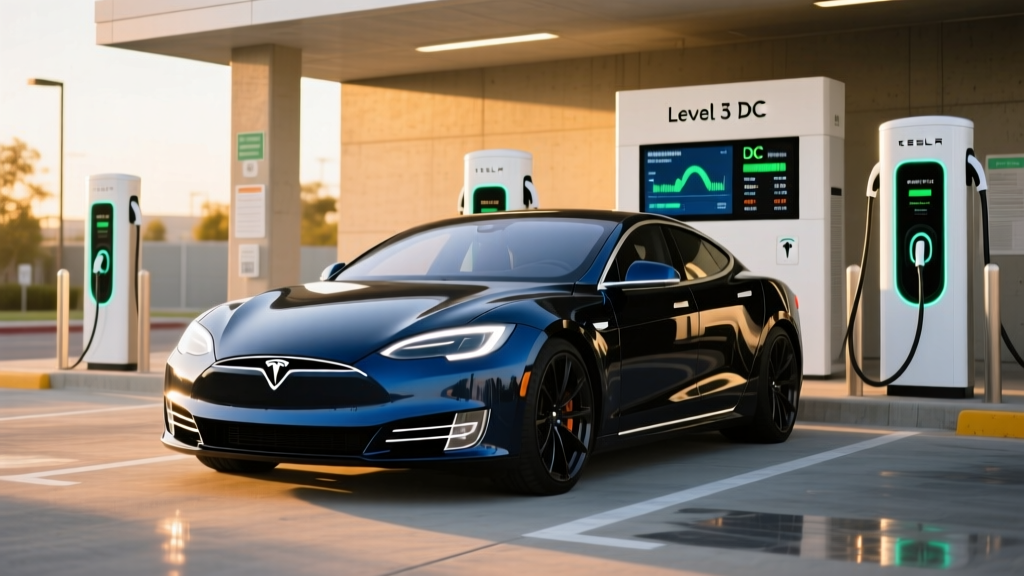
Tesla's idle fee is a per-minute charge applied when a vehicle remains plugged into a Supercharger stall after reaching its charge limit — but only at stations where at least 50% of stalls are occupied. The policy, first introduced in 2016 and refined over the years, exists to keep high-traffic Supercharger stalls available for drivers who actively need to charge.
Think of it like a parking meter that starts counting only after your session is complete. Tesla's logic is straightforward: a fully charged car occupying a stall during peak travel times prevents another EV from charging, creating unnecessary wait times on busy corridors like I-5, I-95, and I-70.
2026 Tesla Idle Fee Rates: What You'll Actually Pay
Tesla uses a two-tier pricing structure based on station occupancy. As of early 2026, the published rates in the United States are:
| Station Occupancy | Per-Minute Fee | Grace Period After Charge Completes |
|---|---|---|
| 50–100% stalls occupied | $0.50/min | 5 minutes |
| 100% stalls occupied (full station) | $1.00/min | 5 minutes |
The 5-minute grace period gives you a window to return to your car and unplug before charges begin. Fees are billed automatically to the payment method on file in your Tesla account — there's no option to dispute them in-app, though Tesla support has occasionally waived clearly erroneous charges.
Real-world cost scenario: You plug in at a busy holiday-weekend Supercharger, set your limit to 80%, and walk to a sit-down restaurant 8 minutes away. Your car finishes charging in 22 minutes. By the time you return at minute 37, you've been idling for 10 minutes past the grace period. At 100% occupancy, that's a $10 idle fee on top of your ~$18 charging session — a 55% surcharge you didn't plan for.
How to Avoid Tesla Idle Fees Every Time
After several years and tens of thousands of Supercharger miles across multiple Teslas, here are the strategies that actually work:
- Use the Tesla app notifications. Your phone will alert you when charging is nearly complete and again when it finishes. Enable push notifications and keep your phone's volume up — even in a loud restaurant, the distinct Tesla chime cuts through.
- Set your charge limit strategically. If you're stopping for a 40-minute meal, set your limit to 90% or 100% so charging takes longer and aligns with your stop. If you only need 20 minutes of charge, plan a quick grab-and-go instead of a sit-down meal.
- Check station occupancy before pulling in. The Tesla app and in-car navigation show real-time stall availability. If a station shows 4/8 stalls available, you're likely safe from idle fees even after finishing. If it shows 1/8, plan to stay near your car.
- Move your car, even if you're not ready to leave. If you've finished charging but aren't ready to drive, unplug and move to a regular parking spot nearby. This frees the stall and eliminates any fee risk.
- Use Tesla's "Trip Planner" charge stop estimates. The car's built-in navigation estimates how long each charge stop will take. Use this to plan your break activities accordingly — a 15-minute charge stop means a gas-station-style restroom break and snack, not a full meal.
Do Non-Tesla EVs Pay Idle Fees at Superchargers?
Yes. Since Tesla opened its Supercharger network to non-Tesla EVs (using the NACS connector or approved adapters for Ford, Rivian, GM, Hyundai, and others), the idle fee policy applies equally. Non-Tesla drivers using the Tesla app or their vehicle's integrated Tesla charging account will see the same $0.50/min and $1.00/min rates.
This is particularly relevant as of 2026, when most new EVs sold in North America ship with native NACS ports. If you're driving a 2025+ Ford F-150 Lightning, Chevy Equinox EV, or Hyundai Ioniq 5 N at a Tesla Supercharger, the idle fee rules apply to you identically. Non-Tesla drivers should be especially vigilant, as their vehicle's native app may not push Tesla-specific idle warnings as reliably as the Tesla app does for Tesla vehicles.
How Idle Fees Fit Into the Broader Tesla Ownership Cost Picture
While idle fees are an annoyance rather than a major expense for most owners, they're part of the larger Supercharger economics that factor into total cost of ownership. Here's how the current 2026 Tesla lineup stacks up in the metrics that matter:
| Model / Trim | EPA Range | Battery (kWh) | Peak DC kW | 10–80% | 0–60 mph | Base MSRP |
|---|---|---|---|---|---|---|
| Model 3 RWD | 272 mi | 60 (LFP) | 170 kW | ~25 min | 5.8s | $38,990 |
| Model 3 Long Range AWD | 341 mi | 79 (NMC) | 250 kW | ~21 min | 4.2s | $44,990 |
| Model Y Long Range AWD | 320 mi | 79 (NMC) | 250 kW | ~22 min | 4.8s | $44,990 |
| Model S Long Range | 402 mi | 100 (NMC) | 250 kW | ~27 min | 3.1s | $74,990 |
| Model X Long Range | 335 mi | 100 (NMC) | 250 kW | ~28 min | 3.8s | $79,990 |
Source: fueleconomy.gov and Tesla's official 2026 specifications. Real-world highway range typically runs 10–15% below EPA; cold weather (below 32°F) can reduce range by 20–30%.
Tesla Supercharger Costs vs. Competitor Networks
Setting idle fees aside, Tesla's Supercharger pricing remains among the most competitive in the industry. Typical 2026 Supercharger rates range from $0.25–$0.40/kWh depending on location and time of day, which translates to roughly $0.07–$0.12 per mile for a Model 3 Long Range (averaging ~3.5 miles/kWh or 119 MPGe combined per EPA data).
Compare that to Electrify America ($0.37–$0.56/kWh), EVgo ($0.36–$0.50/kWh), or Ionity in Europe (€0.49–€0.69/kWh), and Tesla's per-kWh cost is typically 15–30% lower. The idle fee is the one area where Tesla's policy is more aggressive — Electrify America and EVgo generally do not penalize post-charge idling, though some have begun implementing similar policies at high-traffic urban locations.
Federal Tax Credit & Total Cost Context
For 2026, the IRS §30D federal EV tax credit remains available at up to $7,500 for qualifying new Tesla purchases, but eligibility depends on several factors:
- MSRP caps: Vans/SUVs (Model Y, Model X) must be under $80,000; sedans (Model 3, Model S) must be under $55,000.
- Buyer income limits: AGI must not exceed $150,000 (single), $225,000 (head of household), or $300,000 (joint).
- Battery sourcing: A percentage of critical minerals and battery components must be sourced from the U.S. or FTA partners — Tesla's U.S.-built battery cells and LFP sourcing have kept most trims eligible, but always verify at fueleconomy.gov before purchasing.
- Point-of-sale transfer: As of 2024, you can transfer the credit to the dealer at purchase, reducing your out-of-pocket cost immediately rather than waiting for tax filing.
For a Model 3 Long Range AWD at $44,990, the full $7,500 credit brings the effective price to $37,490 — putting it in direct competition with a well-equipped Toyota Camry hybrid or Honda Accord, but with dramatically lower fueling costs and the Supercharger network advantage.
Pros and Cons: The Tesla Supercharger Ecosystem
✅ Pros
- Largest, most reliable DC fast-charging network in North America (70,000+ stalls)
- Plug-and-charge simplicity — no apps, RFID cards, or payment fumbling
- Competitive per-kWh pricing vs. Electrify America and EVgo
- Integrated in-car navigation with real-time stall availability and preconditioning
- NACS adoption by Ford, GM, Rivian, Hyundai, and others expands network utility
- Idle fee policy effectively keeps stalls available at busy locations
❌ Cons
- Idle fees can sting if you're unaware — up to $1.00/min at full stations
- No built-in idle fee cap — a 30-minute overstay at a full station = $30
- 5-minute grace period is tight for sit-down meals or grocery runs
- Some Supercharger locations have limited amenities (restrooms, food)
- Non-Tesla EVs may experience adapter compatibility quirks at older V2 stalls
- Idle fee notifications can be missed if phone is on silent or in a dead zone
Who Benefits Most from Tesla's Supercharger Network?
Frequent road-trippers get the most value. Tesla's route planner, automatic battery preconditioning (warming the pack before arrival for faster charging), and the sheer density of Supercharger stations along major interstates make long-distance EV travel genuinely practical — something no competitor network has fully matched as of 2026.
Apartment dwellers without home charging also benefit disproportionately. If you rely on public charging, Tesla's reliability and speed advantage over third-party networks translates to less time waiting and fewer broken-stall headaches.
Non-Tesla NACS-equipped EV owners now share this advantage. A 2025+ Ford F-150 Lightning or Hyundai Ioniq 5 with a native NACS port gains access to the full Supercharger network, though charge speeds are limited by the vehicle's own DC fast-charge capability (e.g., the Ioniq 5 peaks at ~240 kW, while the F-150 Lightning peaks at ~150 kW).
Frequently Asked Questions
Can I dispute a Tesla idle fee?
Tesla does not offer an in-app dispute mechanism for idle fees. You can contact Tesla Support, and they have occasionally waived fees in cases of clear system error (e.g., the car didn't send a completion notification). However, fees incurred due to simply not returning to your car in time are almost never refunded.
Does the idle fee apply if I set my charge limit to 100%?
Yes. Once your car reaches whatever charge limit you've set — whether 80%, 90%, or 100% — the idle timer begins if the station is at 50%+ occupancy. Setting a higher limit simply means you'll be charging longer before the fee clock starts.
Is there a maximum idle fee per session?
No. Tesla does not cap idle fees. If you leave your car plugged in at a fully occupied station for 45 minutes past your charge completion, you'll owe $45. This is by design — the fee is meant to be punitive enough to motivate drivers to move their vehicles promptly.
Do idle fees apply at Tesla Destination Chargers?
No. Idle fees only apply at Supercharger stations. Destination Chargers (Level 2 chargers at hotels, restaurants, and shopping centers) do not trigger idle fees, as they're intended for longer-duration parking.
How do I know if a Supercharger station will charge idle fees when I arrive?
Check the station's real-time occupancy in your Tesla app or in-car navigation before arriving. If 50% or more of stalls are in use, idle fees are active. The Tesla app also displays a note at stations where idle fees are currently in effect.
Does preconditioning affect idle fees?
Not directly, but preconditioning (which Tesla automatically activates when you navigate to a Supercharger) ensures your battery is at optimal temperature for the fastest possible charge rate. Faster charging means less total time at the stall and a lower risk of finishing charge before you're ready to leave.