If you're shopping for a Tesla — new or used — one of the most consequential spec questions isn't about range or 0-60 times. It's about which vision hardware suite is behind the windshield. Tesla's Hardware 4 (internally called AI4) represents a generational leap in camera resolution, processing power, and sensor redundancy over the preceding HW3 (AI3). But Tesla never issued a clean press release announcing the switchover. The rollout was staggered across model lines, production months, and factory batches, leaving buyers to parse VINs and build dates.
This guide pins down exactly which Tesla model years carry HW4, what the hardware actually does, and how that intersects with range, charging, pricing, and federal tax-credit eligibility for the 2026 model year lineup.
What Is Tesla HW4 (AI4) and Why Does It Matter?
Hardware 4 is Tesla's second-generation vision-and-compute platform, introduced to replace the HW3 suite that had been in production since April 2019. The key upgrades:
- Cameras: Higher-resolution sensors (up to 5 megapixels vs. 1.2 MP on HW3), with improved low-light performance and a wider dynamic range.
- Compute: A redesigned FSD computer with roughly 2–3x the inference throughput of HW3, enabling more complex neural-net models to run in real time.
- Camera count reduction: Tesla simultaneously removed the passenger-side fender repeater camera and ultrasonic sensors (USS), relying entirely on Tesla Vision (camera-only) for parking and proximity detection.
- Higher-mount forward camera: Repositioned behind the rearview mirror housing for a slightly improved field of view.
For buyers, the practical upshot is that HW4-equipped vehicles receive the most advanced FSD (Supervised) updates first, process edge cases with higher-fidelity input, and are expected to remain software-supported longer than HW3 cars. Tesla has not committed to back-porting future FSD model architectures to HW3 indefinitely.
Tesla HW4 Rollout Timeline: Model Year by Model Year
Tesla's HW4 integration was neither simultaneous nor cleanly aligned to model-year boundaries. Here is the production timeline as confirmed by teardowns, owner reports, and Tesla's own parts catalog changes:
| Model | HW4 Production Start | First Model Year with HW4 | Notes |
|---|---|---|---|
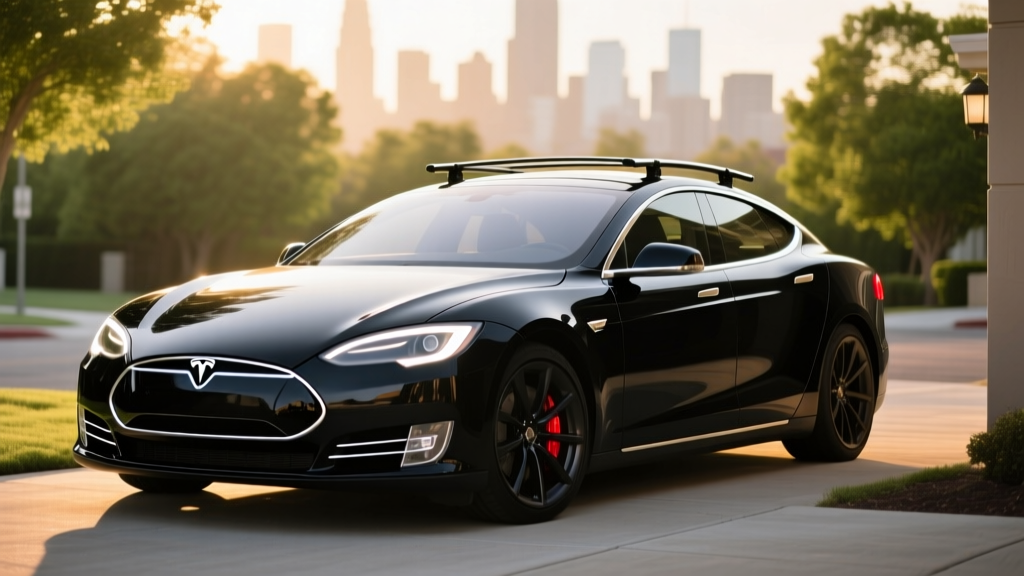
| Model S | ~March 2023 | 2023 (late build) | Introduced alongside Model X refresh; early 2023 builds may still be HW3. |
| Model X | ~March 2023 | 2023 (late build) | Same timeline as Model S. |
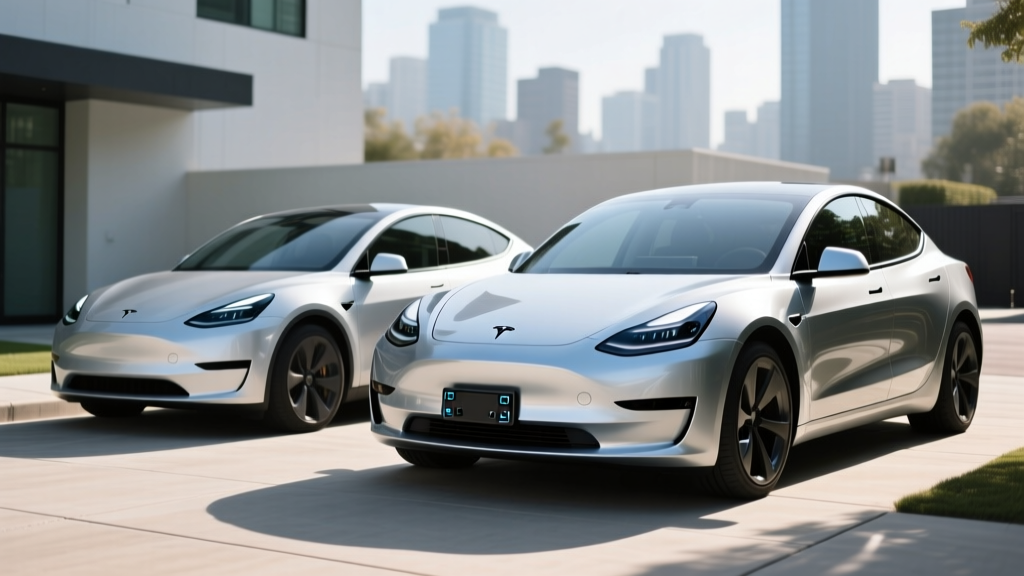
| Model 3 (Highland) | ~October 2023 (China/EU), Q1 2024 (US) | 2024 | The Highland refresh launched exclusively with HW4. Pre-Highland 2023 Model 3s are HW3. |
| Model Y (Juniper) | ~Q1 2025 (US) | 2025 | Juniper refresh brought HW4 to Model Y. Pre-refresh 2024 and early 2025 builds remain HW3. |
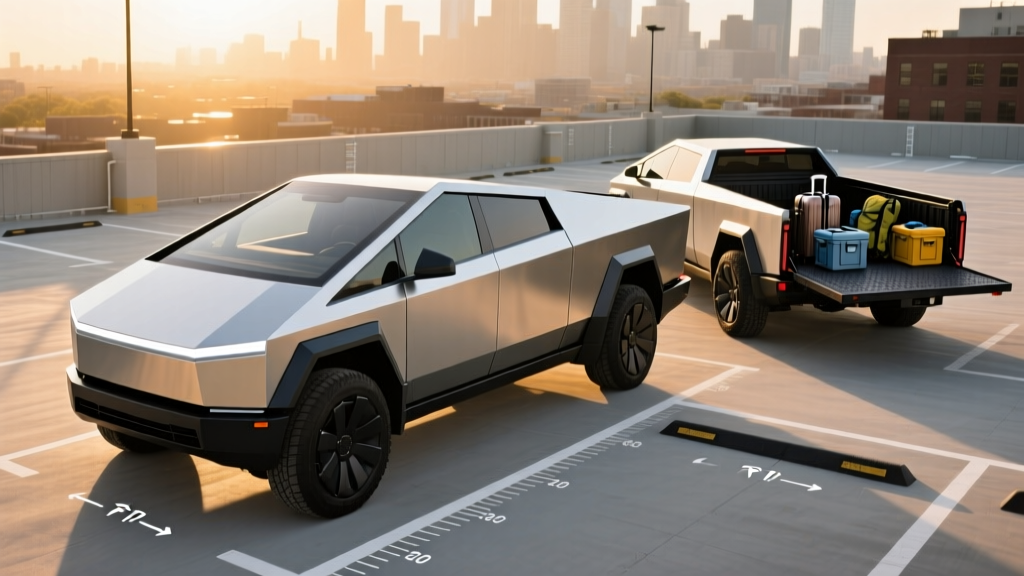
| Cybertruck | November 2023 (SOP) | 2024 | Cybertruck launched exclusively with HW4 — no HW3 examples exist. |
The bottom line for used-car shoppers: A "2023" Model S or X could be HW3 or HW4 depending on the exact build month. A 2024 Model 3 Highland is guaranteed HW4. A 2024 Model Y is almost certainly HW3. For 2026 model-year purchases, every current-production Tesla now ships with HW4.
2026 Tesla Lineup: Range, Charging, and Performance Specs
Below is a consolidated spec table for the most popular 2026 Tesla models, all equipped with HW4. Figures are from EPA / fueleconomy.gov and Tesla's official order pages.
| Spec | Model 3 LR AWD | Model Y LR AWD | Model S LR | Cybertruck AWD |
|---|---|---|---|---|
| EPA Range | 363 mi | 320 mi | 402 mi | 318 mi |
| Battery (usable) | ~75 kWh (NMC) | ~75 kWh (NMC) | ~95 kWh (NMC) | ~123 kWh (NMC) |
| Efficiency | 130 MPGe / 26 kWh/100mi | 117 MPGe / 29 kWh/100mi | 124 MPGe / 27 kWh/100mi | 76 MPGe / 44 kWh/100mi |
| Peak DC Charge | 250 kW | 250 kW | 250 kW | 350 kW |
| 10–80% DC Time | ~25 min | ~27 min | ~30 min | ~28 min |
| Level 2 (11.5 kW) | ~44 mi/hr | ~40 mi/hr | ~44 mi/hr | ~37 mi/hr |
| 0–60 mph | 4.2 sec | 4.8 sec | 3.1 sec | 3.9 sec |
| Horsepower | 346 hp | 384 hp | 670 hp | 600 hp |
| Drivetrain | Dual-motor AWD | Dual-motor AWD | Dual-motor AWD | Dual-motor AWD |
| Cargo (rear seats up) | 23 cu ft | 30 cu ft | 28 cu ft | ~35 cu ft (bed+frunk) |
| Base MSRP | $47,740 | $48,630 | $79,990 | $79,990 |
Charging Deep Dive: What HW4 Owners Actually Experience
HW4 does not change the vehicle's charging hardware — that's determined by the battery pack and onboard charger. But HW4's more efficient thermal-management integration (via the vehicle's central compute) has slightly improved preconditioning routines for Supercharger routing.
| Charging Level | Power (kW) | Miles Added per Hour | Typical Use Case |
|---|---|---|---|
| Level 1 (120V / 12A) | ~1.4 kW | 3–5 mi/hr | Emergency / overnight trickle |
| Level 2 (240V / 48A) | 11.5 kW | 37–44 mi/hr | Home Wall Connector, daily charging |
| DC Fast (V3 Supercharger) | Up to 250 kW | ~200 mi in 15 min (peak) | Road trips, highway corridor charging |
| DC Fast (V4 Supercharger) | Up to 350 kW (Cybertruck) | ~230 mi in 15 min (peak) | 800V-capable platforms |
Charging-curve reality: Tesla's peak 250 kW rate holds only between roughly 10–30% state of charge (SoC). Above 50% SoC, the rate tapers to ~100–120 kW; above 80%, it drops below 50 kW. This is why the 10–80% time is a more meaningful metric than peak kW. On a road trip, plan stops around the 10–80% window to minimize total charging time.
For home charging, Tesla's Gen 2 Wall Connector at 48 amps on a 60-amp circuit delivers 11.5 kW — enough to fully replenish any Tesla overnight. Installation typically runs $800–$2,500 depending on panel proximity and whether a 200-amp service upgrade is needed (licensed electrician required).
Pricing, Trims, and Federal Tax Credit Eligibility
Tesla's 2026 pricing positions the Model 3 and Model Y near the critical $55,000 MSRP cap for SUVs and $55,000 for sedans under the IRS §30D Clean Vehicle Credit. Here's how the lineup stacks up:
| Model / Trim | Base MSRP | MSRP Cap Eligible? | Max §30D Credit | Effective Price (est.) |
|---|---|---|---|---|
| Model 3 RWD | $38,990 | Yes (sedan ≤$55k) | Up to $7,500* | ~$31,490 |
| Model 3 LR AWD | $47,740 | Yes | Up to $7,500* | ~$40,240 |
| Model Y LR AWD | $48,630 | Yes (SUV ≤$80k) | Up to $7,500* | ~$41,130 |
| Model S LR | $79,990 | No (sedan >$55k) | $0 | $79,990 |
| Cybertruck AWD | $79,990 | No (pickup >$80k threshold varies) | $0 | $79,990 |
*Critical §30D caveats: The full $7,500 credit requires meeting BOTH a critical-minerals requirement ($3,750) and a battery-components requirement ($3,750), each with escalating domestic-sourcing thresholds. Tesla's US-built LFP Model 3 RWD (with CATL cells) has historically qualified for partial credit; NMC Long Range models with Panasonic cells built at Giga Nevada have typically met both prongs. Buyer income caps also apply: adjusted gross income ≤$150,000 (single), ≤$225,000 (head of household), ≤$300,000 (joint). The credit can now be transferred to the dealer at point of sale as an instant discount. Always verify current eligibility on fueleconomy.gov before purchasing — battery-sourcing rules tighten annually.
Standout Tech, Drawbacks, and the HW4 Ownership Experience
What HW4 enables that HW3 doesn't (or does better):
- FSD (Supervised) v13+ compatibility: Tesla's latest neural-net driving stacks are optimized for HW4's higher-resolution camera input. HW3 vehicles still receive FSD updates, but with acknowledged fidelity limitations.
- Better phantom-braking mitigation: Higher-resolution forward cameras reduce false-positive obstacle detection, though the issue is not entirely eliminated.
- Improved dashcam and Sentry Mode quality: 5 MP cameras produce noticeably sharper recorded footage.
- No ultrasonic sensors: Tesla Vision handles parking proximity via camera estimation. Most owners adapt within weeks, but the visual distance readout is less precise than physical USS pings at very low speeds in tight garages.
Notable drawbacks across the HW4 lineup:
- Turn-signal stalk removal (Highland Model 3, Juniper Model Y): Steering-wheel-mounted buttons replace the traditional stalk — a polarizing change that takes adaptation.
- No Apple CarPlay / Android Auto: Tesla's proprietary infotainment remains closed. Spotify and Tidal are integrated; phone mirroring is not available.
- Ride firmness: The Model 3 Highland improved ride quality substantially over pre-2024 cars, but the Model Y still transmits sharp impacts more than comfort-oriented competitors like the Hyundai Ioniq 5.
- Insurance costs: Tesla insurance premiums run 15–30% higher than comparable non-Tesla EVs in most states, driven by collision-repair costs and sensor calibration expenses.
- Class-leading Supercharger network access (17,000+ stalls in North America)
- Best-in-class efficiency (Model 3: 26 kWh/100mi)
- OTA software updates add features post-purchase
- HW4 future-proofs FSD development path
- Strong resale value relative to non-Tesla EVs
- No Apple CarPlay or Android Auto
- Turn-signal buttons on wheel (Highland/Juniper) require adaptation
- Higher insurance premiums
- Panel gaps and interior material quality still lag luxury competitors
- FSD (Supervised) requires $8,000 option or $99/mo subscription — not included
Battery, Warranty, and Long-Term Ownership
All current Tesla models use nickel-manganese-cobalt (NMC) chemistry in Long Range and Performance variants. The base Model 3 RWD uses lithium iron phosphate (LFP) cells — a chemistry that tolerates regular 100% charging without degradation concerns but sacrifices ~10% energy density.
| Warranty Component | Coverage |
|---|---|
| Basic Vehicle | 4 years / 50,000 miles |
| Battery & Drive Unit (Model 3/Y) | 8 years / 120,000 miles (LR AWD) |
| Battery & Drive Unit (Model S/X) | 8 years / 150,000 miles |
| Battery Capacity Retention Threshold | 70% of original capacity during warranty period |
Degradation reality: Tesla's 2025 Impact Report states that Model 3/Y battery packs retain an average of ~85% capacity at 150,000 miles. NMC packs show the steepest degradation in the first 20,000 miles (~3–5% loss), then flatten into a very gradual decline. LFP packs (Model 3 RWD) show even less degradation but start with lower total energy. A full out-of-warranty battery replacement currently costs $12,000–$16,000 depending on the model — a figure that continues to decline as cell costs fall.
Who Should Buy a HW4-Equipped Tesla?
- Daily commuter (Model 3 RWD): LFP battery tolerates daily 100% charges, 272-mile EPA range covers most commutes, and the ~$31,500 effective price after tax credit undercuts most competitors. HW4 ensures you get the latest Autopilot improvements.
- Family road-tripper (Model Y LR AWD): 30 cu ft of cargo space, 320-mile range, Supercharger network reliability, and available 7-seat configuration make it the default electric family hauler. Verify 2025+ build date for HW4.
- Tech-enthusiast / FSD subscriber: If you plan to use FSD (Supervised) extensively, HW4 is effectively mandatory for the best current and future experience. HW3 is a dead-end for Tesla's most ambitious driving models.
- Comfort-first luxury buyer: The Mercedes EQE or BMW i5 offer superior ride quality, interior materials, and Apple CarPlay — at higher prices and without Supercharger access.
- Towing-focused truck buyer: Cybertruck's 318-mile range drops to ~200 miles when towing near its 11,000-lb max capacity. The Rivian R1T or Ford F-150 Lightning offer more practical truck utility with competitive range.
- Budget buyer wanting HW4: Used HW4 Teslas (2024+ Model 3 Highland) start around $32,000–$35,000 on the secondary market. The used-EV tax credit (§25E) offers up to $4,000 on vehicles under $25,000 — but most HW4 cars haven't depreciated to that threshold yet.
Frequently Asked Questions
Can I upgrade my HW3 Tesla to HW4?
No. Tesla has not offered a retrofit program for HW3-to-HW4 upgrades, and the hardware differences (camera wiring harnesses, mounting points, compute module form factor) make a field upgrade impractical. If HW4 is a priority, you'll need to purchase a vehicle that left the factory with it.
Does HW4 improve range or charging speed?
Not directly. Range and charging speed are determined by battery chemistry, pack size, and the onboard charger — not the vision hardware. However, HW4's improved thermal-management coordination may marginally improve battery preconditioning accuracy when navigating to a Supercharger, potentially yielding slightly faster initial charge rates in cold weather.
How do I verify whether a used Tesla has HW4?
On the vehicle's touchscreen, go to Controls → Software → Additional Vehicle Information. The "Autopilot Computer" field will read either "Hardware 3" or "Hardware 4" (sometimes listed as "AI3" or "AI4"). You can also check the camera housing behind the rearview mirror — HW4 uses a single, larger camera module rather than the triple-camera cluster of HW3.
Is FSD (Supervised) worth the $8,000 purchase price?
For most drivers, the $99/month subscription is the smarter choice. FSD (Supervised) remains an SAE Level 2 system requiring constant driver attention. Its value depends heavily on your commute complexity and tolerance for beta software. HW4 vehicles extract more value from FSD than HW3 vehicles due to the higher-fidelity sensor input.
Does every 2026 Tesla come with HW4?
Yes. As of the 2026 model year, all Tesla vehicles in production — Model 3, Model Y, Model S, Model X, and Cybertruck — ship with HW4 as standard. The only way to receive a HW3 vehicle today is to purchase pre-Juniper Model Y inventory or a used pre-2024 vehicle.
What's the real-world range of a Model 3 Long Range with HW4?
The EPA rates the 2026 Model 3 LR AWD at 363 miles. In real-world mixed driving at moderate temperatures, expect ~320–340 miles. On a sustained 75 mph highway run in summer, expect ~310–325 miles. In freezing weather with cabin heat, that drops to ~250–270 miles. Preconditioning and seat heaters (more efficient than cabin air heating) help recover some of that winter loss.