What Is Tesla HW4 and Why It Matters in 2026
"HW4" is Tesla shorthand for Hardware 4, the fourth-generation Autopilot sensor and compute suite that has been rolling off the Fremont, Austin, and Shanghai lines since early 2023. By the 2026 model year, HW4 is standard on every new Model 3, Model Y, Model S, and Model X built for North America — there is no longer a HW3 option on new cars. For shoppers Googling hw4 tesla, the real question isn't whether the hardware exists; it's what it actually changes about range, charging, safety, and the FSD (Supervised) experience you're paying for.
This review pins down the numbers that matter: EPA range versus what you'll see on a cold highway run, peak and sustained DC fast-charge rates, the real cost after the §30D federal credit, and whether HW4's sensor upgrades justify the premium over a used HW3 car.
| Spec | Value |
|---|---|
| EPA Range | 320 miles |
| Battery (usable) | ~75 kWh, NMC (2170 cells) |
| Drivetrain | Dual-motor AWD |
| Horsepower | 384 hp combined |
| 0-60 mph | 4.8 seconds |
| Peak DC Fast Charge | 250 kW (V3 Supercharger) |
| 10-80% DC Time | ~27 minutes |
| Level 2 Home Charge | 11.5 kW / 44 mi/hr |
| Efficiency | 122 MPGe / 28 kWh/100 mi |
| Cargo (rear seats up / folded) | 30.2 / 72.1 cu ft |
| Base MSRP | $44,990 |
| Battery Warranty | 8 years / 120,000 miles |
HW4 Hardware: What's Actually Different From HW3
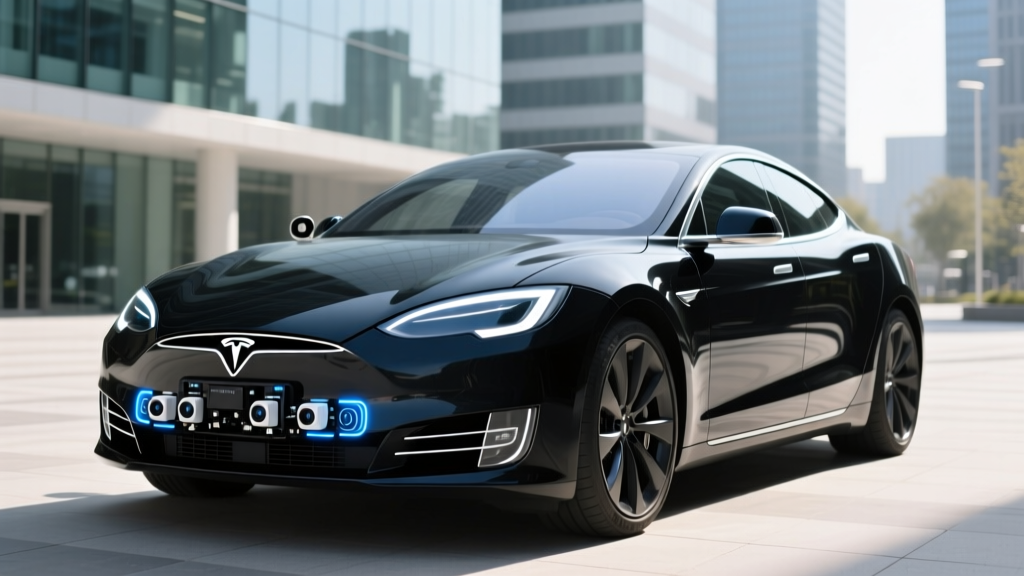
HW4 is not a trim level — it's the vision and compute stack behind Autopilot and FSD (Supervised). The most consequential upgrades versus HW3:
- Cameras: Higher-resolution sensors (up to 5 MP on forward-facing units, up from ~1.2 MP on HW3) with improved low-light performance and a wider field of view on the front repeater cameras.
- Compute: A newer FSD computer with roughly 2–3x the inference throughput of HW3, which matters as Tesla's neural nets grow in parameter count.
- Radar: Tesla reintroduced a high-resolution 4D imaging radar on HW4 vehicles after removing radar from HW3 cars in 2021–2022. This is used as a redundant sensor, not a primary one.
- No ultrasonic sensors (USS): Tesla continues to rely on Tesla Vision (camera-based proximity) instead of parking sensors. Park Assist accuracy has improved through software, but it remains a pain point for some owners.
None of this changes the vehicle's EPA range, battery size, or charge rate — HW4 is about perception and decision-making, not the powertrain. But it does affect which FSD features you can run and how smoothly they behave.
Real-World Range: EPA Sticker vs What You'll Actually See
The Model Y Long Range AWD's 320-mile EPA figure is derived from a mixed city/highway cycle that favors regenerative braking and moderate speeds. Real-world results diverge based on three big factors:
- Highway speed. Aerodynamic drag dominates above 65 mph. At a sustained 75–80 mph, expect to use 310–330 Wh/mi versus the EPA-implied ~280 Wh/mi.
- Temperature. LFP and NMC packs both lose usable capacity and gain internal resistance below 32°F. Plan on 15–25% range loss in cold weather unless you precondition the battery.
- Climate control. Tesla's heat pump (standard on all current models) is far more efficient than resistive heating, but a 20°F day with the cabin at 72°F still draws 2–4 kW continuously.
For the Model 3 Long Range AWD with HW4, the EPA figure is 341 miles on a slightly smaller, more aerodynamic sedan body. The same real-world caveats apply — expect ~290 miles highway in summer, ~250 in winter.
Charging Speed: Supercharger Peaks, Home Reality, and the Curve
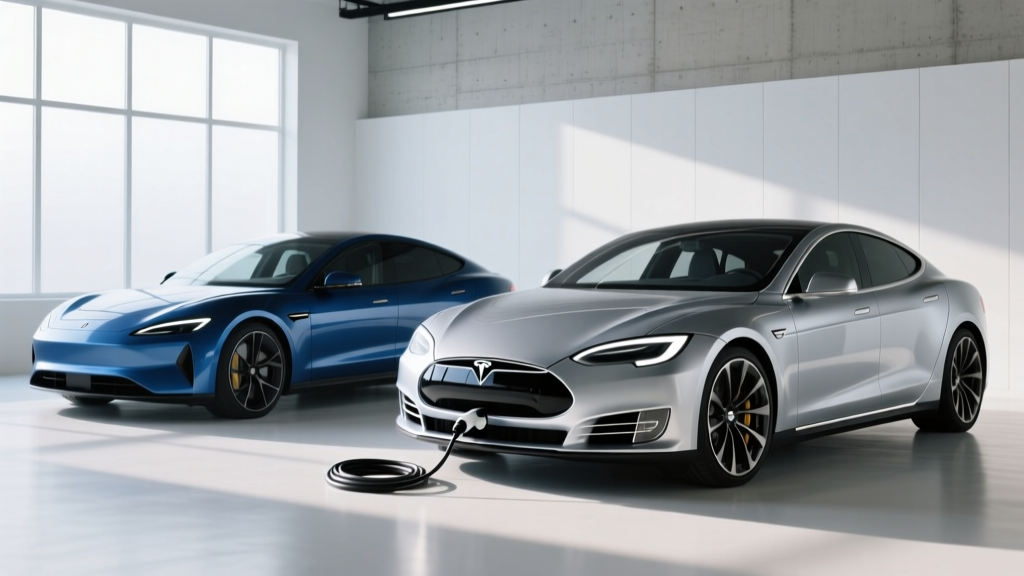
Tesla's NACS connector and Supercharger network remain a genuine ownership advantage in 2026, both for reliability and for the plug-and-charge experience. Here's what charging actually looks like:
| Level | Power | Miles Added per Hour | Typical Use |
|---|---|---|---|
| Level 1 (120V) | ~1.4 kW | ~4 mi/hr | Emergency / trickle |
| Level 2 (240V, 48A) | 11.5 kW | ~44 mi/hr | Home overnight |
| DC Fast (V3 Supercharger) | Peak 250 kW | ~200 mi in 15 min | Road trips |
A few nuances that spec sheets hide:
- The charge curve tapers hard above ~55% SoC. You'll see 250 kW only briefly in the 10–25% range; by 60% you're closer to 100 kW, and above 80% it drops below 50 kW. That's why the 10–80% time is ~27 minutes even though peak rate suggests faster.
- Preconditioning is non-negotiable. Navigate to a Supercharger in the car's nav and the battery will warm itself for ~15–30 minutes before arrival. Skip this in cold weather and your peak rate may cap at 100–120 kW.
- V4 Superchargers (rolling out through 2025–2026) offer up to 350 kW, but current Tesla vehicles are limited by their onboard charge architecture to roughly 250–270 kW. The V4 benefit for Teslas is mostly about cable ergonomics and stall availability, not a dramatic speed bump.
Performance and Efficiency: The Numbers That Matter
The Model Y Long Range AWD pairs a rear induction motor with a front permanent-magnet synchronous motor for 384 hp combined. The 4.8-second 0-60 time is unremarkable next to a Performance trim (3.5 sec) but more than adequate for merging and passing. The single-speed reduction gear means there's no shift shock — just linear torque.
Efficiency is where Tesla still leads most competitors. The Model Y LR returns 122 MPGe combined (28 kWh/100 mi) per fueleconomy.gov. For context, the Ford Mustang Mach-E Extended Range AWD lands at roughly 101 MPGe combined, and the Hyundai Ioniq 5 AWD at about 110 MPGe. Over 12,000 miles a year at the U.S. average electricity price of $0.17/kWh, that efficiency gap translates to roughly $80–$120 annually in electricity savings versus those rivals.
Pricing, Trims, and the 2026 Federal Tax Credit
Tesla's pricing shifts frequently, but as of early 2026 the Model Y lineup for North America looks like this:
| Trim | MSRP | Est. After §30D | Eligible? |
|---|---|---|---|
| Long Range AWD | $44,990 | ~$37,490 | Yes (subject to sourcing/income) |
| Performance AWD | $48,990 | ~$41,490 | Yes (subject to sourcing/income) |
The Model Y qualifies for up to $7,500 under IRS §30D, and Tesla supports the point-of-sale transfer — meaning the credit can come off the purchase price at delivery rather than waiting until you file taxes. But eligibility is not automatic. Per IRS rules, you must meet all of the following:
- Income caps: AGI ≤ $150,000 single / $300,000 married filing jointly.
- MSRP cap: ≤ $80,000 for SUVs/pickups/vans (Model Y qualifies).
- Battery sourcing: A phased-in percentage of critical minerals and battery components must be sourced from the U.S. or FTA partners. Tesla has shifted supply chains to meet this, but the exact qualifying percentage changes by quarter — always verify on the IRS clean vehicle list before ordering.
- VIN verification: The dealer (Tesla) must submit a time-of-sale report confirming compliance.
Consult a tax professional if your situation is complex — this is not tax advice, and §30D rules can change mid-year.
Interior, Cargo, and Daily Livability
The Model Y interior is minimal in the Tesla tradition: a 15.4-inch center touchscreen handles everything, including climate, mirrors, and glovebox. There is no instrument cluster — speed and navigation sit in the upper-left corner of the main display. The 2025 refresh (carried into 2026) added ventilated front seats, ambient lighting, a rear-seat touchscreen, and a power-folding second row, addressing the most common complaints from earlier Model Ys.
Cargo space is a genuine strength: 30.2 cu ft behind the second row and 72.1 cu ft with it folded. The front trunk (frunk) adds another ~4.1 cu ft — useful for charging cables and groceries. Rear legroom is 41.6 inches, enough for adult passengers on long trips. Towing capacity is 3,500 pounds with the optional tow package, adequate for a small trailer or pair of dirt bikes but not a large camper.
Autopilot, FSD (Supervised), and HW4 in Practice
Every 2026 Tesla ships with basic Autopilot (Traffic-Aware Cruise Control and Autosteer) included. FSD (Supervised) remains a $8,000 add-on or $99/month subscription and unlocks Navigate on Autopilot, Auto Lane Change, Autopark, Smart Summon, and traffic-light/stop-sign recognition.
HW4's higher-resolution cameras and 4D radar make the system more stable in rain, dusk, and glare than HW3, based on owner reports and third-party testing. Phantom braking events — sudden deceleration for no visible obstacle — have decreased but not disappeared. On highway drives of 200+ miles, FSD (Supervised) handles the vast majority of miles without intervention, but you should expect 2–6 takeovers per trip for lane merges, toll plazas, and ambiguous situations.
Warranty, Reliability, and Ownership Costs
Tesla's warranty package for the Model Y:
- Basic vehicle: 4 years / 50,000 miles
- Battery and drive unit: 8 years / 120,000 miles, with a capacity retention threshold of 70% — if the pack falls below 70% of original capacity within that window, Tesla replaces or refurbishes it.
Insurance remains the most-cited pain point. Model Y premiums average 20–35% higher than a comparable gas crossover, driven by repair costs (especially the large glass roof and cast rear underbody) and Tesla's direct repair network pricing. Get a quote before ordering — in some states, Tesla's own insurance product is competitive; in others, it's not available.
Depreciation has been volatile. Tesla's aggressive price cuts in 2023–2024 hurt used values, but the 2025 refresh and stabilizing MSRPs have firmed up 2026 residuals somewhat. Plan on ~45–55% value retention at 5 years / 60,000 miles — worse than a Toyota RAV4 Hybrid, better than most luxury EVs.
Who the HW4-Equipped Tesla Suits Best
Choose the Model Y LR with HW4 if: You want access to the most reliable DC fast-charging network in the U.S., value best-in-class efficiency and cargo space, and will use FSD (Supervised) for highway commuting.
Look elsewhere if: You need a physical instrument cluster or Apple CarPlay, you want dealer-service convenience, you drive frequently in extreme cold with no home charging, or your insurance quote makes the total cost uncompetitive versus a Hyundai Ioniq 5 or Ford Mach-E.
Pros and Cons at a Glance
Pros
- Class-leading efficiency (122 MPGe combined)
- Supercharger network reliability and NACS convenience
- Strong cargo volume (72.1 cu ft) and usable frunk
- HW4 sensors meaningfully improve FSD stability
- OTA updates continue to add features post-purchase
Cons
- No Apple CarPlay or Android Auto
- Insurance premiums 20–35% above segment average
- Tesla Vision-only parking assist still inconsistent
- FSD (Supervised) is Level 2, not autonomous — $8k for driver assist
- Service center wait times remain long in some metros
Frequently Asked Questions
Can I upgrade a HW3 Tesla to HW4?
No. Tesla has not offered a retrofit path from HW3 to HW4. The camera harnesses, compute module, and radar hardware are different. If HW4 matters to you, buy a vehicle built from early 2023 onward — VIN lookup or the vehicle's Software menu will confirm the hardware version.
Does HW4 improve range or charging speed?
No. HW4 is the sensor and compute suite; range and charging are determined by battery chemistry, motor configuration, and thermal management. A 2023 HW3 Model Y LR has the same EPA range as a 2026 HW4 Model Y LR.
Is FSD (Supervised) worth $8,000 on a HW4 car?
For most buyers, no — the $99/month subscription is a lower-risk way to try it. FSD (Supervised) shines on long highway commutes but is not a substitute for attention. The $8,000 purchase only makes sense if you plan to keep the car 5+ years and use it daily, and even then it does not transfer to a new owner at resale.
Does the 2026 Model Y still qualify for the $7,500 federal tax credit?
As of early 2026, yes — the Model Y is on the IRS clean vehicle credit list, subject to buyer income caps, battery-sourcing compliance, and the $80,000 MSRP cap for SUVs. Verify at irs.gov before ordering, as sourcing rules can shift by quarter.
How does HW4 compare to competitors' driver-assist systems?
Ford's BlueCruise and GM's Super Cruise offer hands-free driving on pre-mapped divided highways (a SAE Level 2 feature with stricter geo-fencing). Tesla's FSD (Supervised) covers more road types but requires hands-on readiness and is less predictable in construction zones. None of these are autonomous.