Understanding Tesla Hardware 4: The Vision-First Autopilot Platform
If you've been researching Tesla's driver-assistance systems, you've likely encountered the term "Hardware 4" (HW4) and wondered how it differs from previous generations. Tesla's HW4 represents the company's latest iteration of its custom Autopilot computer and sensor suite, designed to support Full Self-Driving (FSD) Supervised capabilities through a pure-vision architecture.
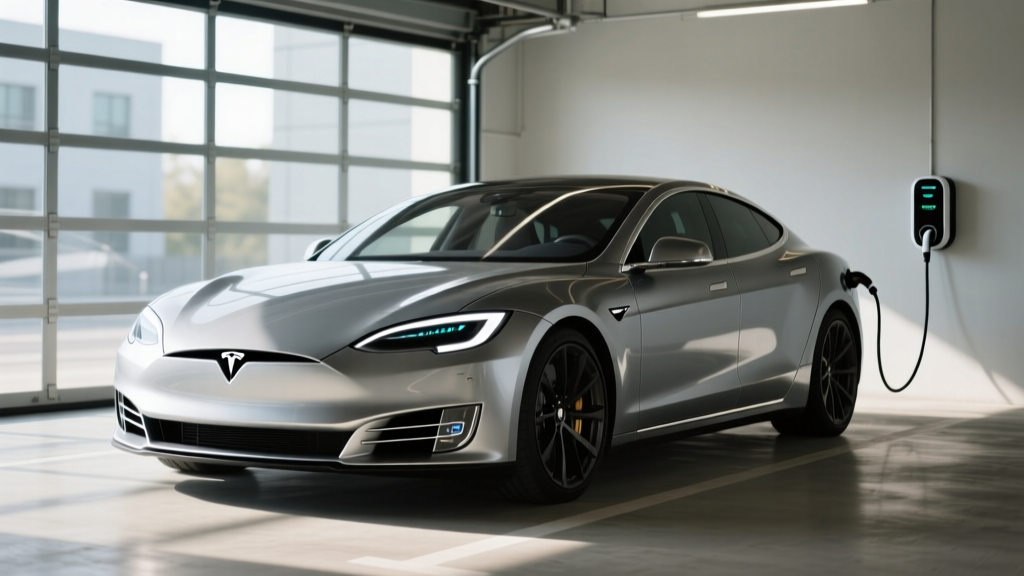
Unlike legacy systems that relied on radar and ultrasonic sensors, HW4 doubles down on high-resolution cameras paired with Tesla's neural-network processing. This hardware forms the foundation for Tesla's SAE Level 2 driver-assistance features across the 2026 Model 3, Model Y, Model S, and Model X lineup.
Tesla's Autopilot and FSD (Supervised) are SAE Level 2 systems. The driver must remain fully engaged, monitor the road at all times, and keep hands on the steering wheel. These are not self-driving systems — only Level 4 robotaxi services like Waymo operate without driver supervision.
HW4 vs HW3: What Changed in the Sensor Suite
Hardware 4 introduced several key upgrades over the previous HW3 (also called Hardware 3) platform:
- Higher-resolution cameras: HW4 uses cameras with approximately 5-megapixel sensors, up from the 1.2-megapixel units in HW3. This provides significantly more detail for Tesla's vision-based object detection.
- Improved low-light performance: The new image sensors handle dawn, dusk, and nighttime driving with less noise and better dynamic range.
- Longer detection range: Tesla states HW4 cameras can identify objects at greater distances, giving the FSD neural network more time to plan lane changes and braking events.
- No radar or ultrasonic sensors: HW4 vehicles ship without millimeter-wave radar or parking ultrasonic sensors. Tesla relies entirely on camera-based "Tesla Vision" for adaptive cruise control, emergency braking, and parking distance estimation.
- Faster onboard compute: The HW4 computer delivers higher processing throughput than HW3, enabling more complex neural-network inference in real time.
For 2026, Tesla has not announced a "Hardware 5" successor, and HW4 remains the current production standard across all consumer vehicles. Cybertruck also ships with HW4, though its sensor placement differs due to the vehicle's geometry.
Which 2026 Tesla Models Include HW4?
As of the 2026 model year, every new Tesla sold in the U.S. includes Hardware 4:
- Model 3 (Highland refresh): All trims — RWD, Long Range, Performance
- Model Y (Juniper refresh): All trims — Long Range, Performance
- Model S: Long Range and Plaid
- Model X: Long Range and Plaid
- Cybertruck: All trims
If you're buying a used Tesla from 2022 or earlier, verify which hardware generation it carries. Vehicles built before approximately mid-2023 may still have HW3. Tesla no longer offers paid hardware upgrades from HW3 to HW4, so this is a fixed attribute at purchase.
What HW4 Means for Autopilot and FSD (Supervised)
HW4 is the hardware prerequisite for Tesla's most advanced driver-assistance features. Here's how the software tiers break down:
Basic Autopilot (Included)
Every new Tesla ships with Traffic-Aware Cruise Control and Autosteer (lane-centering). These Level 2 features work on highways and surface streets, using HW4's camera array to maintain speed, following distance, and lane position.
Enhanced Autopilot ($6,000 option)
Adds Navigate on Autopilot (highway on-ramp to off-ramp assistance), Auto Lane Change, Autopark, Summon, and Smart Summon. These features leverage HW4's improved camera resolution and compute for more confident lane-change decisions.
Full Self-Driving (Supervised) ($8,000 option or $99/month)
FSD (Supervised) extends Autosteer to city streets, handling traffic lights, stop signs, and complex intersections. HW4's higher-resolution cameras provide the neural network with richer input data, which Tesla says improves edge-case handling — though real-world performance still requires active driver oversight.
- Drive without human supervision — you must watch the road and be ready to take over instantly
- Handle all weather conditions — heavy rain, fog, snow, and direct sun glare can impair camera vision
- Navigate unmapped or construction-zone routes reliably
- Replace an attentive driver — NHTSA continues to investigate FSD-related incidents
Real-World Performance: Does HW4 Improve the Driving Experience?
Based on owner reports and third-party testing through 2025–2026, HW4 delivers measurable improvements in specific scenarios:
- Phantom braking reduction: HW4 vehicles show fewer false-positive emergency braking events compared to late-stage HW3 firmware, though they are not eliminated entirely.
- Lane-change confidence: The higher-resolution cameras allow FSD to identify gaps in traffic more accurately, resulting in smoother lane-change execution.
- Nighttime driving: Improved sensor sensitivity reduces the "blindness" episodes that plagued earlier HW3 builds in low-light conditions.
- Parking without ultrasonics: Tesla Vision-based parking distance estimation works adequately in most scenarios, but owners report occasional inaccuracies with thin objects like poles or trailer hitches that cameras struggle to triangulate.
However, HW4 does not eliminate the fundamental limitations of a vision-only approach. Direct sunlight into the forward camera, heavy precipitation, and poorly marked roads still challenge the system. Owners in regions with frequent fog, snow, or heavy rain should weigh this carefully.
HW4 in Context: Tesla vs. Competitor ADAS Hardware
Tesla's vision-only HW4 approach contrasts sharply with competitors who use sensor fusion — combining cameras, radar, and lidar:
- Ford BlueCruise: Uses cameras plus radar for hands-free highway driving on pre-mapped routes (SAE Level 2). Does not attempt city-street autonomy.
- GM Super Cruise: Similar hands-free highway system with camera + radar + lidar on mapped highways (SAE Level 2).
- Mercedes Drive Pilot: SAE Level 3 system (limited conditions, driver can disengage) using cameras, radar, lidar, and HD maps — currently available only in Nevada and California under strict speed and weather constraints.
- Waymo (robotaxi): SAE Level 4, using extensive lidar, radar, and camera arrays — but only in geofenced urban areas as a ride-hail service, not a consumer vehicle.
Tesla's bet is that camera-based vision, trained on billions of real-world miles, will eventually match or exceed multi-sensor fusion at a fraction of the hardware cost. Whether that bet pays off remains an open question — regulators and NHTSA continue to scrutinize Tesla's claims.
Should You Buy a Tesla Based on HW4?
Hardware 4 is a meaningful upgrade over HW3, particularly for buyers who plan to use Enhanced Autopilot or FSD (Supervised). The higher-resolution cameras and improved compute deliver tangible benefits in lane-change smoothness, low-light performance, and phantom-braking frequency.
However, HW4 does not transform Tesla's driver-assistance into a self-driving system. It remains SAE Level 2, requiring your full attention. If hands-free highway driving (with eyes-off capability under specific conditions) is your priority, Ford BlueCruise or GM Super Cruise may better suit your use case — though they lack Tesla's city-street FSD ambition.
- You want the most advanced city-street driver assist available in a consumer vehicle
- You accept vision-only limitations and will remain an engaged driver
- You value over-the-air updates that may improve FSD over time
- You're buying new and want current-generation hardware (not legacy HW3)
- You prefer lidar/radar sensor fusion for redundancy
- You want true hands-free, eyes-off highway driving (Mercedes Drive Pilot, where available)
- You frequently drive in heavy fog, snow, or rain where camera-only systems struggle
Frequently Asked Questions
Can I upgrade my HW3 Tesla to HW4?
No. Tesla does not offer a retrofit program to replace HW3 with HW4. If you want HW4 hardware, you must purchase a vehicle built with it (approximately mid-2023 production onward). Tesla previously offered free HW3-to-HW2 upgrades years ago, but no such program exists for HW4.
Does HW4 work without radar?
Yes. HW4 is a pure-vision system. Tesla removed millimeter-wave radar from production vehicles starting in 2021–2022 and has not reintroduced it. All adaptive cruise control, emergency braking, and parking-distance features rely on camera-based Tesla Vision.
Is Tesla FSD (Supervised) safe?
Tesla publishes periodic safety reports, but independent verification is limited. NHTSA has opened multiple investigations into Autopilot and FSD incidents. As an SAE Level 2 system, FSD requires the driver to remain fully responsible for vehicle operation at all times. Treat it as an advanced cruise-control system, not a chauffeur.
Will HW4 support future Level 3 or Level 4 autonomy?
Tesla has stated its hardware is designed to support future autonomy capabilities via software updates. However, no regulatory approval for Level 3+ operation in consumer Tesla vehicles exists as of 2026. Any future capability would require both software validation and regulatory clearance.
Does HW4 affect range or efficiency?
No. HW4 is the Autopilot compute and sensor package — it does not change the vehicle's battery, motors, or efficiency. EPA range and MPGe figures are determined by powertrain and aerodynamics, not the Autopilot hardware generation.