Tesla's Autopilot hardware generations have quietly defined what its vehicles can — and cannot — do on the road. The jump from HW3.0 to HW4.0 brought higher-resolution cameras, wider fields of view, and a more powerful neural-network processor. Now, Tesla HW4.5 is the next iteration appearing across the 2026 Model S, Model 3, Model X, and Model Y lineup. But unlike a battery upgrade or a range bump, a sensor-suite revision raises a different set of buyer questions: What actually changed? Does it make Full Self-Driving (Supervised) meaningfully better? And should it influence which trim you spec?
This profile breaks down what HW4.5 brings to the table, how it affects the ownership experience across Tesla's 2026 fleet, and pairs those details with the hard numbers — range, charging, pricing, and tax credit eligibility — that matter when you're signing the paperwork.
What Is Tesla HW4.5 and How Does It Differ from HW4?
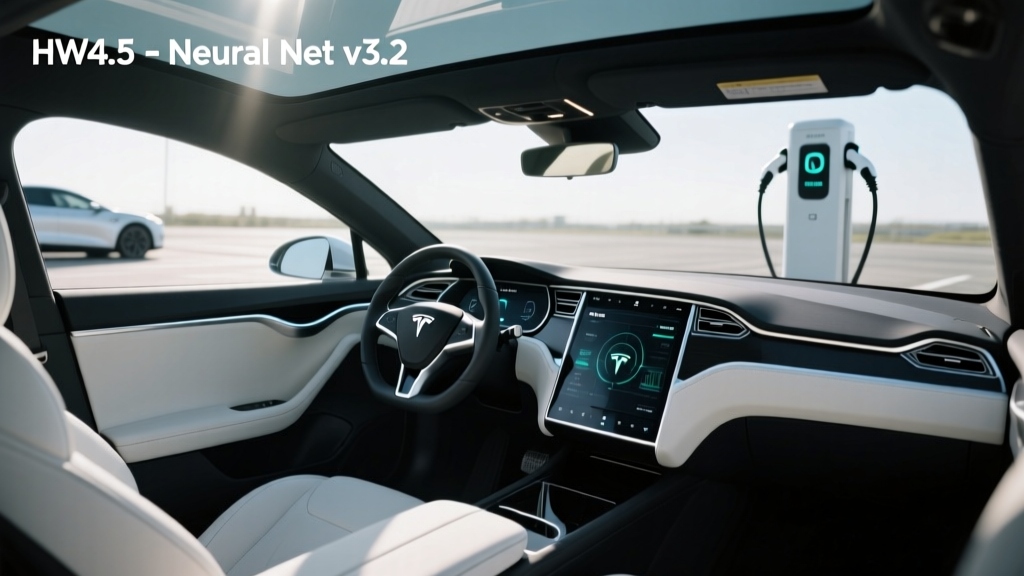
HW4.5 is Tesla's latest onboard compute and sensor package, succeeding the HW4.0 (also called "AI4" in some Tesla communications) that debuted on the refreshed Model S and Model X in 2023 and later rolled into the Model 3 Highland and Model Y Juniper refreshes. While Tesla has not published a full spec sheet publicly, the hardware evolution centers on three areas:
- Camera resolution and dynamic range: HW4.0 upgraded from the 1.2-megapixel sensors on HW3 to roughly 5-megapixel units with improved low-light performance. HW4.5 is expected to further enhance HDR (high dynamic range) processing, reducing washout in direct sunlight and improving object detection in shadow-heavy urban canyons.
- Neural-network processing throughput: Tesla's in-house FSD chip on HW4.0 delivers an estimated 300–500 TOPS (trillions of operations per second). HW4.5 refines this with a faster inference pipeline, reducing latency between perception and actuation — critical for highway-speed lane changes and unprotected left turns under FSD Supervised.
- Sensor placement optimization: The refreshed Model 3 (Highland) and Model Y (Juniper) eliminated ultrasonic sensors entirely, relying on Tesla Vision (camera-only). HW4.5 vehicles continue this vision-only approach but benefit from tighter camera calibration tolerances and improved lens coatings to reduce glare and water-bead distortion.
SAE Automation Level Reminder: Even with HW4.5, Tesla's Autopilot and Full Self-Driving (Supervised) remain SAE Level 2 driver-assistance systems. The driver must keep hands on the wheel (or demonstrate attentiveness via cabin camera) and eyes on the road at all times. These are not Level 4 driverless systems like Waymo's robotaxi service. For a full breakdown of SAE Levels 0–5, see SAE International's J3016 standard.
2026 Tesla Lineup: Range, Battery, and Efficiency at a Glance
HW4.5 is a compute and sensor package — it does not change the battery chemistry, motor configuration, or EPA range of the vehicle it's installed in. Below are the current 2026 specs across Tesla's core models, all of which ship with HW4.5 as standard equipment.
| Spec | Model 3 Long Range AWD | Model Y Long Range AWD | Model S Long Range | Model X Long Range |
|---|---|---|---|---|
| EPA Range | 363 mi | 320 mi | 402 mi | 335 mi |
| Battery (usable, est.) | ~75 kWh (NMC) | ~75 kWh (NMC) | ~95 kWh (NMC) | ~95 kWh (NMC) |
| Drivetrain | Dual Motor AWD | Dual Motor AWD | Dual Motor AWD | Dual Motor AWD |
| Horsepower | ~384 hp | ~384 hp | ~670 hp | ~670 hp |
| 0–60 mph | 4.2 sec | 4.8 sec | 3.1 sec | 3.8 sec |
| Efficiency (MPGe) | 134 MPGe | 122 MPGe | 124 MPGe | 109 MPGe |
| Efficiency (kWh/100 mi) | 25 kWh | 28 kWh | 28 kWh | 31 kWh |
Sources: fueleconomy.gov, Tesla.com official specs (2026 model year).
Real-World Range Reality Check: EPA estimates assume a mix of city and highway driving at moderate temperatures. In our experience and consistent third-party testing:
- Highway-heavy driving (70–80 mph): Expect 85–90% of EPA range. A Model 3 LR rated at 363 mi will realistically deliver ~310–325 mi at sustained interstate speeds.
- Cold weather (below 32°F / 0°C): Range loss of 20–30% is typical without preconditioning. The same Model 3 may deliver 250–290 mi in freezing conditions, though Tesla's heat pump (standard on all 2026 models) mitigates this compared to resistive-heating competitors.
- City / stop-and-go with regen: You may exceed EPA range slightly thanks to regenerative braking recapturing energy.
Charging Speed: DC Fast Charging and Home Level 2
HW4.5 does not alter the vehicle's charging architecture. Tesla's 2026 lineup continues to use the NACS (North American Charging Standard) connector natively, giving access to the Supercharger network and, increasingly, third-party stations equipped with NACS cables or adapters.
| Charging Level | Model 3 / Model Y | Model S / Model X |
|---|---|---|
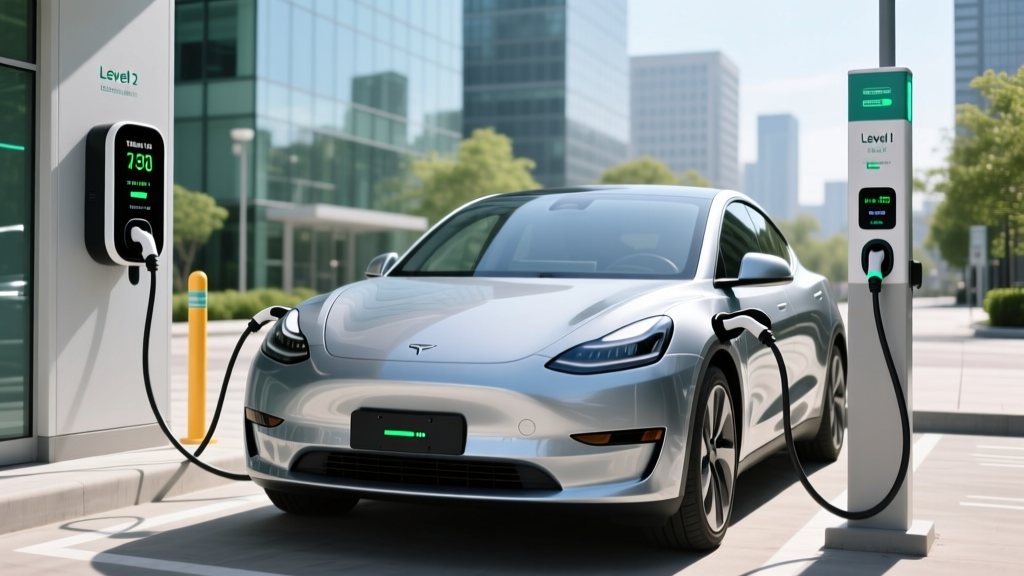
| Level 1 (120V, 12A) | ~3 mi/hr (1.4 kW) | ~3 mi/hr (1.4 kW) |
| Level 2 (240V, 48A home) | ~44 mi/hr (11.5 kW) | ~44 mi/hr (11.5 kW) |
| DC Fast Charge (peak) | 250 kW (V3 Supercharger) | 250 kW (V3 Supercharger) |
| 10–80% DC Fast Charge | ~25–28 min | ~30–35 min |
Charging curve reality: Tesla's peak 250 kW rate is sustained only between roughly 10–45% state of charge. Above 60%, the rate tapers significantly — you might see 80–100 kW, and above 85% it drops further. This is why Tesla (and every other manufacturer) quotes 10–80% times rather than 0–100%. If you arrive at a Supercharger at 15% SoC, you'll see the fastest speeds; arriving at 40% means your average rate will be lower.
Preconditioning matters: When you navigate to a Supercharger in the Tesla navigation system, the car automatically warms or cools the battery to the optimal temperature for fast charging. Skipping preconditioning (for example, by driving to a charger without using the built-in nav) can add 5–10 minutes to your session, especially in cold weather.
Pricing, Trims, and Federal Tax Credit Eligibility
HW4.5 is included at no additional cost — it's not an optional package. Every new 2026 Tesla ships with it. Here's where pricing stands and how the federal tax credit factors in.
| Model / Trim | Base MSRP (2026) | §30D Credit Potential | Effective Price (if eligible) |
|---|---|---|---|
| Model 3 RWD | $38,990 | Up to $7,500 | ~$31,490 |
| Model 3 Long Range AWD | $45,740 | Up to $7,500 | ~$38,240 |
| Model 3 Performance | $52,990 | Up to $7,500 | ~$45,490 |
| Model Y Long Range AWD | $46,630 | Up to $7,500 | ~$39,130 |
| Model Y Performance | $51,490 | Up to $7,500 | ~$43,990 |
| Model S Long Range | $79,990 | $0 (exceeds MSRP cap) | $79,990 |
| Model X Long Range | $84,990 | $0 (exceeds MSRP cap) | $84,990 |
Federal tax credit rules (IRS §30D, 2026): The $7,500 credit is not automatic. Eligibility depends on three gating criteria that eliminate many buyers and some trims:
- MSRP cap: Sedans (Model 3, Model S) must have an MSRP ≤ $55,000. SUVs (Model Y, Model X) must be ≤ $80,000. This is why Model S and Model X do not qualify.
- Buyer income cap: Modified adjusted gross income (MAGI) must not exceed $150,000 (single), $225,000 (head of household), or $300,000 (married filing jointly).
- Battery sourcing requirements: The vehicle must meet escalating critical-mineral and battery-component sourcing thresholds set by the IRS. Tesla has generally maintained compliance for US-built vehicles, but these rules tighten annually. Always verify current eligibility on IRS.gov or confirm with a tax professional before purchasing.
- Point-of-sale transfer: As of 2024, eligible buyers can transfer the credit to the dealer at purchase, reducing the purchase price directly rather than waiting to claim it on their tax return. Tesla supports this at checkout.
Interior, Cargo, and Practicality
HW4.5 doesn't change the cabin, but since you're evaluating a 2026 Tesla purchase, here are the dimensions that matter for daily life:
- Model 3: 23 cu ft trunk + rear-seat fold-down; ~42 in front legroom. The Highland refresh (2024+) added ventilated front seats, ambient lighting, and rear-seat ventilation — meaningful quality-of-life upgrades over pre-2024 cars.
- Model Y: 30 cu ft behind the rear seats (76 cu ft with seats folded). Available 7-seat option (third row is best for children). This cargo advantage is why the Model Y remains the best-selling EV in the US.
- Model S: 28 cu ft trunk + frunk. Premium interior with 17-inch center touchscreen, rear-seat entertainment display, and 22-speaker audio.
- Model X: Up to 88 cu ft cargo (5-seat config). Falcon Wing rear doors provide exceptional access in tight parking spaces, though the mechanism adds maintenance complexity.
All 2026 Teslas include a cabin-facing camera (used for driver attentiveness monitoring under Autopilot/FSD) and the 15.4-inch (Model 3/Y) or 17-inch (Model S/X) center touchscreen running Tesla's latest infotainment software with native streaming, gaming, and trip-planning integration.
What HW4.5 Means for Autopilot and FSD (Supervised)
This is the core question for buyers: does the new hardware translate to a noticeably better driving experience?
Based on the trajectory from HW3 → HW4.0, the improvements with HW4.5 are incremental rather than transformative:
- Better edge-case handling: Higher dynamic range means fewer moments where the system gets confused by sun glare, tunnel transitions, or poorly lit construction zones.
- Faster reaction latency: The upgraded processor reduces the perception-to-action loop. In practice, this means smoother lane changes and more confident merges under FSD Supervised.
- Improved low-light and rain performance: Enhanced sensor processing helps the vision system maintain tracking fidelity in conditions where HW3 would disengage or request driver takeover.
What HW4.5 Does NOT Do:
- It does not make the vehicle self-driving. You remain the responsible operator at all times.
- It does not add radar, lidar, or ultrasonic sensors. Tesla remains committed to a camera-only (Tesla Vision) approach.
- It does not guarantee FSD will reach Level 4 or Level 5 autonomy by any specific date. Tesla has projected full autonomy "next year" since 2016.
- It does not change the cost of FSD. As of 2026, FSD (Supervised) is an $8,000 one-time purchase or $99/month subscription.
Pros and Cons: The HW4.5-Equipped 2026 Tesla
Pros
- Class-leading Supercharger network access (17,000+ stalls in North America)
- Best-in-class efficiency — Model 3 LR achieves 134 MPGe combined
- Over-the-air updates continuously improve vehicle functionality
- HW4.5 offers the most capable Tesla Vision system to date
- NACS connector is now the industry standard — future-proof
- Strong resale value relative to most EV competitors
- Model 3 and Model Y eligible for up to $7,500 federal credit
Cons
- No ultrasonic sensors — parking near low obstacles relies entirely on camera estimation
- FSD (Supervised) remains Level 2 and requires constant driver attention despite the "Full Self-Driving" name
- Minimalist interior lacks physical buttons — climate, mirror, and glovebox controls are screen-only
- Model S and Model X exceed §30D MSRP caps — no federal credit
- Build quality, while improved, still shows occasional panel-gap variance
- Insurance costs are 20–40% higher than comparable gas vehicles in many states
- Repair costs after collision can be high due to sensor/calibration requirements
Warranty Coverage
Tesla's warranty structure is straightforward and consistent across the 2026 lineup:
- Basic vehicle warranty: 4 years / 50,000 miles, whichever comes first.
- Battery and drive unit warranty: 8 years / 100,000 miles (Model 3 RWD with LFP battery) or 8 years / 120,000 miles (Long Range and Performance variants with NMC batteries). Tesla guarantees at least 70% battery capacity retention over the warranty period.
- HW4.5 / Autopilot hardware: Covered under the basic vehicle warranty. If a camera or the FSD computer fails within 4 years/50,000 miles, it's replaced at no cost. Beyond that, out-of-warranty replacement costs are not publicly published but have historically been in the $1,500–$3,000 range for the compute unit.
Who Should Buy a HW4.5-Equipped Tesla in 2026?
Choose a Tesla with HW4.5 if:
- You frequently road-trip and want the most reliable, widespread DC fast-charging network (Superchargers remain the gold standard for uptime and plug-and-charge simplicity).
- You value over-the-air feature updates that add functionality post-purchase.
- You want the highest efficiency (lowest kWh/100mi) in the segment, which directly reduces charging costs.
- You're interested in the most advanced camera-based driver-assist system available to consumers — with the understanding that it's Level 2, not autonomous.
Look elsewhere if:
- You prefer physical controls, a traditional instrument cluster, or Apple CarPlay/Android Auto (Tesla supports neither).
- You want lidar-backed ADAS redundancy (GM Super Cruise, Ford BlueCruise on certain models, and Mercedes Drive Pilot use additional sensor modalities).
- You need a luxury sedan experience with premium materials rivaling BMW i5 or Mercedes EQE — the Model S, while quick, shows its age in fitment.
- You need guaranteed Level 4 autonomous operation (currently only available via Waymo in select metro areas).
Frequently Asked Questions
Can I retrofit HW4.5 into an older Tesla with HW3 or HW4?
No. Tesla has never offered a paid hardware upgrade path between Autopilot generations. HW4.5 is only available in new vehicles produced with the hardware. If you own a HW3 vehicle, you will continue to receive software updates optimized for that hardware's capabilities, but you will not gain HW4.5's sensor resolution or processing improvements.
Does HW4.5 improve range or charging speed?
No. HW4.5 is strictly a compute and sensor upgrade. Range, battery capacity, motor output, and charging speeds are identical to the same model with HW4.0. The efficiency gains in the 2026 lineup come from aerodynamic, motor, and thermal-management improvements — not from the Autopilot hardware.
Is FSD (Supervised) worth $8,000 with HW4.5?
This depends entirely on your use case and risk tolerance. FSD Supervised handles most highway driving, stoplights, and many urban scenarios competently, but it still requires your full attention and can make unexpected errors. The $99/month subscription is a lower-risk way to evaluate it on your commute before committing to the full purchase. Note that FSD does not transfer between vehicles if you sell your car, which affects its value proposition.
Does the Tesla Model 3 qualify for the $7,500 federal tax credit in 2026?
The Model 3 RWD and Long Range AWD qualify if you meet the income requirements (≤$150K single / ≤$300K married filing jointly) and the vehicle meets the current battery-sourcing thresholds. The Model 3 Performance at $52,990 is under the $55,000 sedan MSRP cap and may also qualify. Always verify on fueleconomy.gov and IRS.gov before purchasing, as sourcing rules can shift.
What competitors should I cross-shop against a HW4.5 Tesla?
For the Model 3: the Hyundai Ioniq 6 (361 mi EPA, 800V fast charging), BMW i4 (premium interior, CarPlay), and Ford Mustang Mach-E (SUV-like practicality). For the Model Y: the Hyundai Ioniq 5, Kia EV6, and Ford Mach-E. For the Model S/X: the BMW iX, Mercedes EQS SUV, and Rivian R1S/R1T.