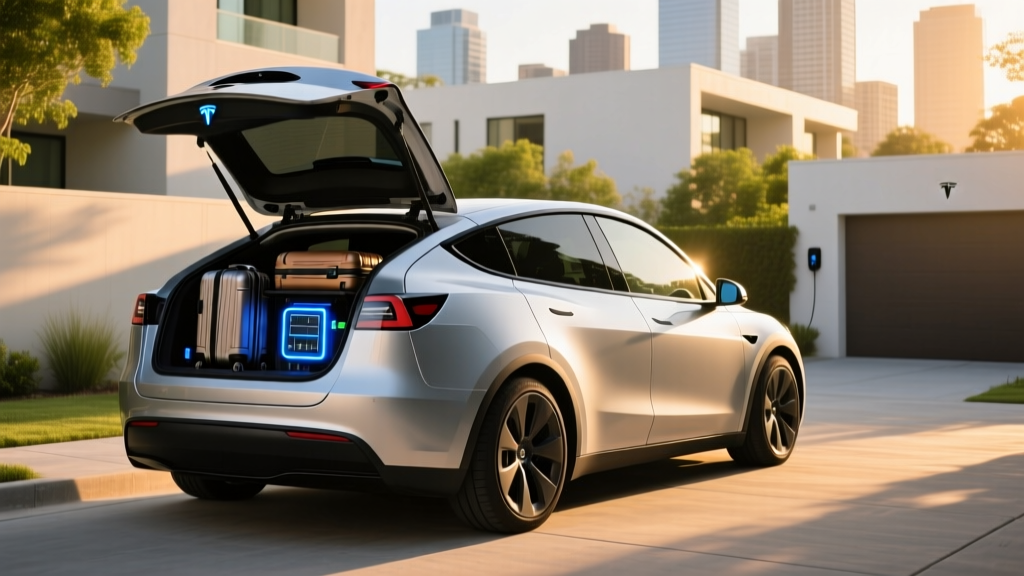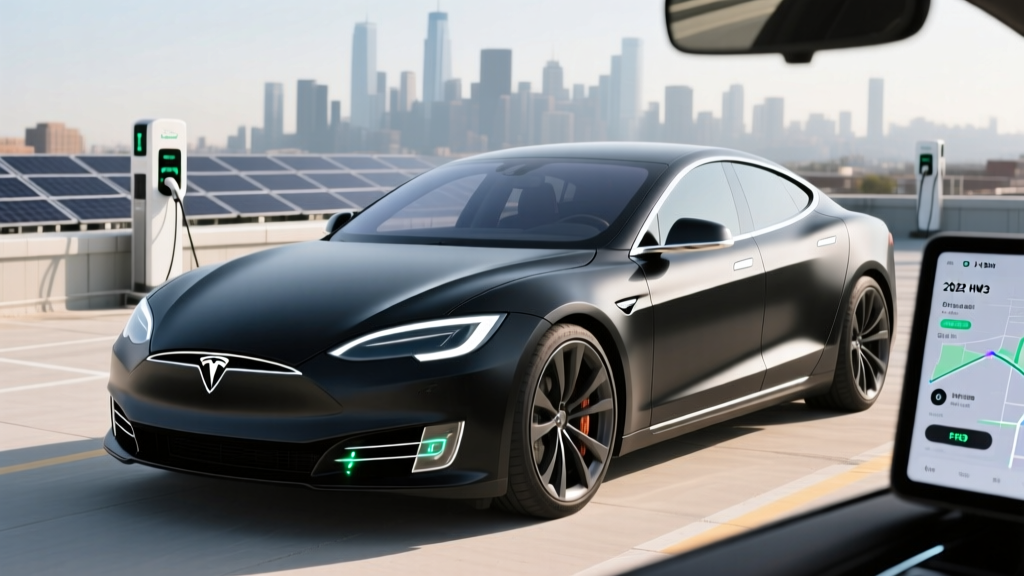
If you own a Tesla Model 3 or Model Y built between April 2019 and early 2023, your vehicle runs on Hardware 3 (HW3) — the dual-chip Autopilot computer that Tesla once promised would deliver full self-driving capability. As Tesla pushes aggressive software updates through 2026, HW3 owners are left with a critical question: are these updates actually unlocking new capabilities, or are you hitting the silicon ceiling?
This review examines what the latest Tesla HW3 software update delivers in 2026, how your vehicle's core specs hold up against the current EV market, and whether your HW3-equipped Tesla remains a smart ownership proposition or a candidate for trade-in.
Your HW3-Equipped Tesla: Core Specs at a Glance
Most HW3 vehicles on the road today are 2019–2023 Model 3 and Model Y variants. Here's what the most common configuration — the Long Range AWD — delivers on paper and in practice.
| Spec | Model 3 LR AWD (HW3 era) | Model Y LR AWD (HW3 era) |
|---|---|---|
| EPA Range | 334 miles | 310 miles |
| Battery Capacity | ~75 kWh usable (NMC) | ~75 kWh usable (NMC) |
| Drivetrain | Dual-Motor AWD | Dual-Motor AWD |
| Horsepower | ~346 hp combined | ~384 hp combined |
| 0–60 mph | 4.2 seconds | 4.8 seconds |
| Max DC Fast Charge | 250 kW (V3 Supercharger) | 250 kW (V3 Supercharger) |
| 10–80% DCFC Time | ~27 minutes | ~27 minutes |
| Level 2 Home Charge | 11.5 kW (~44 mi/hr) | 11.5 kW (~44 mi/hr) |
| Efficiency | 131 MPGe / 26 kWh/100mi | 122 MPGe / 28 kWh/100mi |
| Cargo Volume | 23 cu ft (trunk) + frunk | 76 cu ft (rear seats folded) |
| Warranty (Battery) | 8 yr / 120,000 mi | 8 yr / 120,000 mi |
Source: fueleconomy.gov and Tesla owner's manuals. Exact specs vary by model year and trim.
Real-World Range: What the EPA Sticker Doesn't Tell You
Real-World Highway (70 mph, mild weather): ~270–290 miles
Real-World Highway (cold weather, 30°F or below): ~220–250 miles
City / Commuter Driving with Regen: ~300–320 miles
The EPA test cycle blends city and highway driving with climate-off assumptions. In practice, highway speeds above 70 mph and cold temperatures are the two biggest range killers for HW3-era Teslas. The NMC (nickel manganese cobalt) battery chemistry in these vehicles offers strong energy density but is more sensitive to cold-weather performance loss than the LFP (lithium iron phosphate) packs Tesla introduced in Standard Range models from 2021 onward.
Owners who regularly drive in sub-freezing climates should budget for 20–30% range reduction in winter. Preconditioning the battery while plugged in — a feature available through the Tesla app — recovers some of that lost efficiency by warming the pack before departure. On road trips, plan Supercharger stops at roughly 180–200 mile intervals in winter for comfort.
What the 2026 Tesla HW3 Software Update Actually Changes
Tesla's over-the-air updates for HW3 vehicles in 2026 focus on three areas: FSD (Supervised) improvements, energy management refinements, and UI/UX changes. Here's what you can realistically expect.
FSD (Supervised) on HW3: Capable but Capped
Tesla's FSD (Supervised) software — currently at version 13.x as of early 2026 — continues to support HW3, but with acknowledged limitations. The neural network models powering FSD were originally trained on HW4 sensor data (higher-resolution cameras, wider field of view). When Tesla ports these models to HW3, they must downsample the processing to fit within HW3's older dual-chip architecture.
FSD (Supervised) is a Level 2 driver-assistance system per SAE classification. The driver must remain fully engaged, hands on or near the wheel, and eyes on the road at all times. It is not self-driving. You are legally and operationally responsible for the vehicle at all times.
Real-world FSD performance on HW3 in 2026 is competent for highway cruising and many urban scenarios, but owners report more frequent disengagements than HW4-equipped vehicles — particularly in complex intersections, construction zones, and low-light conditions. Tesla has not published a formal HW3 end-of-support date for FSD, but the trajectory is clear: HW4 (introduced in 2023) is the platform Tesla is optimizing for.
Energy Management and Efficiency Tweaks
Recent software updates have refined thermal management algorithms, slightly improving cold-weather preconditioning efficiency and regen braking behavior. Some owners report 1–2% range gains post-update, though this is within normal variance. The heat pump — standard on Model Y and post-2021 Model 3 — benefits most from these refinements.
Infotainment and UI Changes
Tesla continues to push UI updates, but HW3-era vehicles (particularly 2019–2020 Model 3s with the older Intel Atom MCU1) may experience slower map rendering and occasional lag compared to the AMD Ryzen-powered MCUs in 2022+ vehicles. This is a hardware limitation that no software update can resolve.
Charging Speed: Supercharger Access and Home Setup
One area where HW3 Teslas remain fully competitive is charging infrastructure. Access to the Tesla Supercharger network — now the most reliable DC fast-charging network in North America — is unchanged, and NACS (North American Charging Standard) adoption by rival automakers has only strengthened the network's long-term viability.
| Charging Level | Power (kW) | Speed (miles of range per hour) | Notes |
|---|---|---|---|
| Level 1 (120V outlet) | ~1.4 kW | ~3–5 mi/hr | Emergency/trickle only |
| Level 2 (240V, 48A) | 11.5 kW | ~44 mi/hr | Home Wall Connector; full overnight charge |
| Level 2 (240V, 32A) | 7.7 kW | ~30 mi/hr | Mobile Connector on dryer outlet |
| DC Fast (V3 Supercharger) | 250 kW peak | ~1,000 mi/hr (peak) | 10–80% in ~27 min; tapers above 80% |
| DC Fast (V4 Supercharger) | 250 kW (HW3 limited) | ~1,000 mi/hr (peak) | V4 supports 350+ kW but HW3 caps at ~250 kW |
The charge curve on HW3-era Teslas peaks at 250 kW only briefly — typically between 10–30% State of Charge — then tapers progressively. Expect sustained rates of ~150 kW through the mid-range and a significant drop above 80% SoC. For road-trip planning, the 10–80% time of approximately 27 minutes is the number that matters, not the peak kW figure.
For home charging, Tesla's Wall Connector ($420) on a 60-amp circuit delivers 48 amps / 11.5 kW, adding roughly 44 miles of range per hour. A full charge from 10% takes about 7 hours — easily achievable overnight. Installation costs range from $500–$2,000 depending on your electrical panel's capacity and the distance from panel to charger. If your home has a 100-amp main panel, a panel upgrade to 200 amps may be necessary, adding $1,500–$3,000.
Pricing, Tax Credits, and Ownership Cost
If you already own an HW3 Tesla, your purchase price is locked in. But for buyers considering a used HW3-equipped Model 3 or Model Y — or current owners evaluating trade-in value — the financial picture matters.
| Scenario | Amount | Notes |
|---|---|---|
| New Model 3 LR (2026, HW4) | ~$47,740 MSRP | Current production; HW4 standard |
| Used Model 3 LR (2022, HW3) | ~$25,000–$30,000 | Market dependent; check battery SoH |
| Federal Used EV Credit (§25E) | Up to $4,000 | 30% of sale price, max $4K; income caps apply |
| Federal New EV Credit (§30D) | Up to $7,500 | Only for new purchases; MSRP, income, and battery-sourcing rules apply |
Key §30D and §25E tax credit caveats: The federal new-vehicle credit (§30D) has income caps ($150K single / $300K joint), MSRP caps ($55K sedans / $80K SUVs/trucks), and strict battery critical-mineral and component sourcing requirements that change annually. The used-EV credit (§25E) applies to vehicles sold for $25,000 or less through a licensed dealer, with lower income caps ($75K single / $150K joint). Always verify current-year eligibility at IRS.gov or consult a tax professional before relying on credit amounts.
HW3 vs. HW4: Should You Upgrade?
This is the central question for HW3 owners in 2026. Here's a practical decision framework:
- You primarily use Autopilot for highway driving (lane-keep, adaptive cruise) and don't need cutting-edge FSD
- Your battery State of Health (SoH) is above 85% and range still meets your daily needs
- You're satisfied with the current infotainment responsiveness
- You want to avoid the depreciation hit of trading in
- You're a heavy FSD user who wants the best possible neural-net performance and fewer disengagements
- You want the higher-resolution cameras and improved low-light performance HW4 provides
- You own a 2019–2020 Model 3 with the older MCU1 (Intel Atom) and find the UI sluggish
- Your battery SoH has dropped below 80% and range no longer serves your commute
Tesla does not offer an official HW3-to-HW4 retrofit. While early promises suggested HW3 would achieve full autonomy, the practical reality in 2026 is that HW4 is Tesla's forward-looking platform. HW3 remains supported but is unlikely to receive parity with HW4's FSD capabilities.
Pros and Cons of Owning an HW3 Tesla in 2026
- Full Supercharger network access — still the gold standard for DC fast charging reliability
- Strong real-world efficiency (26–28 kWh/100mi) keeps charging costs low
- Over-the-air updates continue to add features and refinements
- Robust battery warranty (8 yr / 120,000 mi) provides long-term peace of mind
- Excellent cargo space, especially Model Y with 76 cu ft seats-folded
- Performance remains competitive: 4.2s 0–60 in Model 3 LR
- FSD performance gap vs. HW4 — more disengagements in complex scenarios
- No HW4 retrofit path; hardware ceiling is fixed
- Older MCU1 units (2019–2020) show infotainment lag with newer software
- NMC battery chemistry loses more range in cold weather than newer LFP packs
- Used values declining as HW4-equipped vehicles flood the market
- No native NACS adapter needed (Tesla's own connector), but CCS-adapter ecosystem is more mature for non-Tesla charging
Who Is This EV Best For?
An HW3-equipped Tesla Model 3 or Model Y remains an excellent daily driver in 2026 for the following use cases:
- Commuters: If your round-trip commute is under 100 miles, the real-world range (even in winter) provides multiple days between charges, and home Level 2 charging makes ownership effortless.
- Families (Model Y): The Model Y's 76 cu ft of cargo space, available third row (2023+ models), and strong NHTSA 5-star safety ratings make it a practical family hauler.
- Road-trippers: Supercharger network coverage means cross-country travel is viable, though winter trips require more frequent stops (~180–200 miles vs. 220–250 in summer).
It's less ideal for buyers who demand the latest autonomous-driving technology or who want a vehicle that will appreciate — or even hold — its value against newer HW4 models.
Frequently Asked Questions
What is the real-world range of an HW3 Tesla Model 3 Long Range?
The EPA rates it at 334 miles, but real-world highway driving in mild conditions yields approximately 270–290 miles. In cold weather (below 30°F), expect 220–250 miles. City driving with regenerative braking can approach the EPA figure.
How fast does an HW3 Tesla charge on DC fast chargers and at home?
On a V3 Supercharger, HW3 Teslas peak at 250 kW and charge from 10–80% in roughly 27 minutes. At home on a 48-amp Level 2 Wall Connector (11.5 kW), you'll add about 44 miles of range per hour, achieving a full overnight charge in ~7 hours.
Does my HW3 Tesla qualify for the federal EV tax credit?
If you bought new and met all §30D requirements (income caps, MSRP caps, battery sourcing), you may have qualified at purchase. For used HW3 Teslas bought through a dealer for $25,000 or less, the §25E used-EV credit offers up to $4,000 (30% of sale price) if you meet income limits. Verify at IRS.gov.
Is FSD on HW3 as good as on HW4?
No. FSD (Supervised) runs on HW3, but the neural network models are optimized for HW4's higher-resolution cameras and faster processing. HW3 owners experience more frequent disengagements, particularly in complex urban environments and low-light conditions. Both remain SAE Level 2 — the driver must stay fully engaged.
Will Tesla stop supporting HW3 with software updates?
Tesla has not announced an end-of-support date for HW3. However, as FSD development focuses on HW4, the feature gap is likely to widen. Basic Autopilot, safety features, and infotainment updates should continue for the foreseeable future.
Is it worth buying a used HW3 Tesla in 2026?
Yes, if the price is right and you don't need top-tier FSD performance. A used 2022 Model 3 LR with HW3 at $25,000–$30,000 (potentially $21,000–$26,000 after the §25E used-EV credit) offers exceptional value: strong range, Supercharger access, and competitive performance. Check battery State of Health before purchasing — anything above 85% SoH is a solid buy.
What's the biggest drawback of HW3 in 2026?
The fixed hardware ceiling. As Tesla's FSD software evolves around HW4's capabilities, HW3 will increasingly run downsampled models with reduced performance. There is no retrofit path, making this the primary long-term ownership risk.
For the latest Tesla software release notes, visit Tesla's official software updates page. For safety ratings, check IIHS.org and NHTSA.gov.