The Truth About "Tesla Hover" Searches
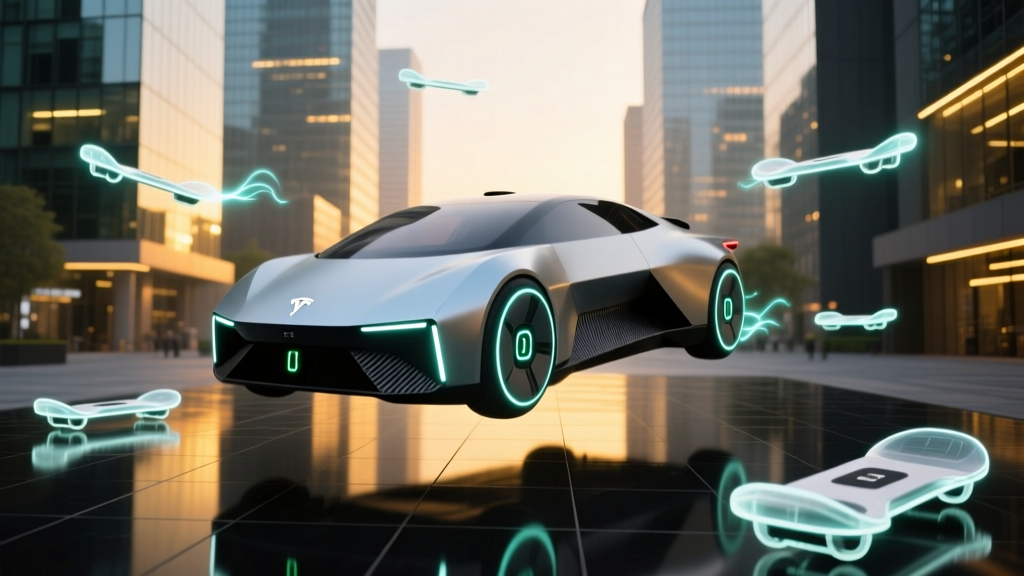
If you've typed "Tesla hover" into a search bar, you're not alone — the term pulls steady search volume every month. But here's the reality check: Tesla does not manufacture a hover car, hoverboard, or any levitating vehicle as of 2026. No Tesla vehicle leaves the ground, and the company has never announced a hover-capable product.
So what's driving the search? A mix of viral concept renders, Elon Musk's history of provocative statements, third-party hoverboards that use "Tesla" as a style descriptor, and genuine curiosity about whether Tesla's engineering might extend to something beyond wheeled vehicles. Let's untangle what's real, what's rumor, and what Tesla actually offers buyers right now.
Where Did the Tesla Hover Idea Come From?
The "Tesla hover" concept has several origin points:
- The Tesla Roadster (2020 announcement): When Tesla unveiled the next-generation Roadster, Musk mentioned an optional "SpaceX package" with cold-gas thrusters that could theoretically improve cornering, braking, and even allow the car to "hover" briefly. This was never a production feature and remains unconfirmed for any shipping vehicle.
- Cybertruck renders: Fan-made concept art frequently depicts the Cybertruck hovering over terrain. These are digital art, not engineering plans.
- Tesla-branded accessories: Tesla has sold various lifestyle products (surfboards, tequila, shorts), fueling speculation that a hoverboard could be next. As of 2026, no such product exists in the Tesla Shop.
- Generic hoverboard confusion: Many consumers use "Tesla" colloquially to describe any premium electric self-balancing scooter, similar to how "Kleenex" refers to tissues.
What Tesla Actually Sells in 2026: The Real Lineup
Rather than chasing a non-existent hover vehicle, here's what Tesla actually offers U.S. buyers in 2026. These are real, purchasable, EPA-rated electric vehicles:
| Model | EPA Range | Battery (kWh) | 0-60 mph | Starting MSRP |
|---|---|---|---|---|
| Model 3 RWD | 272 mi | ~60 kWh (LFP) | 5.8 sec | $38,990 |
| Model 3 Long Range AWD | 341 mi | ~82 kWh (NMC) | 4.2 sec | $42,490 |
| Model Y Long Range AWD | 308 mi | ~82 kWh (NMC) | 4.8 sec | $44,990 |
| Model S Dual Motor | 402 mi | ~100 kWh (NMC) | 3.1 sec | $74,990 |
| Model X Dual Motor | 335 mi | ~100 kWh (NMC) | 3.8 sec | $79,990 |
| Cybertruck AWD | 340 mi | ~123 kWh (NMC) | 4.1 sec | $79,990 |
Sources: EPA / fueleconomy.gov, Tesla.com. Prices and specs reflect 2026 model year; verify current figures before purchasing.
Real-World Range: What the EPA Sticker Doesn't Tell You
• Highway driving at 75 mph: Expect 10-15% less than EPA (e.g., Model 3 LR's 341 mi EPA → ~290-305 mi actual)
• Cold weather (below 32°F): Range can drop 20-30% due to battery chemistry and cabin heating demands
• City/regenerative driving: You may exceed EPA estimates thanks to regen braking recapturing energy
For example, the Model 3 Long Range carries an EPA rating of 341 miles. On a 70°F day with mixed driving, owners consistently report 310-330 miles. But on a January road trip through Montana at 70 mph, plan for 240-270 miles before needing a charge.
Charging Speed: DC Fast Charge and Home Level 2
Tesla's Supercharger network remains the most reliable DC fast-charging ecosystem in North America. Here's what charging looks like across the lineup:
| Charging Method | Power (kW) | Speed (mi/hr) | 10-80% Time |
|---|---|---|---|
| Level 1 (120V household) | 1.4 kW | ~4 mi/hr | N/A (overnight top-up) |
| Level 2 (240V home, 48A) | 11.5 kW | ~37 mi/hr | ~7-9 hours (full) |
| DC Fast (V3 Supercharger) | Up to 250 kW | ~1,000+ mi/hr peak | ~25-30 min |
| DC Fast (V4 Supercharger) | Up to 350 kW* | Higher sustained rate | ~20-25 min* |
*V4 Supercharger speeds depend on vehicle architecture; Model 3/Y on 400V systems cannot fully utilize 350 kW peaks. Charge curve tapers significantly above 80% State of Charge — plan to charge to 80% and go rather than wait for 100%.
Home charging reality: Most Tesla owners install a Wall Connector ($475 hardware) on a 60A circuit, delivering up to 11.5 kW / 44 miles of range per hour. A full overnight charge from 20% to 80% takes roughly 5-6 hours. Installation by a licensed electrician typically runs $500-$2,000 depending on panel proximity and local permitting.
Federal Tax Credit: Does Tesla Qualify in 2026?
Under IRS §30D rules, Tesla vehicles remain eligible for up to $7,500 in federal tax credits, but eligibility depends on three factors that trip up many buyers:
- MSRP Cap: Vans, SUVs, and pickups (Model Y, Model X, Cybertruck) must be under $80,000 MSRP. Sedans (Model 3, Model S) must be under $55,000. This means Model S and Model X do NOT qualify; Model 3 and Model Y do.
- Buyer Income Cap: Adjusted gross income must not exceed $150,000 (single), $225,000 (head of household), or $300,000 (married filing jointly).
- Battery Sourcing: Critical minerals and battery components must meet phased-in domestic/free-trade-partner sourcing thresholds. Tesla has worked to localize supply chains, but specific eligibility can vary by build date and battery supplier. Always verify with the dealer and your tax professional before assuming the full credit.
As of 2026, the credit can be transferred at point of sale, meaning you can apply the $7,500 as an instant discount rather than waiting for tax filing. See IRS.gov Clean Vehicle Credit for current rules.
| Model | MSRP | Est. After $7,500 Credit | Qualifies? |
|---|---|---|---|
| Model 3 RWD | $38,990 | ~$31,490 | ✅ Yes (under $55K cap) |
| Model 3 Long Range | $42,490 | ~$34,990 | ✅ Yes |
| Model Y Long Range | $44,990 | ~$37,490 | ✅ Yes (under $80K SUV cap) |
| Model S | $74,990 | $74,990 | ❌ No (exceeds $55K sedan cap) |
| Cybertruck AWD | $79,990 | ~$72,490 | ✅ Yes (under $80K truck cap) |
Pros and Cons: Tesla Ownership in 2026
✅ Pros
- Best-in-class Supercharger network (20,000+ stalls in North America)
- Over-the-air updates continuously add features
- Low running costs: ~$0.04-$0.06/mile on home electricity vs. $0.12-$0.15/mile for gas
- Strong resale value relative to most EV competitors
- Minimalist interior = fewer parts to break
- Standard Autopilot (SAE Level 2) is competent for highway cruising
❌ Cons
- Build quality inconsistency (panel gaps, paint defects still reported)
- No Apple CarPlay or Android Auto — Tesla's UI only
- Repair wait times can stretch weeks for body/parts damage
- Insurance premiums run 20-40% higher than equivalent gas cars
- FSD (Supervised) costs $8,000 extra and remains Level 2 — not autonomous
- No physical buttons; everything through the touchscreen (turn signals on yoke, etc.)
Who Should Buy a Tesla (And Who Shouldn't)
Buy a Tesla if:
- You have reliable home charging access (garage or driveway with 240V capability)
- You drive 200+ miles per week and want low per-mile fuel costs
- You value over-the-air updates and tech-forward features
- You frequently road-trip and want access to the Supercharger network
- You qualify for the federal tax credit (income under caps, MSRP under limits)
Look elsewhere if:
- You lack home charging and rely entirely on public infrastructure (consider a PHEV instead)
- You need Apple CarPlay/Android Auto for your workflow
- You want a traditional dealership experience with in-person service
- You tow heavy loads regularly (Cybertruck is capable, but efficiency drops sharply under load)
- You're uncomfortable with touchscreen-only vehicle controls
Frequently Asked Questions
Does Tesla make a hoverboard or hover car?
No. Tesla does not manufacture hoverboards, hover cars, or any levitating vehicle. The company makes ground-based electric vehicles (Model 3, Model Y, Model S, Model X, Cybertruck). Third-party hoverboards that use "Tesla" in their marketing are not affiliated with Tesla, Inc.
What was the Tesla Roadster "hover" feature?
In 2020, Elon Musk mentioned a proposed "SpaceX package" for the next-gen Roadster that would use cold-gas thrusters to improve performance and theoretically allow brief hovering. This feature has never been delivered, and the Roadster itself has been repeatedly delayed. It is not a production feature on any current Tesla vehicle.
How much does a Tesla cost after tax credits in 2026?
The Model 3 RWD starts at $38,990 and can drop to approximately $31,490 after the $7,500 federal tax credit (if you meet income and sourcing requirements). The Model Y Long Range starts at $44,990 and can reach ~$37,490 after credit. Model S and Model X exceed the MSRP cap and do not qualify.
Is Tesla's Supercharger network really the best?
By reliability metrics, yes. Tesla Superchargers consistently report 95%+ uptime, compared to 70-85% for many third-party CCS networks (Electrify America, EVgo, etc.). However, with the adoption of NACS as the North American standard, non-Tesla EVs are gaining Supercharger access, which may increase wait times at popular corridors over time.
What's the real-world range of a Tesla Model 3?
The Model 3 Long Range AWD carries an EPA rating of 341 miles. In real-world mixed driving at moderate temperatures, expect 310-330 miles. At sustained highway speeds (75+ mph), plan for 290-305 miles. In cold weather (below freezing), range can drop to 240-270 miles due to battery resistance and cabin heating.
How fast does a Tesla charge at home?
On a Level 2 home charger (240V, 48A), a Tesla charges at up to 11.5 kW, adding roughly 37 miles of range per hour. A full charge from 20% to 80% takes about 5-6 hours overnight. On a standard 120V outlet (Level 1), expect only ~4 miles per hour — suitable for overnight top-ups but not daily fast replenishment.
The Bottom Line on Tesla Hover
The "Tesla hover" concept remains firmly in the realm of internet speculation and fan art. No hover-capable Tesla vehicle exists, is on sale, or has been formally announced with a production timeline. If you're researching Tesla because you're considering an EV purchase, focus on the real lineup: the Model 3 for value and efficiency, the Model Y for family utility, the Cybertruck for truck buyers, and the Model S/X for luxury sedan/SUV seekers.
For the latest official information, visit Tesla.com or check EPA ratings at fueleconomy.gov. And if you truly want a hoverboard — check out Segway, Gotrax, or Razor. Just don't expect the Tesla logo on it.